
Budget decisions for dove limestone contemporary Prescott projects get made long before the first paver is set — and the numbers that matter most aren’t on any quarry price sheet. Freight distance from distribution hubs, current labor market conditions in the Prescott area, and regional stone availability all shift the true cost of a contemporary limestone installation in ways that catch even experienced contractors off guard. Understanding these dynamics early gives you the leverage to engineer real value into your project without compromising the clean, modern aesthetic that dove limestone delivers so effectively in Arizona’s high-desert architectural environment.
Regional Pricing Dynamics for Dove Limestone in Prescott
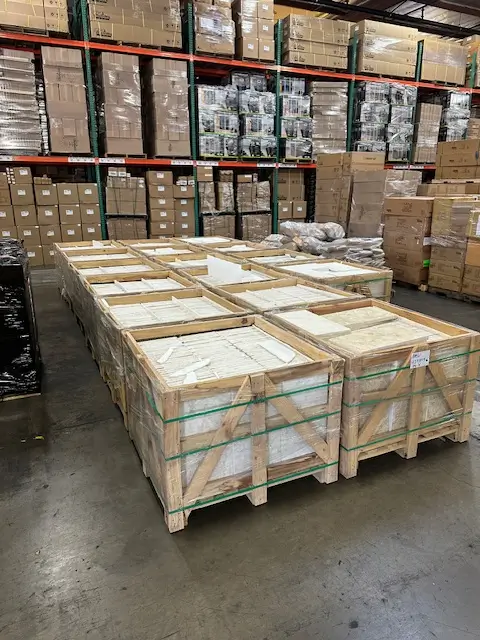
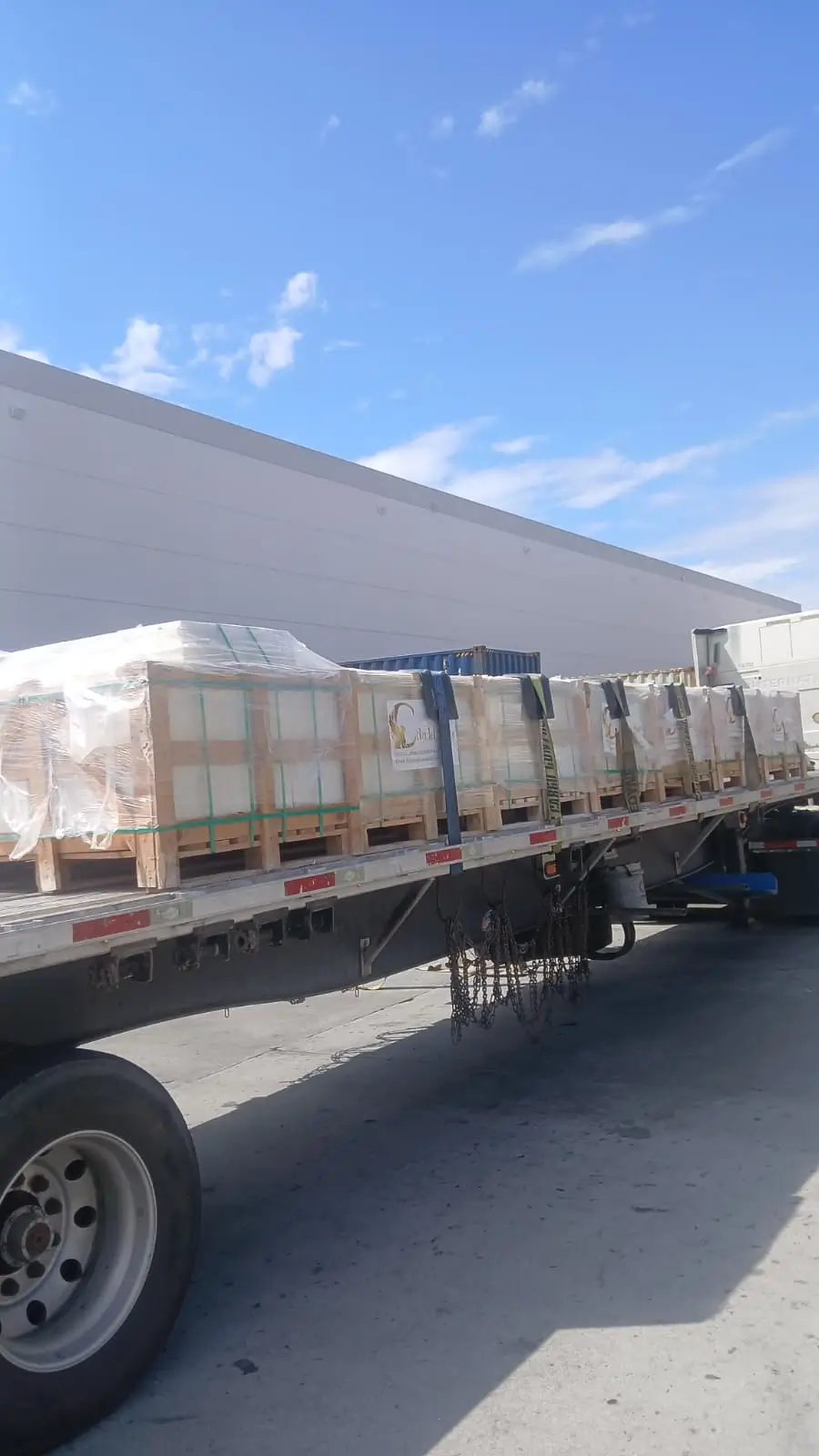
Prescott sits at roughly 5,400 feet elevation, about 100 miles from the Phoenix metro distribution corridor. That distance doesn’t sound significant until you price out a full truck delivery of 30-ton limestone pallets — freight from a Phoenix-area warehouse to a Prescott jobsite can add $400 to $900 per delivery depending on the carrier, pallet configuration, and access road conditions at your site. For smaller residential projects in the 500-square-foot range, that freight cost represents a meaningful percentage of total material spend, so consolidating orders to minimize truck trips is one of the first optimization moves worth making.
Prescott’s labor market also behaves differently from the valley floor. Skilled stone installers based in the Prescott–Prescott Valley corridor tend to carry day-rate premiums of 12–20% over Phoenix metro averages, reflecting lower subcontractor density and longer mobilization windows. Your material-to-labor cost ratio for a dove limestone contemporary installation in Prescott will typically run closer to 45:55 than the 55:45 ratio common in Phoenix — meaning labor consumes a larger share of your budget, which shifts where value engineering has the most impact.
Material Availability and Smart Sourcing Decisions
Dove limestone in the soft warm-grey palette that suits Prescott’s contemporary design context isn’t stocked universally across Arizona distributors. Local building supply yards in the Prescott area typically carry a limited selection of concrete pavers and some basic flagstone, but consistently stocked dove limestone in modular slab formats — the format most contemporary designs call for — requires sourcing from Phoenix-area distribution. That means lead time planning is non-negotiable. Projects that commit to a stone selection without confirming warehouse inventory first routinely face 3–5 week delays that cascade into scheduling conflicts with other trades.
At Citadel Stone, we maintain active inventory of dove limestone products at our Arizona warehouse, which typically compresses lead times to 1–2 weeks rather than the 6–8 week import cycle that hits projects ordering from overseas suppliers. Knowing your stone is in-country and ready for truck dispatch also eliminates the exchange rate risk that makes imported stone budgets unpredictable quarter-to-quarter. For Prescott projects with fixed client budgets and hard completion dates, that warehouse certainty translates directly into reduced contingency requirements.
- Confirm warehouse stock levels before finalizing your project schedule — availability windows shift based on seasonal demand across the state
- Order full truck quantities where possible to reduce per-unit freight cost on Prescott deliveries
- Request samples from current production lots so your specified dove tone matches what arrives on-site
- Factor a 10–12% overage into your order for cuts, waste, and future repair matching
Value Engineering a Dove Limestone Contemporary Design
The highest-leverage value engineering move on a dove limestone contemporary Prescott project is format selection. Larger slab formats — 24×24 or 24×36 inches — reduce installation labor hours per square foot because installers set fewer pieces to cover the same area. The material cost per square foot on larger slabs runs slightly higher, but the labor savings frequently offset that premium by a factor of 1.5 to 2x in Prescott’s labor market. That tradeoff is worth running the numbers on before you lock in a size specification.
Thickness selection is the second lever. For a residential patio or courtyard application where vehicle loading isn’t a concern, 1¼-inch nominal thickness performs adequately over a properly prepared aggregate base. Specifying 2-inch thickness on pedestrian-only areas adds material cost without adding functional value in most residential contexts. Reserve the heavier gauge for driveway aprons, transitional vehicle zones, or any area where point loads from equipment exceed 500 pounds. That targeted thickness approach can reduce material spend by 15–20% on mixed-use installations without compromising durability where it counts.
For projects in Peoria and the northwest valley, the same value engineering logic applies, but freight economics invert — proximity to Phoenix distribution hubs brings delivery costs down while labor rates tighten, so the optimization focus shifts from freight reduction toward format efficiency rather than trip consolidation.
Understanding Prescott’s Contemporary Design Context
Prescott modern aesthetics lean toward a specific expression of high-desert contemporary — cleaner than Sedona’s organic palette, more restrained than urban Phoenix modernism, and distinctly influenced by the granite-boulder landscape that defines the region’s visual character. Dove limestone’s warm grey undertone, which sits between pure silver-grey and beige, bridges the gap between the area’s natural grey granite outcroppings and the warmer wood and steel elements that dominate current style in Prescott’s newer residential construction.
That material harmony matters practically, not just aesthetically. When your exterior paving tone reads as a continuation of the site’s natural geology rather than an imported product, the overall design cohesion reduces the visual complexity that can make contemporary spaces feel busy. Dove limestone achieves this in Prescott’s environment more reliably than pure white limestone or charcoal basalt, both of which create higher contrast against the surrounding landscape than most dove limestone contemporary Prescott projects call for. Arizona updated design sensibility in this region favors integration over contrast — and dove tone delivers that without requiring complex blending strategies.
- Prescott’s granitic boulder landscape creates a natural color reference point that dove limestone complements without competing
- Contemporary residential projects in the area increasingly specify horizontal stone surfaces that extend the indoor floor plane outdoors — dove limestone’s consistent color allows this transition to read seamlessly
- Elevation and forest proximity in Prescott shift the ambient light quality — the stone’s appearance at 5,400 feet differs meaningfully from how it reads in Phoenix’s harsher direct sunlight
- Steel and concrete architectural elements common in Prescott’s contemporary builds pair effectively with dove limestone’s neutral warmth
Thermal Performance and Elevation Factors
Prescott’s elevation introduces temperature variables that don’t appear in Phoenix-specific installation guidance. You’re working with genuine freeze-thaw cycles — not frequent, but real — particularly between November and March when overnight lows regularly drop below 28°F. Dove limestone with water absorption rates below 0.75% performs reliably through these cycles without significant spalling risk, but you should verify absorption data on the specific production lot you’re specifying, not just the product category average. Lot-to-lot variation in natural stone is genuine, and absorption values can shift by 15–20% within the same named product across different quarry cuts.
Similarly, Flagstaff at 7,000 feet faces considerably more aggressive freeze-thaw cycling than Prescott — projects there demand absorption testing as a non-negotiable spec requirement, and the sealing protocol needs to be adjusted to a more frequent annual cycle rather than Prescott’s typical biennial maintenance schedule. Understanding where your project sits on the elevation-frost risk curve is fundamental to specifying dove limestone contemporary Arizona installations that perform over the full 20–25 year design life.
For Prescott applications, the thermal mass benefit of 1¼-inch limestone over a compacted aggregate base creates a comfortable surface temperature differential of roughly 15–18°F below ambient air temperature on exposed south-facing patios during peak afternoon heat in summer months. That benefit is relevant in Prescott’s shoulder seasons — late spring and early fall — when evening outdoor use is highest and surface heat retention makes a tangible difference in usability.
Base Preparation in Prescott’s Regional Soil Conditions
Prescott’s soil profile varies more dramatically than most installation guides account for. Granitic decomposed granite — locally called DG — is common across large portions of the Prescott area and provides a naturally stable sub-base with reasonable drainage characteristics. However, pockets of expansive clay intrude in valley bottom areas and near drainage courses, and these require full excavation to a minimum of 8 inches below finish grade, replacement with compacted Class II base material, and aggressive cross-drainage design to prevent hydrostatic pressure buildup beneath your stone field.
The practical field test that matters here is a simple soil classification check before you commit to a base depth specification. DG-dominant soils in Prescott can support dove limestone paving on 4 inches of compacted aggregate over intact native sub-base. Clay-dominant soils require 6–8 inches of import base plus a non-woven geotextile separator to prevent base contamination over time. Getting this wrong — either over-building on stable DG at unnecessary cost, or under-building on expansive clay — is the most common source of premature installation failure in Prescott’s varied terrain.
For dove limestone paving in Arizona broadly, joint design is equally important as base depth. A 3/16-inch dry-laid joint with polymeric sand maintains the clean contemporary look while allowing the slight differential movement that Prescott’s freeze-thaw cycles demand. Tight-grouted joints in a mortar-set system work well on stable DG but create crack risk on any expansive soil areas — a detail that separates good regional specifications from generic ones.
Sealing, Maintenance, and Preserving the Contemporary Finish
The contemporary aesthetic that makes dove limestone so effective in Prescott depends substantially on a consistent, even surface appearance over time. Without a sealing program, dove limestone’s open pore structure — typically in the 4–8% porosity range — allows mineral staining from irrigation water, organic staining from nearby vegetation, and differential weathering patterns that break up the clean, uniform look that current style in contemporary design requires.
A penetrating impregnator sealer applied within 30 days of installation and refreshed every 18–24 months in Prescott’s climate provides reliable stain resistance without altering the stone’s natural matte appearance. Avoid topical film-forming sealers on exterior dove limestone — they trap moisture vapor, which becomes a spalling mechanism under freeze-thaw cycling. The penetrating chemistry is the correct specification for Prescott’s climate, full stop.
You can reference Citadel Stone’s light grey limestone slabs for additional context on sealing protocols and maintenance schedules applicable to grey-family limestone products across Arizona’s diverse climate zones — the technical guidance translates directly to dove tone specifications as well.
- Apply sealer to clean, fully cured stone — minimum 28 days after installation before first sealer application
- Test sealer on a non-visible section first to confirm the finish doesn’t shift the stone’s grey undertone in an undesirable direction
- Biennial resealing in Prescott’s climate is sufficient for most residential applications — increase to annual for high-traffic or heavily irrigated areas
- Avoid acidic cleaning products — pH-neutral stone cleaner is the correct maintenance chemistry
Installation Sequencing and Project Logistics
Coordinating truck deliveries to Prescott-area jobsites requires more planning than valley-floor projects. Route access, particularly for projects in hillside or forested neighborhoods, can limit delivery vehicle size. A standard flatbed truck carrying full-pallet limestone loads may not be able to access sites with steep grades or narrow road widths — confirm site access dimensions before scheduling delivery so the logistics team can arrange smaller split-delivery loads if needed. This isn’t a minor detail; a failed delivery on a tight-window project adds both cost and schedule damage simultaneously.
Sequencing stone installation after rough grading and before any soft landscape work is standard practice, but in Prescott’s climate the timing has an additional consideration: early spring installations benefit from moderate overnight temperatures that extend the working window for polymeric sand activation. Late-summer monsoon season creates moisture management challenges — material should be staged under cover and base material protected from saturation during storm events, which can occur daily in July and August.
Contrasting Applications: Prescott vs. Sedona Design Sensibility
Understanding what makes dove limestone contemporary design work specifically in Prescott becomes clearer when you compare it to the approach that works in Sedona. Sedona’s red rock landscape creates a warm, saturated color context that shifts stone selection toward earth-toned materials — buff limestone, warm travertine, or rust-veined flagstone. Dove limestone’s cooler grey read can feel tonally disconnected in Sedona’s environment unless it’s being used deliberately as a contrast element in a modern-minimalist design.
Prescott’s granite-and-pine landscape creates a neutral, cooler color context where dove limestone contemporary installations read as tonally correct rather than contrasting. This regional specificity matters when you’re advising clients on stone selection — the same dove limestone specification that performs aesthetically in Prescott may require a tone adjustment when deployed on a Sedona project. Dove limestone contemporary Arizona applications succeed or struggle based significantly on how well the stone tone maps to the site’s natural color environment, and that mapping is location-specific in ways that product photography rarely captures. Prescott modern aesthetics reward this kind of site-responsive material thinking more than almost any other design environment in the state.
Getting Dove Limestone Contemporary Prescott Specifications Right
Getting dove limestone contemporary Prescott projects right comes down to making the right calls before installation begins — on freight consolidation, base depth assessment, format selection for labor efficiency, and sealer specification for freeze-thaw conditions. The aesthetic outcome you’re working toward is achievable with dove limestone in Prescott’s high-desert context, but it’s the pre-installation decisions that determine whether that outcome lasts 12 years or 25. For related design context on complementary stone applications in Arizona, Dove Limestone Paving Harmonious for Marana Balanced Design covers how dove tone performs in a different regional setting — useful perspective when your project scope spans multiple Arizona locations or when you’re advising clients comparing design approaches across the state. Our technical team at Citadel Stone is available to run material calculations, confirm current warehouse stock, and help you structure a delivery schedule that fits your Prescott project timeline. We stock dove limestone paving in Arizona specifically suited to contemporary design specifications in high-elevation markets like Prescott.