
Code First, Material Second: How Paradise Valley Specs Shape Your Dove Grey Choice
Dove grey limestone neutral Paradise Valley specifications must satisfy Maricopa County’s residential paving standards before they deliver a square inch of visual value — structural compliance sets the baseline before any material aesthetic conversation begins. The town’s zoning code references IBC load classifications for pedestrian hardscape, and your material selection needs to meet minimum compressive strength thresholds that eliminate several softer limestone varieties outright. That narrows the field fast, and it redirects the conversation toward limestone densities and cut thicknesses that perform structurally — which, as it happens, aligns well with dove grey limestone’s natural composition.
Load-Bearing Requirements That Govern Your Material Specification
Paradise Valley doesn’t operate under the same permissive rural code environment you’d find in unincorporated Maricopa County. The town enforces residential site plan review for any hardscape exceeding 200 square feet, and that review triggers structural documentation requirements. Your paving specification has to demonstrate minimum compressive strength — typically 3,000 PSI for pedestrian applications and 8,000 PSI for vehicle-accessible surfaces — which dove grey limestone in the high-density quarry cuts comfortably exceeds, often testing between 9,000 and 12,000 PSI in third-party certification.
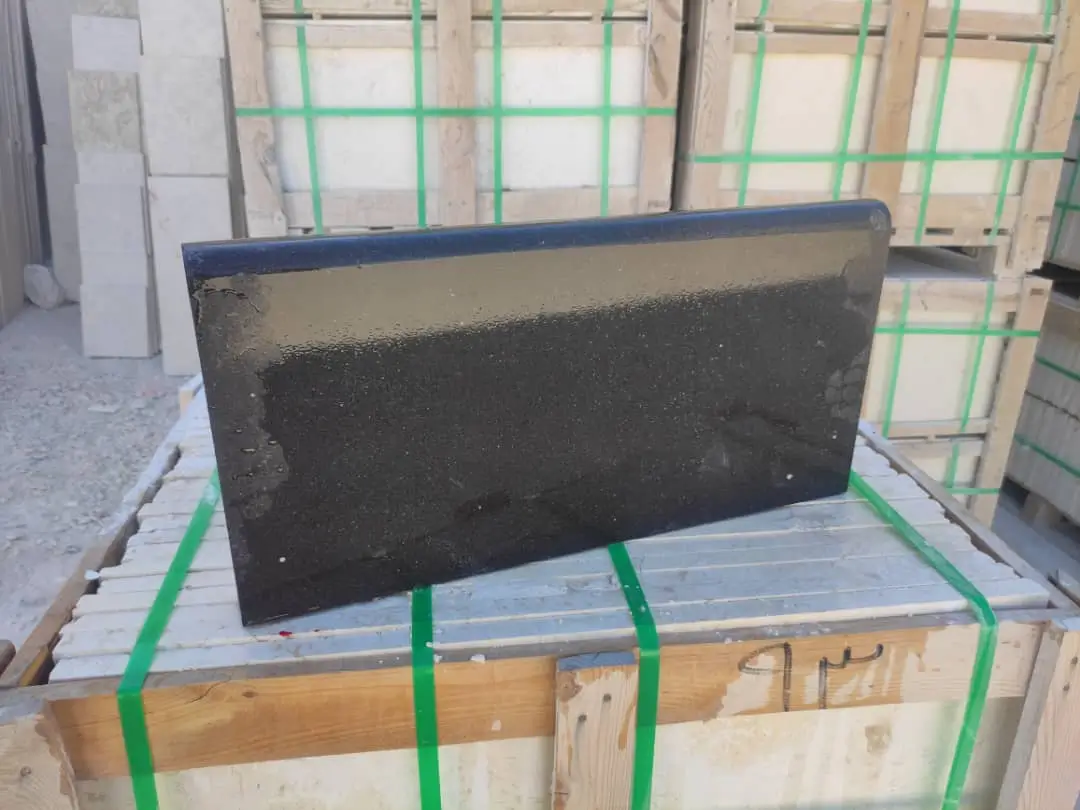
- Pedestrian walkway applications require nominal 1.25-inch to 1.5-inch slab thickness over a properly compacted aggregate base
- Driveway and motor court surfaces need 2-inch to 3-inch nominal thickness to handle vehicle point loading without surface fracture
- Edge restraint systems must be mechanically fastened — adhesive-only restraints don’t meet Paradise Valley’s residential hardscape standards for vehicle-accessible zones
- Expansion joint spacing in dove grey limestone paving should not exceed 12 feet in linear runs — tighter than generic industry recommendations because of the valley’s thermal cycling range
The detail most specifiers underestimate is how base depth interacts with soil bearing capacity in the northeast Valley. Decomposed granite underlain by caliche is a common profile that sounds forgiving but can behave unpredictably when moisture penetrates. Your compacted aggregate base should run 6 to 8 inches for pedestrian paving and 10 to 12 inches for vehicle-accessible areas, and that base spec needs to be documented as part of the permit submission.
Why Dove Grey’s Neutral Palette Aligns With Local Design Standards
Paradise Valley maintains one of the more detailed architectural review processes in the Valley — the Design Review Board evaluates exterior hardscape materials alongside structure color and landscaping, specifically to preserve the community’s cohesive high-desert aesthetic. Dove grey limestone neutral Paradise Valley installations pass this review with less friction than bolder material choices precisely because dove grey occupies the architectural middle ground that the town’s design guidelines implicitly favor. The material doesn’t compete with the ochre and terracotta that surrounds it — it resolves those tones into a cohesive exterior palette that supports Paradise Valley versatile design goals across diverse estate configurations.
- Paradise Valley’s design guidelines reference earth-tone harmonics, and dove grey reads as a warm neutral that complements both warm sandstone and cooler concrete elements
- The material’s natural variation — subtle veining, slight tonal shifts — satisfies the DRB’s preference for organic material character over uniformity
- Dove grey limestone’s honed and brushed finish options allow you to match the texture directionality the DRB sometimes requires for slip resistance documentation
The versatile design flexibility built into dove grey as a neutral comes from how its base tone interacts with the Arizona flexible palette of surrounding materials. Running dove grey paving adjacent to buff travertine pool coping, dark basalt edging, or steel-grey concrete walls produces no visual conflict — a performance characteristic that makes it unusually adaptable in multi-material project environments. That adaptability is particularly valuable in Paradise Valley where exterior packages often combine multiple hardscape materials across a single estate site.
Seismic Considerations and How They Affect Your Stone Selection
Arizona sits in a lower seismic hazard zone compared to California, but Paradise Valley and the greater Scottsdale corridor aren’t exempt from design seismic value requirements in the International Building Code as adopted by Arizona. Seismic design category A or B applies to most residential construction here, and while that doesn’t trigger the same structural complexity as higher-category zones, it does inform your paving system’s jointing design. Rigid mortar-set applications on large format dove grey limestone slabs need movement joint accommodation — the seismic provisions and thermal expansion requirements actually point in the same direction on this.
For Sedona projects at higher elevation with more pronounced geology, the seismic considerations carry more weight, but even Paradise Valley applications benefit from specifying a flexible setting bed system — polymer-modified thinset with adequate shear transfer — rather than traditional rigid mortar beds that crack under differential movement. This is one of those spec decisions that looks like an installation detail but is actually a structural longevity call.
Thermal Expansion and Joint Spacing Across Arizona’s Climate Zones
Dove grey paving neutral Arizona installations operate across a significant temperature range, and that range drives your joint spacing calculation more than most product literature acknowledges. Paradise Valley surface temperatures swing from near-freezing overnight lows in December to 145°F slab surface temperatures in July. Limestone’s coefficient of thermal expansion runs approximately 3.0 to 4.5 × 10⁻⁶ per °F — moderate compared to concrete, but across a 150°F surface range, you’re dealing with measurable dimensional change in long linear runs.
- Expansion joints every 10 to 12 feet in north-south oriented runs where full-sun exposure maximizes thermal cycling
- Sand-set installations over compacted aggregate tolerate movement better than mortar-set systems, reducing joint frequency requirements
- Joint material should be non-shrink polyurethane in Paradise Valley applications — standard grout won’t flex adequately through the annual temperature range
- Perimeter control joints at all fixed structure interfaces — house foundation, pool shell, landscape walls — are non-negotiable in this climate
In Flagstaff, the freeze-thaw cycle adds another dimension entirely — frost line depth runs approximately 18 inches, and base preparation requirements there differ substantially from the low-desert standard. Paradise Valley doesn’t share that frost-depth concern, but specifiers who work across both markets should recognize that the Arizona flexible palette of design solutions extends to base engineering, not just surface material selection.
Selecting the Right Thickness for Dove Grey Limestone Paving
The thickness decision for dove grey limestone paving in Arizona isn’t just a structural call — it affects how the material behaves acoustically underfoot, how it retains and releases heat through the evening hours, and how it ages under point loading. Thinner cuts (1.25 inch) provide a lighter, more refined look but demand an extremely stable, fully-supported base without any bridging voids. Thicker cuts (2 inch and above) are more forgiving of minor base irregularities and carry substantially higher point load capacity.
For Paradise Valley motor courts and entry driveways — applications where occasional vehicle access occurs even on ostensibly pedestrian surfaces — the 2-inch nominal specification is the professional minimum. Dove grey limestone paving slabs are available in both gauged and ungauged format; gauged material is preferable for any application with strict dimensional tolerance requirements or where level changes are minimal. For further guidance on related material options, the slate grey limestone paving slabs specification provides useful comparative thickness and density data applicable across Arizona hardscape projects.
Adaptable Colors and Design Integration in Paradise Valley Exteriors
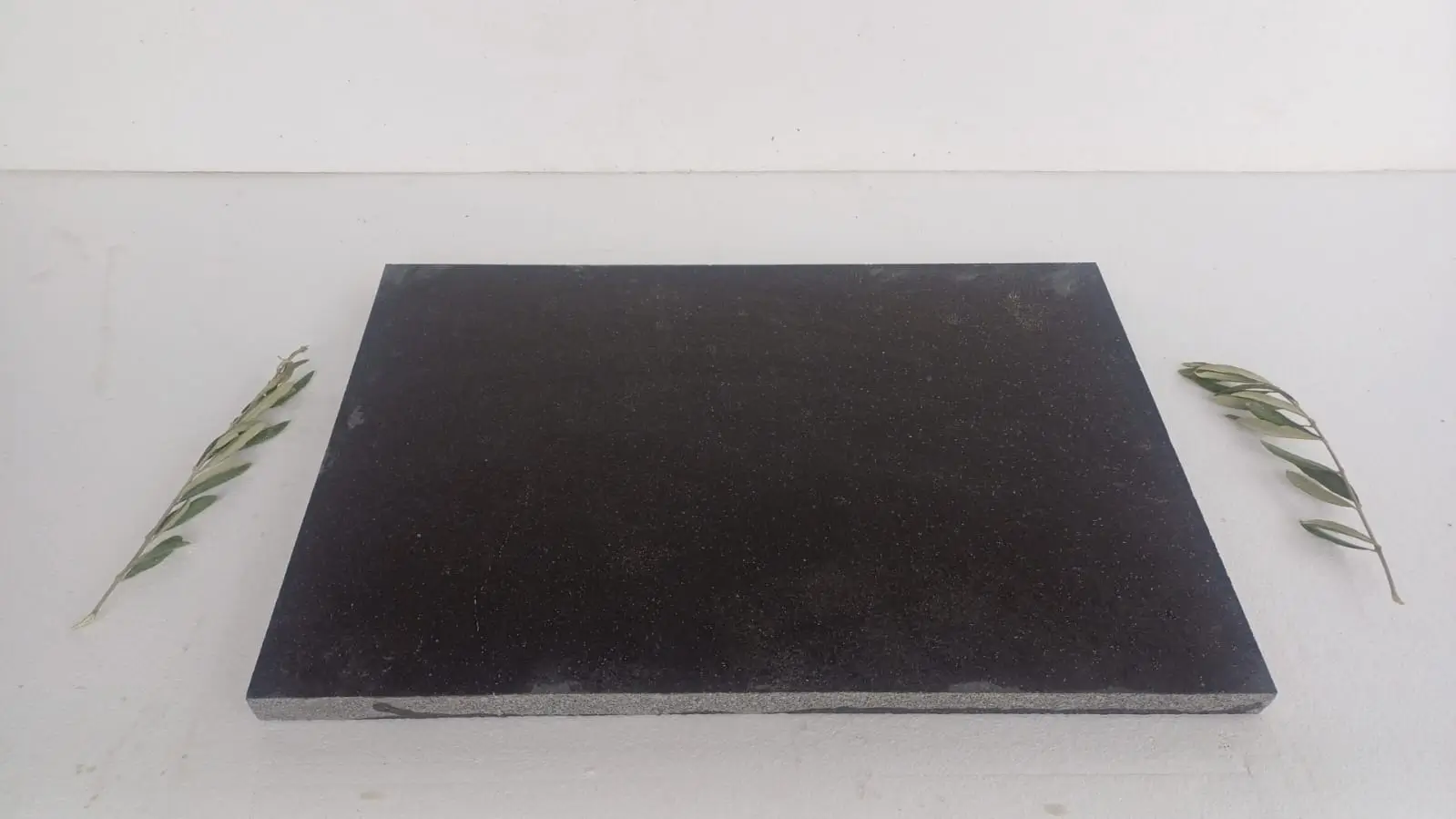
The dove grey neutral tone earns its reputation for adaptable colors not because it blends into everything passively, but because it provides the tonal anchor that lets surrounding materials express their full character. In a Paradise Valley exterior package where you’re working with warm Sonoran Desert planting, aged-copper lighting fixtures, and buff masonry walls, dove grey paving creates the contrast bridge that makes each element read more distinctly. The material doesn’t compete — it organizes.
- Pair dove grey limestone with warm terracotta pot groupings for a high-contrast traditional Arizona aesthetic
- Use dove grey as the primary paving material with charcoal basalt edging for a contemporary, monochromatic exterior direction
- Combine dove grey pavers with natural oak and weathered steel water features — the grey’s blue undertone activates the cool tones in aged metal beautifully
- In pool deck applications, dove grey’s solar reflectance reduces surface temperature versus darker stone, keeping bare-foot comfort viable through midday
The Paradise Valley versatile design environment rewards materials that can shift register depending on context. A large estate site might use dove grey consistently across a motor court, pool deck, and garden walkway — three zones with completely different architectural moods — and the stone reads appropriately in each setting because its neutral base tone is genuinely flexible within the broader Arizona flexible palette, not simply muted.
Ordering, Warehouse Logistics, and Lead Times for Paradise Valley Projects
Project planning for Paradise Valley installations needs to account for material lead times early — not as an afterthought once the design is finalized. At Citadel Stone, we maintain warehouse inventory of dove grey limestone in the standard Arizona cut dimensions, which allows us to ship to Paradise Valley and surrounding areas within one to two weeks for in-stock specifications. Custom sizing, unusual thickness profiles, or specialty finishes (flamed, antiqued) require direct quarry sourcing and typically run four to six weeks from order confirmation.
Truck access logistics matter more on Paradise Valley residential sites than they do in commercial environments. Many estates have gated entries, narrow motor court access, or landscaping that constrains delivery vehicle size. Communicating those access constraints to your supplier before scheduling delivery is essential — a standard flatbed truck carrying a full pallet load of 2-inch dove grey limestone can weigh upward of 4,000 pounds, and repositioning that load on-site without appropriate equipment adds cost and schedule risk. Confirm truck dimensions and turning radius requirements during the ordering process, not on delivery day.
For projects in Peoria and the northwest Valley, the delivery logistics differ — warehouse locations and truck routing through the metro area affect scheduling windows, so early coordination with your supplier remains equally important regardless of which Valley submarket your project occupies.
Sealing and Maintenance Protocols for Long-Term Performance
Dove grey limestone requires sealing for Arizona exterior applications — that’s not a recommendation, it’s a structural protection requirement. The stone’s natural porosity, typically 5 to 8% in the density grades used for paving applications, creates a pathway for moisture, chlorine (pool-adjacent applications), and iron oxide staining from rebar or irrigation hardware. A penetrating silane-siloxane sealer applied within 30 days of installation and renewed every 18 to 24 months in full-sun Paradise Valley exposure maintains the stone’s structural integrity and prevents subsurface efflorescence that’s nearly impossible to reverse.
- First seal application should occur after initial cleaning but before any grout or joint sand application — sealing the face before grouting prevents permanent grout haze in limestone’s porous surface
- Color-enhancing sealers will shift dove grey’s tone noticeably warmer — use only neutral penetrating sealers if maintaining the true dove grey neutral is a design priority
- Pool deck applications adjacent to chlorinated water require a sealer with documented chemical resistance — standard residential sealers degrade in 8 to 12 months under pool chemistry exposure
- Inspect joint sand annually for washout or displacement — compromised joints allow water infiltration that undermines base compaction and eventually produces slab settlement
Professional Summary
Dove grey limestone neutral Paradise Valley projects succeed or fail based on structural specification decisions made before a single slab is placed. Compressive strength documentation, base depth calculation, expansion joint spacing, and sealing protocol define the installation’s performance horizon more than any aesthetic consideration — and getting those structural details right is what separates a 25-year installation from one that starts showing settlement and joint failure in year seven. The dove grey neutral palette and its adaptable colors within the broader exterior scheme are the visible outcome of correct specification, not a substitute for it.
The dove grey paving neutral Arizona specification that performs across Paradise Valley’s regulatory, thermal, and aesthetic requirements isn’t complicated — but it requires precision at each decision point. Material thickness, base engineering, edge restraint, and sealing all need to work as a coordinated system. As you finalize your project scope, related Citadel Stone applications may inform your broader hardscape planning — Dove Grey Limestone Paving Relaxing for Peoria Calm Environments explores how the same material performs in a complementary residential context across the Valley. Citadel Stone offers bulk discounts on dove grey limestone paving slabs in Arizona.