
Scheduling your dove grey limestone relaxing Peoria installation around Arizona’s seasonal calendar is the single biggest factor separating a smooth, long-lasting result from a frustrating one. Most specifiers focus on material selection and base prep — both important — but the timing of when material hits the ground determines whether your setting bed cures properly, whether your joint compound performs as labeled, and whether your crew can physically keep pace with the work. Getting the seasonal window right is where experienced installers earn their reputation.
Why Seasonal Timing Defines Your Installation
Arizona’s climate doesn’t follow the conventional four-season model, and your project schedule shouldn’t either. The state operates on two functional installation seasons — a cooler window running roughly October through April, and a summer period that demands serious caution from late May through September. Peoria sits in the low desert, which means ground temperatures at 2–3 inches depth can lag 8–12°F behind air temperatures, creating misleading conditions in early spring and late autumn when you think you’re safe but the substrate is still radiating stored heat.
Dove grey limestone’s medium thermal mass is one of its genuine performance advantages in this environment. The material absorbs heat more gradually than darker stones, which matters not just for occupant comfort but for how the setting mortar behaves beneath it during installation. A substrate that cycles between 65°F at 6 AM and 105°F by 2 PM creates differential curing conditions across a single slab that can cause pre-bond failure within the first seasonal cycle.
- October through mid-December offers the most forgiving conditions — ambient temperatures stabilize, morning ground temps stay above 50°F without exceeding the 90°F threshold that accelerates mortar set
- Late February through April is the second preferred window, though spring temperature swings require you to monitor afternoon conditions more carefully
- June through September requires early-morning work windows of 5 AM to 10 AM at absolute maximum, with afternoon sessions generally not viable for setting work
- December and January can introduce overnight lows below 35°F in Peoria, requiring thermal blanket protection on fresh mortar for 48–72 hours post-installation
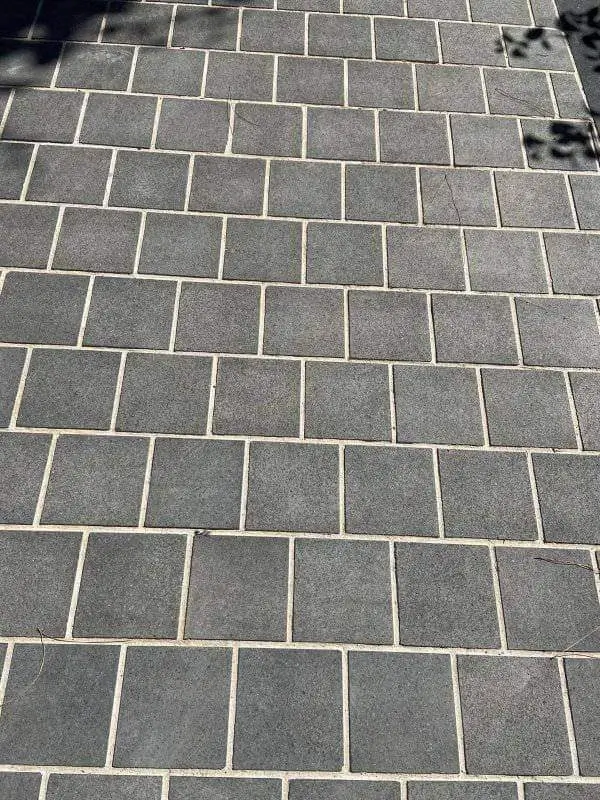
Morning vs. Afternoon Work Windows in Arizona
The difference between a 7 AM start and a 10 AM start on a July day in Peoria is roughly 25°F of surface temperature — and that gap compounds quickly once the sun reaches a high angle. For dove grey limestone relaxing Peoria projects, the pale coloration provides real reflectance benefits for occupants later, but during installation, that same light surface absorbs enough radiant heat by mid-morning to push setting bed temperatures past the point where standard thin-set performs as specified.
Polymer-modified mortars rated for high-heat applications typically list maximum substrate temperatures of 90–95°F. You’ll breach that threshold on unshaded concrete substrates in Peoria by roughly 9:30 AM from June through August. Scheduling mortar application, slab laying, and initial joint work before that window closes isn’t a preference — it’s a specification requirement if you want the manufacturer’s warranty language to remain valid.
- Pre-wet the substrate lightly at sunrise on hot days — this temporarily drops surface temperature by 10–15°F and extends your usable work window by 20–30 minutes
- Stage your dove grey limestone in shaded areas overnight before installation; slabs stored in direct sun can reach 120°F+ by mid-afternoon and should never be laid at that temperature
- Use extended-open-time thin-sets during spring and fall shoulder seasons — standard mortars can skin over in under 8 minutes at 85°F ambient
- Afternoon sessions in cooler months (November–February) are generally safe for grouting and joint work, even if morning sessions handled the setting bed
Optimal Installation Windows for Dove Grey Paving Relaxing Arizona Projects
The October-to-November window is, in practical terms, the most productive period for dove grey paving relaxing Arizona work. Day lengths are still generous, ambient temperatures typically run 70–85°F during work hours, and the ground has shed enough stored summer heat to cooperate with standard mortar systems. You’re also ahead of the holiday slowdown that tends to delay material deliveries in December.
March and April present a slightly trickier picture. Spring in the Peoria area can swing 35–40°F between a cold overnight and a warm afternoon within the same week. Your cure schedule needs buffer days built in — don’t plan for foot traffic on freshly installed dove grey limestone paving in Arizona until at least 72 hours have passed, and extend that to 96 hours if overnight temperatures dropped below 45°F during the cure window. Cracked bond lines traced back to spring installations almost always show a temperature anomaly in the first 48 hours of curing when the job log gets reviewed.
For projects near Yuma, where the heat season extends earlier and later than Peoria, compress that optimal spring window to late February through late March. Summer arrives functionally earlier in Yuma’s lower-elevation desert environment, and your scheduling math needs to reflect that.
Adhesive and Mortar Behavior Across Seasonal Shifts
Standard Portland-based mortars experience open time reductions of roughly 40% for every 18°F increase in ambient temperature above 70°F. That relationship is exponential in practice, not linear — meaning a 95°F installation day doesn’t just tighten your working time modestly, it creates near-impossible conditions for achieving full back-butter coverage on large-format dove grey limestone slabs before the mortar skins. Large-format stone, typically anything above 18 inches × 18 inches, requires 95% back-butter coverage per ANSI A108.5 standards; skinned mortar won’t bond to spec regardless of how much force you apply.
Epoxy-based grout systems also behave very differently between October and July. In cooler months, you have a workable pot life of 45–60 minutes. Summer installations can cut that to 20 minutes or less, which means smaller mixing batches, more frequent clean-water rinses, and a crew that understands the urgency. Switching to urethane-based joint filler during summer months offers more forgiving working characteristics and excellent flexibility for managing the thermal movement dove grey limestone experiences across Peoria’s seasonal temperature range.
- Specify extended open-time mortars (minimum 30-minute open time at 95°F) for any installation between May and September
- Check adhesive product datasheets for maximum substrate temperature, not just ambient — substrate can run 20–30°F above air temperature on sunny days
- Mix mortar in smaller batches during hot periods — a full bag mixed at once often can’t be placed within the effective open time on summer days
- Keep mortar materials in shaded storage until immediately before use; bags stored in direct sun can raise material temperature significantly before mixing even begins
Curing Conditions That Protect Your Dove Grey Limestone
Curing isn’t passive — it’s an active process that requires you to manage temperature and moisture conditions deliberately for the first 72 hours after installation. Dove grey limestone paving in Arizona performs best when the mortar beneath it cures slowly and completely, which means your post-installation plan matters as much as your installation technique. Direct sun on freshly laid stone can evaporate moisture from the setting bed too rapidly, leading to a phenomenon sometimes called case hardening — a hard surface skin over an incompletely cured interior that fails under load.
For summer installations, misting the surface lightly twice daily during the first 48 hours and covering with breathable burlap prevents this failure mode without trapping harmful moisture. In cooler months, your concern shifts — frost events during the cure window can disrupt hydration chemistry at the mortar interface. At Citadel Stone, we recommend monitoring overnight low forecasts for 72 hours post-installation and keeping thermal blankets staged on-site when temperatures are forecast below 40°F.
- Never allow standing water on freshly laid dove grey limestone in the first 48 hours — ponding saturates the setting bed and delays cure
- Restrict all foot traffic for 24 hours minimum; heavy rolling loads (wheelbarrows, equipment) require 7-day full cure regardless of ambient conditions
- Grout joints only after mortar has achieved initial set — typically 24 hours in cooler months, potentially 36–48 hours in summer due to slower depth curing under high surface temperatures
- Arizona’s low humidity accelerates surface drying but can actually slow deep cure — misting remains valuable even in arid conditions
Thermal Expansion and Joint Spacing for Arizona Conditions
Dove grey limestone exhibits a coefficient of thermal expansion of approximately 4.6–5.2 × 10⁻⁶ per °F, which is lower than concrete’s 5.5–6.5 × 10⁻⁶ range. That difference matters for compatibility between your stone and its substrate — but it doesn’t eliminate the need for properly spaced movement joints. Peoria’s seasonal temperature range from winter overnight lows near 35°F to summer highs near 115°F represents an 80°F swing, and large paved areas must accommodate that movement or transmit it through the weakest point in the system, which is usually the bond line.
Standard industry guidance places movement joints at 20-foot intervals, but projects in the low desert benefit from tightening that to 15-foot intervals, particularly in areas with south or west exposure. You’re asking the system to manage roughly 0.06 inches of expansion per 10 linear feet across a full seasonal cycle. That seems modest until you’re looking at a 40-foot-wide terrace where cumulative movement at both ends can exceed your grout joint’s elastic capacity. Flexible sealant joints replace standard grout at these locations — polyurethane sealant with a Shore A hardness of 25–35 provides appropriate elasticity for Arizona conditions.
Projects in Mesa often encounter caliche hardpan substrates that limit movement independently of the stone assembly — in those situations, joint spacing can be modestly relaxed to 18 feet because substrate rigidity restrains differential movement. But that engineering decision should be made explicitly, not assumed by default.
Creating Peaceful Spaces with Dove Grey’s Visual Calm
The atmospheric quality that makes dove grey limestone the go-to material for peaceful spaces isn’t accidental — it’s the specific interaction between the stone’s cool-toned mid-range value, its natural surface texture, and the way Arizona’s intense light softens rather than bleaches it. Stark white surfaces in Peoria’s full sun can feel harsh and glaring by midday. True dove grey, with its subtle blue-mineral undertones, sits in a luminance range that reads as calm rather than cold, particularly in the long-angle morning and evening light that characterizes the cooler installation and use seasons.
For an Arizona serene atmosphere in outdoor living spaces, pair dove grey limestone with warm-toned planting beds and deep shade structures. The stone’s natural variation — the gentle cloud-like patterning that comes from its sedimentary formation — creates visual interest without demanding attention. That’s a difficult quality to find in manufactured materials, and it’s why dove grey limestone has become a dominant choice for Peoria calm environments where the goal is recovery and restoration rather than stimulation. At Citadel Stone, we’ve seen this pairing work consistently across high-desert properties where the landscape itself sets a contemplative tone.
You can explore specific regional applications, including tumbled dove grey limestone in Pima County, to understand how surface finish choices affect both the tactile comfort and the visual serenity of your installation.
Scheduling Around Peoria’s Weather Patterns
Beyond the broad seasonal framework, Peoria’s monsoon season — running roughly mid-June through mid-September — introduces a scheduling variable that catches specifiers unfamiliar with Arizona’s climate. Monsoon rainfall arrives as intense, short-duration events that can deposit 1–2 inches of rain in under an hour. Fresh mortar beds within 24 hours of placement are vulnerable to saturation and washout during these events, and you can’t simply reschedule around them because monsoon timing within a given afternoon is genuinely unpredictable.
The practical response is to compress your installation sessions to early morning during monsoon months, fully close the slab and protect exposed mortar before noon, and treat any afternoon work as finished rather than in-progress. This isn’t excessive caution — it’s the scheduling discipline that separates installers who deliver consistent results in Arizona from those who blame the weather after warranty claims arise. Your project contract should acknowledge the monsoon period explicitly and include schedule contingency days for it.
- Build 3–5 weather contingency days per month into summer project schedules to account for monsoon interruptions
- Stage polyethylene sheeting and weight bags on every summer job site — rapid deployment after an unexpected afternoon storm can protect a full day’s work
- Schedule large material deliveries during October through April to avoid monsoon-period truck scheduling complications and potential damage to palletized stone during transit
- Verify warehouse stock availability before finalizing summer project timelines — high-demand spring installation season can deplete popular dove grey limestone profiles by June
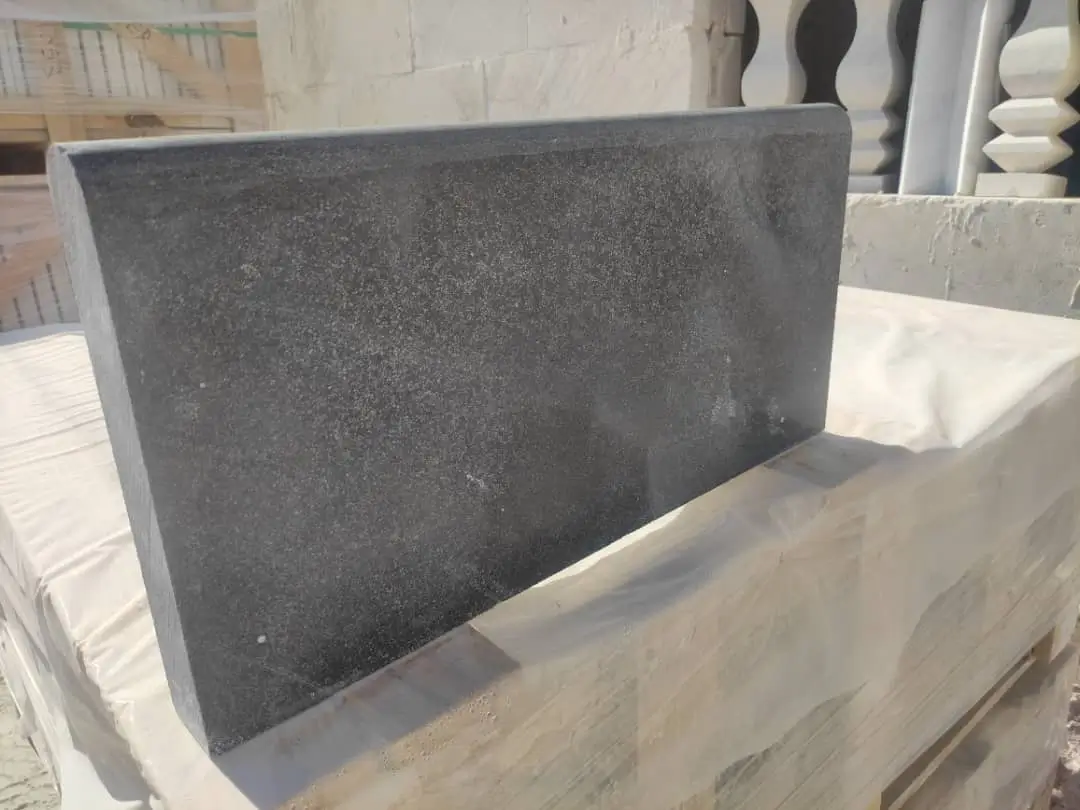
Material Sourcing, Logistics, and Timing Your Order
Dove grey limestone relaxing Peoria projects depend not just on when you install, but on when you order. Lead time from warehouse to site for this material typically runs 1–2 weeks for standard profiles when regional inventory is stocked — but spring installation season, from late February through April, creates high demand across Arizona simultaneously. Ordering material in January for a March installation isn’t early; it’s timely. Ordering in mid-February for a late March start introduces real risk of schedule compression.
Citadel Stone maintains Arizona warehouse inventory that allows regional contractors to verify stock before committing to project timelines, which matters significantly for dove grey paving relaxing Arizona given its consistent demand. Truck scheduling from warehouse to project site should account for access constraints — particularly in residential Peoria neighborhoods where wide-load articulated trucks may require specific entry approaches and turning radius clearances. Confirming site access when you place your order rather than the day before delivery avoids the most common logistics disruption on residential jobs.
Projects in Gilbert and similar suburban communities often have HOA notification requirements for material deliveries, which adds administrative lead time beyond the physical shipping window. Factor those requirements into your overall project timeline from the first planning conversation, not as a last-minute item.
- Order dove grey limestone a minimum of 3 weeks before your target installation date during spring season (February–April)
- Confirm material dimensions and profile match your specification before delivery — returns and reorders add 2–4 weeks to your timeline
- Add 10–12% overage to your order calculation to account for cuts, edge trimming, and potential breakage during delivery and staging
- Request delivery during the coolest part of the day in summer to reduce handling risks from heat-expanded packaging and staff fatigue
Seasonal Planning for Dove Grey Limestone Relaxing Peoria Installations
The most consistent outcomes for dove grey limestone relaxing Peoria installations come from specifiers who treat seasonal timing as a first-order variable, not an afterthought. Your material selection and base preparation establish the potential of the installation — your seasonal scheduling determines whether that potential is realized. Plan your installation window during October through April whenever project timelines allow it, and build specific monsoon contingencies into any summer scope. Manage your mortar systems according to actual substrate temperatures rather than ambient air readings, and protect fresh installations from both heat acceleration and cold-weather cure disruption with equal seriousness.
The Peoria calm environments that dove grey limestone creates — shaded courtyards, contemplative garden paths, low-stimulation outdoor living areas — are durable outcomes when the installation behind them is done correctly and seasonally. Your stone should be on-site and acclimated before work begins, your adhesive system should match the day’s temperature profile, and your post-installation protection plan should be staged and ready. As you consider how dove grey fits into broader Arizona hardscape projects, Dove Grey Limestone Paving Transitional for Glendale Blend Styles covers how this same material performs within transitional design contexts across different Arizona communities — a useful reference as your project scope expands beyond Peoria. Our dove grey limestone paving in Arizona is the epitome of understated luxury.