

Design First: Why Aesthetics Drive Material Choice in Arizona
Comparing pool paver materials Arizona homeowners actually want comes down to a question most contractors skip straight past — what does your outdoor space need to look like? Before you land on a material, you need to reconcile the surface with the broader design language of your property, because in Arizona, the pool deck isn’t an isolated slab — it’s the centerpiece of an entire outdoor living concept. Desert contemporary, Spanish Colonial Revival, transitional ranch, Sonoran minimalist — each of these vocabularies has a corresponding palette of natural textures and tones that either reinforces or undermines the architectural character you’re working with.
Natural stone reads differently than concrete in the landscape. Stone carries variation — veining, fossil traces, subtle color shifts across the surface — that gives it a visual depth concrete simply can’t replicate with pigment or aggregate exposure alone. For xeriscaped surrounds, that textural authenticity matters enormously. You’re not just choosing a pool deck material; you’re choosing how the built surface relates to decomposed granite pathways, boulders, agave, and native groundcover.
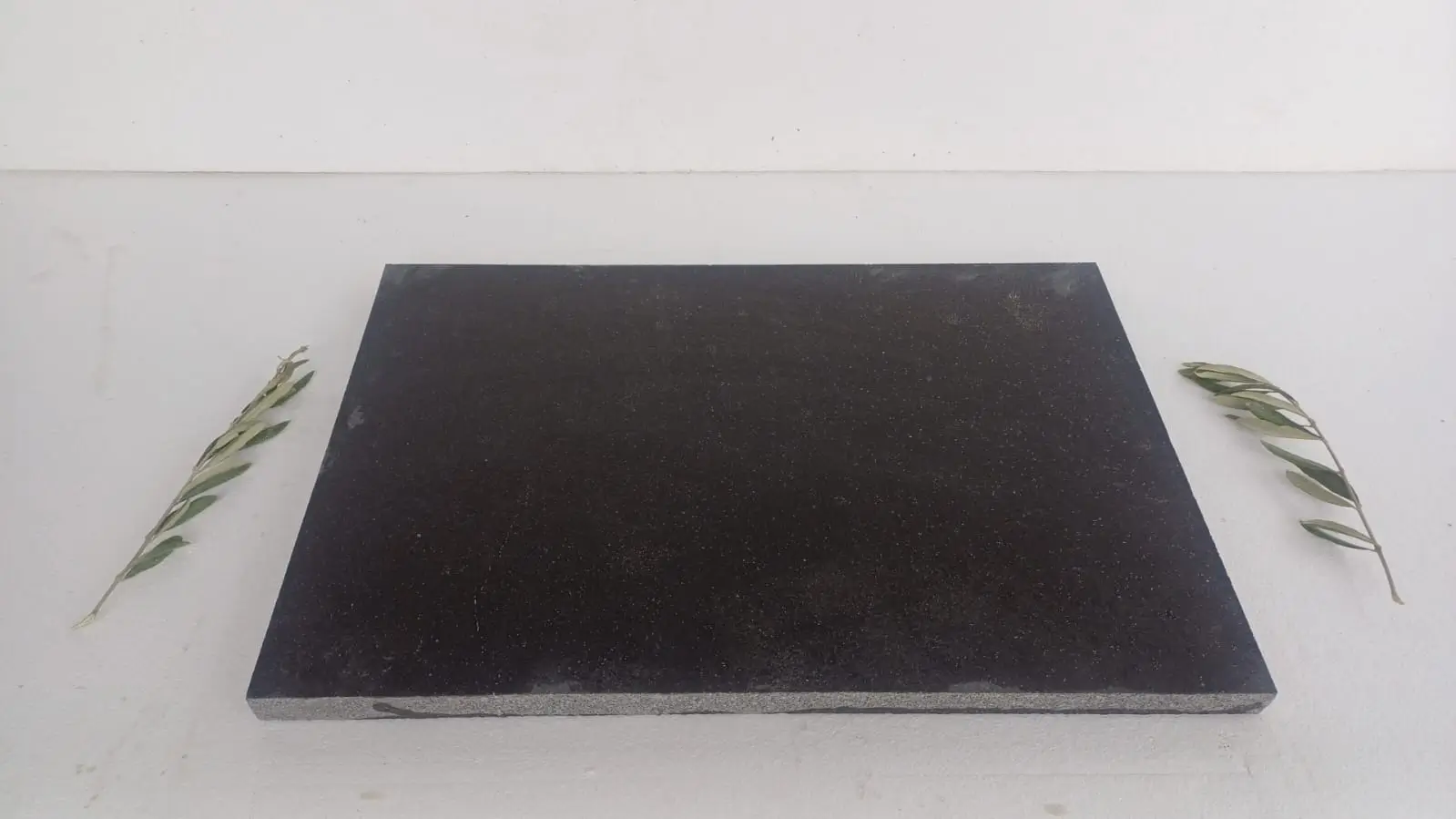
Natural Stone and Arizona Landscape Styles
The range of landscape design traditions across Arizona is broader than people outside the state usually appreciate. You’ve got the ultra-minimal desert modern scene concentrated in parts of the Valley, where travertine and honed limestone thrive because their clean, flat surfaces complement low-water plantings and steel-framed shade structures. Then you’ve got the lush tropical-influenced backyard style — bird of paradise, Texas sage, Mexican fan palms — where the warm buff tones of tumbled limestone or travertine read as organic rather than stark.
In areas like Gilbert, where newer master-planned communities often favor a transitional aesthetic blending Southwestern warmth with contemporary clean lines, the material choice carries real design weight. Travertine in a walnut or noce finish connects the pool deck back to the earth tones of the surrounding stucco and landscape rock without competing with the planting. Concrete pavers in that same context can look competent — but they tend to flatten the palette rather than enrich it.
- Travertine works exceptionally well with desert xeriscaping — its naturally pitted surface and warm earth tones mirror the surrounding landscape organically
- Limestone in a honed or brushed finish integrates with Spanish Colonial and Mediterranean Revival architecture better than almost any other pool surround material
- Concrete pavers offer color consistency that suits formal symmetrical designs but can appear visually thin against richly planted desert gardens
- Tumbled natural stone edges blur the boundary between hardscape and planting beds in a way that no manufactured product quite achieves
- Flagstone-style irregular cuts suit informal, naturalistic garden styles — they pair well with decomposed granite and low-water groundcover plantings
Stone Versus Concrete Performance in Arizona Heat
The conversation about heat-resistant pool pavers across Arizona always starts with surface temperature, and for good reason — a pool deck that’s unsafe to walk on barefoot at 2 p.m. in July has failed its primary function. Travertine’s thermal behavior is where it genuinely separates itself in the comparison. Its interconnected pore structure creates a slight insulating effect at the surface, and the lighter coloration that most travertine carries in its natural state reflects a significant portion of solar radiation rather than absorbing it.
Concrete pavers, particularly in darker tones, absorb heat aggressively. Even lighter concrete mixes tend to run 15–20°F hotter at the surface than equivalent travertine in direct afternoon sun. That gap matters most between noon and 5 p.m. in July and August, which is exactly when your pool is most heavily used. Concrete pavers with a lighter aggregate exposure or a reflective surface treatment can narrow that gap, but they don’t close it entirely. In areas like Yuma, where summer ground temperatures are among the most extreme in the continental United States, that thermal difference between materials isn’t just comfort — it’s a genuine specification consideration that affects how usable your deck actually is.
- Travertine surface temps typically run 12–22°F cooler than equivalent concrete pavers under identical Arizona sun exposure
- Concrete pavers with a full-body light color and polished aggregate reduce heat absorption but still underperform travertine in the 1 p.m.–4 p.m. window
- Darker concrete paver tones should be avoided entirely for pool surrounds in low desert Arizona — surface temps can reach 160°F+
- Natural stone’s thermal mass means it retains heat into the evening — plan shaded zones or consider lighter finishes for east-facing decks
Slip Resistance and Finish Selection
Pool deck surface options AZ homeowners prefer tend to favor the brushed or tumbled finish categories, and that preference has a practical basis beyond aesthetics. Wet feet on a polished surface are a genuine liability — not a theoretical one. For stone, a brushed or chiseled finish creates the micro-texture wet areas need; the current reference is the ANSI A326.3 wet DCOF threshold (0.42). Tumbled travertine and brushed limestone both hit that benchmark reliably in real-world pool conditions.
Concrete pavers have a built-in surface texture advantage from the manufacturing process — the aggregate exposure from their casting gives them a textured surface that generally performs well without additional treatment. The comparison between pool deck surface options AZ homeowners evaluate is more nuanced than a simple win for either material. You should assess the specific finish specification for both products rather than relying on material category alone, because a polished travertine tile — which has no place on a pool deck — and a tumbled travertine paver — which performs excellently — are technically the same material with completely different outcomes.
Installation and Base Preparation Differences
Here’s where the field experience in comparing pool paver materials Arizona conditions reveal becomes critical. Natural stone pavers and concrete pavers both require a compacted aggregate base, but the specification tolerances differ in ways that matter for long-term performance. Natural stone — particularly travertine — is more sensitive to base settlement variation. You’ll typically want 6 inches of compacted crushed aggregate base under stone for Arizona pool surrounds, with a 1-inch sand setting bed. Concrete pavers can tolerate slightly less base preparation in stable soil conditions, but Arizona’s expansive clay soils in much of the Valley change that calculus.
In Mesa and surrounding East Valley communities, expansive clay layers beneath the subgrade create differential settlement conditions that challenge both material types. The difference is that concrete pavers, being thinner and more uniform in manufacturing, will crack more predictably in a grid pattern along joint lines. Natural stone, with its higher inherent compressive strength, tends to rock and shift rather than crack outright — which is actually easier to repair. Lifting, re-leveling, and resetting individual stone pavers is a straightforward process. Matching a cracked concrete paver color and texture after years of UV fade is considerably harder.
- Minimum 6-inch compacted aggregate base recommended for stone pavers on Arizona pool decks, increasing to 8 inches in known expansive soil zones
- Concrete pavers require consistent compaction tolerances — variation of more than ¼ inch across 10 feet will telegraph through the finished surface
- Both materials need properly designed drainage slope — minimum 1.5% grade away from the pool shell and coping
- Expansion joints every 12–15 feet are non-negotiable in Arizona’s temperature range — the seasonal delta between December and July can exceed 60°F at the surface level
- Polymeric sand joint fill is mandatory for both material types — standard sand will wash out under pool splash-out conditions within a single season
Porosity, Sealing, and Maintenance Realities
The porosity question is where travertine gets the most scrutiny in Arizona pool contexts, and some of it is warranted — but most of the concern is overstated when you understand what proper sealing actually accomplishes. Travertine’s open pore structure does absorb water more readily than concrete if left untreated. An unsealed travertine pool deck will absorb chlorinated splash-back, develop calcium deposits along the pore channels over time, and become increasingly difficult to clean. That’s a real maintenance liability.
Sealed travertine — with a penetrating impregnator applied to a clean, dry surface — performs dramatically differently. A quality silicone or fluoropolymer-based penetrating sealer fills the pore structure without altering the surface appearance, reducing absorption to near-zero for 3–5 years in Arizona conditions. Plan on resealing every 3 years in pool environments — the chlorine exposure and UV intensity in Arizona accelerates sealer breakdown compared to a standard patio application. Concrete pavers have lower inherent porosity and don’t strictly require sealing, but a sealer significantly improves stain resistance and simplifies cleaning in pool environments for both materials.
For a detailed look at maintenance protocols specific to Arizona’s UV intensity and pool chemistry environment, How to Maintain Grey Pavers in Arizona’s Climate walks through the seasonal maintenance schedule and product selection in practical detail.
Cost, Value, and Longevity Comparison
The material cost delta between natural stone and quality concrete pavers in Arizona is real — natural travertine and limestone typically run 25–45% higher per square foot than equivalent concrete paver products at the supply level. Installed cost differences are somewhat narrower, because the labor component of both installations is comparable when base preparation is properly specified. The question you need to answer is whether the performance and aesthetic premium justifies that initial cost difference for your specific project.
The longevity comparison favors natural stone significantly in Arizona’s UV-intense climate. Concrete pavers fade — not dramatically in the first few years, but cumulatively over a decade, the color shift can be substantial. Natural stone develops a patina rather than fading; it deepens and enriches rather than bleaching out. A properly maintained natural stone pool surround should deliver 30–40 years of structural performance in Arizona conditions. Concrete pavers, maintained properly, run 20–25 years before color inconsistency and surface degradation make replacement the more practical choice. For full lifecycle cost comparison, the stone premium typically pays back over 15–20 years in reduced replacement frequency.
Arizona rated pool surround materials from the natural stone category also carry a resale value signal that concrete doesn’t. Real estate professionals in the Valley consistently report that natural stone pool surrounds are identified as a premium feature in listing descriptions and appraisals. At Citadel Stone, we hear this from project owners regularly — the investment perception matters to them, not just the material performance.
Ordering, Logistics, and Project Planning
The practical side of comparing pool paver materials Arizona projects involve includes lead time and supply logistics — and this is an area where material choice genuinely affects your project schedule. Natural stone, particularly travertine imported from Turkish or Mexican quarries, can carry 6–8 week lead times if you’re ordering from an importer without domestic warehouse inventory. That’s a real project planning constraint when your pool contractor has a 3-week installation window booked.
Citadel Stone maintains warehouse stock of key Arizona pool deck materials, which compresses that lead time to 1–2 weeks in most cases. You can review current availability and get a detailed Citadel Stone Arizona paver comparison that covers dimensional options, finish specifications, and thickness ranges for both natural stone and concrete product lines. Planning your material order 3–4 weeks ahead of your scheduled installation start is the reliable approach — it gives you buffer for truck delivery scheduling and allows time to inspect material on arrival before your crew mobilizes.
- Order a minimum of 10% overage on natural stone — color and texture variation between quarry lots means mid-project reorders may not match exactly
- Concrete pavers from domestic manufacturers carry shorter lead times — typically 1–2 weeks — but verify that your specified color and finish is in stock, not made to order
- Truck delivery scheduling in Arizona’s summer construction season can compress significantly — confirm your delivery window at order placement, not the week before
- Stage material on site in covered conditions if installation is more than a week out — UV exposure begins degrading protective coatings on stone even before installation
- Inspect stone pallets on delivery before signing off — edge chips and face cracks from warehouse handling are covered under most supplier policies if documented at delivery
Before You Specify: Stone Versus Concrete Pool Pavers in Arizona
The decision between natural stone and concrete for your Arizona pool surround isn’t a binary one — it’s a prioritization exercise. You’re weighing initial cost against lifecycle performance, design authenticity against manufacturing consistency, and maintenance discipline against replacement frequency. For projects where the landscape design demands material character and where long-term value matters, natural stone is the specification that delivers on both counts. For tightly budgeted projects where color uniformity and minimum maintenance input are the priorities, quality concrete pavers are a legitimate and durable choice.
Stone versus concrete pool pavers in Arizona ultimately comes down to what your project needs to accomplish over its full lifespan — aesthetically, structurally, and financially. The stone category wins on design integration, surface temperature, and longevity. Concrete wins on initial cost and installation simplicity. Neither answer is wrong for every project — but knowing which criteria matter most to your specific situation is what separates a specification decision from a guess. Our technical team at Citadel Stone works through these trade-offs with Arizona homeowners and contractors regularly, and the heat-resistant pool pavers across Arizona that perform best are always the ones matched correctly to the project’s actual conditions and goals. Residents in Flagstaff, Chandler, and Peoria regularly compare pool paver options through Citadel Stone, selecting stone finishes that balance UV resistance with barefoot comfort across Arizona’s varied climate zones.