
Surface degradation on cobblestone versus concrete paving in Arizona almost always starts the same way — not with cracking or spalling, but with the slow, cumulative bleaching that UV exposure delivers year after year in this state. Arizona receives roughly 300 days of intense solar radiation annually, and that sustained UV bombardment affects each material differently at a molecular level. Concrete’s cementitious binders oxidize and chalk under prolonged UV, while natural cobblestone develops a weathered patina that, when properly managed, can actually enhance its character rather than diminish it. Understanding these divergent UV responses is what separates a specification decision you’ll stand behind for 25 years from one you’ll revisit in eight.
How UV Exposure Attacks Each Paving Material Differently
Concrete reacts to Arizona’s UV environment through photooxidation of its Portland cement matrix. The calcium silicate hydrate compounds near the surface break down progressively, causing the characteristic gray chalking you see on unprotected flatwork within three to five years of installation. You’re not just losing color — you’re losing surface hardness, which accelerates aggregate exposure and then pitting. Natural cobblestone in Arizona operates on a fundamentally different degradation pathway.
Stone’s crystalline mineral structure doesn’t oxidize the way cementitious paste does. What you’re managing with cobblestone is UV-driven moisture cycling — the stone absorbs heat, drives out residual moisture, and over time this cycling can weaken iron-bearing minerals in the matrix, producing the reddish-brown surface staining that homeowners sometimes mistake for permanent discoloration. In reality, that staining is manageable with the right sealing schedule, and it signals a process you can slow dramatically with proper surface treatment applied before the first Arizona summer hits.
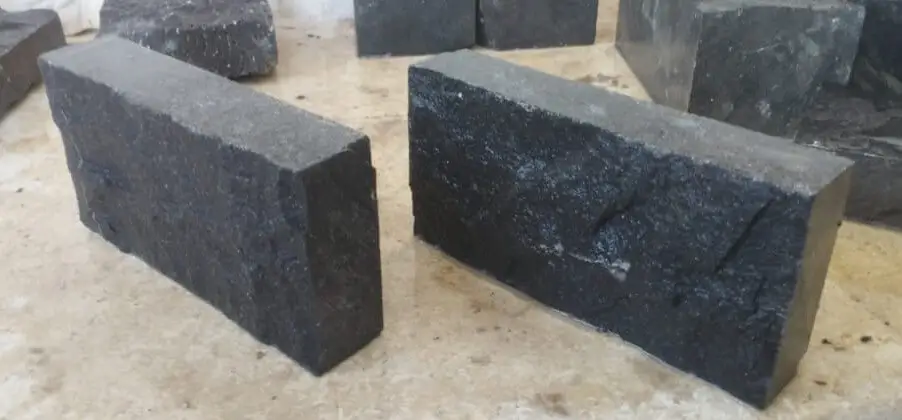
Color Retention: Cobblestone vs Concrete Under Arizona Sun
The color fading comparison between cobblestone versus concrete paving in Arizona is more nuanced than most material guides acknowledge. Integrally colored concrete holds pigment reasonably well in its core, but the surface layer — the 3–5mm zone that UV actually penetrates — bleaches noticeably within two to four years without UV-inhibiting sealers. You’re essentially managing an appearance deficit from year three onward unless the surface is retreated on a disciplined schedule.
Natural cobblestone’s color behavior under UV depends heavily on stone variety and finish. Tumbled or antiqued finishes tend to age more gracefully because their surface texture diffuses light rather than reflecting it uniformly, which means color shift is less visually abrupt. Honed or polished finishes on cobblestone will show UV-driven dulling more prominently — you’ll notice the surface loses its reflective quality within two Arizona summers if left unsealed. That doesn’t make polished finishes a wrong choice, but it does mean your sealing commitment needs to match the finish ambition.
- Tumbled cobblestone finishes mask UV weathering more effectively than smooth concrete surfaces
- Integral concrete color bleaches at the surface layer, not uniformly through the slab
- Iron-bearing cobblestone varieties show surface staining under UV heat cycling — preventable with penetrating sealers
- Concrete’s chalking process begins within three to five years under direct Arizona sun exposure
- Natural stone paving alternatives in Arizona with lighter mineral content show less UV-driven discoloration over time
Sealing Schedules That Actually Work in Arizona Conditions
The standard advice — seal every two years — doesn’t fully account for Arizona’s UV intensity. Projects in Mesa with full southern exposure can exhaust a standard penetrating sealer’s UV inhibitor package in 14 to 18 months, which means waiting the full two years leaves your stone unprotected for a meaningful portion of that cycle. A more practical approach for direct-sun Arizona installations is a 12-month reapplication schedule for penetrating sealers on natural cobblestone, with a visual check at six months.
For concrete paving, film-forming acrylic sealers provide better UV protection than penetrating types, but they create their own maintenance challenge — they peel if you recoat before the previous layer fully degrades, and in Arizona heat, that degradation happens unevenly across the slab. You end up chasing peeling edges. The more durable concrete sealing approach for Arizona UV conditions uses a silane-siloxane penetrating blend that doesn’t film, applied annually in early spring before the summer UV peak arrives.
- Apply penetrating sealers to natural cobblestone in early spring — before May UV peaks
- Inspect sealer integrity on southern exposures at six months, not twelve
- Avoid film-forming acrylics on concrete in zones with temperature swings exceeding 40°F diurnally
- Silane-siloxane penetrating blends outperform standard concrete sealers under sustained UV exposure
- Cobblestone with existing UV-driven staining requires a clean-and-treat protocol before resealing — sealing over staining locks it in
Choosing Finishes for Long-Term UV Resistance
Finish selection genuinely affects how cobblestone versus concrete paving in Arizona ages under UV — this isn’t just an aesthetic decision. For cobblestone, the finish determines how aggressively UV radiation interacts with the stone’s surface layer. A flamed finish, which opens up micro-texture through thermal shock, creates a surface that scatters UV rather than allowing concentrated penetration at specific mineral boundaries. That scattering effect reduces the localized heating that drives iron oxidation staining.
Concrete finish choices affect UV performance through a different mechanism. Broom-finished concrete actually weathers more predictably under UV than trowel-finished flatwork because the texture provides more uniform exposure across the surface — troweled surfaces develop UV shadow patterns that cause uneven bleaching, making the fading look patchy rather than gradual. Among Arizona heat-resistant driveway cobblestone options, the most UV-durable finish combinations pair a textured surface with a pigmented penetrating sealer that includes UV stabilizers in its chemical package.
At Citadel Stone, we evaluate finish performance specifically against Arizona solar conditions during our quality assessment process — certain quarry batches with higher iron content get flagged for additional sealing recommendations before they ship to high-UV exposure projects.
Structural Performance Beyond UV: Heat Load and Base Behavior
Your material choice also needs to account for how each paving system handles Arizona’s thermal mass loading — separate from UV effects, though they compound each other. Cobblestone’s unit-paver format accommodates thermal expansion through joint movement, which means the pavers themselves don’t accumulate stress the way monolithic concrete does. A continuous concrete slab in an Arizona driveway experiences compressive stress during peak afternoon temperatures that, over years, contributes to random cracking — particularly when the subgrade has any clay content.
Comparing outdoor paving surfaces across Arizona projects consistently reveals that natural cobblestone installations in sandy loam soils outperform concrete in longevity when the base preparation hits the right depth. The critical variable is your aggregate base — 6 inches minimum for residential driveways, 8 inches in zones with documented caliche irregularity. Cobblestone paving in Arizona performs at its structural ceiling when that base is compacted to 95% Proctor density with a geotextile separation layer between native soil and aggregate.
Concrete, by contrast, requires control joints every 10–12 feet in Arizona conditions — tighter than the 15-foot spacing common in cooler climates. You’ll also want a minimum 4-inch slab thickness with fiber reinforcement for residential driveways. Neither of these specifications is complicated, but they’re routinely underspecified on residential projects, and the cracking that follows gets attributed to “the heat” when it’s actually an installation shortfall.
- Cobblestone’s unit-paver format distributes thermal expansion through joints — no accumulation stress
- Concrete control joints should be placed at 10–12 foot intervals in Arizona, not the 15-foot default
- Aggregate base minimum: 6 inches for residential driveways, 8 inches in caliche-prone zones
- Fiber-reinforced concrete performs significantly better than plain concrete under Arizona thermal cycling
- Geotextile separation layers under cobblestone base aggregate prevent fines migration in sandy Arizona soils
Cobblestone vs Asphalt Performance for AZ Homeowners
The cobblestone vs asphalt performance comparison deserves a brief mention here because many Arizona homeowners are weighing three options, not two. Asphalt performs poorly in sustained Arizona heat — softening points for standard asphalt binders occur around 140–160°F, and Arizona driveway surface temperatures routinely exceed 160°F in July and August. You end up with tracking, rutting under vehicle tires, and accelerated UV oxidation of the asphalt binder that makes the surface brittle within five to seven years. Cobblestone and concrete both outperform asphalt on long-term durability in Arizona’s climate zone, but for different reasons and with different maintenance demands. For homeowners evaluating cobblestone vs asphalt performance AZ conditions create, the thermal stability of natural stone is a decisive advantage that compounds over the life of the installation.
Long-Term Appearance Retention: What 20 Years Looks Like
The 20-year appearance trajectory of cobblestone versus concrete paving in Arizona diverges significantly when you project forward honestly. Unsealed concrete in high-UV Arizona exposure typically shows aggregate pop-out within 10 years, surface scaling in zones with any moisture infiltration, and a bleached, mottled appearance that’s difficult to remediate without overlays or coatings. Projects in Gilbert — where east-west oriented driveways deliver direct western exposure for four to six hours daily — show accelerated surface deterioration on concrete that often requires attention at the 8-year mark rather than 15. The city’s combination of high afternoon sun angles and sandy-loam subgrade conditions makes it a useful benchmark when comparing outdoor paving surfaces across Arizona installations.
Natural cobblestone’s 20-year profile under proper maintenance looks considerably different. With biennial sealing — annual in full-sun Arizona exposures — and occasional joint sand replenishment at year 5 and year 12, natural cobblestone develops a patina that most homeowners find more attractive than the original installation. The UV-driven mineral stabilization that occurs over a decade actually bonds the surface layer more tightly in many granite and basalt cobblestone varieties. You’re not fighting deterioration — you’re managing a natural aging process that, when directed correctly, improves the material’s character.
For projects in Chandler where HOA covenants require consistent appearance standards, cobblestone’s more predictable aging curve under a defined maintenance protocol is worth factoring into the specification decision alongside upfront cost.
- Concrete surface scaling typically begins at years 8–12 in high-UV Arizona zones without consistent sealing
- Cobblestone patina development under UV improves character in granite and basalt varieties
- Joint sand replenishment at year 5 and year 12 is the most commonly skipped cobblestone maintenance step
- Cobblestone’s modular format allows targeted replacement of individual units — concrete requires sectional saw-cutting and pouring
- Appearance maintenance cost over 20 years is comparable between the two materials when concrete resurfacing is factored in
For projects where you’re weighing upfront investment against long-term value, Citadel Stone natural cobblestone for Arizona provides technical specification support and material sourcing with warehouse inventory maintained for Arizona delivery windows — typically 1–2 weeks from order confirmation rather than the 6–8 week import cycle that affects most natural stone projects.
Project Planning, Logistics, and Material Availability
Your project planning timeline for cobblestone versus concrete paving in Arizona should account for material lead times and seasonal installation windows. Concrete is generally available on short notice — your delay is scheduling the pour and cure window, not material procurement. Natural cobblestone, particularly imported European or South American varieties, can have 6–10 week lead times from overseas suppliers. Domestic cobblestone from Arizona-region quarries reduces that significantly, and warehouse-stocked material from regional suppliers can be on your project site within 7–10 business days when inventory aligns.
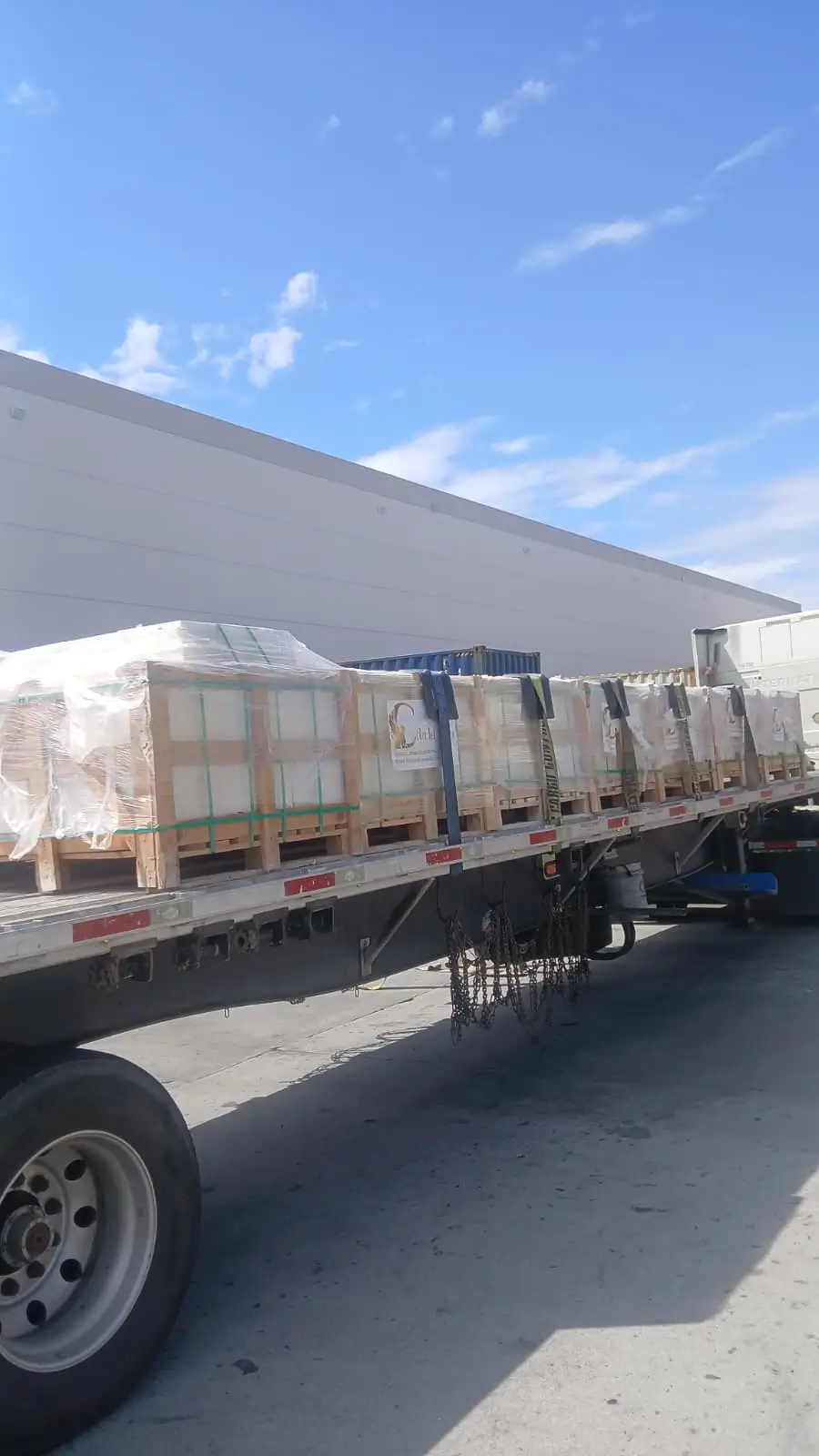
Truck access to your site also affects which material makes more practical sense. A concrete pour requires ready-mix truck access — typically a vehicle needing a minimum 10-foot clear width and a turning radius your site may or may not accommodate. Cobblestone delivery by flatbed truck is more flexible; pallets can be staged at the curb and moved by hand truck or pallet jack across tighter access points. For hillside lots, narrow driveways, or backyard projects in established neighborhoods, cobblestone’s delivery flexibility is a genuine practical advantage, not just an aesthetic one.
- Concrete pour scheduling depends on crew availability and cure window — material is locally available
- Warehouse-stocked cobblestone reduces lead times to 7–10 business days for Arizona projects
- Ready-mix truck access requires minimum 10-foot clear width — verify site constraints early
- Cobblestone pallet delivery by flatbed truck accommodates tighter site access than concrete placement
- Plan cobblestone installation outside June–August peak heat to ensure proper setting compound performance
Your Action Plan for Cobblestone vs Concrete Paving in Arizona
The specification decision between cobblestone versus concrete paving in Arizona ultimately comes down to how you weight UV durability, appearance longevity, maintenance commitment, and installation logistics against each other for your specific project. Concrete delivers lower upfront cost and faster installation, but its UV vulnerability in Arizona’s solar environment creates a maintenance and appearance deficit that compounds over time. Natural cobblestone — particularly Arizona heat-resistant driveway cobblestone options with appropriate UV-resistant sealers applied from year one — gives you a material whose aging trajectory you can direct rather than just react to.
Your sealing schedule is the most important ongoing commitment you’ll make regardless of which material you choose. Treat it as a recurring line item in your property maintenance budget, not an optional enhancement. For cobblestone, that means a penetrating UV-inhibiting sealer applied in early spring, with a visual check at six months on any southern or western exposures. For concrete, annual silane-siloxane treatment delivers more consistent protection than the film-forming alternatives that peel under Arizona’s thermal cycling.
For detailed budgeting and cost structure across different cobblestone configurations, Cobblestone Paving Cost in Arizona: A Full Guide covers the full cost framework for Arizona projects, from material pricing to installation and long-term maintenance budgeting. In Flagstaff, Yuma, and Scottsdale, homeowners comparing cobblestone against concrete frequently note that Citadel Stone materials arrive in calibrated thicknesses starting at 40mm, which supports stable dry-lay installation across varying soil conditions.