

UV radiation in Arizona doesn’t just fade paint — it actively degrades the mineral bonds in natural stone over time, and limestone is no exception. Any serious choosing limestone patio stones Arizona guide must start with surface science, not just aesthetics. The stones that hold up over 20-plus years in the Sonoran Desert share specific finish profiles, density ranges, and sealing compatibility that distinguishes them from material that looks great in a showroom but oxidizes visibly within three seasons. Understanding those differences before you place an order is what separates a patio that ages gracefully from one that requires costly resurfacing.
How UV Exposure Affects Limestone in Arizona’s Climate
Arizona’s solar intensity isn’t just a comfort issue — it’s a material performance variable. The state receives some of the highest UV index readings in North America, and natural stone absorbs, reflects, and reacts to that radiation in ways that compound over years, not months. Limestone, as a calcium carbonate-based material, is particularly susceptible to a process called photooxidation at its iron-bearing mineral inclusions, which is why buff and gold-toned limestones can shift toward a washed-out gray within five to seven years without a UV-stabilizing sealer applied on schedule.
The porosity of limestone amplifies this problem. Open pore structures let UV-carrying moisture penetrate deeper into the stone matrix, accelerating the breakdown of organic binders and mineral colorants from the inside out rather than just at the surface. Dense, low-absorption limestones — those with water absorption rates below 3% per ASTM C97 testing — resist this degradation pathway significantly better than more porous varieties commonly sold at lower price points.
Selecting the Best Limestone Finish for Arizona Patios
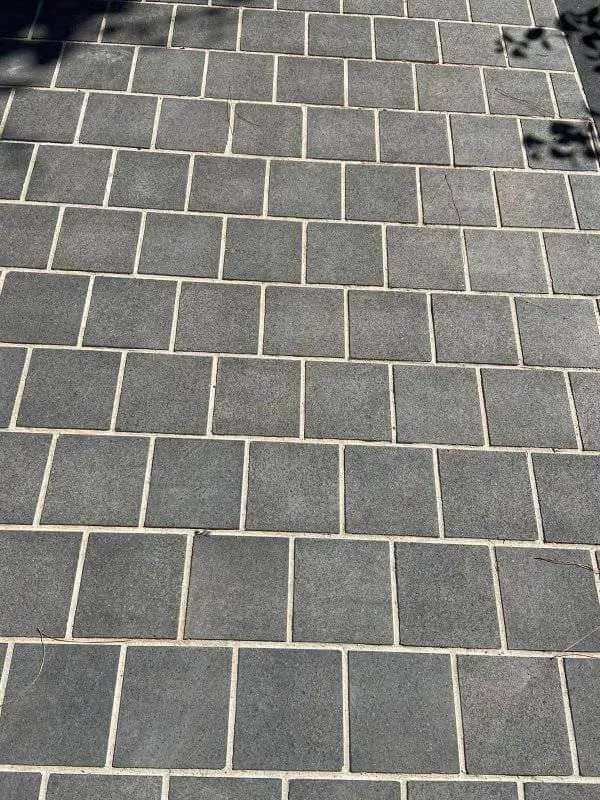
Your finish choice is arguably the single most important UV-performance decision you’ll make. Honed and brushed finishes outperform polished surfaces in outdoor Arizona conditions for a counterintuitive reason — polishing opens micro-facets that create additional UV absorption points, while a honed or brushed texture closes the surface grain and reduces the effective surface area exposed to solar radiation.
The best limestone finish for Arizona patios sits in the honed-to-brushed spectrum, with a natural cleft or tumbled finish also performing well in lower-traffic courtyard applications. Here’s what the finish options deliver in practical UV-resistance terms:
- Honed finish reduces surface gloss, which limits UV-accelerated glare reflection that contributes to premature surface heating and discoloration
- Brushed finish creates a micro-textured surface that holds penetrating sealer more effectively, extending recoat intervals from 18 months to closer to 24-30 months
- Natural cleft finish preserves the stone’s original stratification layer, which tends to be the most UV-stable surface the material offers
- Polished finish looks exceptional initially but loses its optical properties within two Arizona summers and requires more aggressive sealing maintenance to compensate
- Tumbled finish suits decorative borders and low-traffic zones — it’s UV-stable but the rounded edges can collect debris under high-pollen conditions common in late spring
At Citadel Stone, we evaluate finish durability directly from the quarry samples before warehouse inventory decisions — finishes that don’t hold up under accelerated UV testing don’t make it into our Arizona stock. That selective sourcing process is something you won’t always get from generalist suppliers pulling from catalog inventory.
Patio Stone Thickness Selection in Arizona Conditions
Thickness decisions interact with UV performance in a way most homeowners don’t anticipate. Thicker slabs carry more thermal mass, which means they absorb more solar energy during peak sun hours and release it well into the evening — a real comfort consideration for patios used at dusk in Yuma, where summer evenings stay warm and radiant heat from the stone surface adds meaningfully to the ambient temperature.
For residential patio applications with standard foot traffic, patio stone thickness selection in Arizona should follow this framework:
- 1.25-inch slabs: suitable for covered patios with stable sub-base conditions and minimal thermal cycling exposure — UV load is reduced under shade structures, making thinner material viable
- 1.5-inch slabs: the standard specification for open, exposed patios — provides adequate flexural strength to resist thermal expansion cracking across the 80°F+ daily temperature swings Arizona experiences regularly
- 2-inch slabs: recommended for patios adjacent to pool decks, barbecue islands, or any area where point loads and moisture exposure combine with UV stress
- Anything below 1.25 inches: not recommended for outdoor Arizona applications regardless of base quality — the UV-thermal stress combination creates microfracture risk that compromises the stone within 5-8 years
The interaction between slab thickness and sub-base compaction matters here too. A 1.5-inch slab on a poorly compacted base develops flex stress under load, and flex stress accelerates existing UV-induced surface microfractures into full structural cracks. Your base preparation and your slab thickness work as a system — spec both together, not independently.
Slip-Resistant Limestone Options for Arizona Homeowners
Slip resistance in Arizona is a more complex specification than it appears. Pool-adjacent patios introduce wet-surface conditions, but the UV component adds another layer: certain sealers that significantly increase slip resistance when freshly applied lose their coefficient of friction faster under Arizona’s UV load than the manufacturer’s ratings suggest. This is the gap between lab-tested performance and field performance that professional specifiers learn the hard way.
Slip-resistant limestone patio options AZ homeowners prefer consistently combine two features — a naturally textured surface finish and a UV-stable penetrating sealer rather than a topical coating. Here’s how to evaluate your options:
- Look for wet DCOF ratings meeting the 0.42 minimum of ANSI A326.3 for wet outdoor surfaces — this is the minimum threshold for pool and spa adjacency
- Brushed and sandblasted finishes carry substantial texture without sealer dependence, which matters when UV degrades topical treatments
- Avoid relying on topical anti-slip coatings as your primary safety strategy — they require reapplication every 12-18 months under Arizona UV conditions, and missed cycles create liability exposure
- Natural cleft limestone surfaces present an open, textured face straight from the fracture plane, and are specified without surface treatment in most applications
- Test your actual lot material, not spec sheet averages — batch variation in quarried limestone means DCOF can vary by 0.08-0.12 between production runs from the same quarry
For the Sedona market specifically, where red rock dust and seasonal pollen create surface contamination on patios year-round, a brushed limestone with enhanced surface grip performs better in real-world conditions than spec sheets would predict. Sedona’s elevation — around 4,350 feet — also means occasional freeze events in January and February, which interact with wet-surface slip resistance differently than pure desert conditions.
Sealing Schedules and UV Protection for Arizona Limestone
Your sealing schedule is the most actionable part of long-term UV protection management. The challenge in Arizona is that most sealer manufacturers develop their recoat interval recommendations based on temperate climate testing — their 3-year interval becomes an 18-month interval under Yuma’s UV index, and pushing past that window creates cumulative surface degradation that’s difficult to reverse without grinding.
The chemistry distinction between penetrating and topical sealers matters enormously here. Penetrating silane-siloxane sealers bond with the mineral structure of the limestone and aren’t significantly degraded by UV radiation because they exist below the stone’s surface, not on it. Topical acrylic or polyurethane sealers create a UV-exposed film that yellows, peels, and loses adhesion — often within a single Arizona summer for lower-grade formulations.
- Initial sealer application: apply within 30 days of installation, before any UV exposure compounds existing quarry-related micro-porosity
- Reapplication intervals for penetrating sealers in low desert Arizona: 18-24 months, not the 36 months listed on most product labels
- Reapplication intervals for penetrating sealers in higher-elevation locations like Flagstaff: 24-30 months is defensible given lower UV intensity and shorter high-sun seasons
- Indicator test: apply several drops of water to the surface — if water absorbs within 3-4 minutes rather than beading, the sealer has failed and reapplication is overdue
- UV-stable impregnating sealers with fluoropolymer chemistry deliver the best long-term performance and justify their higher per-gallon cost through extended service intervals
For projects across our limestone patio selections for Arizona, take a look at our limestone patio selections for Arizona to identify which density grades and finish combinations we recommend for your specific application and UV exposure level.
Color Retention and Surface Oxidation Under Arizona Sun
The color shift that Arizona UV exposure produces in limestone isn’t random — it follows predictable patterns based on the stone’s mineral composition. Iron-bearing limestones (the warm buff, gold, and amber varieties) are most susceptible to color change, because iron oxidizes under UV and moisture cycling, producing a bleaching effect on warm tones and an orange-rust streaking on lighter backgrounds. Choosing limestone with lower iron content — typically the cooler-toned gray and silver varieties — gives you better long-term color stability without sacrificing natural stone character.
The Arizona-rated natural stone patio surface buying advice that experienced specifiers actually follow starts with the iron content question. Request petrographic data or at minimum a supplier’s track record with specific stone varieties in comparable Arizona exposures. At Citadel Stone, our technical team advises on which quarry lots have demonstrated color stability over multiple Arizona installation cycles — that institutional knowledge is more useful than generic spec sheets.
- Cool-toned gray and silver limestones retain color consistency for 15-20 years under proper sealing schedules
- Warm buff and gold tones can show visible bleaching within 5-7 years if sealing intervals are missed even once
- Cream and ivory varieties fall in the middle — more UV-stable than warm tones but more susceptible to yellowing from topical sealer degradation than cool-toned material
- Surface oxidation presents as a dull, chalky surface appearance — early-stage oxidation responds to professional cleaning and resealing, while advanced oxidation requires abrasive restoration
- Requesting 5-year UV exposure documentation from your supplier is reasonable and any established supplier should be able to provide it
Base Preparation and Long-Term Installation Stability
Base preparation in Arizona limestone installations carries a UV-performance connection that isn’t obvious until you’ve watched installations fail. Inadequate base compaction causes differential settlement, which creates the edge-lifting and joint-opening conditions that allow UV-accelerated moisture to infiltrate below the stone. Once moisture reaches the sub-base through compromised joints, the freeze-thaw risk in higher elevations and the salt crystallization risk in lower desert zones both accelerate surface spalling — a problem that originates below grade but presents visually as UV surface damage.
For limestone patio stones in Arizona, your aggregate base specification should follow this performance-based framework rather than defaulting to regional minimums:
- Minimum 6-inch compacted aggregate base for residential patios in low desert Arizona — expand to 8 inches for anything adjacent to pool decks where drainage demands are higher
- Use crushed angular aggregate at 3/4-inch minus gradation — the angular particle geometry provides better interlock under thermal cycling than rounded river gravel
- Compact to 95% of modified Proctor density (ASTM D1557) — accepting less than 92% creates the differential settlement risk that eventually compromises joints and UV-resistance at edges
- Install a 1-inch bedding layer of coarse concrete sand above the aggregate base — not stone dust, which retains moisture and can migrate under UV-heat-induced thermal movement
- Maintain minimum 1.5% surface slope away from structures for drainage — inadequate slope combined with UV-degraded sealer creates prolonged moisture contact that accelerates surface scaling
In Flagstaff, where the soil profile includes significant volcanic material with different expansion coefficients than Sonoran desert soils, base preparation demands more attention to sub-base stabilization — particularly in areas that experience soil moisture variation between monsoon season and the dry spring period.
Ordering, Delivery, and Project Planning for Arizona Limestone
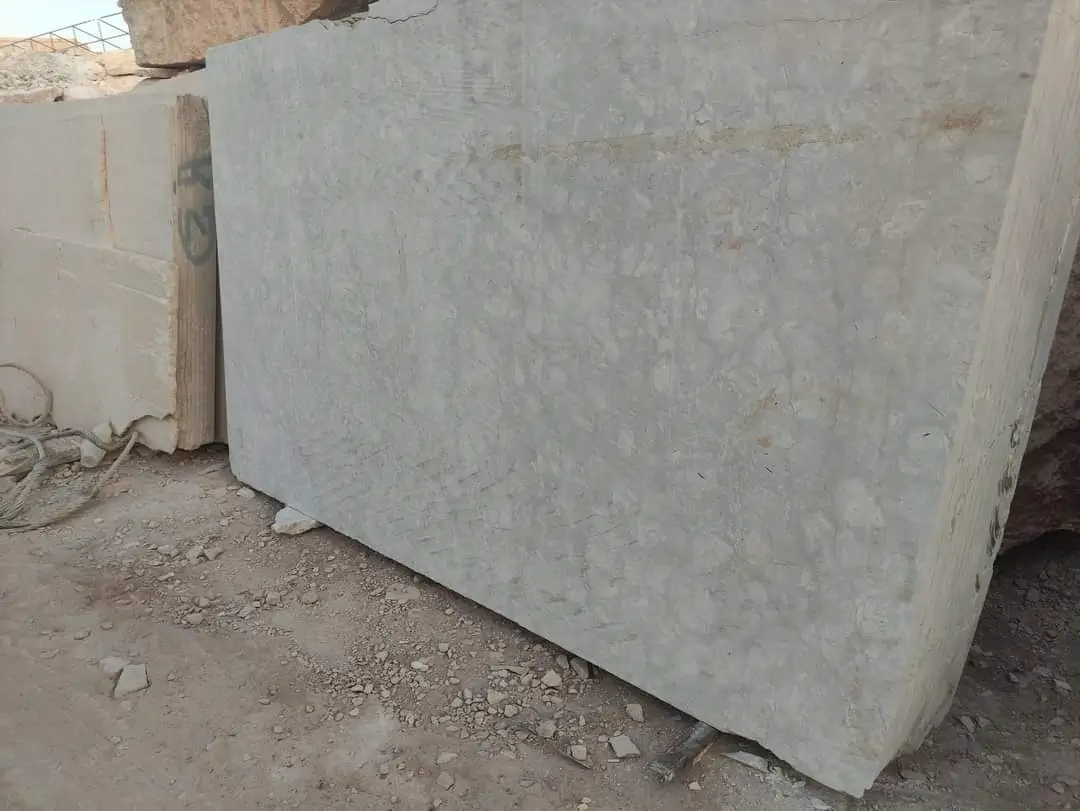
Your project timeline should account for material lead times honestly — not the optimistic scenario. Imported limestone that isn’t warehoused domestically carries 6-8 week lead times from order to delivery, and that window extends if your specific finish or color selection requires a dedicated quarry cut. Citadel Stone maintains warehouse inventory across Arizona, which typically reduces lead times to 1-2 weeks for standard selections and keeps truck scheduling manageable within your contractor’s timeline.
Verify warehouse stock levels before committing to project start dates with your installation contractor. A contractor who schedules excavation and base work assuming the stone will arrive on a specific date — and then faces a 2-week truck delivery delay — creates real cost exposure through crew standby time and sub-base protection requirements. That coordination failure is avoidable with a single verification call before contract signing.
- Confirm your exact lot is in warehouse stock, not just the product line — limestone from different quarry runs has color variation that becomes visible when mixing lots on the same patio surface
- Order 10-12% overage above your calculated square footage for pattern cuts, border pieces, and future repair matching — running short mid-project and ordering from a different lot creates visible color inconsistency
- Coordinate truck access to your site before ordering — larger Arizona properties with circular drives or narrow gate access may require specialized delivery arrangements that affect scheduling
- Request material delivery as close to installation start as practical — extended outdoor storage exposes pre-sealed material to UV before installation, which can compromise the initial sealer bond
Final Recommendations for Choosing Limestone Patio Stones in Arizona
Pulling together a complete approach to choosing limestone patio stones in Arizona means treating UV exposure as your primary design constraint, not an afterthought. Your finish selection, stone density, sealing chemistry, and base preparation all feed back into UV resistance — they’re not independent decisions. Start with a low-iron, low-absorption limestone in a honed or brushed finish, specify penetrating silane-siloxane sealer with a committed 18-24 month recoat schedule, and build your base to the 95% compaction standard rather than the regional minimum. Those four decisions, made correctly at the outset, determine whether your patio looks exceptional in year 15 or requires intervention in year 7.
Following sound Arizona-rated natural stone patio surface buying advice at the specification stage is worth considerably more than any post-installation remediation budget. If you run into performance issues after installation — surface scaling, color shift, or joint instability — Limestone Paving Stone Problems in Arizona? Fix It addresses the most common Arizona limestone failure patterns and their practical field solutions, making it a useful companion resource for any Citadel Stone project across the region. Homeowners across Scottsdale, Flagstaff, and Tempe consult Citadel Stone when selecting limestone patio stone thickness, with 1.5-inch slabs commonly chosen for patios that experience significant foot traffic and temperature swings.