
The drainage decisions you make before a single stone gets placed will determine whether your Arizona installation looks pristine at year fifteen or shows failure signs by year five. Buying natural stone in Arizona isn’t complicated once you understand that water — not heat — is the variable that breaks most residential and commercial projects. Arizona’s dual precipitation identity, bone-dry winters followed by the violent monsoon season between July and September, creates hydraulic stress that catches unprepared buyers completely off guard.
Why Water Drives Every Stone Selection Decision in Arizona
Most buyers walk into a stone purchase focused on color, finish, and price per square foot. What they’re not thinking about is porosity ratings and how a material’s absorption coefficient interacts with flash flooding. Arizona’s monsoon season delivers storms that drop two inches of rain in under an hour — a volume that overwhelms poorly graded surfaces and pushes water into material joints faster than evaporation can respond.
Your drainage gradient is the first specification that needs to be locked down before material selection. A 1.5% to 2% slope away from structures is the baseline across the Phoenix metro area, but projects in lower-lying neighborhoods or near wash corridors need closer to 2.5%. The stone you select has to complement that slope without creating trip hazards at transitions.
- Surface porosity above 6% accelerates sub-base saturation during monsoon events, particularly in soils with low percolation rates
- Dense-cut limestone and basalt in the 3–5% porosity range offer the best balance between drainage performance and stain resistance in Arizona conditions
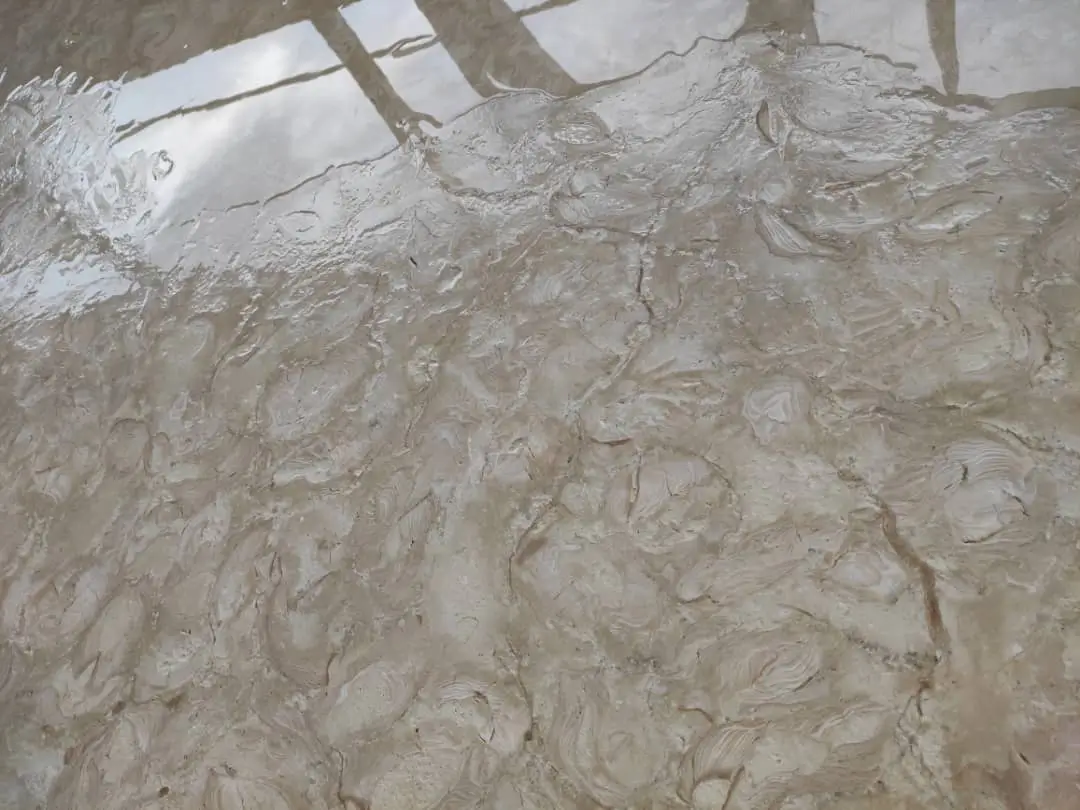
- Travertine’s interconnected void structure, while visually distinctive, requires a penetrating sealer with a breathability rating that allows vapor transmission without trapping subsurface moisture
- Sandstone performs well on drainage gradient but degrades faster than limestone in caliche-alkaline soil contact — a soil chemistry issue unique to Arizona’s desert floor
- Granite’s near-zero porosity sheds water cleanly but demands precise joint sealing because standing water in open joints becomes a freeze-thaw risk at elevations above 2,500 feet
Understanding Arizona Monsoon Patterns and How They Affect Your Material Choice
The best stone materials for Arizona landscapes are the ones engineered — whether by nature or fabrication — to handle rapid wet-dry cycling. Arizona averages 7 to 10 inches of annual rainfall in the low desert, but roughly 40% of that total falls within a six-week monsoon window. That concentration creates a hydraulic impact cycle that synthetic materials handle poorly and that natural stone manages better when the right species is selected.
Sedimentary stones like limestone and sandstone were formed under conditions of cyclic hydration and compression, which gives them a mechanical memory for moisture movement that metamorphic stones don’t share equally. In practice, this means limestone pavers in Peoria neighborhoods with heavy desert landscaping handle monsoon runoff with less surface spalling than comparable granite installations — provided the base preparation keeps moisture from pooling beneath the stone rather than moving through it.
Here’s what many specifiers and buyers miss: the damage from monsoon moisture rarely appears on the stone surface itself. It appears in the sub-base, where saturation causes differential settlement that cracks and tilts surface pavers. Your material choice matters, but it matters half as much as your drainage infrastructure beneath the stone.
Base Preparation and Drainage Infrastructure That Actually Works
For buying natural stone in Arizona with long-term performance in mind, base preparation isn’t a line item to economize — it’s the structural foundation that determines whether your drainage system functions at year one or fails by year three. The standard eight-inch compacted aggregate base is a starting point, not an endpoint.
- Install a perforated drain pipe at the low point of every stone field larger than 200 square feet — this is non-negotiable in the monsoon corridor
- Use clean crushed granite aggregate (3/4-inch minus) rather than decomposed granite for your compacted base — DG holds moisture longer and contributes to sub-base instability after repeated wet-dry cycles
- In areas with clay-rich soils, add a layer of geotextile fabric between native soil and the aggregate base to prevent clay migration upward through the drainage layer
- Verify that your drain outlets have a minimum 6-inch drop from the stone surface to the outlet elevation — inadequate fall creates backwater pressure during peak monsoon events
- For patios larger than 400 square feet, consider a channel drain at the downslope edge rather than relying solely on surface slope to move water off the installation
The caliche hardpan that underlies much of Arizona’s desert soil creates a hidden drainage problem that experienced buyers account for during site evaluation. Caliche doesn’t percolate water — it redirects it laterally, which means saturation builds up along the edges of your installation rather than moving straight down. Breaking through caliche with a jackhammer in drainage corridors before base placement eliminates about 70% of the subsidence issues you’d otherwise face in five years.
Selecting Quality Stone Slabs That Perform in Arizona Drainage Conditions
Your material evaluation during the purchasing process should include two physical tests that most buyers skip: a water absorption test and a surface texture friction assessment. For the absorption test, wet the face of the sample and time how long it takes to visibly darken — limestone and travertine will react within seconds, granite and basalt within 30 to 60 seconds. Stone that darkens in under 5 seconds and stays dark after 3 minutes needs an impregnating sealer applied before installation, not after.
Selecting quality stone slabs AZ homeowners prefer for outdoor applications often comes down to finish selection, and this is where drainage behavior gets overlooked. A polished finish on limestone creates a near-impermeable surface that sheds water efficiently — but it becomes dangerously slippery when wet, which is a serious safety liability during monsoon afternoon storms. A brushed or tumbled finish increases surface friction to ASTM C1028 wet static coefficient values of 0.60 or higher, which is the minimum threshold you should require on any stone surface where foot traffic occurs during or after rain.
Thickness specification is equally important in wet conditions. For natural stone in Arizona placed over a compacted aggregate bed, 1.25-inch (30mm) minimum thickness is your baseline for patio applications. For vehicular areas or zones with heavy foot traffic concentration, step up to 1.5 to 2 inches. Thinner stone — anything under an inch — flexes under point load when the sub-base has any moisture in it, and that flexing initiates micro-fractures along natural bedding planes that you won’t see until they open up in year two or three.
Outdoor Stone Options Across Arizona Properties and Their Drainage Characteristics
Different stone species carry distinct drainage profiles, and matching material to application context is a decision that requires more than aesthetic judgment. Here’s an honest assessment of how the primary stone categories perform against Arizona’s actual moisture conditions.
- Limestone: Excellent for large horizontal surfaces with proper sealer maintenance — manages wet-dry cycling well, available in neutral desert tones that reduce heat absorption compared to darker stones
- Travertine: The voids that give it character also serve as micro-drainage channels, but unfilled travertine traps debris and requires more maintenance in landscaped areas with organic runoff
- Basalt: Extremely dense with very low water absorption — ideal for pool surrounds and drainage-adjacent zones, but the dark surface color requires careful placement to manage radiant heat near seating areas
- Quartzite: High silica content makes it highly resistant to staining from mineral-rich desert water runoff — performs exceptionally in areas where hard water deposits are a recurring issue
- Flagstone (irregular): Natural drainage gaps between pieces require a stable setting bed and quality polymeric sand to prevent joint washout during heavy monsoon rainfall
For buyers in Tempe working on properties near the Salt River corridor, the soil moisture variability is higher than in drier elevated neighborhoods, and quartzite or dense-cut limestone consistently outperforms porous alternatives in those conditions. At Citadel Stone, we receive specific requests for quartzite slab stock from contractors working that corridor precisely because they’ve learned the hard way what happens when softer stone sits near seasonal high-water tables.
The Arizona Desert Stone Purchasing Process: Logistics and Lead Times
Understanding how stone moves from quarry to your project site shapes how you plan timelines and budget. Natural stone destined for Arizona projects typically comes from domestic quarries in Texas, Georgia, and the Southwest, or from international sources in Turkey, Brazil, and India. Domestic stone ships faster — typically 2 to 3 weeks from quarry to warehouse — while imported stone runs 8 to 14 weeks depending on port conditions and customs clearance.
Verify warehouse stock levels before committing to project timelines because natural stone availability fluctuates with quarry output cycles. A particular limestone lot that’s available in April may be out of stock by June when monsoon-season project demand peaks across Arizona. If you’re working with a specific color match or finish requirement, order your material 60 to 90 days ahead of your installation window — not 2 weeks ahead.
Truck delivery logistics deserve attention on your end before your material ships. Full-pallet stone deliveries require a flat, accessible drop zone — standard flatbed trucks need a minimum 30-foot approach clearance and a firm surface that won’t sink under a loaded 40,000-pound delivery vehicle. Residential sites with soft desert soil, fresh grading, or narrow access often need a dedicated staging area marked out in advance. For the Phoenix metro area, curbside delivery is the norm, which means you’ll need a forklift or hand truck plan to move material from street to installation site efficiently.
This Arizona desert stone purchasing guide wouldn’t be complete without noting that current stock levels vary by season — you can browse available options and confirm inventory through Arizona stone for sale Citadel Stone before making your purchasing decision, which helps you verify what’s available in-region before committing to a longer import timeline.
Sealing Schedules That Match Arizona’s Wet-Dry Climate Cycles
The sealer you apply and the schedule you follow need to account for both the monsoon season and the prolonged dry periods between rain events. Most generic sealing guides are written for humid climates where moisture is relatively constant — Arizona’s extreme moisture variability requires a different approach.
- Apply your initial penetrating impregnating sealer before monsoon season — ideally in May or early June — so the stone enters the high-moisture period fully protected
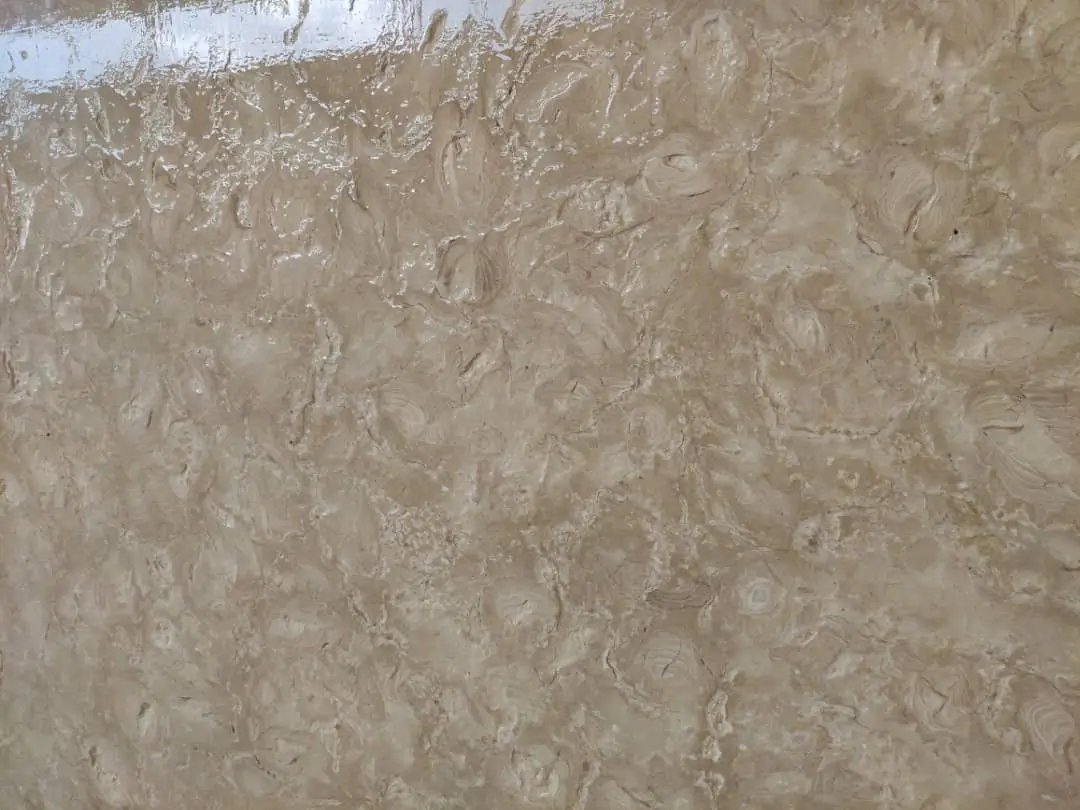
- Use a silane-siloxane blend sealer for maximum penetration depth on porous stones like limestone and travertine — these products outperform topical acrylic sealers in UV resistance and moisture vapor transmission
- Reapplication intervals in Arizona low desert conditions typically run 18 to 24 months for penetrating sealers — shorter than the 3-year schedules cited by manufacturers who calibrate for temperate climates
- Never apply sealer to dry stone that has reached surface temperatures above 90°F — the solvent carrier evaporates before proper penetration, leaving an uneven protective layer that fails unevenly
- Inspect grout joints and polymeric sand every spring — monsoon runoff erodes joint material faster than the stone face itself, and open joints allow sub-base moisture infiltration that bypasses your drainage infrastructure
The interaction between UV intensity and sealer chemistry is worth understanding at a practical level. Arizona’s UV index during summer months regularly exceeds 11 — the highest classification on the standard scale — which breaks down acrylic and polyurethane topical sealers in one to two seasons. Budget-grade sealers fail here faster than anywhere else in the country. Spending more on a high-grade silane-siloxane product isn’t a premium — it’s just basic Arizona math.
Common Purchasing Mistakes That Cost Arizona Buyers Significantly
Field experience reveals the same purchasing errors appearing repeatedly across projects of every budget level. Knowing what to avoid saves you from expensive remediation work after installation is complete.
- Ordering without requesting a moisture absorption test result from the supplier — this single data point tells you more about the stone’s drainage suitability than any visual assessment
- Selecting material based on indoor showroom samples under controlled lighting rather than viewing the stone in direct sun — Arizona’s light environment changes color perception dramatically
- Underordering and relying on the supplier to match your original lot — natural stone quarried at different times has visible color variation that creates patchwork effects when lots are mixed
- Ignoring the thermal expansion properties of different stone species when designing large continuous surfaces — temperature differentials of 60°F or more between winter nights and summer afternoons create cumulative expansion stress
- Purchasing the lowest cost per square foot option without factoring in the sealing maintenance budget — a $6/sq ft limestone that requires semi-annual sealing costs more over ten years than an $11/sq ft quartzite that needs attention every three years
Overordering by 10 to 12% is standard practice for a reason — cutting waste, corner pieces, and irregular perimeter shapes consume more material than most first-time buyers anticipate. Add another 3 to 5% buffer if you’re working with natural cleft or irregular flagstone that requires more selective placement. Running short mid-project and waiting on a supplemental truck delivery delays completion and risks a lot-match problem that becomes visible once everything is laid out under full sun.
What to Get Right Before Your Arizona Stone Order Ships
The framework that serves buyers best when buying natural stone in Arizona starts with drainage infrastructure, works through material porosity and thickness selection, and finishes with a realistic maintenance budget that accounts for the UV and moisture conditions specific to this region. Getting those three elements aligned before you commit to a specific stone species or supplier eliminates the majority of performance failures that drive expensive remediation work. Your installation’s long-term performance depends on decisions made during the purchasing and planning phase — not on what gets done after the stone is already in the ground.
Pricing structure is another dimension that influences project outcomes, particularly on larger installations where cost-per-ton variance between wholesale and retail channels creates meaningful budget differences. The Wholesale vs Retail Stone Pricing in Arizona Compared resource breaks down how those channels compare for Arizona buyers and helps you understand which sourcing path makes sense for your project scale. At Citadel Stone, we stock a full range of natural stone products at our Arizona warehouse and our team can walk you through drainage-appropriate specifications before your order is placed. Builders in Tucson, Mesa, and Chandler rely on Citadel Stone when buying natural stone in Arizona, selecting slabs and cut pieces verified for surface stability in sustained high-temperature outdoor conditions.