
Bullnose travertine coping Arizona pools is one of those spec decisions that looks straightforward on paper but reveals its complexity the moment Phoenix summer heat enters the equation. The rounded-edge profile isn’t just an aesthetic preference — it’s a structural and safety specification, and the margin between a correct installation and a costly callback is tighter than most pool builders expect. Getting the edge geometry, thickness, and mortar bed right before the first stone sets is the difference between coping that performs for two decades and coping that starts lifting at year four.
Why the Bullnose Profile Is a Functional Specification, Not Just a Style Choice
The bullnose edge on travertine coping does something flat-cut stone can’t — it eliminates the sharp 90-degree corner that becomes a knee and shin hazard when swimmers pull themselves out of the pool. For households with children or elderly family members, that rounded transition from vertical pool wall to horizontal deck surface is a genuine injury-prevention detail. You’re not selecting bullnose travertine coping for Arizona pools because it looks good in the catalog; you’re selecting it because the edge geometry reduces impact force on contact.
The radius also channels water more predictably. A properly bullnosed edge directs splash-out away from the bond beam and toward the deck drain, reducing the saturation cycle that accelerates efflorescence in mortar joints. This matters more in Arizona than most installers acknowledge upfront, because the evaporation rate here pulls minerals through the stone faster than it would in a coastal climate. The bullnose travertine advantages in desert climates extend well beyond aesthetics — thermal behavior, drainage geometry, and impact safety are all shaped by that single profile decision.
Thermal Performance Under Arizona’s Extreme Heat Conditions
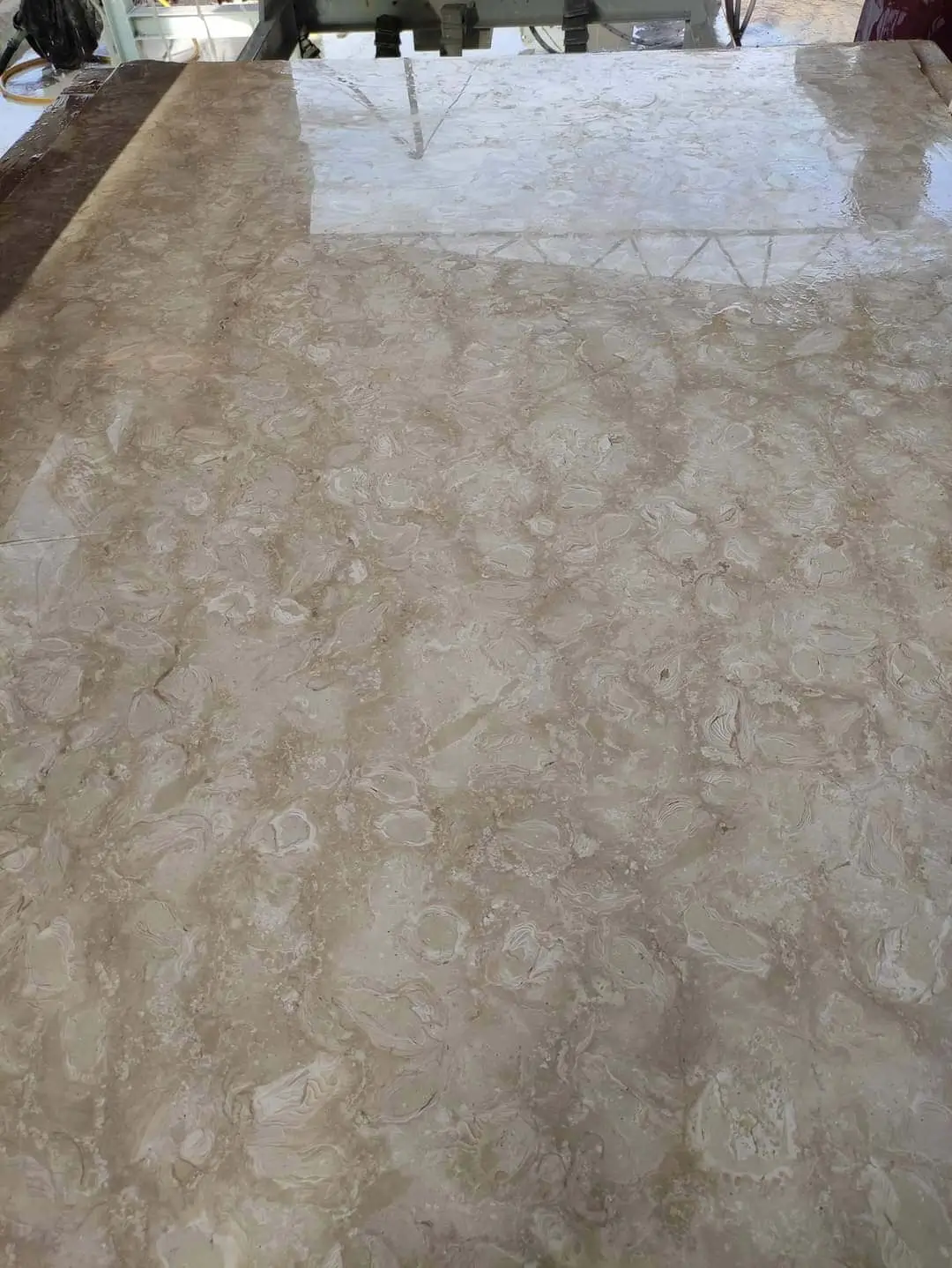
Travertine’s thermal mass behavior is one of its most misunderstood properties in desert pool environments. The material absorbs heat more slowly than dense concrete and releases it gradually — which means surface temperatures on travertine coping run 15–22°F cooler than poured concrete under direct midday sun exposure in Arizona summers. That’s not marketing language; that’s a real barefoot comfort differential that homeowners notice immediately the first July afternoon they use the pool.
The advantage comes from travertine’s interconnected pore structure, which reduces the material’s effective thermal conductivity. However, that same porosity creates a maintenance obligation you need to communicate clearly at specification time. Unsealed travertine in a pool environment will absorb chlorinated water and mineral-laden splash-out, accelerating pitting and staining. In Yuma, where summer pool use is nearly year-round and UV intensity is among the highest in the continental US, sealing schedules should run on an 18-month cycle rather than the 24-month interval common in cooler regions.
- Surface temp differential vs. concrete: 15–22°F cooler under direct exposure
- Travertine thermal conductivity: approximately 1.0–1.5 W/m·K, significantly lower than dense concrete at 1.7–2.0 W/m·K
- Recommended sealer type: penetrating silicone or silane-siloxane blend, not topical film sealers
- Resealing interval in Arizona low desert: every 18 months for high-use pools
- Topical sealers trap moisture beneath the surface in high-heat cycles, causing delamination
Slip-Resistant Pool Coping Materials AZ: What the Numbers Actually Mean
The slip-resistance conversation around travertine gets muddled because people conflate the natural texture of the unfilled surface with the performance of honed or filled travertine. These are not the same material specification. Unfilled travertine — where the natural voids are left open — provides a coefficient of friction (COF) in the 0.60–0.72 range when wet, comfortably above the 0.42 DCOF threshold established for pool surrounds under ANSI A137.1. Honed and filled travertine can drop that COF to 0.45–0.52, which still clears the minimum but leaves you with a narrower safety margin.
For rounded edge pool safety across Arizona homeowners, the bullnose edge itself contributes to the safety profile beyond just texture. A smooth, rounded transition reduces the probability of skin abrasion during falls compared to a sharp arris edge. When you combine an unfilled travertine surface with a properly radiused bullnose, you’re meeting both the friction and the impact-geometry requirements simultaneously. Slip-resistant pool coping materials in AZ need to satisfy both the ANSI wet DCOF threshold and the surface geometry standard — bullnose travertine addresses both in a single specification.
- ANSI A137.1 wet DCOF minimum for pool surrounds: 0.42
- Unfilled travertine wet COF range: 0.60–0.72 (exceeds minimum with margin)
- Honed and filled travertine wet COF: 0.45–0.52 (clears minimum, reduced margin)
- Tumbled finish travertine: 0.65–0.75 wet COF, highest slip resistance in the family
- ASTM C1028 field testing recommended for final surface confirmation post-installation
Thickness Specification and Base Preparation for Arizona Pools
Specifying bullnose travertine pool coping at the wrong thickness is one of the most common field failures — and it’s almost always under-thickness, not over. The standard recommendation for pool coping in residential applications is a minimum of 1.25 inches (30mm) nominal thickness, but Arizona’s soil conditions push that floor upward. Expansive clay soils, which appear frequently across the Phoenix metro and extend into the East Valley, introduce differential movement at the bond beam that a thinner stone simply can’t absorb without cracking at the nose.
At Citadel Stone, we recommend 1.5-inch (38mm) minimum for any pool coping installation in Arizona where expansive soil conditions are present — which is most projects east and south of the I-10 corridor. The additional thickness adds meaningful flexural strength and gives you more material to work with if edge chipping occurs and a grind-and-polish repair is needed years down the road. For rounded edge pool safety across Arizona homeowners, that extra material at the nose is not an upsell — it’s structural insurance.
- Minimum thickness for Arizona pool coping on stable soil: 1.25 inches nominal
- Recommended thickness on expansive or clay-heavy soils: 1.5 inches minimum
- Mortar bed depth: 3/4 to 1 inch of polymer-modified thin-set mortar over properly prepared bond beam
- Bond beam surface prep: mechanically clean, free of curing compound, SSD (saturated surface dry) before setting
- Overhang projection over pool wall: 1.5–2 inches standard, no more than 2.5 inches without structural review
Mortar Joint Sizing and Expansion Gaps: The Detail That Drives Longevity
The thermal expansion coefficient for travertine sits in the range of 4.6–5.8 × 10⁻⁶ per °F depending on density and mineral composition. In practical terms for an Arizona pool project, that means a 50-foot run of coping will expand and contract by approximately 0.13–0.17 inches across the temperature range from a cool January morning to a peak August afternoon. That movement needs somewhere to go, and if your mortar joints are too tight, it goes into the stone edge — specifically the bullnose profile, which is the thinnest cross-section and the first place you’ll see cracking.
The fix is straightforward but frequently skipped: maintain a minimum 3/16-inch joint width throughout the coping run, and place dedicated expansion joints at maximum 12-foot intervals rather than the 15-foot intervals specified in generic masonry guidelines. The 12-foot interval is specifically appropriate for Arizona because the temperature delta here exceeds what those generic guidelines were written to address. Fill expansion joints with a polyurethane sealant rated for pool chemical exposure — not grout, not standard caulk.
Projects in Mesa frequently encounter caliche hardpan beneath pool decks, which can create micro-differential settlement at the bond beam perimeter. In these conditions, the expansion joint schedule becomes even more critical because the sub-base itself is contributing movement that compounds thermal expansion. Inspect caliche depth during excavation and confirm your base contractor has addressed any soft spots before coping installation begins.
Installation Sequence and the Quick Fixes That Actually Work
The issues that appear after bullnose travertine coping installs in Arizona fall into predictable categories, and most of them trace back to one of three installation sequence failures. Understanding those failure modes before the job starts is what separates a 20-year installation from a four-year callback.
For a comprehensive breakdown of material sourcing and specification options, our Arizona bullnose travertine pool guide covers selection criteria and thickness options across different pool configurations in Arizona’s climate zones.
Fix: Lifted or Loose Coping Stones
Lifted stones almost always mean one of two things — inadequate back-buttering of the stone, or the bond beam wasn’t in proper SSD condition when the mortar was applied. The polymer-modified mortar dried too fast against a thirsty concrete surface, and the bond never fully developed. Your fix here is a complete reset: remove the lifted stones cleanly, chip back the mortar bed to a sound substrate, re-dampen the bond beam to SSD, apply fresh polymer-modified thin-set to both the substrate and the back of the stone (back-buttering is non-negotiable in Arizona heat), and reset. Don’t try to inject adhesive under partially lifted stones — it rarely achieves full coverage and the failure repeats.
Fix: Edge Chipping and Cracking at the Bullnose Radius
Chips at the bullnose radius are usually impact damage or a sign of under-thickness stone combined with insufficient overhang support. For existing chipping on otherwise sound stones, a travertine repair compound color-matched to the field stone and finished with a fine-grit diamond pad can restore the appearance to within acceptable tolerance for most residential applications. For cracks that run through the full thickness of the stone, the stone needs replacement — structural cracks in pool coping compromise the waterproofing continuity at the bond beam junction.
Fix: Efflorescence and Mineral Staining
White mineral deposits appearing on the coping surface within the first six months indicate moisture migration through under-filled mortar joints or inadequate sealing. The fix starts with a diluted phosphoric acid wash (5–8% concentration) applied with a stiff nylon brush to dissolve the calcium carbonate deposits, followed by a thorough rinse. Once the surface is clean and dry, apply a penetrating silicone sealer and ensure all grout joints are fully packed. Efflorescence that returns within 90 days after treatment signals a drainage problem or a mortar joint void that needs physical repair before resealing.
Child-Safe Pool Edge Solutions Across Arizona Climates
The child-safe pool edge conversation goes beyond slip resistance — it encompasses the full geometry of the coping installation. Bullnose travertine advantages in desert climates include the fact that the rounded profile reduces the probability of head and limb injuries during the high-energy pool entry and exit activity that characterizes family pool use. For households with young children, specifying a minimum 2-inch radius bullnose rather than the narrower 1-inch radius standard profile increases the contact surface area and further reduces concentrated impact force.
Pool installations in Gilbert and the broader Southeast Valley typically involve newer construction with contemporary pool geometry — larger deck areas, more linear edge runs, and fewer curved perimeters. In these configurations, maintaining consistent bullnose profile quality across long straight runs requires careful attention to stone lot selection. Variation in radius profile between different production batches from the same quarry can create visible inconsistency in long linear runs. Confirm that your material is drawn from a single production run before delivery, and inspect the warehouse stock before it’s loaded onto the truck for your site.
Ordering, Lead Times, and Logistics for Arizona Pool Projects
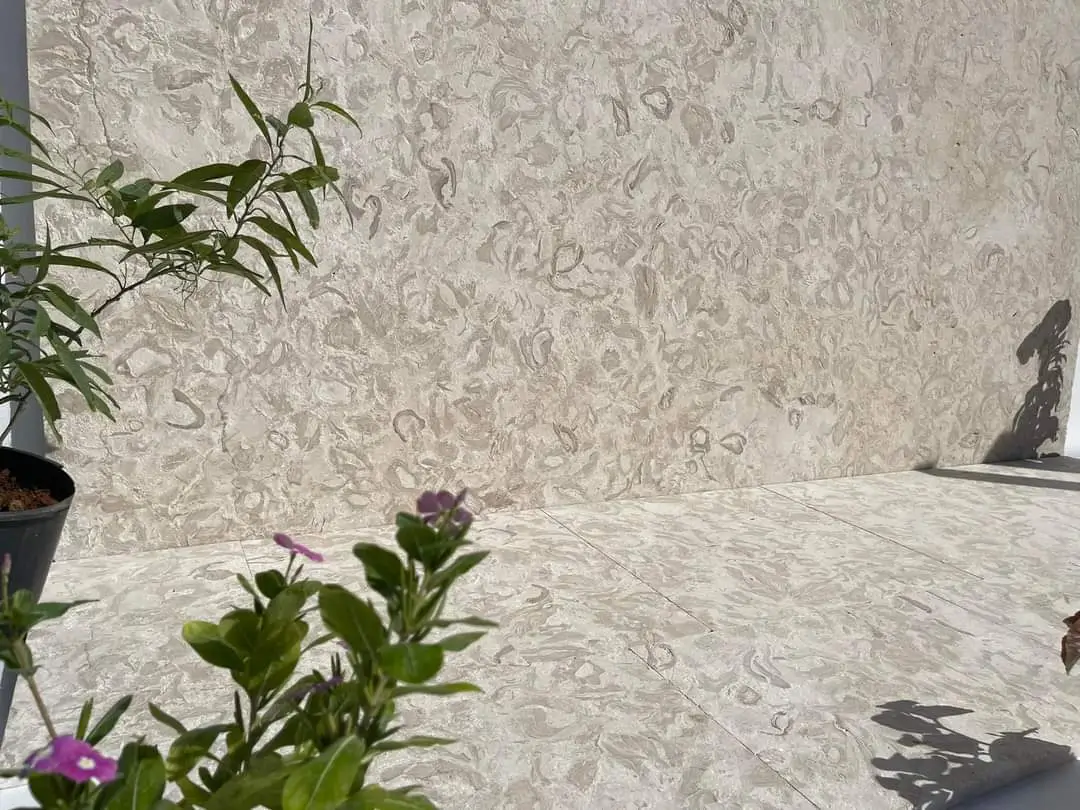
Bullnose travertine coping for Arizona pools involves a supply chain consideration that catches first-time project managers off guard — bullnose profile pieces are fabricated to order, not stocked in bulk at general stone distributors. Lead times from import sources run 6–8 weeks minimum, and that window doesn’t account for quality inspection or trucking to the project site. Citadel Stone maintains warehouse inventory of bullnose travertine coping in Arizona specifically to compress that timeline, typically to 1–2 weeks from order confirmation to truck delivery.
- Order quantity buffer: add 8–10% overage to net linear footage for cuts, waste, and future repairs
- Verify bullnose radius profile (1-inch vs. 2-inch) is confirmed in writing before warehouse pull
- Request material from a single production lot to ensure color and profile consistency
- Confirm truck access to the pool site before scheduling delivery — standard flatbed trucks require 12-foot clearance and a turnaround area
- Inspect all pieces at delivery for shipping damage to the bullnose edge before signing the delivery receipt
- Store flat on pallets in shaded conditions — avoid stacking more than 4 inches high on the bullnose face
Getting Bullnose Travertine Coping Specifications Right Before Installation Begins
Bullnose travertine coping for Arizona pools is a mature, well-proven specification — but it rewards the projects where the details were deliberated before the first stone was set, not patched after the first season. The thermal expansion gaps, the mortar bed depth, the sealing schedule, the stone thickness relative to your soil conditions — these are decisions that compound over time. Get them right upfront and the installation runs quietly in the background for 20 years. Skip any of them and you’re back on the pool deck with a grinder or a cold chisel within a few seasons.
Your specification should address expansion joint placement, stone thickness, surface finish selection, and sealing protocol as a coherent package rather than isolated line items. The child-safe pool edge solutions across Arizona that perform best over time are those where every layer of the installation — base prep, mortar bed, stone thickness, and edge profile — was specified as a system. For context on how adjacent Arizona hardscape installations handle related specification challenges, Blue Black Limestone Paving Slab Installation for Tempe Precision provides useful insight into how material selection and installation precision interact across Arizona stone projects. The same climate forces that govern limestone slab performance in Tempe apply to your coping specification decisions — thermal cycling, UV exposure, and drainage geometry are universal considerations regardless of material. Citadel Stone delivers slip-resistant bullnose travertine coping across Arizona, serving communities in Mesa, Gilbert, and Peoria with durable child-safe pool edge solutions.