



























50 Years Of Manufacturing & Delivering The Highest-Quality Limestone & Black Basalt. Sourced & Hand-Picked From The Middle East.

Escrow Payment & Independent Verifying Agent For New Clients

Contact Me Personally For The Absolute Best Wholesale & Trade Prices:

USA & Worldwide Hassle-Free Delivery Options – Guaranteed.

Bluestone vs Alternatives: Pool Deck Cost in Arizona

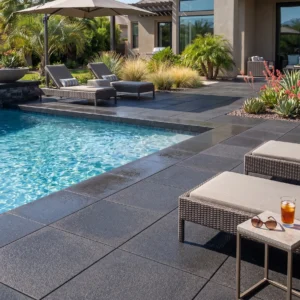
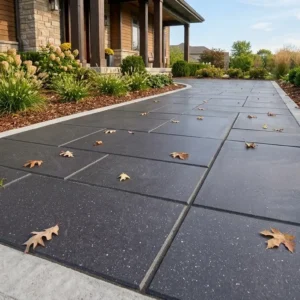
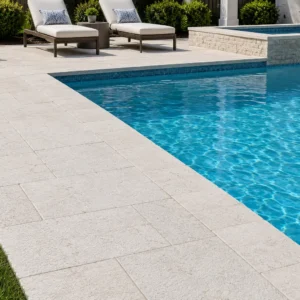
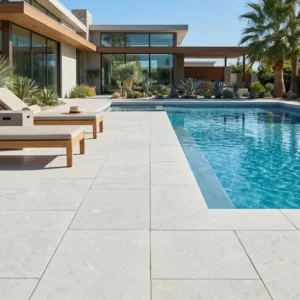
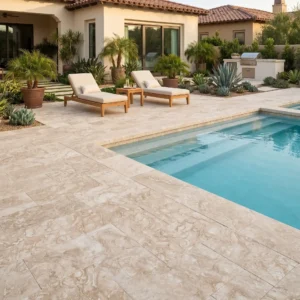
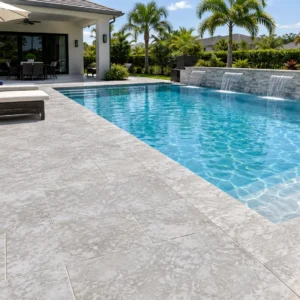
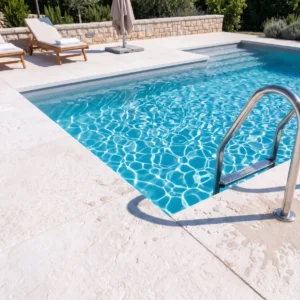
Breaking down bluestone pool deck cost Arizona comparison requires more than a quick price-per-square-foot lookup. Material grade, finish type, slab thickness, and installation complexity all shift the final number significantly. In practice, homeowners comparing bluestone against concrete or porcelain often underestimate the long-term value equation — bluestone's heat-diffusing properties and natural durability make it a strong performer in Arizona's extreme climate. Citadel Stone pool deck cost Arizona resources help buyers understand where their budget is going before committing to a surface. What people often overlook is how regional supply access affects overall project cost, including freight and lead times. Citadel Stone offers bluestone pool deck material at competitive price points, with homeowners in Phoenix, Mesa, and Sedona comparing per-square-foot costs against concrete and porcelain before selecting their preferred surface.

Table of Contents

Most bluestone pool deck cost Arizona comparison discussions start and end with price per square foot — and that’s exactly where homeowners get burned. The real cost story unfolds across material thickness, finish selection, base preparation requirements, and long-term maintenance demands that vary sharply between bluestone and its most common competitors. Understanding how these variables compound across Arizona’s climate zones gives you the decision framework that a simple price tag never will.

What Actually Drives Cost Differences Between Pool Deck Materials

Material price is just the starting point. Your total installed cost breaks down across at least five distinct cost centers, each of which shifts differently depending on which material you choose.

  • Raw material cost per square foot (slab or paver, varies by thickness)
  • Base preparation depth and aggregate specification (soil type matters more than most buyers expect)
  • Labor rate differentials by material (bluestone requires tighter tolerances than concrete pavers)
  • Sealing, treatment, and finish application costs at installation
  • Recurring maintenance costs projected over a 10–20 year ownership horizon

Here’s what most cost comparisons miss: the material sitting on the pallet from the warehouse is only 35–45% of your total project cost on a typical Arizona pool deck. That means a $3 per square foot difference in material cost translates to roughly $1.05–$1.35 per square foot in total project cost difference — not the dramatic gap the sticker price implies. Your specification decisions on thickness and finish have a proportionally larger effect on final budget than the material choice alone.

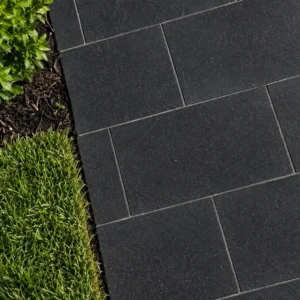
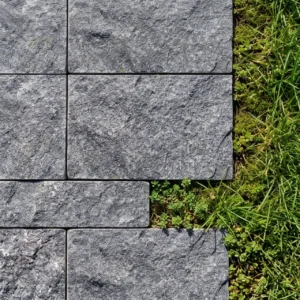
A close-up view of a dark, textured, speckled surface.

Bluestone Pool Deck Cost Range Across Arizona

For a realistic bluestone pool deck cost Arizona comparison, you need to start with regional installed price ranges rather than national averages — those national figures consistently understate labor costs in Phoenix metro and overstate material availability in rural areas.

Expect Arizona installed costs for bluestone pool decks to land in these ranges based on thickness and finish:

  • 1.5-inch natural cleft bluestone: $22–$30 per square foot installed in metro Phoenix
  • 2-inch thermal-finish bluestone: $26–$36 per square foot installed
  • Tumbled bluestone pavers (pool coping applications): $28–$40 per square foot installed
  • Material-only cost for bluestone pool deck pavers: $8–$16 per square foot depending on thickness and sourcing

In Scottsdale, where luxury pool projects routinely exceed 1,200 square feet of deck area, that installed range becomes a significant budget variable. A 1,200 square foot deck at $22 versus $36 per square foot represents a $16,800 swing — entirely within the bluestone category, before you’ve compared it to any competing material. Finish type and thickness are doing the heavy lifting on that spread.

Bluestone vs. Travertine: The Most Common Arizona Comparison

Travertine is the material most Arizona homeowners compare to bluestone, and the cost relationship is closer than you’d expect. Travertine pool deck installations in Arizona typically run $18–$28 per square foot installed — slightly below bluestone on average, but with meaningful performance trade-offs that affect long-term value. When pricing bluestone pavers vs alternative materials Arizona projects demand, travertine is always the first benchmark worth examining.

The key differences worth understanding before you make the call:

  • Travertine’s open pore structure absorbs water more aggressively than bluestone, requiring more frequent resealing in pool environments
  • Bluestone’s denser composition handles the combination of pool chemicals and intense UV exposure with less surface degradation over time
  • Travertine’s natural voids can trap pool water and accelerate staining without consistent maintenance
  • Bluestone’s thermal mass absorbs heat more aggressively than travertine in direct Arizona sun — surface temperature management matters for both materials

For budget-friendly bluestone pool coping options across Arizona, thermal-finish bluestone often competes directly with filled travertine at similar price points. The thermal finish creates the slip resistance you need around water and reduces surface temperature compared to polished alternatives — practical advantages that travertine’s tumbled finish also delivers, but through a different mechanism.

Bluestone vs. Concrete Pavers: Understanding the Real Price Gap

Concrete pavers are where the cost conversation gets more complex. Manufacturer-grade concrete pool pavers start around $10–$14 per square foot installed — a meaningful gap below bluestone’s entry point. But that comparison requires honest accounting of what you’re actually getting for the difference.

Concrete pavers in Arizona pool environments face a specific degradation pathway. The combination of pool chemical splash, chlorine vapor exposure, and UV radiation accelerates surface fade and micro-cracking in concrete at a rate that simply doesn’t apply to dense natural stone. You’re looking at visible surface changes within 7–10 years on most concrete paver installations, compared to 20+ years of stable performance from properly maintained bluestone.

When you factor a 20-year ownership horizon into the pricing bluestone pavers vs alternative materials Arizona calculation, the economics shift considerably. Concrete paver replacement or resurfacing at year 10–12 adds $10–$18 per square foot in future costs, effectively closing the original price gap. Your decision becomes less about upfront cost and more about which payment schedule works better for your situation.

Bluestone vs. Large-Format Porcelain: The Premium Comparison

Large-format porcelain is increasingly the premium alternative to natural stone for Arizona pool decks, and it’s worth a direct cost comparison because the numbers are closer than most homeowners assume. Porcelain pool deck installations in Arizona run $24–$38 per square foot installed — overlapping significantly with bluestone’s range.

  • Porcelain offers virtually zero porosity, which eliminates sealing requirements entirely
  • Color consistency across porcelain is guaranteed; natural bluestone will show variation between slabs
  • Porcelain’s rigidity requires a flatter, more precisely prepared base — substrate movement that bluestone can tolerate will crack large-format porcelain
  • Base preparation costs for porcelain in Arizona’s expansive soil zones often run $2–$4 per square foot higher than for bluestone

That base preparation premium often gets overlooked in the initial porcelain price quote. In Flagstaff, where freeze-thaw cycles add substrate movement to the equation, that base cost differential for porcelain expands further. Bluestone’s natural flexibility tolerance makes it a more forgiving specification in climates where the ground moves seasonally — a real performance advantage that doesn’t show up in material cost per square foot.

How Finish Type Affects Your Arizona Pool Deck Budget

The finish you specify on bluestone pool deck pavers has a larger effect on your budget than most buyers anticipate. This is where the real cost differentiation lives within the bluestone category itself — and where bluestone deck installation costs Arizona homeowners expect can shift by several dollars per square foot before a single slab is laid.

You’ll encounter four primary finish options for bluestone pool applications, each with distinct cost and performance implications:

  • Natural cleft: lowest cost option, highest slip resistance, most variable surface texture
  • Thermal (flamed): mid-range cost premium of $1.50–$3 per square foot over natural cleft, consistent texture, excellent pool-side performance
  • Honed: smoother surface that requires enhanced slip resistance treatment, adds cost at installation
  • Sandblasted: mid-range finish that provides controlled texture uniformity at moderate price premium

For pool deck applications specifically, thermal finish bluestone is worth the premium. The flaming process opens the surface slightly, reduces heat absorption compared to honed options, and creates a texture that performs well in wet conditions without the aggressive variation of natural cleft. bluestone pool deck for sale Citadel Stone covers the available finish options and thickness specifications for Arizona pool projects in detail.

Thickness Specifications and Their Budget Impact

Thickness is the single most underappreciated cost variable in the bluestone pool deck cost Arizona comparison conversation. Most homeowners focus on surface area price and overlook that a 2-inch slab costs materially more than a 1.25-inch paver — not just in material cost, but in shipping weight, base modification requirements, and labor time for setting.

Arizona pool deck applications typically call for these thickness ranges:

  • 1.25-inch nominal: appropriate for pedestrian-only deck areas with proper 4-inch compacted base
  • 1.5-inch nominal: recommended standard for most Arizona residential pool decks
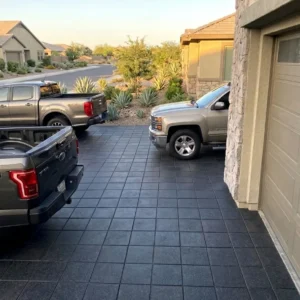
  • 2-inch nominal: required for pool coping, cantilever applications, and areas subject to vehicle access
  • 2.5-inch and above: specified for commercial applications or areas with heavy point loading

The truck delivery cost for bluestone also scales with thickness. A pallet of 2-inch material weighs roughly 40% more than the same square footage in 1.25-inch, which affects both your freight calculation and your on-site handling requirements. Your contractor’s labor quote should reflect this difference — if it doesn’t, the bid may not be accounting for the full material weight.

Several dark gray, speckled stone blocks are arranged on a white surface.

Arizona Climate Factors That Affect Long-Term Cost

Arizona’s climate creates specific material performance demands that directly affect your 10-year cost projection. Understanding these factors helps you evaluate competing materials on a level playing field rather than comparing entry-level prices that don’t reflect real performance over time.

In Sedona, mid-elevation projects encounter a climate that combines significant UV intensity with periodic temperature swings that low-desert installations don’t see. The clay-heavy soil profiles in parts of the Sedona area also mean base preparation requires additional attention to drainage geometry — a cost factor that affects all pool deck materials but hits thinner, less flexible materials disproportionately.

Bluestone’s specific performance advantages in Arizona’s conditions include:

  • Low water absorption rate (typically below 0.4%) reduces pool chemical penetration and staining
  • Compressive strength above 12,000 PSI provides durability against point loading from pool equipment and furniture
  • Thermal stability across a wide temperature range without the micro-cracking that affects concrete alternatives
  • UV-stable coloration that doesn’t fade under Arizona’s extreme sun exposure the way pigmented concrete products can

At Citadel Stone, we verify material specifications from our warehouse stock before shipping — absorption rates, finish consistency, and dimensional tolerances are confirmed on the material you actually receive, not just the spec sheet from the quarry. That quality control step matters when you’re committing to a pool deck installation where material variability creates visible field problems.

Sourcing, Lead Times, and Budget Planning

Your project timeline directly affects your budget in ways that don’t show up in material quotes. Arizona bluestone pool deck projects that hit sourcing delays mid-installation face labor standby costs, schedule compression, and in summer months, setting mortar that behaves differently than it does during cooler install windows. Accurate bluestone deck installation costs Arizona homeowners expect require factoring in lead time risk from the start.

Realistic lead time expectations for Arizona bluestone projects:

  • Domestic warehouse stock (Arizona-based suppliers): 1–2 weeks typical lead time
  • Import material ordered to specification: 6–10 weeks depending on port of entry and shipping conditions
  • Custom sizes or specialty finishes: add 2–4 weeks to any base lead time
  • Peak season (October through March for Arizona pool projects): add 1–2 weeks across all categories

The truck delivery window matters too — particularly for projects in areas with restricted delivery access or HOA scheduling requirements. Coordinating your material delivery with your contractor’s base preparation completion date requires a realistic understanding of lead times from your supplier. Ordering bluestone pool deck pavers in Arizona through a supplier with local warehouse inventory eliminates the import timeline risk entirely for standard specifications.

Your Arizona Pool Deck Cost Decision Plan

The bluestone pool deck cost Arizona comparison points toward a clear decision process: start with your 20-year project budget rather than your Day 1 material cost, then work backward to the specification that delivers the best value across that horizon. Bluestone’s density, UV stability, and chemical resistance create genuine long-term advantages over concrete and many tile alternatives — advantages that justify the entry price premium when you account for reduced maintenance and replacement costs over time.

Before finalizing your material selection, get quotes that include finish type, thickness specification, and base preparation as explicit line items — not bundled into a per-square-foot installed rate that obscures where the money is actually going. Thickness and finish selection account for as much as 30–40% of the cost variance within the bluestone category itself. Budget-friendly bluestone pool coping options across Arizona almost always come down to specifying the right finish and thickness for your actual use case rather than defaulting to the most premium option. As you continue planning your Arizona pool project, exploring related hardscape decisions can refine your overall specification — How to Maintain Bluestone Coping Tiles in Arizona’s Climate provides practical guidance on the ongoing care that protects your bluestone investment once the installation is complete.

Contractors in Scottsdale, Peoria, and Gilbert sourcing bluestone pool deck for sale through Citadel Stone note that material thickness and finish type are the two factors most affecting final project budgets in Arizona.

Arizona's Direct Source for Affordable Luxury Stone.

Need a Tailored Arizona Stone Quote

Receive a Detailed Arizona Estimate

Special AZ Savings on Stone This Season

Grab 15% Off & Enjoy Exclusive Arizona Rates

A Favorite Among Arizona Stone Industry Leaders

Invest in Stone That Adds Lasting Value to Your Arizona Property

100% Full Customer Approval

Our Legacy is Your Assurance.

Experience the Quality That Has Served Arizona for 50 Years.

When Industry Leaders Build for Legacy, They Source Their Stone with Us

Arrange a zero-cost consultation at your leisure, with no obligations.

Achieve your ambitious vision through budget-conscious execution and scalable solutions

An effortless process, a comprehensive selection, and a timeline you can trust. Let the materials impress you, not the logistics.

The Brands Builders Trust Are Also Our Most Loyal Partners.

Secure the foundation of your project with the right materials—source with confidence today

One Supplier, Vast Choices for Limestone Tiles Tailored to AZ!

Frequently Asked Questions

If your question is not listed, please email us at [email protected]

What is the average cost of a bluestone pool deck in Arizona per square foot?

Bluestone pool deck material in Arizona typically ranges from $15 to $35 per square foot for the stone itself, with installed costs landing between $25 and $55 per square foot depending on site preparation, layout complexity, and finish selection. Tumbled or thermal finishes often command a premium over natural cleft. Regional supply availability and project size also influence final pricing, so always obtain itemized quotes that separate material from labor.

Standard brushed concrete decking generally costs $8 to $18 per square foot installed, making it cheaper upfront than bluestone. However, concrete in Arizona’s heat can require more frequent resealing, crack repair, and resurfacing over time. Bluestone’s upfront cost is higher, but its natural density and resistance to thermal cycling often result in a lower total maintenance cost over a 10- to 15-year period, which shifts the comparison considerably.

Porcelain pavers typically run $20 to $45 per square foot installed and offer uniform sizing with minimal maintenance. Bluestone costs are comparable but vary more by grade and origin. From a practical standpoint, porcelain has an edge in stain resistance, while bluestone offers a more natural aesthetic and better heat performance on bare feet in direct sun. The cost-effectiveness decision usually hinges on long-term maintenance expectations and design preference rather than upfront price alone.

Several site-specific factors push costs up: existing concrete removal, unlevel ground requiring additional base work, custom cutting around curved pool edges, and premium thermal or honed finishes. Arizona’s hard caliche soil can also increase excavation time and base preparation costs. What people often overlook is that freight distance from the supply source adds a measurable cost for natural stone — sourcing from a local warehouse versus out-of-state significantly affects your total installed price.

This is a common concern and a legitimate one. Untreated dark bluestone in direct Arizona sunlight can become uncomfortably warm during peak summer hours. A thermal or flamed finish increases surface texture and slightly reduces heat absorption compared to a honed finish. In practice, light-gray bluestone in a thermal finish performs noticeably better than darker slabs. Pairing bluestone decking with shaded areas or applying a light-colored sealer helps manage surface temperatures in Phoenix-area climates.

Citadel Stone carries bluestone in multiple finishes — including thermal, natural cleft, and honed — suited to Arizona’s UV intensity and pool-edge applications. Their inventory is selected with regional climate performance in mind, not just aesthetics. Citadel Stone maintains active supply coverage across Arizona, providing specifiers and homeowners with dependable access to premium natural stone inventory and reducing lead times for pool deck projects in Phoenix, Scottsdale, and surrounding areas.