

Thermal cycling — not raw heat — is the performance variable that separates durable Arizona floor tile installations from premature failures, and it’s the lens through which any serious blue limestone versus stone flooring Arizona comparison must be conducted. Arizona’s desert climate swings 40°F to 60°F between overnight lows and afternoon highs across much of the state, and that range compresses and expands stone at the joint level hundreds of times per year. You need to understand how each material’s thermal expansion coefficient behaves across that full range before you commit to a species, finish, or installation pattern.
Why Thermal Cycling Defines Arizona Floor Tile Performance
The core engineering challenge in Arizona isn’t managing peak temperature — it’s managing the rate and frequency of temperature change at the material interface. Blue limestone carries a thermal expansion coefficient of approximately 4.5 to 5.5 × 10⁻⁶ per °F, which places it comfortably below travertine (typically 6.5 to 7.0 × 10⁻⁶ per °F) and well below most dark basalt options. Over a 50°F daily swing, blue limestone expands and contracts roughly 0.0027 inches per linear foot — a number that sounds small until you multiply it across a 400-square-foot great room floor with no control joints.
Your joint design needs to account for cumulative movement across entire slab runs, not just individual tiles. For blue limestone in Arizona interiors, expansion joints every 15 linear feet in both directions is the field-proven standard — not the 20-foot spacing that some generic specifications still recommend. Skipping that tighter interval is one of the most consistent reasons tile installations develop corner cracking within three to five years in the Phoenix metropolitan area.
The material also matters for thermal mass behavior. Blue limestone absorbs heat during the day and releases it gradually overnight, which moderates the surface temperature swings that drive joint stress. Darker natural stones accelerate that cycle, creating faster contraction once solar gain drops at sunset — and faster contraction means higher stress at the grout line.
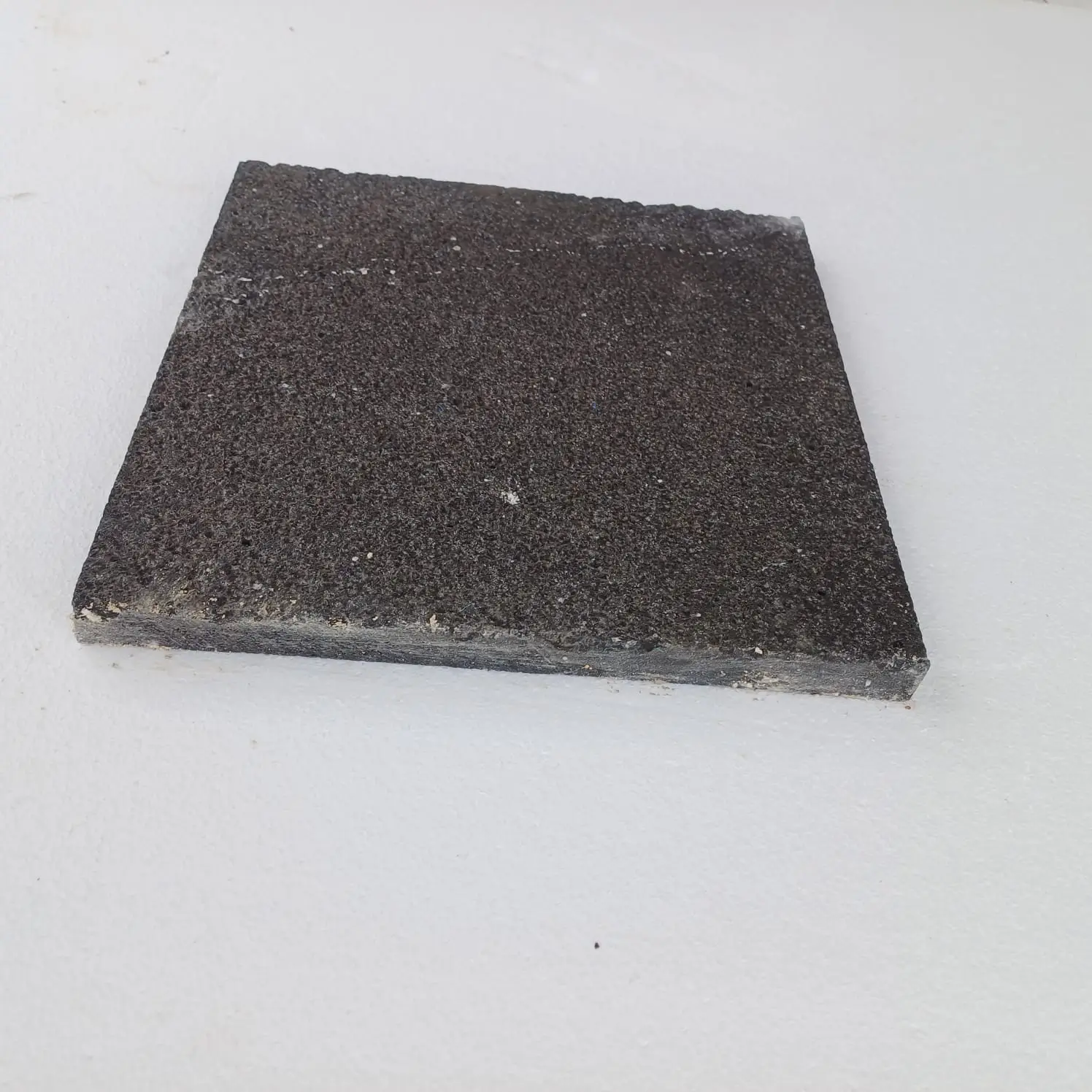
Blue Limestone Against Travertine: Arizona Interior Performance
The limestone versus travertine floors AZ interiors debate comes down to three factors: porosity management, surface continuity, and long-term joint stability under thermal cycling. Travertine is a form of limestone, but its characteristic voids — the cross-section pitting that gives it that organic texture — create a fundamentally different performance profile indoors.
Travertine’s open pore structure absorbs cleaning solutions, grout haze, and household spills more aggressively than dense blue limestone. Filled travertine reduces that problem but introduces a secondary failure point: the filler material (typically epoxy or grout) expands and contracts at a different rate than the host stone. In homes across Tempe where indoor climate control creates additional temperature differentials between morning slab temperatures and afternoon cooling setpoints, that mismatch between fill and host accelerates surface delamination within the voids.
Blue limestone presents a tighter, more uniform pore structure that responds more predictably to sealer penetration and thermal stress. You’ll get consistent sealer performance across the field, which simplifies your maintenance schedule considerably. For a natural stone floor tile comparison in Arizona, the density advantage blue limestone holds over travertine directly translates to lower maintenance frequency and more predictable long-term joint behavior.
- Blue limestone compressive strength typically ranges from 10,000 to 14,000 PSI, exceeding most filled travertine by 20 to 30 percent
- Travertine’s void structure requires annual inspection of filler integrity in high-thermal-swing environments
- Blue limestone absorbs approximately 2 to 4 percent water by weight versus travertine’s 5 to 8 percent range
- Sealer reapplication cycles for blue limestone run every 2 to 3 years in Arizona interiors versus 1 to 2 years for travertine in comparable conditions
- Travertine surface finishes tend to show thermal spalling at edges faster than blue limestone in uncontrolled outdoor-adjacent spaces
Evaluating Hard Stone Flooring Across Arizona Homes
Hard stone flooring options across Arizona homes span a wider range than most homeowners initially consider: blue limestone, travertine, slate, quartzite, marble, and basalt all appear regularly in local specifications. The thermal cycling angle cuts across all of them differently, and understanding those differences helps you make a selection that holds up over a 20-plus year horizon.
Slate performs well thermally but presents a significant risk in Arizona’s dry climate — its layered cleavage planes can delaminate under repeated low-humidity cycling. Quartzite is extremely hard (7 on the Mohs scale) and handles thermal stress well, but its cost premium and limited slip resistance in polished finishes make it a specialist choice rather than a general interior solution. Marble, while aesthetically compelling, etches easily in households with acidic cleaning products and shows thermal stress cracking more readily than blue limestone due to its calcite recrystallization characteristics.
Blue limestone holds a practical middle ground: dense enough to resist thermal deformation, soft enough to cut cleanly in the field without excessive blade wear, and consistent enough in color variation that thermal movement gaps between tiles read naturally rather than as installation defects. That last point is underappreciated — when you’re specifying stone that will move with temperature, a material with natural tonal variation accommodates slightly inconsistent joint widths far better than a uniform-looking material where every millimeter of gap is visible.
At Citadel Stone, we’ve evaluated blue limestone floor tiles in Arizona conditions across residential, hospitality, and light commercial projects, and the performance data consistently supports its thermal resilience relative to competing natural stone categories at a comparable price point.
Slip Resistance and Finish Selection for Arizona Floors
Finish selection isn’t just an aesthetic decision — it directly determines slip resistance ratings, which matter more in Arizona than many homeowners realize. Indoor-outdoor living is the dominant lifestyle driver in markets like Chandler, and that means stone floors regularly transition between dry interior use and wet-foot traffic from pools, outdoor showers, and irrigation runoff.
The ANSI A326.3 standard classifies slip resistance using the Dynamic Coefficient of Friction (DCOF). A minimum wet DCOF of 0.42 is required for wet interior floors. Textured finishes on blue limestone clear that threshold comfortably, while polished finishes commonly fall short of it in wet, active areas — request the wet DCOF test report for the exact finish before you specify it.
- Honed finish: recommended for general Arizona interior use
- Brushed or tumbled finish: appropriate for pool-adjacent transition zones
- Polished finish: limit to low-traffic, dry-use areas only
- Sandblasted finish: highest slip resistance of the four, suitable for outdoor thresholds
The honed finish also provides a practical thermal advantage — its matte surface reflects less direct glare from Arizona’s high solar angle but still reflects meaningful infrared radiation, keeping surface temperatures measurably lower than dark polished alternatives. Field measurements consistently show honed blue limestone running 18 to 25°F cooler underfoot at peak afternoon sun exposure compared to polished dark basalt in equivalent positions.
Thickness Specifications and Base Preparation for Arizona Conditions
Base preparation quality determines more about long-term performance than the stone itself — and in Arizona, that statement carries extra weight because soil expansion characteristics vary dramatically between the Valley floor and higher-elevation zones. Expansive clay soils in parts of the Phoenix metro can exert upward pressure of 3,000 to 5,000 PSF during wet cycles, which overwhelms any mortar bed specification that doesn’t account for it.
For blue limestone floor tiles in Arizona interior applications, a minimum 3/4-inch nominal thickness provides adequate flexural strength across spans up to 16 inches on center when properly bedded. The 5/8-inch material commonly offered through general tile distributors works for fully supported concrete slab installations but creates risk over any subfloor deflection scenario — wood-framed floors in older construction particularly.
Mortar bed depth matters too. A 3/4-inch to 1-inch mortar bed over concrete provides the thermal buffer that decouples stone movement from slab movement. Thin-set-only installations without a decoupling membrane are a long-term liability in Arizona specifically because the slab-to-air temperature differential during daily cycling drives micro-movement at the adhesive interface. A decoupling membrane adds roughly $1.50 to $2.50 per square foot to your installation cost but statistically doubles the effective service life of the mortar bond in thermal swing environments.
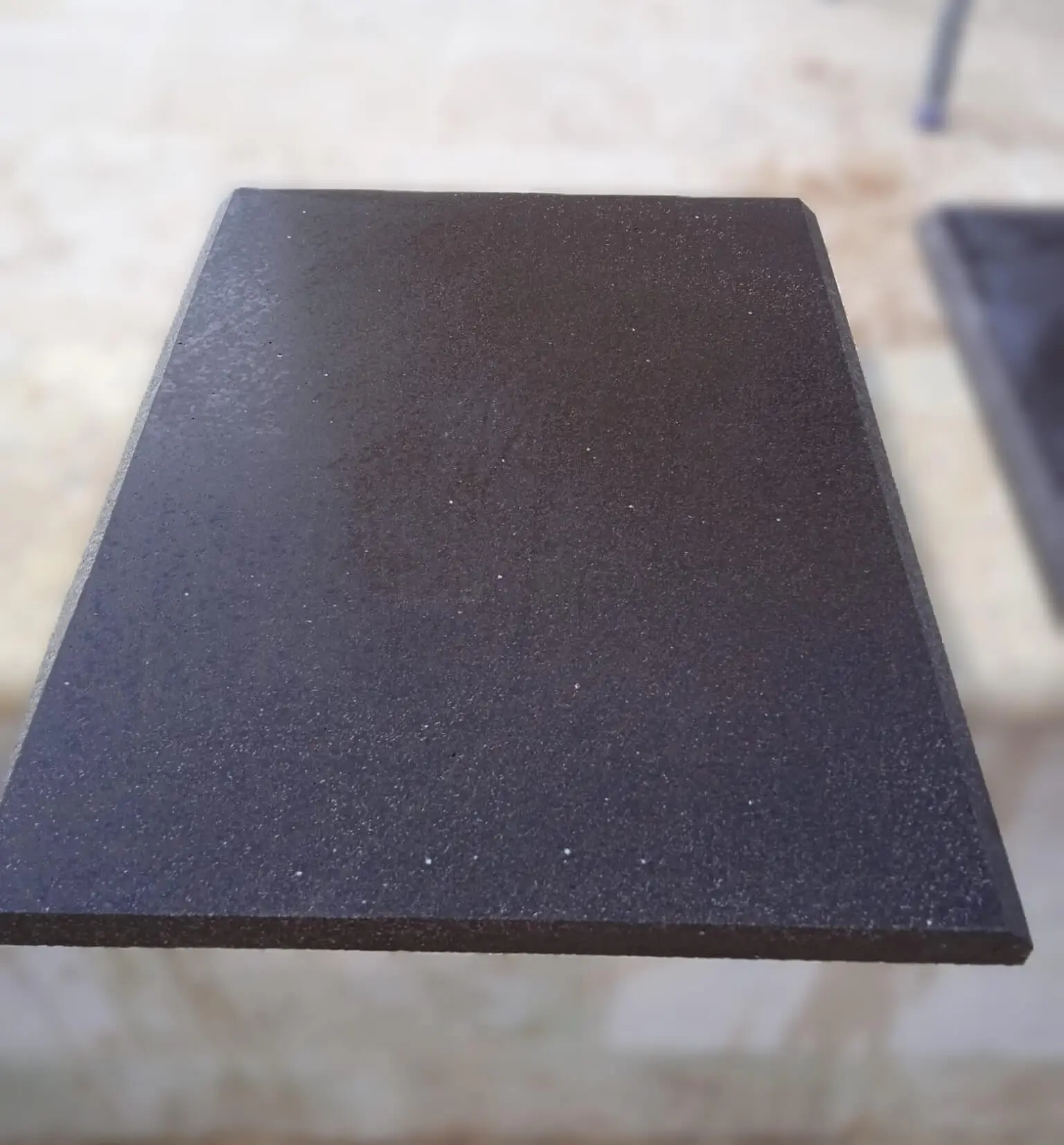
Sealing Protocols That Actually Work in Arizona’s Climate
Sealing blue limestone in Arizona requires you to account for something most product datasheets don’t mention: the application window. Penetrating sealers applied to stone above 90°F surface temperature cure too quickly, creating surface film rather than deep penetration — and surface film peels within 12 to 18 months under Arizona UV exposure. Your effective application window is early morning, before 9 AM, when slab temperatures in Arizona’s summer months are still manageable.
Sealer chemistry matters as much as timing. Silane-siloxane penetrating sealers perform best in Arizona’s low-humidity environment because they bond molecularly to the silica matrix in limestone rather than relying on moisture activation. Fluoropolymer-based sealers provide superior stain resistance but require reapplication every 18 to 24 months in high-UV exposure. For interior blue limestone floors, a quality silane-siloxane penetrating sealer applied in two coats, with a 30-minute wipe-off between coats, provides 2 to 3 years of protection under normal use.
For those specifying our Arizona blue limestone floor tile, we recommend confirming sealer compatibility with the specific stone lot before full application — limestone density and porosity can vary between quarry runs, and what performs perfectly on one batch may over-penetrate on another.
Arizona Desert Stone Floor Alternatives: Where Blue Limestone Fits
The Arizona desert stone floor tile alternatives conversation usually comes down to whether homeowners want the warm earth tones of travertine and sandstone or the cooler, more contemporary palette that blue limestone and quartzite deliver. That’s an aesthetic distinction, but the performance implications of the color choice are real in a state where solar gain through south-facing windows creates measurable temperature gradients across a floor field.
In Peoria, where new construction tends toward open floor plans with substantial south and west glazing exposure, the cooler surface temperature of blue limestone creates a genuine comfort advantage in the primary living zone. Darker earth-tone stones in the same exposure can reach surface temperatures 25 to 35°F higher than blue limestone during peak afternoon hours — a difference you’ll feel barefoot even in air-conditioned interiors when the radiant surface temperature exceeds the air setpoint.
That doesn’t make warmer-toned stones wrong choices — it means you need to understand the trade-off. If your client prioritizes the aesthetic warmth of travertine or sandstone, thermal accumulation can be mitigated through lighter grout colors, proper shading design, and strategic rug placement. For projects where thermal comfort is a primary performance criterion, blue limestone’s natural albedo advantage is a meaningful specification differentiator in any natural stone floor tile comparison in Arizona, not just a stylistic footnote.
- Blue limestone surface temperatures typically 18–30°F cooler than dark basalt or slate under identical exposure conditions
- Warmer-toned travertine and sandstone have higher thermal mass — beneficial in passive solar designs where evening heat release is desirable
- Quartzite provides comparable thermal performance to blue limestone but at significantly higher material cost
- Slate’s layered structure creates freeze-thaw vulnerability in outdoor-adjacent applications despite reasonable thermal coefficient values
- Polished marble accumulates heat efficiently and releases it slowly — comfortable in winter but potentially problematic in Arizona summers
Ordering, Logistics, and Project Planning for Arizona Stone Floors
Material availability affects project timelines as much as specification decisions, and this is where local warehouse inventory becomes a genuine competitive advantage. Import-sourced stone through international distributors typically carries 6 to 8 week lead times for Arizona delivery — a timeline that creates real risk when construction schedules compress or flooring installation follows other trades without buffer.
Citadel Stone maintains Arizona warehouse inventory of blue limestone floor tiles that reduces typical lead times to 1 to 2 weeks for in-stock dimensions and thicknesses. Your project scheduling should still verify current stock levels before confirming flooring installation start dates, but the difference between warehouse-available and import-ordered material is the difference between a smooth subcontractor handoff and a three-week delay that costs more than the stone itself.
Truck delivery logistics also deserve attention in Arizona’s suburban sprawl. Flatbed truck access for pallet delivery requires a clear approach path of at least 40 feet and a turning radius appropriate for a standard 48-foot trailer. Split deliveries to sites with constrained truck access add cost — typically $150 to $300 per additional delivery — and are avoidable with proper pre-coordination. Confirm your delivery site’s access constraints when you place your order so the warehouse team can right-size the truck configuration from the start.
Decision Points: Getting Your Blue Limestone Versus Stone Flooring Arizona Specification Right
The blue limestone versus stone flooring Arizona decision ultimately resolves around three interconnected variables: thermal expansion tolerance, finish and slip resistance requirements, and your project’s long-term maintenance commitment. Blue limestone scores favorably on all three when you specify it correctly — tight joint spacing, decoupling membrane, honed finish, and a proper silane-siloxane sealer program. Miss any of those elements and you’re working against the material’s inherent strengths.
For deeper guidance on material selection and budget structuring for Arizona limestone projects, How to Choose Blue Limestone Tile in Arizona covers the cost and selection framework in detail — a useful companion resource as you finalize specifications for hard stone flooring options across Arizona homes.
The performance case for blue limestone in Arizona interiors is strong, but it’s only as strong as the installation system behind it. Your subfloor assessment, expansion joint layout, finish selection, and sealing schedule determine whether you get a 15-year installation or a 30-year one. Focus your specification energy on those variables rather than the stone selection alone — because the material will perform if the system is right. Projects across Scottsdale, Chandler, and Peoria show that blue limestone floor tiles from Citadel Stone are consistently chosen for their slip-resistance ratings and lower heat-retention profile compared to darker natural stone alternatives.