
Blue black limestone borders Paradise Valley projects carry a structural logic that most specifiers discover only after their first installation — the border element isn’t decorative afterthought, it’s the containment system that determines whether your field pavers stay locked or migrate over time. Getting the perimeter detail right means understanding how this dense, fine-grained stone behaves differently from the field material it frames, especially across Paradise Valley’s significant elevation changes and intense thermal cycles. The border’s thickness, bedding depth, and joint configuration all interact in ways that generic spec sheets don’t explain.
Why Border Selection Defines the Whole Project
You’ll find that blue black limestone borders Paradise Valley designs function as the visual and structural anchor for the entire paved surface. The color contrast between the near-black perimeter and a lighter field paver — travertine, sandstone, or buff limestone — creates a framing effect that reads like architectural detailing rather than simple edging. That edge definition is what separates a refined outdoor space from a pleasant but undifferentiated stone surface.
The material itself earns its role here. Blue black limestone typically registers compressive strength between 11,000 and 14,000 PSI, which exceeds the threshold you need for border applications that bear vehicular overhang loads or resist lateral soil pressure. Its low porosity — usually in the 2.5 to 4% absorption range — also means it resists the salt migration that occasionally stains lighter border stones when irrigation systems run across the surface.
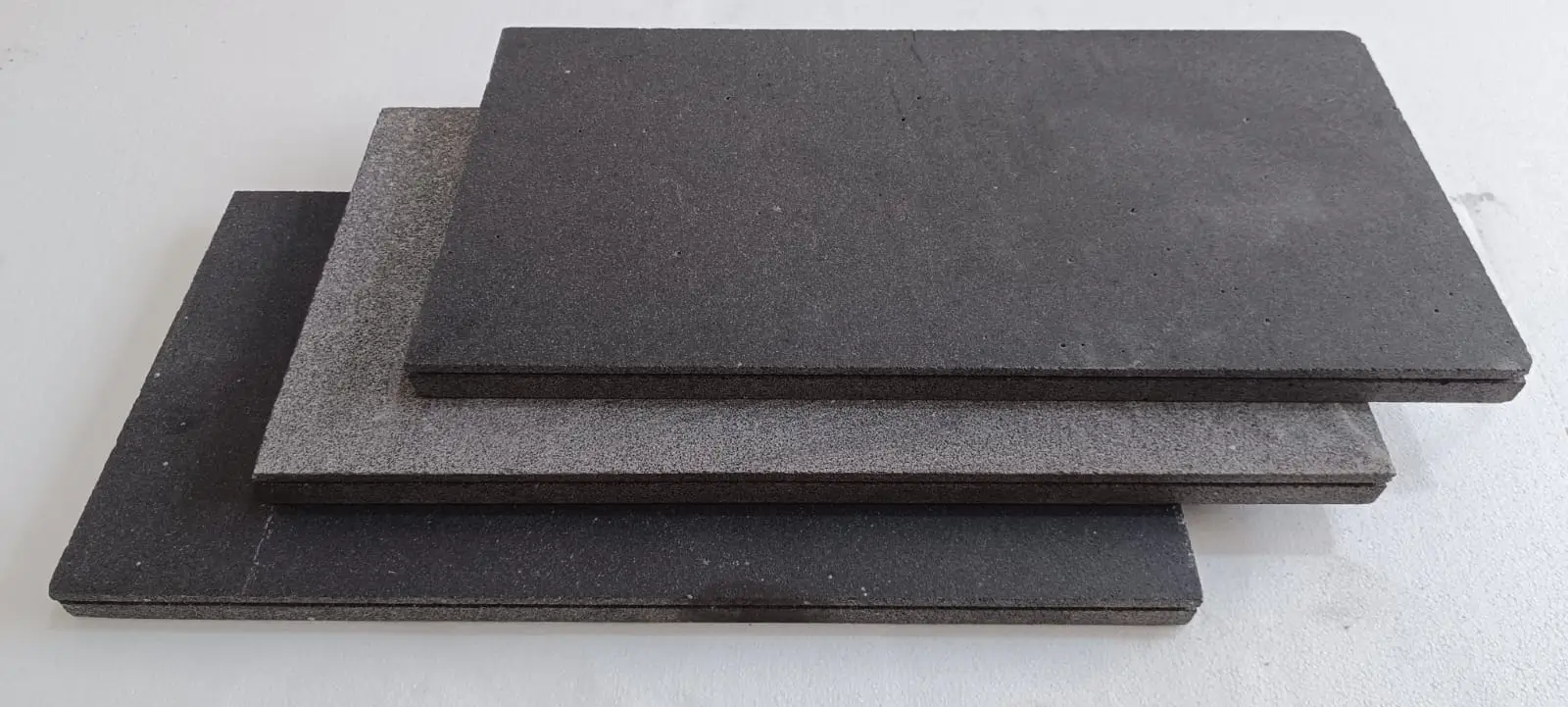
Thickness and Format for Border Applications
The dimension question comes up on every project, and the answer depends on what the border is actually doing. For pedestrian-only perimeter details, 1.25-inch nominal thickness works well. For driveway aprons, pool surrounds with vehicle access, or raised terrace edges that see any lateral load, you’ll want 1.5 to 2 inches. Thinner formats look elegant but deflect under point loads, and deflection at the perimeter is how you get field paver shifting in year three.
- Standard border width runs 4 to 6 inches for single-course perimeter definition
- Double-course borders at 8 to 12 inches total create a more architectural band at terrace transitions
- Coping-profile borders on raised walls require a 2-inch minimum for adequate overhang and drip edge
- Cut-to-width field borders in 3-inch increments give you flexibility for non-standard site geometries
- Matching the border thickness to within 1/8 inch of your field paver thickness simplifies bedding and eliminates trip hazard risk
Blue black limestone paving slabs in Arizona are typically available in both sawn and natural-cleft finishes. For blue black paving slab trim Arizona projects, sawn tops give you the clean linear edge that reads well against field material, while natural-cleft introduces texture variation that can look intentional or uneven depending on the project’s overall language. Choose deliberately — don’t let the finish choice default to whatever arrived from the warehouse first.
Color Contrast and Design Logic for Paradise Valley Elegance
Paradise Valley edging design has trended toward high-contrast perimeter definition over the last decade, and blue black limestone sits at the far end of that contrast spectrum. Against Sedona-inspired terracotta tones or bright white marble field pavers, a blue black border reads almost as a graphic line — precise and intentional. Against warm buff limestone, the contrast is subtler but still sophisticated, especially when the sun hits at a low angle and the blue undertones in the stone come forward.
Understanding the color behavior of this material across the day matters more than most designers realize. The blue-black appearance isn’t static — morning light pulls out blue-grey overtones, while midday sun in Paradise Valley‘s intense exposure shifts the surface toward near-black. Your Paradise Valley edging design intent should account for this range rather than relying solely on a showroom sample viewed under artificial light.
- Pair with white or cream travertine for maximum contrast and a contemporary resort aesthetic
- Pair with grey granite or bluestone field pavers for tonal coherence with subtle depth variation
- Pair with warm buff limestone for a transitional look that bridges traditional and modern vocabularies
- Use blue black as a double border — black outer, grey inner — to build visual layering without adding a third material
Thermal Performance and Expansion Management
Arizona perimeter details fail at a predictable location — the corner. Thermal cycling in the Phoenix metro pushes stone through a daily expansion and contraction range that accumulates stress at 90-degree turns. Blue black limestone has a linear thermal expansion coefficient around 4.7 × 10⁻⁶ per °F, which is favorable, but that doesn’t eliminate the need for expansion accommodation in border runs exceeding 20 linear feet.
For straight border runs, place expansion joints at 15-foot intervals — not the 20-foot spacing you’ll see in some generic specifications. The 5-foot reduction matters because border material is exposed on two faces rather than one, accelerating the surface-to-core temperature differential. Fill those joints with a polyurethane sealant rated for UV exposure and movement rather than a rigid mortar, which will crack and open the joint to weed intrusion.
Projects in Flagstaff face an additional variable — freeze-thaw cycling that doesn’t affect low-desert installations. At Flagstaff elevations, you’ll want to verify your blue black limestone’s freeze-thaw durability rating, as not all quarry sources perform equally under repeated ice expansion within the stone matrix. Request ASTM C880 test data from your supplier before specifying in freeze-thaw zones.
Base Preparation for Border Stability
The border is only as stable as what’s beneath it, and this is where field installations run into trouble more often than anywhere else. A border element that’s properly dimensioned but set in an inadequate base will rock, settle, and pull away from the field pavers within two to three seasons. Your minimum base specification for blue black limestone borders in Arizona should be 6 inches of compacted aggregate base at 95% Proctor density, plus a 1-inch setting bed of either dry-pack mortar or screeded sand-cement.
- Verify native soil bearing capacity before finalizing base depth — expansive clay soils common across parts of the Phoenix metro may require 8-inch aggregate depth
- Extend the aggregate base 4 to 6 inches beyond the outer edge of the border to prevent edge undermining during monsoon saturation events
- Use angular crushed aggregate rather than rounded river rock — angular particles interlock and resist lateral displacement under border edge loading
- Compact the base in two lifts rather than one to achieve consistent density throughout the depth
- Allow 48 hours of cure time on dry-pack setting beds before loading the border with field paver installation traffic
For projects referencing Peoria‘s soil conditions, you’ll often encounter a mix of sandy loam and caliche deposits. Well-prepared caliche actually provides an exceptional sub-base for border installations — it’s naturally compacted and highly stable — but disturbed caliche needs re-compaction before you lay aggregate. Don’t assume undisturbed caliche equals adequate preparation without verifying density.
Installation Sequencing and Field Coordination
Here’s what often gets overlooked on blue black limestone border projects: the sequencing relationship between border installation and field paver installation. Borders should go in first — they establish the geometric framework and the elevation control points from which you work inward. Setting field pavers first and then trying to fit a border around them introduces cumulative tolerance errors that show up as irregular joint widths at the perimeter.
Your border installation sequence should run: base preparation and compaction, dry-fit border run to verify geometry and cut requirements, setting bed application, border placement with continuous string-line elevation control, 24-hour cure before adjacent field paver installation begins. That cure window isn’t optional — foot traffic and adjacent setting bed work will disturb freshly set border stones if you try to compress the schedule.
For blue black paving slab trim Arizona projects with curved geometry — common in Paradise Valley’s organic-landscape design vocabulary — plan for more waste factor than straight runs. Curved cuts in dense limestone require a 14-inch diamond blade at reduced feed rate, and the cut tolerance tightens on inside curves. Budget a 15 to 18% waste factor for radius work versus the 8 to 10% typical for straight runs.
Sealing and Surface Maintenance Protocols
Blue black limestone borders don’t require sealing for structural protection the way more porous limestones do, but sealing serves a different function here — color enhancement and surface consistency. An impregnating sealer with a slight color-enhancing formula will deepen the blue-black tones and reduce the chalky surface haze that some samples develop after extended UV exposure. Apply sealer after installation cure, not before, and not during periods of high surface temperature.
For guidance on complementary stone products used alongside border applications, our smoke blue limestone paving resource covers the full performance profile of the lighter blue-toned material that pairs most naturally with blue black borders in Arizona’s design context.
- Apply a penetrating silane or siloxane sealer rather than a topical coating — topical sealers peel under Arizona UV intensity
- Reseal every 2 to 3 years in full-sun exposures, every 3 to 4 years in shaded or covered applications
- Clean with a pH-neutral stone cleaner — acidic products etch limestone surfaces and strip sealer prematurely
- Address efflorescence on border stones promptly using a diluted phosphoric acid solution followed by full rinsing — don’t let calcium carbonate deposits accumulate across multiple seasons
Sourcing, Logistics, and Project Planning
Material consistency across the border run matters more than it does for field pavers. Because borders are viewed as a continuous line, color variation between pallets becomes visible in a way that’s forgiving in a large field but conspicuous in a perimeter element. When you order blue black limestone borders, request material from a single quarry production run and verify that all pallets carry matching lot numbers. At Citadel Stone, we pull material from consistent quarry sources and can provide lot-matched orders for border projects where color continuity is a specification requirement.
Warehouse lead times for cut-to-width border material typically run 1 to 2 weeks for standard dimensions. Custom profiles — beveled edges, bullnose tops, or step-nosing formats — extend that to 3 to 4 weeks from the warehouse to your project site. Build the lead time into your installation schedule so border material arrives before field paver installation begins, not simultaneously. A truck delivery that arrives mid-project while field pavers are already going in creates sequencing problems that cost more to fix than the time you thought you were saving.
In Sedona, where site access for large delivery trucks is often constrained by narrow canyon roads and HOA restrictions on delivery hours, split your order into smaller truck loads rather than a single full pallet delivery. The additional freight cost is offset by avoiding the delay and handling damage that comes from repositioning oversized loads on restricted access routes.
Border Accents and Pattern Integration
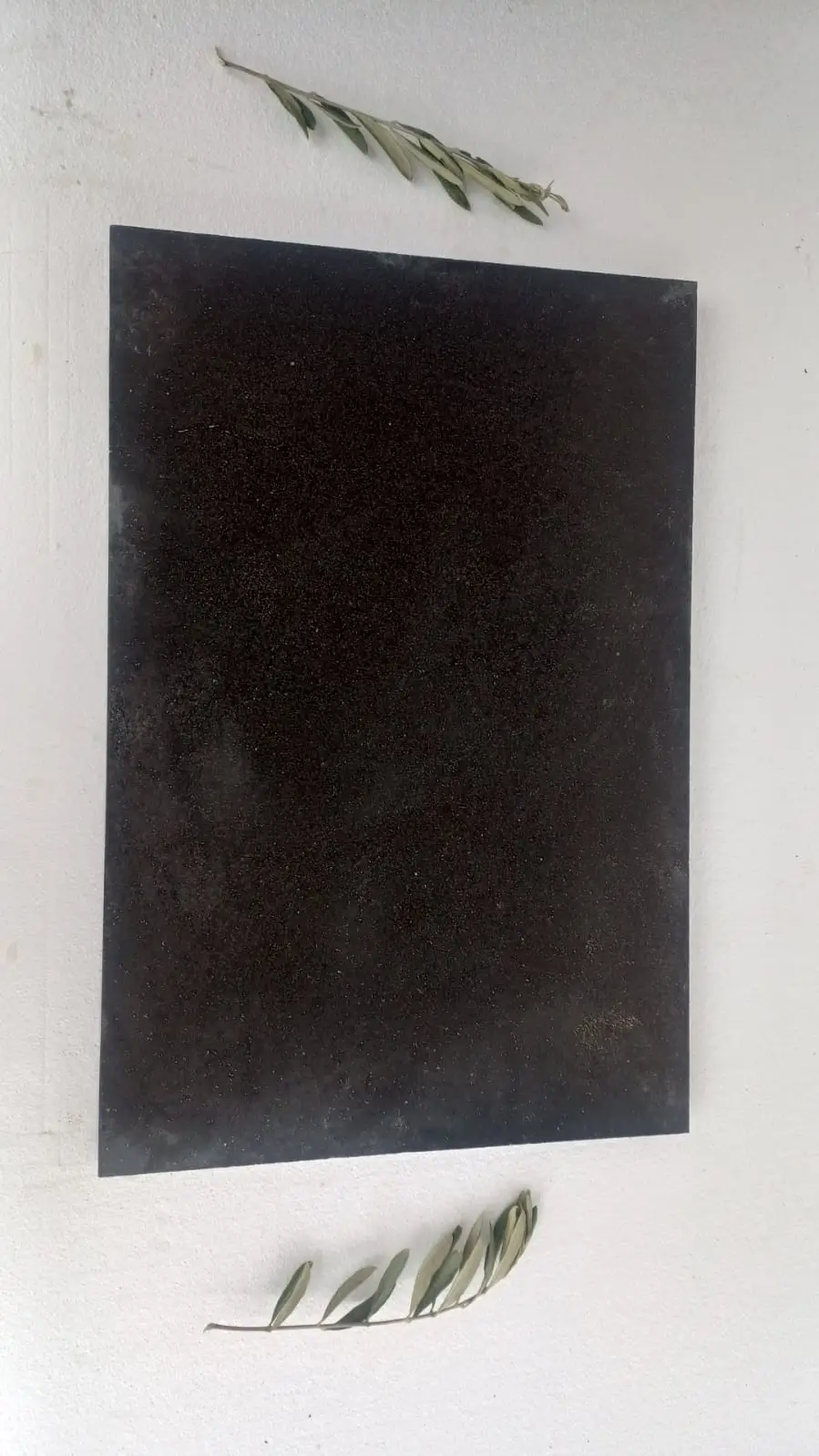
The border accent detail can do more design work than just edge definition if you think about it as a pattern element. A single-width perimeter border is the baseline — but introducing a contrasting accent band of a third material between the blue black border and the field creates depth and visual rhythm that reads at distance. This layered approach to Arizona perimeter details is common in high-value residential work where the landscape design vocabulary borrows from interior material specification.
Consider these pattern integration approaches for blue black limestone borders:
- Insert a 2-inch-wide band of white limestone or cream travertine between the blue black border and the field paver — the sandwich effect creates a frame-within-a-frame at the perimeter
- Use blue black limestone as the primary border and repeat the material as medallion inserts or compass rose details within the field to build material coherence across the plane
- Alternate border formats — full-width slab borders at terrace edges, soldier-course borders at planting bed edges — to differentiate zones without introducing additional materials
- Run the border as a continuous element through step nosings and riser faces to unify vertical and horizontal planes in multi-level designs
Blue black limestone paving slabs in Arizona lend themselves to these integrated pattern approaches because the material cuts cleanly at narrow widths without the edge chipping that affects some softer limestones. These border accents can be specified at 2-inch-wide profiles with confidence that the cut edges will hold through installation handling and long-term service.
What Separates a Good Border Installation from a Great One
The difference between a blue black limestone border that looks exactly right at year ten and one that looks tired at year five comes down to three decisions made before the first stone is set: base depth matched to site-specific soil conditions, joint spacing calibrated to the actual thermal exposure of the perimeter location, and material sourcing from a consistent production lot. Every other detail — sealer selection, pattern choice, finish specification — matters, but these three decisions are load-bearing in a way the others aren’t.
Your specification should also address the transition condition at gate posts, column bases, and landscape wall footings where the border meets a rigid structural element. These transitions need a compressible filler rather than a rigid mortar joint — the structural element doesn’t move with thermal cycling the way the border material does, and a rigid connection at that interface is where cracking initiates. A closed-cell backer rod and polyurethane caulk at these transitions adds less than two hours to the installation but eliminates the most common failure point in Paradise Valley border installations.
For projects that extend the design language vertically, Blue Black Limestone Paving Slab Steps for Peoria Multi-Level Design explores how the same material performs in step nosing and riser applications, providing specification continuity across the horizontal and vertical elements of complex outdoor spaces. Our blue black natural limestone paving in Arizona is the preferred choice for modern desert architecture.