
Design First: Why Black Pavers Define Arizona Landscape Aesthetics
Black walkway paver maintenance Arizona conditions demand starts long before you pull out a pressure washer — it starts with understanding why dark stone became the signature material of desert-modern and xeriscaped landscapes across the state. The visual weight of black pavers anchors low-water plant palettes in a way no tan concrete or beige travertine can replicate. Against the silver-green of agave, the rust-orange of decomposed granite, and the chalky white of exterior stucco, black stone creates contrast that reads as deliberate and sophisticated — which is exactly why it dominates new residential and commercial walkway installations from the ground up.
Your choice of black stone isn’t just an aesthetic preference; it’s a commitment to a specific design language. Desert-modern architecture in Arizona leans hard into material honesty — exposed concrete, corten steel, native plant masses — and black pavers anchor that palette with a permanence that painted or stained surfaces simply don’t offer. The maintenance decisions you make after installation either preserve that visual integrity or erode it within a few seasons.
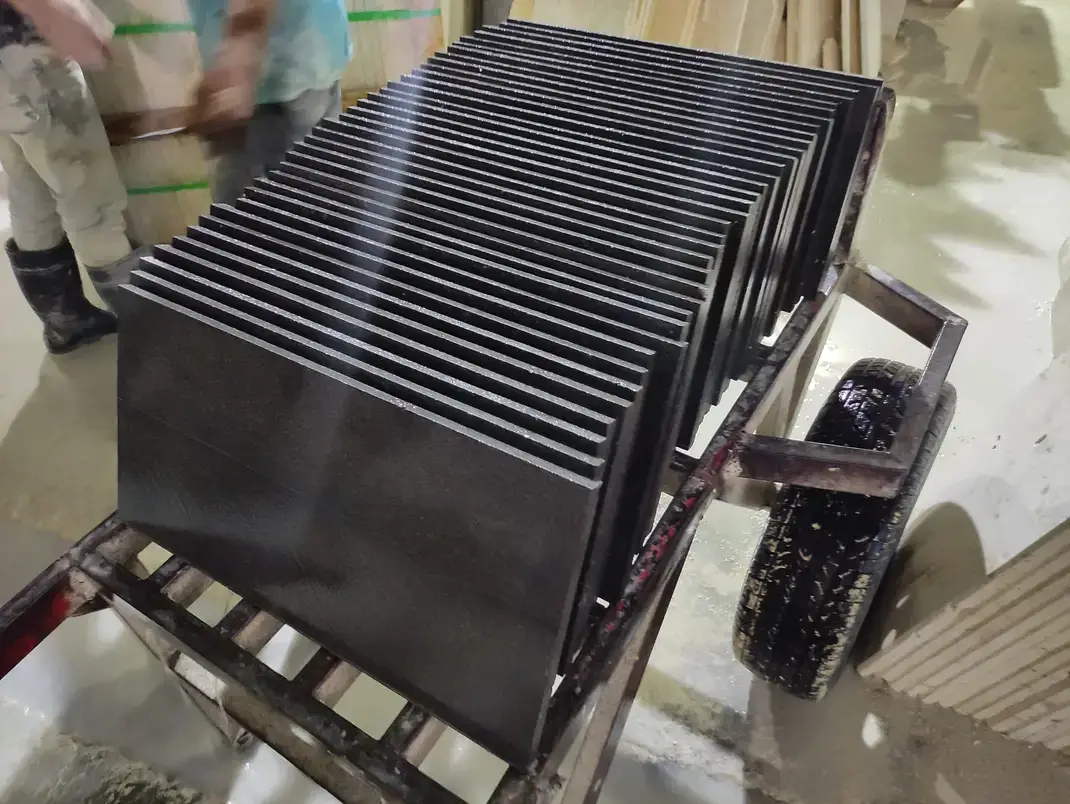
What Your Black Pavers Actually Face in the Arizona Climate
The thermal reality of dark stone in Arizona is significant, but it’s worth framing correctly: surface temperatures on unshaded black pavers can reach 160–175°F on peak summer afternoons. That’s not a reason to avoid the material — it’s a reason to understand how heat cycling affects your sealing schedule and joint sand stability. Most of the maintenance failures seen on black walkway pavers in Arizona trace back to sealers that weren’t formulated for that temperature range, not the stone itself.
Maintaining dark pavers along walkways in Arizona also means accounting for UV bleaching, which affects not just color but surface texture. Arizona’s UV index regularly exceeds 11 during summer months — a level that breaks down petroleum-based sealers in as little as 18 months. You’ll want a UV-stable, penetrating silane-siloxane sealer rather than a surface-coat acrylic if you want the deep, consistent color retention that makes black pavers worth specifying in the first place.
- UV index above 11 from May through September degrades petroleum-based sealers rapidly
- Surface temperatures on exposed black stone can reach 160–175°F at peak hours
- Thermal cycling between day and night creates micro-expansion at joint interfaces
- Monsoon season delivers sudden high-volume water that tests drainage design and joint stability
- Caliche sub-base conditions affect drainage behavior beneath the paver field
Cleaning Black Stone Pavers in Arizona: What Actually Works
Cleaning black stone pavers in Arizona is different from cleaning light-colored materials because dark stone shows efflorescence, mineral deposits, and dust accumulation in ways that are counterintuitive. Calcium deposits from hard Arizona water appear as white hazing on black surfaces — highly visible and easy to misidentify as sealer failure. The fix isn’t re-sealing; it’s targeted acid washing with a diluted phosphoric acid solution (approximately 10:1 water to acid), followed by thorough rinsing and a 48-hour dry period before any sealer is reapplied.
For routine cleaning cycles, you’ll get better results with a pH-neutral stone cleaner applied monthly during monsoon season and quarterly in drier months. Pressure washing is appropriate for annual deep cleaning, but keep PSI below 1,200 and maintain a 12-inch standoff distance from the surface — anything above that range risks opening up micro-fissures in denser basalt or slate varieties and forcing water into the sub-base. In Chandler, where alkaline soil conditions push mineral migration upward through pavers, monthly rinsing with clean water alone significantly reduces the frequency of full cleaning treatments.
- Use pH-neutral stone cleaner — avoid bleach-based products that strip sealer and alter stone chemistry
- Phosphoric acid solutions (10:1 dilution) address calcium carbonate hazing effectively
- Pressure wash annually at 1,000–1,200 PSI with a 40-degree fan tip
- Allow 48 hours of dry time after cleaning before sealer application in summer; 72 hours in cooler months
- Rinse joint sand areas gently — high-pressure targeting of joints displaces polymeric sand and creates weed entry points
The Sealing Schedule That Protects Black Walkway Pavers
Arizona desert black paver sealing and care follows a different calendar than national product recommendations suggest. Most sealer manufacturers print reapplication intervals of 3–5 years on their labels — those intervals were developed for Mid-Atlantic or Pacific Northwest conditions, not the Sonoran Desert. In practice, penetrating sealers on black walkway pavers in Arizona need attention on an 18–24 month cycle at lower elevations, and a 24–30 month cycle in higher-elevation areas where temperatures are less extreme.
The test that tells you more than any schedule is the water bead test: pour a small amount of water on the paver surface. If it beads and holds shape for 60 seconds or longer, the sealer is performing. If it absorbs within 15–20 seconds, you’ve lost effective coverage and the stone is vulnerable to staining and moisture infiltration. For walkways in Peoria that receive regular foot traffic across decomposed granite areas, that absorption test is worth running every 6 months because foot traffic imports silica particles that act as micro-abrasives against the sealer film.
When selecting a sealer product for black pavers, the distinction between enhancing and non-enhancing penetrating sealers matters enormously for aesthetics. An enhancing sealer deepens the black tone and brings out the stone’s natural character — essentially a permanent wet-look without the plastic sheen of a surface coat. A non-enhancing sealer preserves the natural dry color. For desert-modern and xeriscaped landscapes where the design intent depends on that rich, dark surface, the enhancing sealer is almost always the right call.
Joint Sand Maintenance in Arizona Heat
Most walkway maintenance guides skip joint sand management entirely — yet it’s the single biggest factor in the long-term structural performance of your black paver field. Polymeric sand in Arizona’s climate is subject to thermal contraction at night that creates micro-gaps, and those gaps are where weeds establish, ants excavate, and moisture channels form. Black paver walkway upkeep across Arizona that ignores joint sand is incomplete maintenance, regardless of how well the surface is sealed.
Your polymeric sand joints should sit at 90–95% depth capacity at all times. After a monsoon season, it’s common to lose 15–20% of joint depth through washout, particularly on walkways with grades above 2%. Refilling with a fresh application of polymeric sand — using a dry-lay technique and activating with a fine water mist — restores joint integrity without disturbing the surrounding paver field. Don’t use standard dry sand as a refill; it lacks the polymer binders that resist washout and ant excavation, and you’ll be repeating the process after every significant rain event.
For projects where you’re sourcing material and planning maintenance supply runs, it’s worth confirming warehouse stock availability for polymeric sand in the specific gradation your joint width requires. Narrow joints under 3mm need a fine-grade product, while joints from 3–12mm use standard grade — and getting that wrong means a second trip or a delayed project. At Citadel Stone, we keep detailed records of what joint profiles work best with which black stone varieties so you’re not starting that research from scratch.
Integrating Black Pavers with Xeriscape and Desert-Modern Design
The landscape design context matters for maintenance decisions more than most homeowners realize. Black pavers installed adjacent to decomposed granite groundcover — one of the most common combinations in Arizona xeriscaping — face a specific contamination pattern: DG particles migrate onto the paver surface with wind and foot traffic and concentrate in the textured surface of rougher stone varieties. That accumulation dulls the surface and holds moisture against the sealer in ways that accelerate degradation. For guidance on maintaining dark pavers along walkways in Arizona bordered by loose aggregate, see our black walkway pavers for Arizona upkeep to see which surface finishes resist that DG migration most effectively.
The interplay between plant material and paver maintenance is real. Drip irrigation systems that hydrate native plantings adjacent to black paver walkways often create localized wet zones at the paver edge. Over time, that consistent moisture drives efflorescence and can soften polymeric sand joints within a 6-inch zone of the irrigation emitter. Adjusting emitter positioning 8–10 inches away from the paver edge — or switching to subsurface drip in those zones — significantly reduces that maintenance burden without changing the landscape design intent.
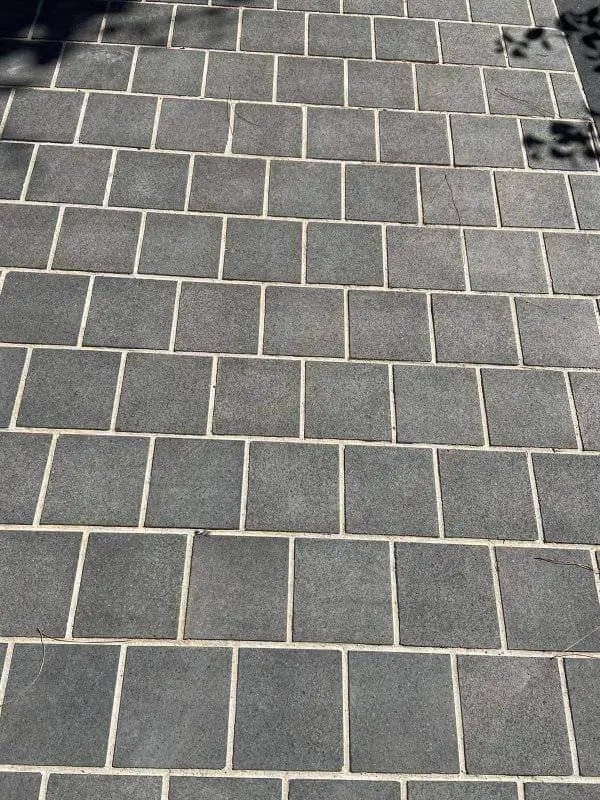
- Position drip emitters at least 8–10 inches from paver edges to prevent edge-zone efflorescence
- Blow or sweep DG contamination off black paver surfaces monthly during windy seasons
- Choose a honed or sawn surface finish over natural cleft when the walkway borders loose aggregate groundcover
- Inspect paver edges where planters meet stone for root intrusion annually — desert plant roots follow moisture channels under pavers
- Use dark-toned polymeric sand in joints adjacent to black pavers so color contrast doesn’t undermine the design palette
Stain Prevention for Black Pavers in Arizona’s Desert Environment
Contrary to the assumption that dark pavers hide staining, black stone makes certain stain types dramatically more visible. Rust streaks from iron-containing soil, orange tannin stains from certain native plant species, and white mineral deposits from irrigation water all stand out sharply against a dark background. Stain prevention is actually more critical for black walkway paver maintenance in Arizona than it is for lighter materials where many of those same stains would blend in.
Iron staining is particularly common in areas where the underlying soil has high ferrous content, which includes significant portions of the Phoenix metro area. You’ll see it manifest as orange-brown streaking that appears to bleed upward through the stone — it’s actually mineral migration from the sub-base moving through the paver body via capillary action. The prevention strategy is a combination of proper base sealing during installation and maintaining your penetrating sealer at full effectiveness so capillary pathways through the stone stay blocked.
For black walkway pavers in Arizona that sit beneath desert trees — ironwood, mesquite, or palo verde — tannin and sap deposits require a different treatment protocol than mineral stains. An enzymatic cleaner or a diluted hydrogen peroxide solution (3% concentration) addresses organic staining without bleaching the surface or stripping the sealer. Never use undiluted bleach on dark stone — it creates irreversible lightening and destroys any enhancing sealer that’s present. In Tempe, where mature mesquite canopy is common in established neighborhoods, addressing sap and pod debris promptly after monsoon events prevents the staining from bonding to the sealer surface.
A Practical Seasonal Maintenance Calendar for Arizona Black Pavers
The Arizona climate has a different seasonal rhythm than most national maintenance guides account for, and your maintenance calendar needs to reflect it. The two critical maintenance windows are late spring (April–May) before peak heat arrives, and early fall (October) after monsoon season concludes. Those two windows give you optimal conditions for sealer application — moderate temperatures, low humidity, and stable forecasts.
- March–April: Full inspection of joint sand depth, surface sealer performance test, any spot repairs to damaged pavers
- April–May: Deep clean if needed, sealer reapplication if water bead test fails, polymeric sand top-off in depleted joints
- June–September: Monthly pH-neutral surface cleaning, prompt removal of organic debris, no sealer work during peak heat
- October: Post-monsoon assessment — joint sand washout evaluation, mineral deposit treatment, edge condition review
- November–February: Ideal window for any paver repairs, base corrections, or expansion of the walkway system since cooler temperatures extend setting times and reduce thermal stress on fresh work
Citadel Stone maintains warehouse stock of compatible sealers, polymeric sand, and cleaning compounds calibrated to Arizona’s stone varieties — which means your maintenance supply runs don’t require weeks of lead time. Having the right materials on hand before that April window opens is the difference between catching the optimal application conditions and missing them until fall.
What Matters Most for Black Walkway Paver Maintenance in Arizona
The through-line across everything covered here is this: black walkway paver maintenance in Arizona is primarily a material chemistry and timing challenge, not a labor-intensive scrubbing exercise. Getting the sealer product right for UV and heat conditions, maintaining joint sand integrity, and acting within the correct seasonal windows reduces your total maintenance workload substantially compared to reactive care after problems appear. The design investment you made in choosing black pavers for your Arizona landscape pays off over a 20–30 year service life when the maintenance foundation is built correctly from the start.
For the structural side of that long-term performance, the decisions made during original installation shape everything that follows. Base preparation and joint detailing choices directly affect how manageable your maintenance program becomes over time — reviewing those fundamentals is worthwhile whether you’re specifying a new installation or troubleshooting an existing one. How to Install Black Walkway Pavers in Arizona walks through those installation decisions in full detail.
Black walkway pavers from Citadel Stone are selected for surface hardness characteristics that generally reduce weed intrusion and seasonal staining in the dry desert conditions common to Phoenix, Mesa, and Chandler throughout the year.