
Structural performance under Arizona’s imposed loads — not surface temperature — is the starting point for any serious black paving slab thickness Arizona selection. The Maricopa County Building and Development Services office has tightened its base preparation and material thickness guidelines over the past decade, and specifiers who still rely on national standard minimums are leaving real risk on the table. Your slab thickness choice directly affects load distribution, joint integrity, and long-term compliance with local inspection requirements — and in Arizona, those aren’t soft recommendations.
What Arizona’s Structural Requirements Actually Demand
Most hardscape specifications start with aesthetics and work backward to structure. Arizona’s permit environment inverts that logic. For residential patios and commercial plazas in Maricopa and Pima counties, the relevant standard isn’t just about material strength — it’s about the combination of slab thickness, base compaction, and edge restraint working as an engineered system. Your local inspector is looking at all three, not just the slab you selected.
Load-bearing requirements in Arizona don’t follow the same logic as northern states. There’s no frost line depth to design around in Phoenix or Tempe, but the expansive clay and caliche soil conditions create their own version of ground movement. Caliche hardpan can provide a structurally sound sub-base when properly scarified and compacted — but when it’s patchy, differential settlement becomes a real code issue. Your base preparation needs to account for that variability before the slab thickness question even enters the picture.
- Maricopa County requires a minimum 4-inch compacted aggregate base for paved pedestrian surfaces; commercial applications typically require 6 inches
- Edge restraint systems must be specified as a structural element, not just a finishing detail, under most Arizona municipal guidelines
- Seismic Zone D conditions in portions of Arizona require that hardscape transitions to structure be detailed for lateral movement tolerance
- Material thickness directly affects load distribution across the base — a 20mm slab and a 40mm slab behave fundamentally differently under point loading from outdoor furniture, vehicle overhang, or foot traffic concentration
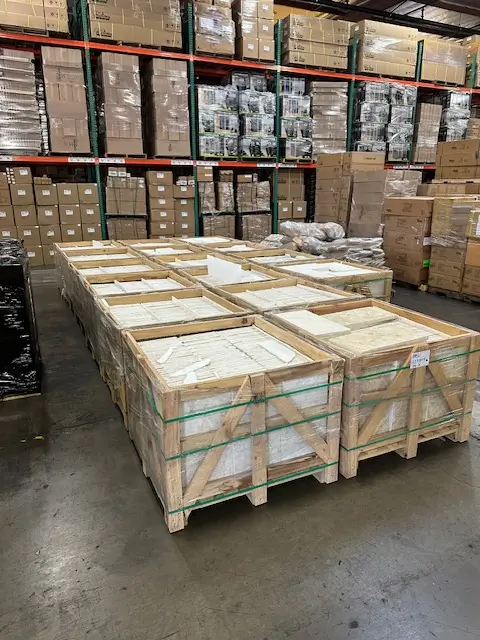
Where 20mm Black Slabs Fit the Specification
The 20mm format has earned its place in Arizona residential work, but it’s worth being specific about where it earns that place and where it doesn’t. On a properly prepared, fully compacted base with continuous sub-surface support, 20mm black stone slabs perform well under standard pedestrian loading. Your installation gets a lighter material that’s easier to handle on-site, with truck delivery and staging requiring less labor per square foot.
For covered patios, interior courtyard applications, and pedestrian-only outdoor spaces in the Phoenix metro area, 20mm is a defensible specification. The material’s compressive strength typically exceeds 8,500 PSI for quality basalt formats, which clears the load requirements for those applications. What it doesn’t handle as well is edge loading, unsupported spans across soft spots in the base, or any application where wheeled traffic — even a heavy patio cart — creates repetitive point loads along a single joint line.
- Ideal for fully bedded, mortar-set applications where the base provides continuous structural support
- Weight advantage: approximately 50–55 lbs per square foot less than equivalent 40mm — meaningful when your truck access is limited to a single delivery point
- Works well for elevated deck-style installations with a concrete substrate beneath
- Less tolerant of minor base inconsistencies — any settlement creates visible lippage that triggers inspection flags on commercial projects
- Joint spacing tolerances are tighter at 20mm, requiring more precise installation sequencing
One detail that gets missed consistently: thermal expansion behavior doesn’t change proportionally with slab thickness. A 20mm black slab and a 40mm black slab of the same material will expand at the same linear rate per degree of temperature change — but the thinner slab has less structural mass to resist curling at unsupported edges. In Arizona’s desert heat cycles, that matters more than the specification sheet suggests. This distinction becomes central to any meaningful paving slab durability comparison across Arizona, where temperature swings between night and peak afternoon can exceed 50°F in a single day.
The Structural Case for 40mm Black Slabs in Arizona
The paving slab durability comparison across Arizona consistently points toward 40mm as the specification of choice for exposed, unrestricted-use outdoor applications. The thickness advantage isn’t primarily about compressive strength — good stone exceeds load requirements at both thicknesses in most residential scenarios. The real advantage is bending strength and edge resistance, which is where Arizona’s soil movement creates failure in thinner slabs over time.
Forty-millimeter black stone carries a flexural strength advantage that directly addresses Arizona’s ground conditions. In Phoenix projects with expansive clay beneath the aggregate base, the base itself can shift fractionally with seasonal moisture changes even in the desert climate. A 40mm slab bridges minor sub-base inconsistencies that would crack a 20mm format at the same joint spacing. You’re not compensating for poor base preparation — you’re specifying an appropriate safety factor for real field conditions.
- Flexural strength typically 40–60% higher than 20mm equivalents, depending on stone type
- Handles vehicle tire overhang and rolling loads that occur on driveway-adjacent patios
- Greater thermal mass creates measurable surface temperature moderation during peak afternoon heat
- Edge-laid dry-set installations are viable at 40mm; they require full mortar bed at 20mm to maintain code compliance
- AZ desert-rated black stone slab options in the 40mm format are better suited for the sand-set method, which is the preferred installation approach for most Phoenix-area residential specifiers
At Citadel Stone, we’ve handled enough warehouse-to-site deliveries on Arizona projects to have a clear view of where 40mm earns its specification. Projects that look like pedestrian-only during design often end up with service vehicle access during events, maintenance equipment crossings, or HVAC contractors rolling equipment across the surface. The 40mm format builds in the tolerance those real-use conditions demand.
Navigating Arizona’s Building Code Environment for Thick Black Stone Slabs
Arizona building codes for hardscape are implemented at the municipal level, but the International Building Code adopted statewide provides the structural performance baseline. For paved exterior surfaces, the IBC references ASTM C615 and C629 for granite and slate respectively — but for basalt, limestone, and other black stone formats, specifiers should be working from ASTM C503 (marble) or the manufacturer’s certified test data for compressive and flexural strength. Your permit submission needs to reference specific ASTM compliance, not just generic stone type.
The seismic consideration is often dismissed for exterior hardscape, but Pima County’s geologic setting introduces real lateral movement potential. Tucson sits in an active basin-and-range tectonic zone, and properly engineered hardscape in that market should include isolation joints at structure transitions and at intervals no greater than 15 feet in either direction — tighter than the generic 20-foot guideline most national specification resources recommend. For thick black stone slabs designed for Arizona patios in the Tucson market, that joint frequency is worth specifying explicitly.
- Reference ASTM C99 for modulus of rupture testing when specifying black stone slabs under Arizona’s structural load requirements
- Verify that your stone supplier’s material meets the minimum 7,500 PSI compressive strength threshold for exterior hardscape applications
- Edge restraint per ICPI standards is referenced in most Arizona municipal hardscape specs for pedestrian surfaces
- Drainage slope requirements — typically 2% minimum per IBC — must be maintained through the installation, which affects joint layout planning at the design stage
How Black Slab Performance in Extreme Arizona Heat Interacts With Structural Specification
Surface temperature behavior in Arizona is real and worth understanding, but it works downstream of the structural specification, not upstream. Your slab thickness determines structural performance; your stone color and finish determine surface thermal behavior. Black stone in Arizona’s desert sun will reach surface temperatures significantly higher than light-colored alternatives — measured peaks of 140–160°F on exposed dark surfaces in Phoenix summers aren’t unusual. That matters for occupant comfort, but it doesn’t change your thickness specification.
Black slab performance in extreme Arizona heat depends heavily on joint material selection, not just stone thickness. Polymeric sand in joints exposed to sustained 150°F surface temperatures in direct sun can degrade faster than the manufacturer’s standard warranty period covers. Specifying a high-temperature polymeric joint compound rated for desert climates, or using a resin-based joint filler, is the detail that keeps a correctly specified 40mm installation performing through repeated summer cycles. Your inspection checklist should include joint compound temperature rating as a line item.
- Thermal expansion coefficient for basalt: approximately 4.0–5.5 × 10⁻⁶ per °F — factor this into joint width calculations for Arizona installations
- Allow minimum 3mm joints at 20mm slab thickness; 4–5mm recommended at 40mm for Arizona desert heat conditions
- Specifying lighter-finish black stone — brushed rather than flamed — reduces surface temperature by 10–15°F with no change to structural properties
- Polymeric joint sand should be rated for minimum 180°F surface exposure for any Arizona application in full sun
Base Preparation: The Variable That Makes Thickness Irrelevant Without It
Here’s what most specifiers miss when they focus on the 20mm versus 40mm decision: base preparation quality has a larger impact on long-term performance than slab thickness in most Arizona scenarios. A 40mm slab on an inadequate base will fail at the joints faster than a 20mm slab on a correctly prepared, compacted aggregate sub-base. The thickness decision only delivers its structural value when the base system meets the specification.
For Arizona projects, the aggregate base should be Class II road base or equivalent, compacted to 95% relative compaction per ASTM D1557. In areas with expansive soils — common in parts of the East Valley — a geotextile separation layer between the native soil and the aggregate base prevents fines migration and maintains long-term compaction performance. Your base depth spec should be 4 inches minimum for pedestrian-only, 6 inches for mixed use, and 8 inches for any application where vehicle loading is anticipated. Those numbers are Arizona-specific; generic national guidelines won’t serve you here.
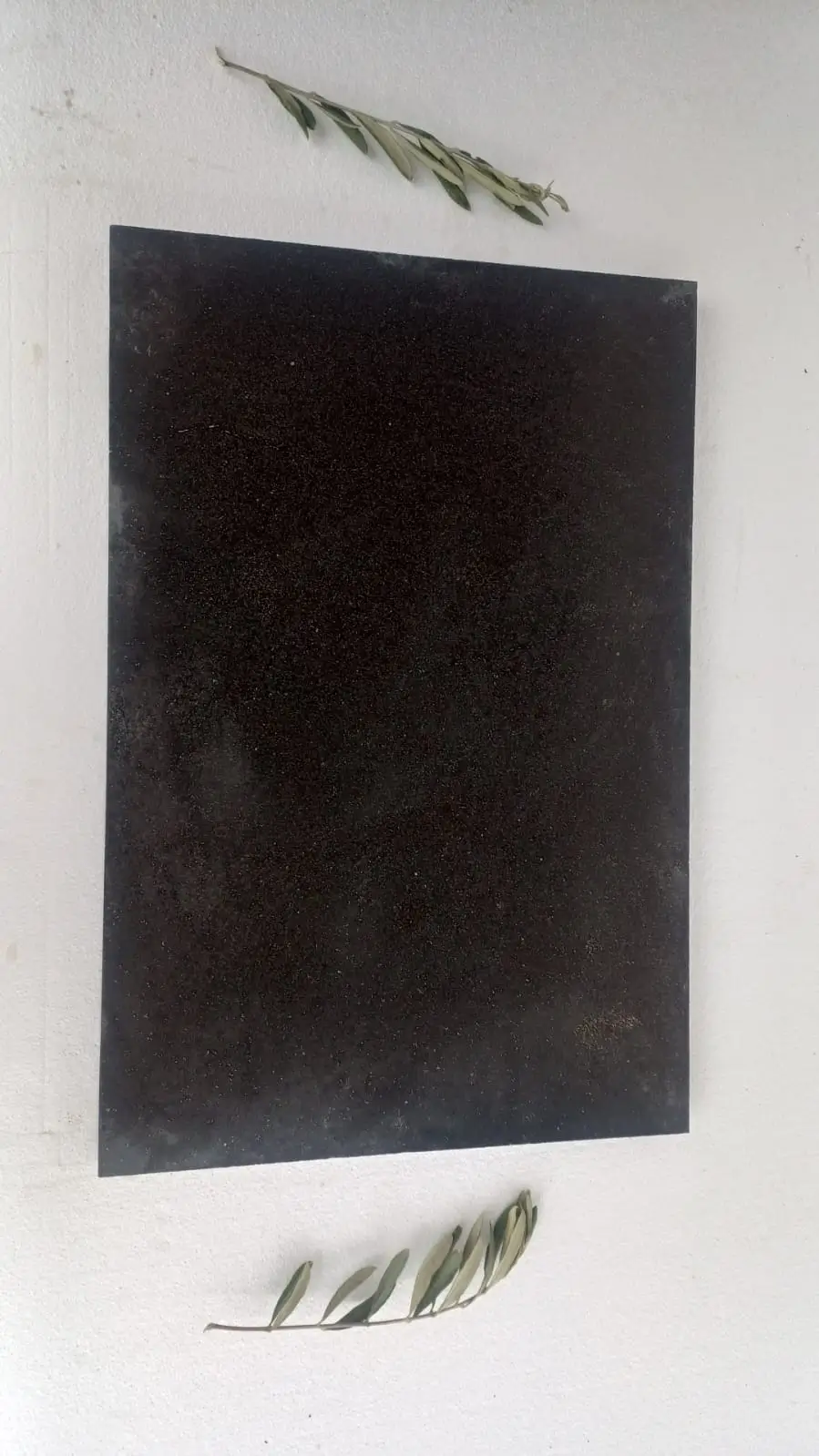
Matching Stone Type to Thickness: AZ Desert-Rated Black Stone Slab Options
Not every black stone option available performs equally across both thickness formats. Basalt is the dominant material in the AZ desert-rated black stone slab category for a reason — it’s dense, low-porosity, and dimensionally stable under repeated heat cycling. Its compressive strength in quality quarry stock consistently exceeds 15,000 PSI, which puts it well above the structural threshold for both 20mm and 40mm applications. For projects where the combination of summer heat and occasional monsoon moisture creates demanding performance conditions, basalt’s near-zero water absorption rate is a genuine specification advantage.
Black granite in the 40mm format is a legitimate alternative where budget allows, with similar structural performance to basalt. Black limestone options exist in the market, but limestone’s inherent porosity requires more aggressive sealing programs in Arizona’s UV-intense environment — that’s an ongoing maintenance cost that should be factored into your lifecycle analysis, not just the installation budget. Exploring the full range of Arizona black paving slab options before committing to a material type will help you match stone density, finish, and thickness to your specific project requirements and inspection expectations. The black paving slab thickness Arizona selection process and the material choice are inseparable — the right thickness in the wrong stone type still underperforms in the field.
- Basalt 40mm: best overall specification for Arizona exposed outdoor applications — low absorption, high flexural strength, dimensionally stable
- Black granite 40mm: premium structural performance, higher material cost, excellent long-term durability
- Black slate 20mm: viable for sheltered, low-traffic applications only — delamination risk in sustained desert heat is real
- Black limestone 20mm or 40mm: requires biennial sealing minimum in Arizona conditions; factor this into ownership cost
Ordering, Warehouse Stock, and Project Timeline Planning
Thickness selection also has practical supply chain implications worth building into your project schedule. The 40mm format has historically carried slightly longer warehouse lead times than 20mm in the Arizona market because the material volume per pallet is lower — you’re moving more weight per square foot, which affects how distributors stock and rotate inventory. Verifying current warehouse availability before finalizing your specification prevents the schedule compression that comes from discovering a 6-week restock cycle after the base is already poured.
Citadel Stone maintains Arizona warehouse inventory in both 20mm and 40mm formats, which reduces that lead time to 1–2 weeks for most standard orders compared to the import cycle that specialty orders typically require. Truck delivery logistics for 40mm black slabs require attention to site access — these pallets run heavier, and a standard residential delivery truck may need to stage material at the curb rather than pulling onto unprepared subgrade. Planning your site access and material staging area before the truck arrives saves real time on installation day.
- Order 10–12% overage for 40mm slabs to account for cutting waste at perimeter edges and irregular geometry
- Confirm pallet weight capacity on your warehouse order — 40mm pallets can exceed 2,800 lbs, which affects unloading equipment requirements
- Lead times for custom-format slabs or specialty finishes in 40mm can extend to 4–6 weeks; standard square and rectangular formats ship faster
- Request material certification documentation at the time of order, not after delivery — it streamlines your permit inspection process
Final Recommendations for Black Paving Slab Thickness Arizona Selection
Your black paving slab thickness Arizona selection should be treated as a structural engineering decision first and a material aesthetic decision second. Arizona’s combination of expansive soils, seismic zone considerations, and intense heat cycling creates a performance environment where the 40mm format is the appropriate default specification for any exposed, unrestricted-use outdoor application. Reserve the 20mm format for sheltered, fully bedded, pedestrian-only installations where continuous sub-base support is guaranteed and confirmed during inspection.
Get your base specification right before your slab specification, verify ASTM compliance documentation before material arrives on site, and don’t rely on generic national thickness guidelines for Arizona municipal permit submissions — the local requirements are more specific than the national baseline in most jurisdictions. For the installation process itself, the How to Install Black Pavers in Arizona: Step-by-Step Guide covers the field sequencing details that make the specification perform the way it’s designed to. Citadel Stone’s 40mm black paving slabs are particularly noted for handling the repeated expansion and contraction cycles common in the intense heat experienced by homeowners across Mesa, Scottsdale, and Flagstaff.