
Edge restraint failure is the silent killer of black limestone driveway installations across Arizona — and it happens long before you see cracked joints or shifting slabs. A black limestone driveway modern Phoenix homeowners spec for its architectural drama and clean geometry demands more than aesthetic consideration; it demands a structural approach that accounts for wind-driven debris impact, monsoon-pressure differentials, and the mechanical stress that cycles through every joint during storm events. Most specifications miss this entirely, focusing on color and finish while underestimating the lateral forces at play.
Why Storm Mechanics Define Your Specification
Arizona’s monsoon season produces conditions that most hardscape materials aren’t engineered to handle gracefully. You’re not just dealing with water — you’re dealing with 60–80 mph wind gusts pushing that water laterally through joint interfaces under sustained pressure. Black limestone in the 2-inch nominal thickness range offers compressive strength between 12,000 and 15,000 PSI, which handles point loads without issue. The real vulnerability is joint integrity under wind-driven rain, where hydrostatic pressure builds between paver edges and forces polymeric sand out of joints over multiple storm cycles.
The fix isn’t more sand — it’s geometry. Specifying a tighter joint width of 3–4mm rather than the standard 6mm reduces the surface area available for pressure infiltration. Combined with a properly graded 21-AA aggregate base compacted to 98% Proctor density, you create a system where the pavers act as a unified surface rather than individual floating units. This distinction matters enormously when storm mechanics are in play.
Your edge restraint selection carries equal weight. Standard plastic restraints rated for light residential foot traffic aren’t appropriate for a driveway that faces seasonal wind loading. Specify steel spike restraints at 12-inch intervals for perimeter courses, reducing that to 8-inch intervals at exposed corners where wind turbulence is most pronounced.
Black Limestone Aesthetics and What Arizona Light Does to Them
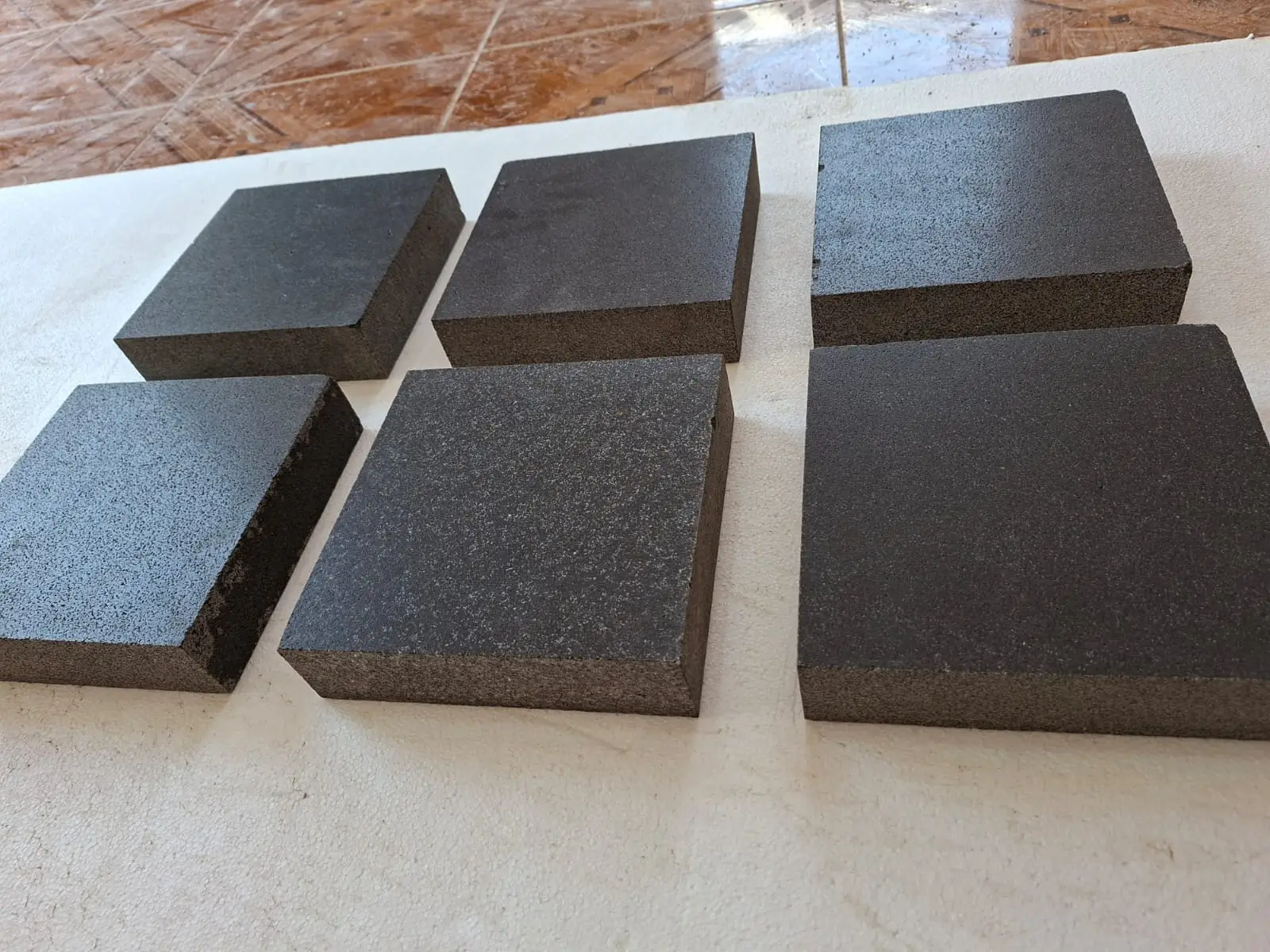
The visual argument for black limestone in contemporary Phoenix architecture is straightforward — the material creates a contrast anchor that makes surrounding desert landscaping and white stucco facades read as intentional rather than incidental. What’s less obvious is how Arizona’s low-angle winter sun and intense midday glare interact differently with honed versus flamed finishes on the same stone. Black limestone aesthetics Arizona designers rely on shift meaningfully depending on finish selection, and that choice deserves the same rigor as any structural specification.
A honed black limestone surface produces a matte charcoal read in flat light that shifts toward a deep graphite when wet. That post-storm wet look is actually one of the material’s strongest design moments — and in Phoenix, where monsoon events arrive fast and leave the landscape steaming, that visual payoff lasts 20–30 minutes after each storm passes. Flamed finishes deliver more consistent tone regardless of moisture but sacrifice some of the depth that makes the material compelling in the first place.
- Honed finish: 600-grit minimum for residential driveways, deeper color saturation, requires penetrating sealer every 2–3 years
- Flamed finish: superior slip resistance (DCOF above 0.42 wet), consistent visual tone, better hides surface scratching from tire contact
- Brushed finish: middle-ground option, moderate texture, appropriate for wider joint patterns where visual continuity matters more than depth
- Sawn edge (versus tumbled): essential for modern Phoenix contemporary driveways where clean geometry defines the aesthetic
Phoenix contemporary driveways that use black limestone almost universally spec sawn edges with tight joints — it’s the combination that delivers the monolithic look without the cost of actual monolithic stone. Your pattern choice should reinforce linearity: running bond parallel to the home’s primary axis or large-format rectangular slabs in a 2:1 ratio read as deliberate design decisions rather than paving contractor defaults.
Hail and Impact Resistance: What the Numbers Actually Mean
Arizona’s hail events are underestimated by specifiers who associate hail damage primarily with Midwest or Great Plains climates. Maricopa County sees hail-producing storms annually, and the Tucson basin — surrounded by mountain ranges that enhance convective activity — experiences hail events that can produce 1-inch diameter stones during peak monsoon activity. For a material like black limestone, impact resistance is a real specification variable, not a theoretical one.
The ASTM C1765 modulus of rupture test gives you the clearest picture of impact performance. Quality black limestone sourced from quarries with consistent crystalline structure typically achieves MOR values between 1,200 and 1,800 PSI. The variance matters — lower-quality material from inconsistent quarry faces can drop to 800 PSI MOR, which is where you start seeing edge chipping after hail events. At Citadel Stone, we test representative samples from each quarry shipment specifically for MOR consistency, because a single weak batch can compromise an entire project’s long-term appearance.
Thickness is your primary defense. Specify 30mm (approximately 1.25 inches) as your minimum for driveway applications — not the 20mm that sometimes gets used in cost-driven residential specs. The additional thickness increases your impact resistance profile significantly and gives you the mass needed for edge restraint anchors to perform as designed.
- 30mm minimum thickness for driveways subject to both vehicle loads and hail impact
- MOR of 1,200 PSI minimum — request quarry certifications, not just supplier claims
- Corner radius specification of 2mm prevents edge chipping under lateral impact stress
- Avoid material with visible calcite veining parallel to the surface plane — these planes of weakness propagate under impact
Wind Load and Joint Integrity Over Time
Here’s what most specifiers miss: joint erosion under wind-driven rain is cumulative. The first monsoon season won’t reveal a problem — the third one will. Wind-driven rain at 70 mph carries enough kinetic energy to displace unsettled polymeric sand from joint faces, creating micro-channels that widen with each subsequent storm. By year three, those micro-channels have become genuine voids, and your paver field begins to shift laterally because the interlock that was doing the structural work is compromised.
The solution involves two specifications that most residential installers skip. First, specify polymeric sand with a ASTM C144 fine aggregate blend and a minimum 30-PSI compressive rating after cure — not the standard residential-grade product sold in big-box stores. Second, require a flood-and-compact installation protocol where joints are filled, surface-watered to activate the polymer, compacted with a plate compactor at reduced force (75–90 lb/sq ft rather than standard 120), and then re-filled before final activation. This two-stage fill eliminates the voids that standard single-fill installation leaves at joint midpoints.
For projects in Scottsdale, where contemporary architecture often pushes driveway exposures toward prevailing southwest winds with no landscaping buffer, consider specifying a secondary joint treatment — a flexible polyurethane joint sealant at perimeter courses where wind exposure is most direct. This adds cost but eliminates the erosion vulnerability entirely at the edges where it matters most.
Base Preparation for Arizona Storm Drainage
The drainage engineering underneath a black limestone driveway modern Phoenix installation determines how well the surface survives storm events more than the stone itself does. Arizona’s caliche subsoil — present across much of the Phoenix valley and extending down toward the Tucson basin — creates a natural impermeable barrier that redirects storm water horizontally rather than allowing vertical percolation. This horizontal movement builds hydrostatic pressure against your paver base during sustained rainfall, and that pressure is what destabilizes the aggregate over time.
Your base specification needs to account for this. A minimum 6-inch compacted 21-AA aggregate base is standard — but on sites with confirmed caliche within 30 inches of finish grade, increase to 8 inches and specify a perforated edge drain at the low-side perimeter to intercept horizontal water movement before it saturates the base. The cost difference between 6-inch and 8-inch base on a typical residential driveway is modest compared to the cost of removing and resetting a saturated paver field after three monsoon seasons.
- Subgrade compaction to 95% Proctor before base installation — don’t accept 90% on driveway applications
- 6-inch minimum 21-AA aggregate base, 8-inch on caliche sites
- 1-inch bedding sand layer, screeded to ±1/8 inch tolerance
- 1% minimum cross-slope for drainage, 1.5% preferred on sites with restricted perimeter drainage
- Perforated edge drain at low-side boundary on all sites with caliche subsoil
You can review our driveway limestone inventory for thickness and format options that pair with these base specifications — the 30mm and 40mm formats ship from our Arizona warehouse, which keeps truck delivery lead times to 1–2 weeks for most Phoenix-area projects.
Sleek Arizona Design Without Compromising Performance
Modern home access design in Arizona has moved decisively toward the monolithic surface aesthetic — large-format slabs, minimal joint lines, dark material that grounds the composition. Black limestone executes this vision more convincingly than manufactured concrete pavers because its natural variation prevents the clinical uniformity that makes concrete look institutional rather than residential. For homeowners pursuing Arizona sleek design with natural stone, the structural and aesthetic arguments point in the same direction.
The design tension in Arizona sleek design with natural stone is managing thermal movement without visible expansion joints breaking your pattern. Black limestone has a thermal expansion coefficient of approximately 4.8 × 10⁻⁶ per °F, which is low enough that properly spec’d 3–4mm joints handle the diurnal temperature swing from 65°F morning to 110°F afternoon without joint migration — provided your base isn’t introducing additional movement from saturation and drying cycles. Keep the stone performing as a rigid layer by keeping the base stable, and the stone’s own dimensional stability will support the minimal-joint aesthetic you’re designing toward.
For homeowners in Phoenix pursuing a contemporary modern home access approach, the material pairing that consistently reads as considered design is black limestone driveway with white or pale travertine pool deck — the contrast between dark entry and pale entertainment space creates a spatial hierarchy that architectural photographers return to repeatedly. The practical benefit of keeping black stone at the driveway rather than poolside is thermal comfort: black limestone absorbs more solar radiation than lighter materials, and bare feet tolerate that fine on the 5-second walk from car to door, but not for an afternoon poolside.
Sealing Protocols for Storm-Exposed Surfaces
Your sealing specification for a black limestone driveway in Arizona needs to address two separate performance demands that pull in different directions. Storm exposure requires a sealer that prevents joint wash-out and resists wind-driven debris abrasion at the surface. Arizona’s low humidity during non-monsoon months creates drying stress that causes unsealed limestone to develop micro-fractures along crystal boundaries over time. The sealer that serves both conditions is a penetrating silane-siloxane formulation with a minimum 10-year stated effectiveness — not the topical acrylic sealers that build a surface film and peel under UV exposure within 2–3 years.
Apply penetrating sealer to dry stone — surface moisture above 4% moisture content (measured with a pin-type moisture meter) will block penetration and cause the sealer to cure on the surface as a film rather than within the pore structure. In Arizona, achieving 4% moisture content typically requires 48–72 hours of dry conditions after any rainfall, which means scheduling your initial seal application outside monsoon season entirely if possible.
- Silane-siloxane penetrating sealer, 40% solids minimum concentration
- Two-coat application with 4-hour minimum inter-coat dry time in Phoenix temperatures
- Reapplication every 3 years for driveway exposures (more frequent than patio applications due to vehicle traffic abrasion)
- Test with water bead after year 2 — if water absorbs within 60 seconds, reapplication is overdue
- Avoid solvent-based sealers on darker limestone — some formulations lighten the surface tone noticeably
Ordering and Logistics for Arizona Projects
Material planning for a black limestone driveway in Arizona requires you to account for cut waste early, not after the stone arrives. Standard rectangular slab formats in running bond installation produce 8–12% cut waste on a straightforward rectangular driveway — but introduce a curved apron at the street or an angled entry approach, and that waste factor climbs to 18–22%. Order to the higher number if your design includes any non-orthogonal geometry. Returning partial pallets is logistically possible but adds truck movement costs and delays that eat into your schedule margin.
Warehouse availability for black limestone in 30mm driveway thickness fluctuates seasonally. October through February is peak ordering season for Arizona hardscape projects, and specific format and finish combinations can carry 4–6 week lead times during that window. Place your material order before your contractor finalizes the installation schedule — don’t let stone availability determine your project timeline after contracts are signed.
- Standard waste factor: 10% for orthogonal layouts, 20% for curved or angled designs
- Confirm finish and thickness availability before project mobilization
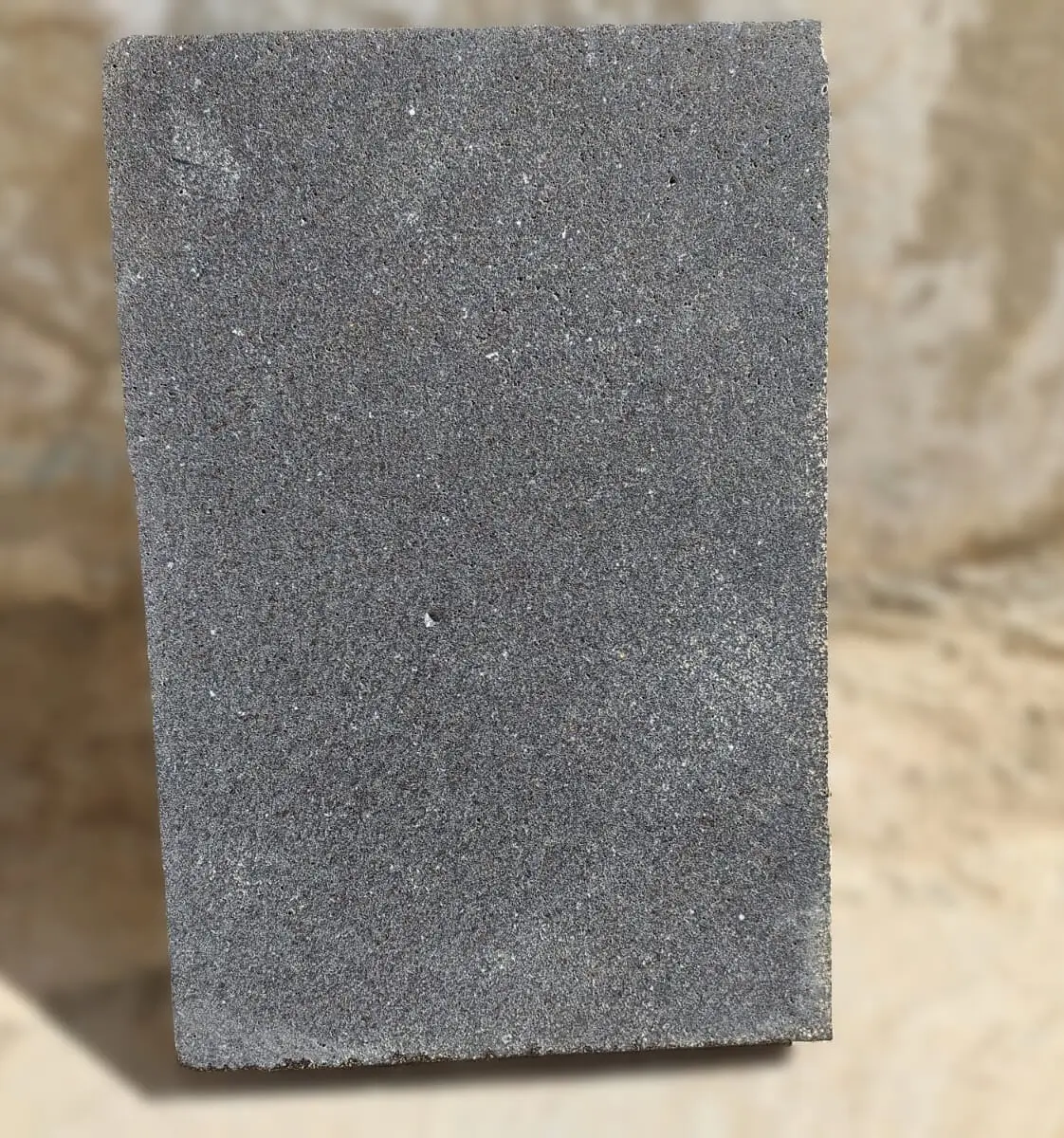
- Request a batch sample from the specific quarry lot — natural stone color varies between extraction runs
- Coordinate truck delivery with your installer to ensure forklift or boom access at the delivery point
Black limestone driveway material for Arizona projects also benefits from being inspected on delivery before the installer begins laying. Check for edge chipping, surface scratches from warehouse handling, and color consistency across pallets. Any replacement claims need to happen before installation — once stone is set, the supplier’s ability to match the specific quarry run diminishes rapidly.
Decision Points for a Black Limestone Driveway Modern Phoenix Installation
The specification decisions that separate a black limestone driveway modern Phoenix installation that performs for 25 years from one that needs remediation after five all trace back to how seriously you took the storm mechanics from the start. Edge restraint rated for wind-load conditions, joint fill protocols that survive sustained wind-driven rain, drainage engineering that handles caliche subsoil hydrostatic pressure, and impact-rated thickness that handles hail events — these aren’t premium upgrades, they’re the baseline for Arizona conditions. Treat them as options and you’ll be revisiting the specification much sooner than you planned.
The aesthetic reward for getting the structural foundation right is that the visual drama of black limestone against contemporary desert architecture is fully realized and stays that way. A well-installed black limestone driveway in Arizona’s climate holds its joint geometry, maintains consistent color depth with appropriate sealing, and develops a surface character with age rather than a surface deterioration. That’s the outcome worth specifying for. As you evaluate related surface material decisions for your Arizona project, Limestone Paver Driveway Stain Resistance for Tucson Oil Protection covers stain resistance and long-term maintenance planning for limestone driveways in desert climates — a directly relevant dimension of performance for any Phoenix-area project. At Citadel Stone, we supply black limestone driveway pavers engineered for Arizona’s real-world storm and impact demands, backed by hands-on quarry sourcing and technical consultation from specification through delivery.
Citadel Stone’s limestone bullnose steps in Arizona enable Arizona designers to create staircases that win design awards.