
Budget overruns on black limestone driveway heat Scottsdale projects rarely trace back to the material itself — they trace back to freight miscalculations and regional labor assumptions that don’t hold up once contracts are signed. The Phoenix metro market operates differently from national cost models, and the gap between a well-sourced project and a poorly planned one can reach 25–35% of total installed cost before a single paver touches the ground. Understanding how Arizona’s supply chain dynamics, market labor rates, and material-to-freight ratios interact will sharpen your budgeting from the start.
Project Cost Fundamentals for Arizona Black Limestone Driveways
The delivered cost of black limestone in Arizona reflects a specific freight reality — most of this material travels from quarry sources in the Pacific Northwest, Mexico, or India before it reaches a regional warehouse. Your base material price per square foot at origin means very little without adding freight, staging, and local delivery to your jobsite. Depending on your project location, those logistics layers can add $3–$6 per square foot to what looked like an attractive material quote.
Sourcing decisions made early in design will define your cost structure more than any other variable. At Citadel Stone, we recommend clients lock in freight and staging costs before finalizing their material specification — because substituting materials mid-project to hit a budget is considerably more disruptive than adjusting the spec at the design table. Black limestone driveway pavers in Arizona typically land in the $8–$14 per square foot range for material only, with installed costs in the $18–$28 range depending on base complexity and site access.
Freight Distance and Regional Material Availability
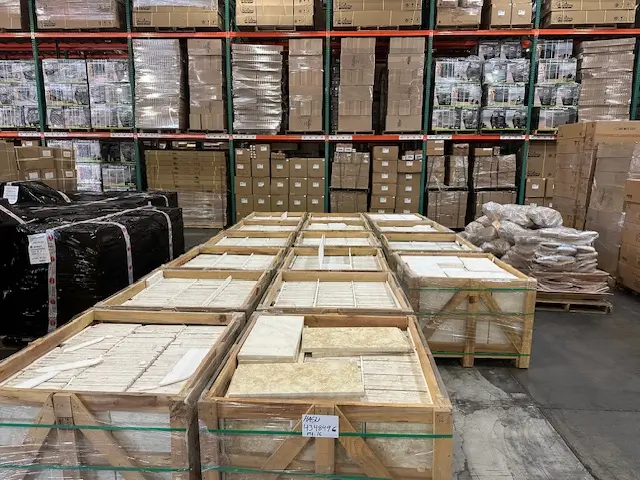
Arizona sits at a freight crossroads that creates interesting cost dynamics for black limestone driveway heat Scottsdale projects. Material coming from Mexican quarries through Nogales arrives quickly and cheaply relative to Indian or Turkish imports clearing West Coast ports. Your project location within Arizona matters considerably — a driveway project in Yuma near the California and Mexico borders benefits from shorter haul distances than an equivalent project deeper in the valley, and that geographic advantage can translate to $0.80–$1.50 per square foot in freight savings at volume.
The practical implication for your project is straightforward: always ask your supplier where the material currently sits. Warehouse stock that’s already in-state costs you one delivery leg, not two. Offshore stock that needs to clear customs and truck from a port warehouse can add 4–6 weeks and meaningful freight cost to your timeline.
- In-state warehouse availability reduces lead time from 6–8 weeks to 1–3 weeks in most cases
- West Coast port material incurs additional drayage to Arizona distribution points
- Minimum order quantities affect your per-unit freight cost — smaller projects pay a premium
- Oversized truck loads carrying 1.5-inch and 2-inch thickness materials have weight restrictions on some rural Arizona routes
- Confirm your supplier’s warehouse location — Phoenix metro versus Tucson involves different final-mile costs
Labor Market Conditions and Installation Cost Ratios
Arizona’s construction labor market has tightened considerably over the past several years, and the hardscape trades have felt that pressure sharply. Experienced stone installation crews in the Phoenix metro now command $9–$14 per square foot for installation labor on standard residential driveway projects — a meaningful increase from figures quoted even three years ago. Your material-to-labor cost ratio for a black limestone driveway project in Arizona will typically run 55/45 to 60/40 material-to-labor, which inverts the ratio many out-of-state cost models assume.
This ratio shift has a direct implication for value engineering decisions. Spending more on a higher-quality material specification — better edge finishing, tighter dimensional tolerances, superior natural cleft profiles — actually makes financial sense when labor costs are already elevated. You’re essentially diluting a fixed high labor cost across a better material investment. Conversely, cutting material cost by 15% while leaving labor costs unchanged saves less than most homeowners expect on the total installed number.
Thermal Considerations and Their Budget Planning Impact
The thermal characteristics of black limestone driveway surfaces in Scottsdale’s desert environment create specific budget planning requirements that go beyond the material cost itself. Scottsdale summer temperatures routinely push ambient air to 110–115°F, and dark natural stone surfaces can reach surface temperatures of 160–175°F under direct afternoon exposure. That thermal load isn’t just a comfort consideration — it’s a specification driver that affects your substrate preparation budget, joint material selection, and long-term maintenance cost model.
Black limestone heat retention Arizona projects must account for differential thermal expansion between the stone, the setting bed, and the sub-base materials. Your joint compound specification shifts when surface temperatures will regularly exceed 150°F — standard polymeric sand performs adequately up to around 130°F, but premium high-temperature joint stabilizers run $0.40–$0.70 per square foot more and are genuinely worth the cost differential in this climate. Budget that line item from day one rather than discovering it during material procurement.
- Arizona cooling strategies for stone driveways include strategic shade structuring — pergolas and overhead elements can reduce surface temperature by 25–40°F
- Thermal expansion coefficients for black limestone run approximately 4.8–5.2 × 10⁻⁶ per °F — your expansion joint spacing should reflect this, not generic paver guidelines
- Setting bed materials rated for high-temperature performance add $0.30–$0.60 per square foot to your base specification
- A sealed surface reduces thermal absorption marginally but extends joint compound life meaningfully in high-heat exposure
Value Engineering Without Compromising Performance
Value engineering on a black limestone driveway in Arizona works best when you target the variables that genuinely don’t affect long-term performance. Thickness selection is a legitimate optimization lever — residential driveway applications with standard passenger vehicle loading perform well at 1.25-inch nominal thickness, and stepping up to 1.5-inch for the full driveway field versus reserving 2-inch material for heavy-use entry zones and turning areas is a common cost-saving approach. You’re not compromising performance; you’re matching specification to actual load requirements.
Profile selection is another area where budget-conscious decisions are possible without sacrificing aesthetics. Natural cleft black limestone with minor surface variation is structurally equivalent to machine-calibrated material but commands a lower price point. The calibrated finish costs more because the processing labor is higher at the mill — you’re paying for dimensional consistency, which matters for tight-tolerance pattern work but matters less for standard running bond or ashlar patterns.
For deeper technical specification guidance on this material category, Citadel Stone’s limestone walkway facility offers detailed resources on material selection and project planning across Arizona’s diverse climate zones.
Base Preparation Cost Variables Specific to Arizona
Base preparation is where Arizona projects most frequently blow their budgets, and the cause is almost always soil conditions that weren’t fully investigated before excavation. Caliche hardpan, which appears across much of the Phoenix metro at varying depths, creates a two-sided problem — it’s expensive to break through when it appears in the wrong location, but when it’s properly prepared it provides exceptional sub-base stability. Projects in Mesa and the East Valley frequently encounter caliche at 12–24 inches of depth, and crews experienced with local conditions will factor this into their base bids appropriately.
Your aggregate base specification should target 6–8 inches of compacted Class II road base for standard residential driveway applications. In areas with expansive clay soils — more common in the western portions of the valley — you may need geotextile fabric and additional stabilization measures that can add $1.50–$2.50 per square foot to your base cost. A soil report covering your specific site isn’t optional on high-value black limestone installations; it’s insurance against a much more expensive mid-project discovery.
- Caliche investigation should be part of your pre-bid site assessment, not a change order trigger
- Aggregate base compaction to 95% Proctor density is the minimum specification — undershooting this creates settlement that no surface material will mask
- Proper positive drainage slope (minimum 1.5% away from structures) affects both excavation depth and material quantities
- Concrete edge restraints add $3–$5 per linear foot but are non-negotiable for long-term edge stability under vehicle loads
Scottsdale Summer Heat, Sourcing, and Your Project Timeline
There’s a practical seasonal budget consideration that most project timelines ignore: installation labor during Scottsdale summer temperatures commands a premium, and summer scheduling windows are compressed. Crews working in 110°F ambient temperatures need heat protocols, modified work hours, and hydration provisions — all of which factor into competitive bids during June through September. If your project timeline is flexible, late October through March installations in the Phoenix metro typically yield more competitive labor pricing and better crew availability.
The black limestone driveway heat absorption dynamic also affects your installation scheduling in a more technical sense. Setting beds placed in extreme heat cure at accelerated rates, which can create issues with working time and joint preparation windows. Mortar-based setting applications in summer should be scheduled for early morning starts, with the majority of the bond coat work completed before ambient temperatures exceed 95°F. Coordinating your material truck delivery for an early morning window in summer isn’t just logistics preference — it’s a quality control decision.
Scottsdale summer temperatures also affect your material staging decisions. Black limestone sitting on an exposed jobsite in July will reach temperatures that can cause thermal shock if immediately placed against a cool setting bed — a detail that experienced crews in Gilbert already account for in their staging protocols. Southeast Valley projects benefit from shaded staging areas that allow material to acclimate to working conditions before installation begins, a practical Arizona cooling strategy that costs nothing to implement but protects both the material and the finished installation.
Sealing, Maintenance, and Lifecycle Cost Modeling
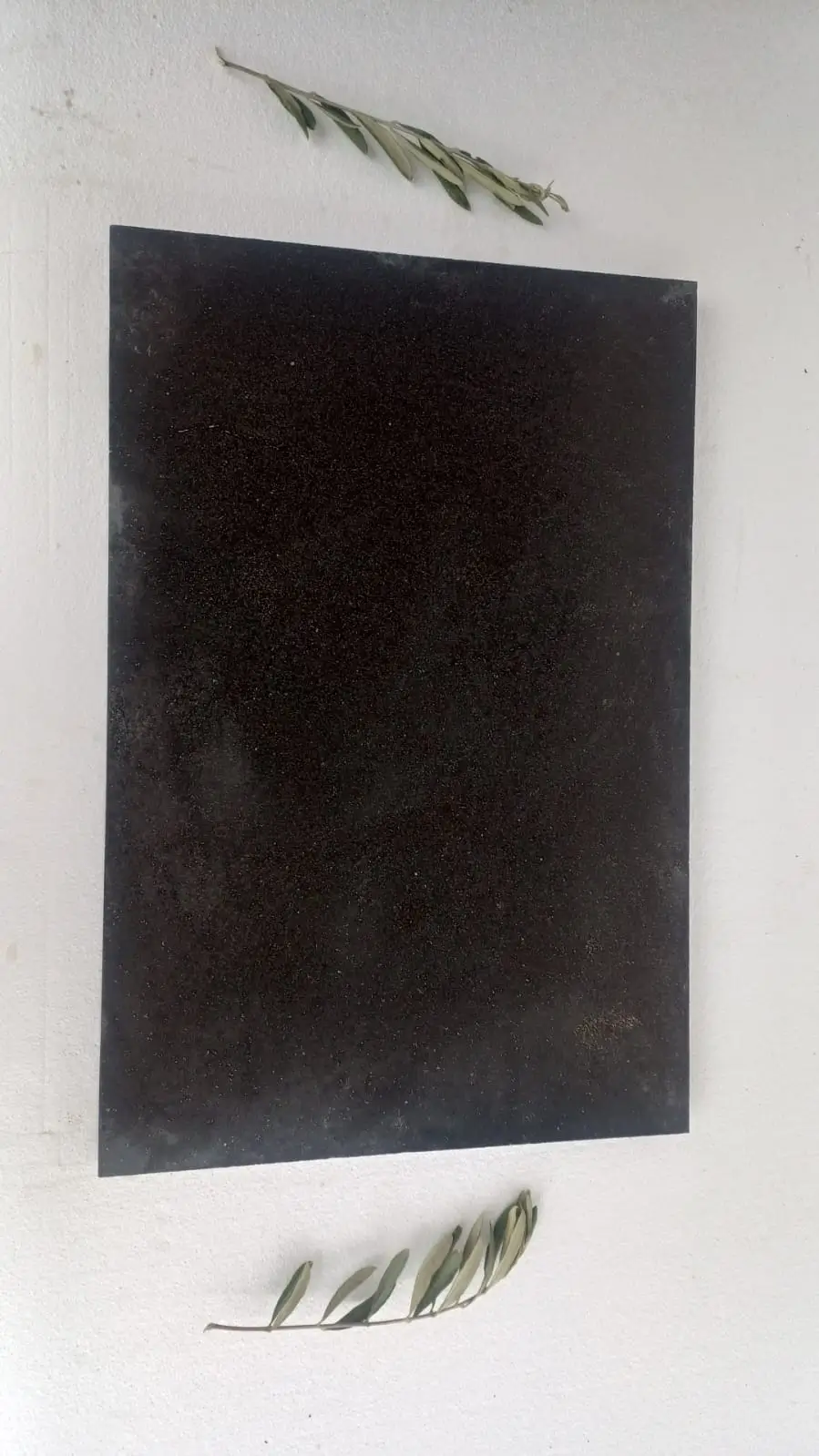
Long-term cost modeling for a black limestone driveway in Arizona must include sealing and maintenance as first-class budget line items, not afterthoughts. Black limestone’s dark mineral content responds well to penetrating impregnator sealers, which protect against oil staining from vehicles and reduce surface oxidation — both common degradation pathways in high-heat, high-UV environments. A quality penetrating sealer applied to a properly prepared surface should be reapplied every 18–24 months in Arizona’s climate, compared to every 3–4 years in more temperate regions.
The sealing product cost differential matters here. Budget-grade sealers at $0.15–$0.25 per square foot per application degrade significantly faster under sustained UV and heat exposure — you end up resealing more frequently and spending more over a 10-year period than if you’d specified a premium fluoropolymer-based product at $0.45–$0.65 per square foot. Total 10-year sealing cost on a typical 1,200 square foot driveway runs $1,800–$3,500 depending on product selection and application frequency, which is worth modeling explicitly rather than discovering incrementally.
- First seal should occur 30 days after installation — not immediately, and not after 90 days
- Color-enhancing sealers deepen the black tone and are a legitimate aesthetic upgrade, but require more frequent reapplication than neutral penetrating products
- Joint sand stabilization should be treated as a separate maintenance protocol from surface sealing — two distinct product categories, two distinct schedules
- Professional sealing applications on 1,000–1,500 SF driveways typically run $400–$800 in the Phoenix market
Final Considerations for Black Limestone Driveway Heat Scottsdale Planning
The complete picture of a black limestone driveway heat Scottsdale project comes into focus only when you’ve worked through the cost layers systematically — freight origin, warehouse availability, labor market conditions, base preparation variables, thermal specification requirements, and lifecycle maintenance costs. Treating any one of these as an afterthought creates budget exposure that’s difficult to recover from mid-project. Your best financial outcome comes from building a fully loaded cost model before finalizing your material specification, not from optimizing the material price in isolation.
For homeowners and specifiers considering complementary hardscape elements alongside a black limestone driveway installation, the aesthetic and material decisions can be surprisingly interconnected. Black Limestone Driveway Modern Aesthetic for Phoenix Contemporary Homes explores the design dimension of this material in the Phoenix contemporary market — a useful reference as you develop the full visual program for your Arizona project. Citadel Stone’s technical team works directly with Arizona homeowners and contractors on black limestone driveway specifications, drawing on our regional supply chain experience to deliver accurate budgets and reliable material performance. Award-winning projects throughout Arizona showcase Citadel Stone’s black limestone stepping stones in Arizona in architectural magazines.