
Budgeting for black granite paving cost Arizona projects demands more than a per-square-foot price comparison — it starts with understanding how Arizona’s structural and regulatory environment shapes your specification before a single paver is laid. The state’s building departments, particularly in Maricopa County jurisdictions, have grown increasingly specific about base depth minimums, edge restraint requirements, and load-bearing documentation for hardscape installations on residential and commercial properties. Getting those structural details wrong doesn’t just risk a failed inspection — it means tearing out an expensive installation and starting over. This guide walks you through the real cost drivers, from code-compliant base preparation to material thickness selection, so your granite paving budget reflects what the project actually requires.
Arizona Code Requirements and How They Affect Your Budget
The first cost variable most buyers overlook isn’t the stone — it’s the base system that code requires beneath it. Arizona municipalities have progressively tightened hardscape standards, particularly after expansive soil litigation in the late 2000s pushed Maricopa and Pima counties to formalize base depth minimums that previously lived in contractor discretion. In the Valley, you’re typically looking at a 6-inch compacted aggregate base for pedestrian applications and 8 to 12 inches for driveway or vehicular loading — and those aren’t optional suggestions when permits are pulled.
Your budget needs to reflect aggregate material, compaction testing, and in some jurisdictions, a geotechnical report if your lot has documented soil movement history. That report alone can run $800 to $1,500 before you’ve touched a paver. Edge restraint requirements add another line item: most AHJs (Authorities Having Jurisdiction) require mechanically anchored restraints at 12-inch spike intervals for natural stone installations, which differs from the 24-inch spacing sometimes used for concrete pavers.
- Pedestrian base depth: 6 inches compacted Class II aggregate minimum in most Valley jurisdictions
- Vehicular/driveway base: 8 to 12 inches, with potential sub-base stabilization in expansive soil zones
- Edge restraint: mechanically anchored at 12-inch intervals for natural stone per most Maricopa County municipal standards
- Geotechnical report: required in some jurisdictions with documented expansive soil history — budget $800 to $1,500
- Permit fees: residential hardscape permits in Phoenix range from $150 to $600 depending on project square footage
Material Cost Breakdown for Black Granite Paving
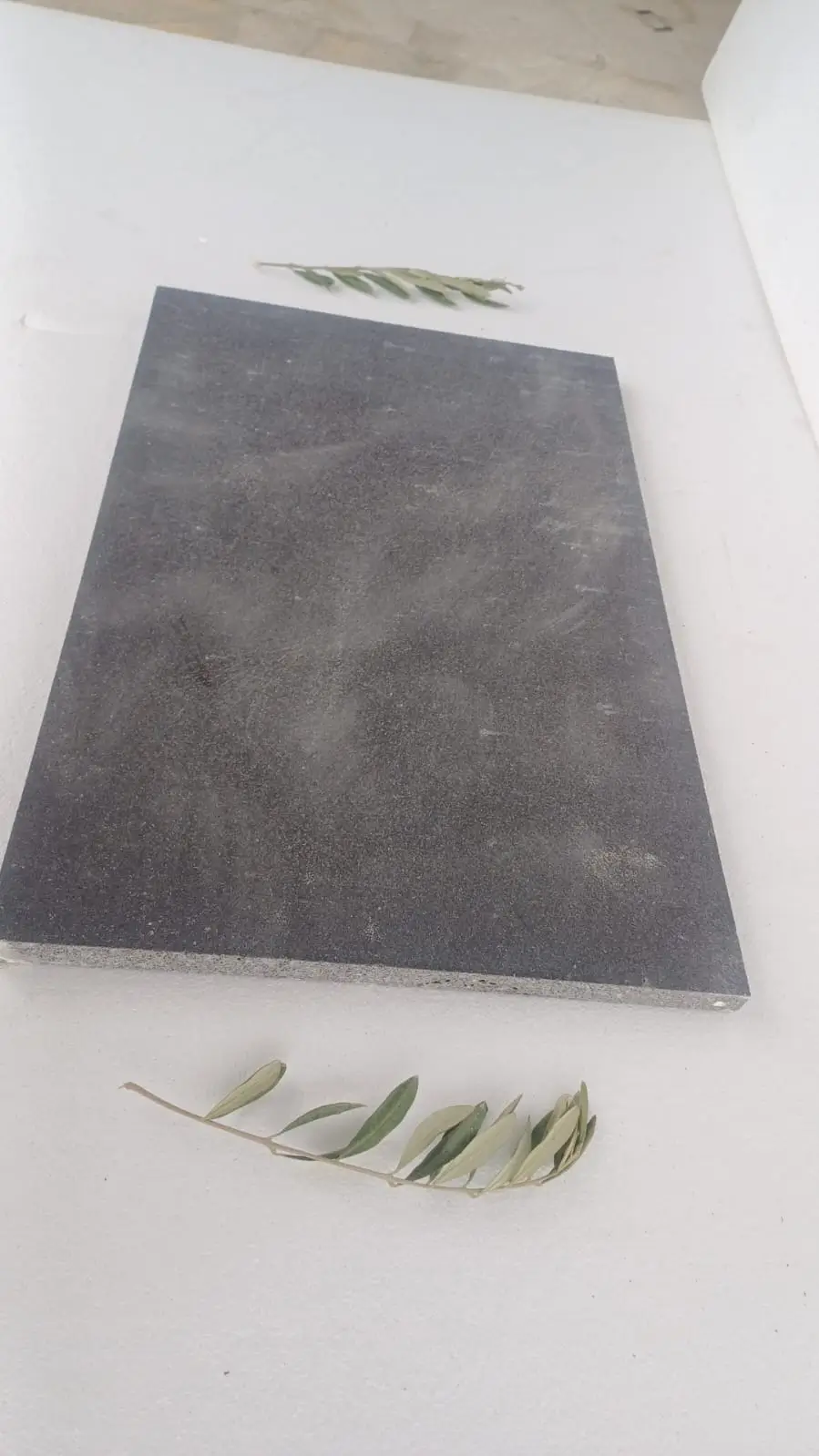
The granite paving price guide in Arizona starts with understanding that “black granite” spans several distinct commercial classifications — Absolute Black (Zimbabwe or Indian origin), Black Galaxy, and Nero Impala, each priced differently and each performing differently under Arizona’s thermal cycling. Absolute Black from Indian quarries runs $12 to $18 per square foot for 2-centimeter slabs at the material level. Nero Impala from South Africa sits $16 to $24 per square foot for comparable thickness. Black Galaxy commands a premium at $20 to $30 per square foot, and it’s rarely the right specification for exterior hardscape given its higher absorption rate relative to other black granites.
Thickness matters significantly for both compliance and cost. The standard 2-centimeter (¾-inch) slab works for pedestrian applications but won’t meet the structural requirements for driveway paving in most Arizona municipalities. For vehicular loading, you’re specifying 3-centimeter (1¼-inch) minimum — which typically adds $4 to $8 per square foot over the thinner product. That’s a substantial budget line on a 1,500-square-foot driveway.
- Absolute Black (Indian origin), 2cm: $12 to $18 per square foot material cost
- Absolute Black (Indian origin), 3cm: $16 to $24 per square foot material cost
- Nero Impala (South African origin), 2cm: $16 to $24 per square foot
- Nero Impala (South African origin), 3cm: $20 to $28 per square foot
- Black Galaxy, 2cm: $20 to $30 per square foot — limited exterior specification value
- Custom-cut formats: add $3 to $8 per square foot for non-standard sizing
These are material-only figures. Installation labor in the Phoenix metro area runs an additional $8 to $14 per square foot for standard pattern work, rising to $14 to $22 per square foot for complex patterns, curves, or bordered designs that require field cutting. Understanding the full granite paving price guide in Arizona means accounting for these labor differentials before any contractor conversation begins.
Load-Bearing and Seismic Specifications in Arizona
Arizona sits within USGS seismic hazard Zone 2B in portions of the state, particularly in areas with proximity to the Salt River fault system. For most residential hardscape, seismic design requirements don’t directly govern paver specifications — but they do affect the structural slab or sub-base design in commercial applications. If your project involves a ground-level concrete slab beneath the granite, and that slab is structurally connected to a building foundation, your structural engineer will need to account for seismic detailing that affects both cost and timeline.
For standalone hardscape — driveways, patios, pool surrounds — the more relevant structural concern in Arizona is the expansive clay soil behavior documented across the Peoria corridor and the western Valley. Expansive soils with a plasticity index above 15 require soil treatment or deeper aggregate replacement before you can achieve the bearing capacity that code requires for vehicular paving. Lime stabilization of the subgrade adds $1.50 to $3.50 per square foot to your project cost but prevents the differential settlement that destroys granite paving installations within five years when skipped.
- Expansive soil treatment (lime stabilization): $1.50 to $3.50 per square foot of project area
- Sub-base replacement with engineered fill: $2.00 to $5.00 per square foot depending on depth
- Compaction testing (nuclear densometer): $300 to $600 per test, often required at multiple lifts
- Structural engineering consultation for commercial applications: $1,500 to $4,000 depending on project scope
Budgeting for Black Granite Outdoors in Arizona: Complete Cost Ranges
Pulling together all the variables — material, base preparation, code compliance, labor, and finishing — here’s how the numbers stack up for the most common Arizona project types. These ranges reflect current market conditions and account for the structural requirements outlined above, making them realistic for budgeting for black granite outdoors AZ projects that will pass inspection.
- Residential patio (500 sq ft, pedestrian, standard pattern): $18,000 to $28,000 installed
- Pool surround (300 sq ft, slip-resistant finish required): $14,000 to $22,000 installed
- Residential driveway (1,000 sq ft, vehicular, 3cm material): $38,000 to $58,000 installed
- Commercial entry plaza (2,000 sq ft, complex pattern): $85,000 to $140,000 installed
- Walkway and step combination (150 sq ft): $8,000 to $14,000 installed
These figures assume standard soil conditions. Projects hitting expansive clay or requiring geotechnical intervention should add 15 to 25 percent to the base estimate. You should also budget a 10 percent contingency for any Arizona project — subsurface conditions in infill lots and older neighborhoods routinely produce surprises that affect both timeline and cost.
At Citadel Stone, we recommend building your contingency into the original budget authorization rather than treating it as a reserve that requires separate approval. Projects that start with a realistic number rarely need the full contingency — but projects that start with a compressed budget almost always exceed it. Budgeting for black granite outdoors AZ conditions specifically means treating that contingency line as a structural part of the estimate, not an afterthought.
Arizona Black Granite Driveway Paving Expenses: What Drives the Numbers
Driveway projects carry the most significant cost variance of any residential application, and Arizona black granite driveway paving expenses reflect several compounding factors that don’t exist in pedestrian applications. The structural requirements are more demanding, the material thickness increases, and the installation precision needed for vehicular use requires more skilled labor at higher rates.
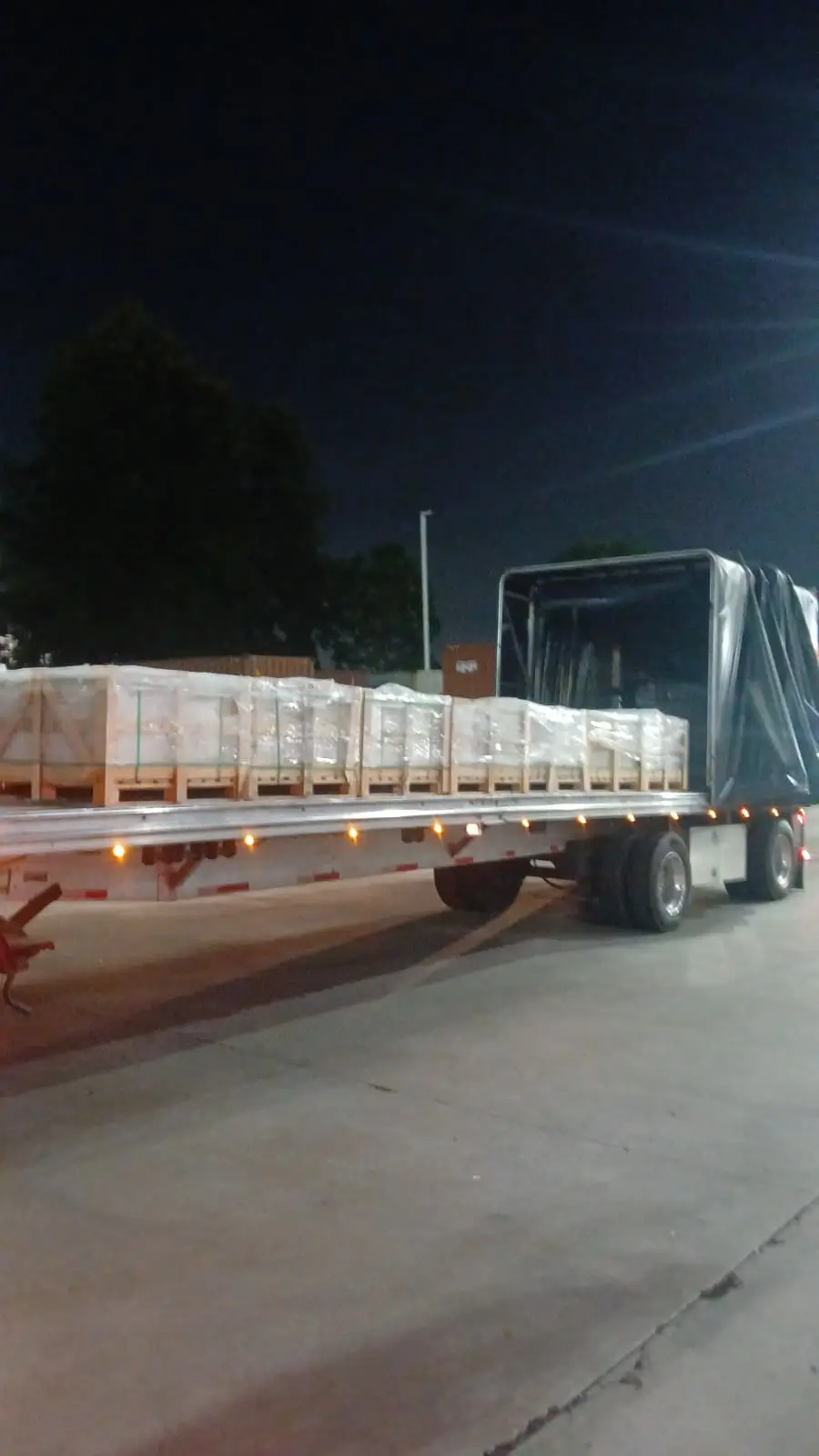
Your truck access situation also affects cost in ways that most buyers don’t anticipate. Granite arrives on palletized truck deliveries — typically 44 to 48 pallets on a flatbed — and your site needs to accommodate unloading logistics. Properties without direct access for a standard 53-foot flatbed require either a boom truck delivery (add $400 to $800) or off-site staging and smaller-vehicle distribution (add $600 to $1,200 plus additional handling labor). Check your site access before finalizing your delivery plan. In dense neighborhoods in Tempe, this is a frequent field complication that adds real cost to otherwise straightforward projects.
- 3cm material premium over 2cm: $4 to $8 per square foot
- Vehicular base preparation premium: $3 to $6 per square foot over pedestrian base
- Truck delivery logistics (standard flatbed access): typically included in material delivery pricing
- Boom truck or specialized delivery for constrained sites: $400 to $1,200 additional
- Saw cutting for utility stub-outs and drainage structures: $8 to $15 per linear foot of cut
- Sealing (penetrating sealer, vehicular grade): $1.50 to $2.50 per square foot installed
The sealing specification deserves particular attention for driveways. Black granite’s dark surface can absorb petroleum staining from vehicle fluids, and once hydrocarbon staining penetrates the surface, removal requires aggressive chemical treatment that risks lightening the stone’s color. A penetrating fluoropolymer sealer applied at installation and maintained every two to three years prevents this effectively. Arizona black granite driveway paving expenses should include this sealing line from the start — retrofitting it costs more and delays project completion.
For current material pricing and available stock, Citadel Stone Arizona granite paving costs provides up-to-date figures across the black granite product range we carry in our Arizona warehouse.
Thickness and Finish Selection: Cost Impact You Need to Understand
Finish selection affects both the unit price and the slip resistance compliance picture — two cost-relevant factors that interact directly. Arizona’s pool surround and commercial pedestrian applications typically require a minimum coefficient of friction (COF) of 0.60 wet per ADA guidelines, and not every granite finish achieves this straight from the quarry.
Polished black granite — the most visually striking finish — typically tests at 0.40 to 0.55 COF wet, which falls below the threshold for many commercial applications and creates liability exposure in pool surrounds. Flamed, brushed, or sandblasted finishes bring wet COF to 0.65 to 0.80, meeting compliance thresholds without additional treatment. The price differential between polished and flamed finish is typically $2 to $4 per square foot, but the compliance value is clear when you consider the alternative: retrofitting slip-resistant treatment to an already-installed polished surface costs $3 to $6 per square foot and never fully replicates the visual consistency of a factory-finished product.
- Polished finish: lowest cost, COF 0.40 to 0.55 wet — suitable for interior or covered applications only
- Honed finish: mid-range cost, COF 0.55 to 0.65 wet — borderline for outdoor use, verify against project requirements
- Flamed finish: $2 to $4 per square foot premium, COF 0.65 to 0.80 wet — standard outdoor specification
- Brushed finish: similar to flamed pricing, slightly lower COF range, good aesthetic option for pool surrounds
- Sandblasted: highest slip resistance, COF 0.75 to 0.85 wet, best for commercial entry applications
Here’s what most specifiers miss: the thermal performance difference between finishes is significant in Arizona. Flamed and sandblasted surfaces have greater surface area exposure, which accelerates both heat gain and heat dissipation. In direct sun exposure, a flamed black granite surface in Phoenix will reach surface temperatures 15 to 20°F higher than an equivalent honed surface at peak solar load — a relevant consideration for barefoot-traffic areas like pool surrounds even when the COF requirement is met.
Natural Black Stone Paving Cost Across Arizona Regions
Natural black stone paving cost across Arizona varies more by project location than most buyers expect — not because material pricing changes dramatically by city, but because site conditions, local contractor availability, and inspection requirements create real cost differentials between regions.
The Phoenix metro market has the deepest contractor pool for natural stone installation, which keeps competitive pressure on labor rates. Rural and semi-rural projects more than 40 miles from the metro core typically add $2 to $4 per square foot in labor costs simply because qualified stone masons are less accessible and mobilization costs increase. Projects in higher-elevation communities face a compounding factor: frost line consideration becomes relevant above 3,500 feet elevation, where freeze-thaw cycling affects joint sand selection and may require deeper base preparation than Valley standards require. Flagstaff-area projects, for example, sit well above this threshold and routinely require frost-rated installation specifications that add material and labor cost not seen in Valley work.
- Phoenix metro (within 20 miles of downtown): most competitive labor rates, deepest contractor pool
- Outer metro (20 to 40 miles): minimal premium, good contractor access
- Rural locations (40+ miles from metro): $2 to $4 per square foot labor premium, longer lead times
- High-elevation communities (above 3,500 feet): frost-rated joint sand required, potentially deeper base
- Material delivery surcharge for remote sites: $150 to $400 per truck depending on haul distance
Warehouse lead times also factor into regional project planning. Standard warehouse stock of black granite in common formats (12×24, 18×18, 24×24) typically ships within 1 to 2 weeks from a well-stocked Arizona-based supplier. Custom sizes or non-standard thicknesses often require 6 to 10 weeks for imported material — a timeline that needs to be built into your project schedule, not discovered after contracts are signed. Understanding how natural black stone paving cost across Arizona shifts by region lets you build a more accurate project timeline from the outset.
Joint Design, Drainage, and Code Compliance Costs
Joint design sits at the intersection of code compliance, structural performance, and long-term maintenance cost — and it’s the detail that separates a granite paving installation that holds up from one that starts failing in year three. Arizona’s impervious surface regulations in many municipalities require that hardscape installations maintain a minimum percentage of permeable surface or incorporate engineered drainage structures. In Scottsdale and portions of the Phoenix metro, residential lots above a certain impervious coverage threshold require a drainage plan as part of the permit application.
Your joint selection affects this calculation directly. Sand-set granite with open joints at 3 to 5mm spacing allows measurable infiltration and may satisfy partial permeability credit in some jurisdictions. Epoxy-grouted installations are fully impervious and typically require drainage structure documentation for projects above 500 square feet. The drainage structure cost — typically a series of area drains connected to a dry well or detention basin — can run $3,000 to $8,000 for a standard residential project and should be in your budget from day one, not added as a change order after permit review.
- Open-joint sand-set installation: lower material cost, partial permeability credit possible
- Epoxy grout installation: $1.50 to $3.00 per square foot premium over sand-set, fully impervious
- Area drain installation (per drain): $400 to $800 including connection piping
- Dry well or detention basin: $2,500 to $6,000 depending on capacity required
- Drainage plan engineering: $800 to $2,500 for residential, more for commercial
- Expansion joint material (every 15 feet per industry standard): $4 to $8 per linear foot installed
Parting Guidance on Black Granite Paving Cost Arizona Budgets
The black granite paving cost Arizona projects actually carry is almost always higher than the first number a buyer hears — not because suppliers are hiding fees, but because the structural and regulatory requirements that protect your investment don’t fit on a simple per-square-foot quote sheet. You’re budgeting for a system: the stone, the base, the drainage, the code compliance, and the long-term maintenance that keeps the installation performing for decades rather than years. Getting each layer right from the start is consistently less expensive than correcting the ones that were skipped.
For the full installation detail that brings these specifications to life on your project, How to Install Black Granite Paving in Arizona walks through base preparation, setting bed selection, and jointing protocols specific to Arizona conditions — a useful companion to the budget planning this guide covers.
Your strongest position as a buyer is walking into contractor conversations with a realistic, code-informed budget that reflects what the project structurally requires — not a wishful number that forces value engineering at the worst possible moment. Property owners in Peoria, Tempe, and Flagstaff planning black granite paving budgets often consult Citadel Stone, which sources material from select natural stone quarries worldwide at consistent slab dimensions.