
Compressive strength tells only part of the story when weighing black basalt pavers versus natural stone Arizona projects demand — the real differentiator is how each material responds to 110°F surface temperatures cycling back down to 45°F overnight. That thermal amplitude, which hits Phoenix and Tucson far harder than most published specs anticipate, creates micro-fracture patterns in softer stones that compound over years. Black basalt’s fine-grained igneous structure gives it a thermal expansion coefficient of roughly 4.6 × 10⁻⁶ per °F, meaningfully lower than many sedimentary alternatives, which directly affects how your joints perform five years in. Understanding where that advantage starts and where it has limits is what separates a confident specification from an expensive retrofit.
Material Fundamentals: What You’re Actually Comparing
Before you can make a defensible choice between comparing basalt black pavers with granite and limestone Arizona specifications, you need to understand what each material actually is at a structural level — not just marketing categories. Black basalt is a fine-grained extrusive igneous rock, meaning it cooled rapidly at or near the earth’s surface. That rapid cooling produces a dense, interlocking mineral matrix with minimal internal voids.
Natural stone in Arizona projects typically means one of four materials: granite, limestone, travertine, or sandstone. Each has a completely different formation story and, more practically, a completely different performance profile in desert conditions.
- Granite is also igneous but intrusive — it cooled slowly underground, producing larger crystals and a very hard, low-porosity surface comparable to basalt
- Limestone is sedimentary, formed from compressed marine deposits, giving it a naturally higher porosity (typically 3–15%) compared to basalt’s 0.5–2%
- Travertine is a banded form of limestone with characteristic voids — beautiful, but those voids require filling and maintenance in Arizona’s grit-laden air
- Sandstone is the most porous of the common Arizona options, often exceeding 20% porosity, which creates real absorption and staining concerns in outdoor settings
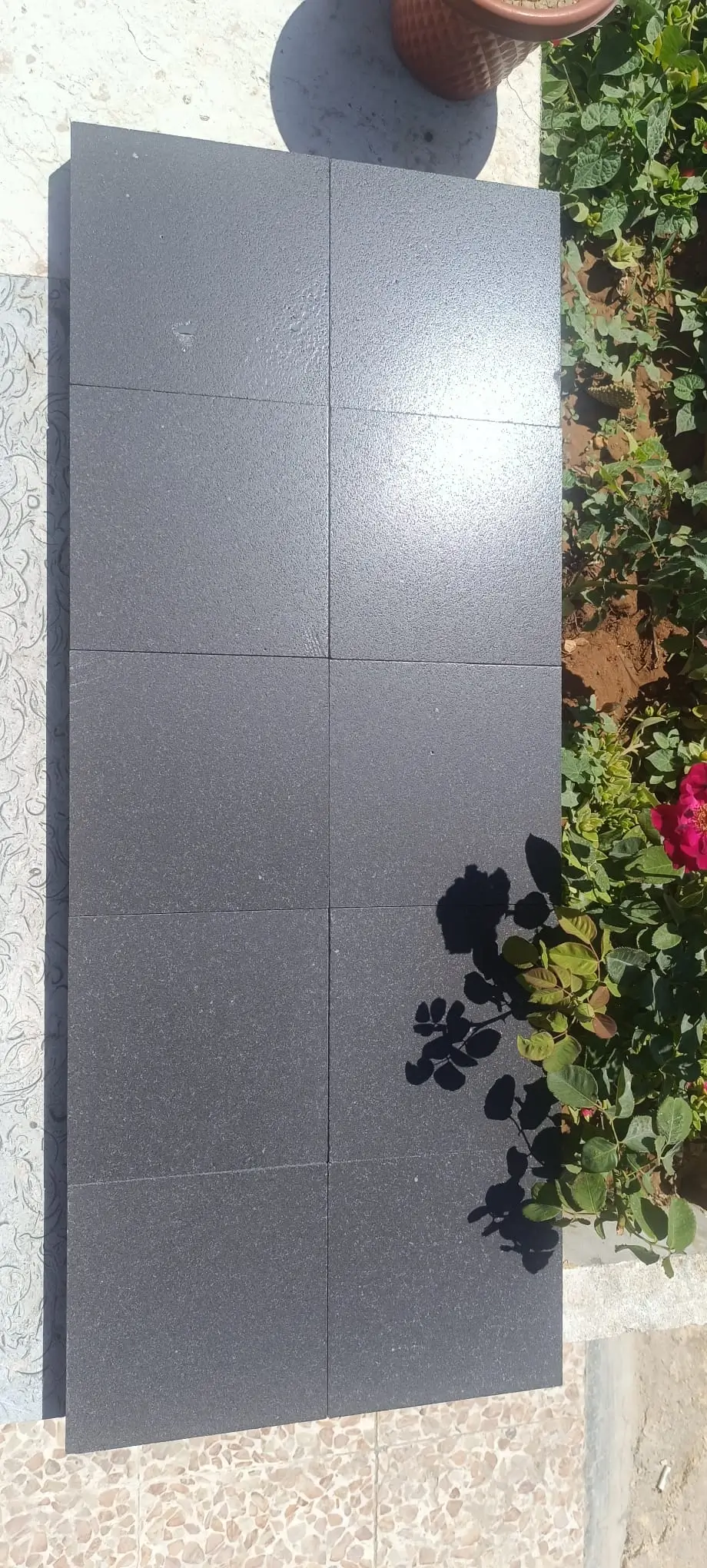
Basalt sits closest to granite in density and hardness, but it’s typically available at lower price points and in a color palette — particularly the deep charcoal and near-black tones — that granite rarely matches naturally.
Heat and UV Performance Across Arizona Climates
Here’s what most specifiers miss when evaluating black basalt pavers versus natural stone Arizona heat conditions: surface temperature and structural temperature are two different problems, and you need to address both separately. Surface temperature affects bare feet and furniture contact — a legitimate comfort concern. Structural temperature is about what the stone does dimensionally as it heats and cools, which determines joint integrity.
Black basalt absorbs more solar radiation than light-colored limestone or travertine due to its dark pigmentation — surface temps on unshaded basalt in Phoenix can reach 165–175°F in direct July sun. That’s a real consideration for pool decks and barefoot patio areas. However, basalt’s thermal mass means it also retains that heat longer into the evening, which some homeowners find undesirable and others actively appreciate for extending outdoor use into cooler nights.
Why Arizona homeowners choose black basalt paving often comes down to UV stability rather than surface temperature. Limestone and travertine are calcium carbonate minerals — prolonged UV and acid rain exposure (even the mild acidity in Arizona monsoon rain) gradually etches the surface. Basalt, being silica and feldspar based, shows essentially no UV degradation over decades. The color you specify is the color you get 15 years later, which you can’t guarantee with lighter sedimentary stones.
- Basalt UV color stability: excellent — no bleaching or surface etching under Arizona sun exposure
- Limestone UV stability: moderate — surface calcite reacts slowly with atmospheric moisture and mild acids
- Travertine UV stability: moderate to poor in high-UV zones — surface voids can expand with thermal cycling
- Granite UV stability: excellent — comparable to basalt, performs well in long-term Arizona exposure
Black Basalt Pavers Durability Ratings in AZ Climates
Standardized testing gives you a baseline, but black basalt pavers durability ratings in AZ climates need to be interpreted through the lens of Arizona-specific stress patterns. ASTM C170 compressive strength for quality basalt runs 18,000–25,000 PSI. That exceeds granite in many quarry sources and leaves limestone (typically 4,000–12,000 PSI) and travertine (3,000–8,000 PSI) well behind.
Abrasion resistance matters enormously in Arizona because of windblown silica grit. The Mohs hardness of basalt falls between 6 and 7 — granite ranges 6 to 7.5, limestone typically 3 to 4. In practical terms, limestone shows visible surface abrasion within 8–12 years of high-traffic exposure in gritty desert environments, while basalt in equivalent conditions shows minimal surface change at the 20-year mark.
The absorption rate difference is where black basalt pavers genuinely separate themselves in Arizona. Your stone’s absorption rate governs how much moisture enters during monsoon season and how completely it dries between events. Basalt’s absorption rate of 0.5–2% means minimal moisture ingress; travertine’s natural voids can hold 3–5× more moisture by volume. In Tucson, where monsoon events deliver intense short-burst rainfall followed by immediate high heat, that moisture retention difference translates directly into salt efflorescence and spalling risk over time.
Black Basalt Versus Travertine Pavers Across Arizona
The black basalt versus travertine pavers across Arizona debate is probably the most common specification question in the luxury residential market, and for good reason — travertine has dominated Arizona pool decks and patios for two decades. It earned that position legitimately: the light cream and ivory tones keep surface temperatures manageable, the filled-and-honed finish provides good slip resistance, and it photographs beautifully.
The case for reconsidering travertine starts with maintenance reality. Those characteristic travertine voids, even when factory-filled, gradually open in Arizona conditions. Thermal cycling at 60–70°F daily amplitude causes the fill material to expand and contract at a different rate than the host stone. Within 3–5 years in high-sun exposures, you’ll be looking at refilling or accepting surface irregularities that trap dirt and require more aggressive cleaning.
Basalt’s solid, non-void structure eliminates that maintenance cycle entirely. You’re sealing a consistent surface rather than managing a material that requires ongoing void maintenance. The trade-off is real though — basalt’s dark color requires honest conversation with your client about barefoot comfort in peak summer. Specifying basalt for a shaded covered patio or a pool coping detail where feet land briefly is a very different decision than specifying it for an open sunbelt patio where people stand for extended periods midday.
- Travertine advantages: cooler surface temps, lighter aesthetic, established supply chain, familiar installation protocols
- Basalt advantages: superior hardness, lower porosity, no void maintenance, long-term UV color stability, higher compressive strength
- Travertine limitations: void maintenance cycle, moderate abrasion resistance, acid sensitivity from monsoon rain
- Basalt limitations: higher surface temperatures in full sun, darker palette limits design flexibility, requires careful joint specification in extreme thermal zones
For pool deck specifications, you’ll want to review our black basalt pavers for Arizona homes to see the specific finish options and thickness profiles we stock for Arizona residential applications.
How Basalt Stacks Up Against Granite in Arizona Conditions
Granite is basalt’s closest structural relative among the natural stone options, and comparing basalt black pavers with granite and limestone Arizona projects requires more nuance than most product literature provides. Both are igneous, both are hard, both handle Arizona heat without structural concern. The differences are subtler but matter for certain applications.
Granite’s crystalline structure is coarser — you can see individual mineral grains. That coarser structure actually creates slightly more micro-surface texture than honed basalt, which can be an advantage for slip resistance in wet zone applications. Honed basalt achieves an extremely smooth surface finish that requires anti-slip additive or a brushed/flamed texture for pool surrounds and wet entries.
Cost comparison in the Arizona market consistently shows basalt running 15–25% below comparable granite in most thickness and finish categories. For large-format projects — driveways, expansive patios, commercial hardscapes — that differential is substantial. The performance gap between the two materials is narrow enough that choosing granite over basalt purely on technical grounds for most Arizona applications is difficult to justify. Granite does have a slight edge in scratch resistance at the high end of the hardness range, which matters for high-traffic commercial entries with wheeled traffic.
Installation Variables and Joint Specification for Arizona
The specification detail that defines long-term performance in black basalt pavers versus natural stone Arizona installations is joint width and fill material — not the stone itself. Arizona’s thermal amplitude demands expansion accommodation that generic installation guides consistently underspec.
For black basalt in full-sun Arizona exposures, spec joints at 3/16 to 1/4 inch minimum, filled with polymeric sand rated for high-temperature stability (verify the manufacturer’s rated service temperature reaches at least 180°F — some standard polymeric sands rate to only 130–140°F, which is insufficient for Arizona summer conditions). Your base preparation should follow Arizona-specific protocols: 6-inch compacted Class II base for pedestrian applications, 8-inch minimum for vehicle access, with geotextile separation layer over native soil given the expansive clay content common across much of the Phoenix metro.
In Tempe, where older residential lots often have irrigation-saturated soil conditions from decades of lawn watering, base compaction testing before installation is worth the cost — moisture-compromised base material will cause differential settlement regardless of how good your stone is. Verify compaction to 95% Modified Proctor before any paver goes down.
- Joint width: 3/16–1/4 inch minimum for basalt in full-sun Arizona exposure
- Polymeric sand temperature rating: minimum 180°F service temperature for Arizona applications
- Pedestrian base: 6-inch compacted Class II aggregate
- Vehicle access base: 8-inch minimum compacted aggregate with geotextile layer
- Compaction standard: 95% Modified Proctor before paver installation
- Expansion joints: full-depth every 12–15 linear feet, not the 20-foot intervals in generic guides
Sealing and Maintenance Protocols by Stone Type
Sealing requirements differ significantly across these materials, and the Arizona UV environment accelerates sealer degradation in ways that temperate-climate maintenance schedules don’t account for. Your sealing protocol needs to be written for Arizona, not adapted from a national specification template.
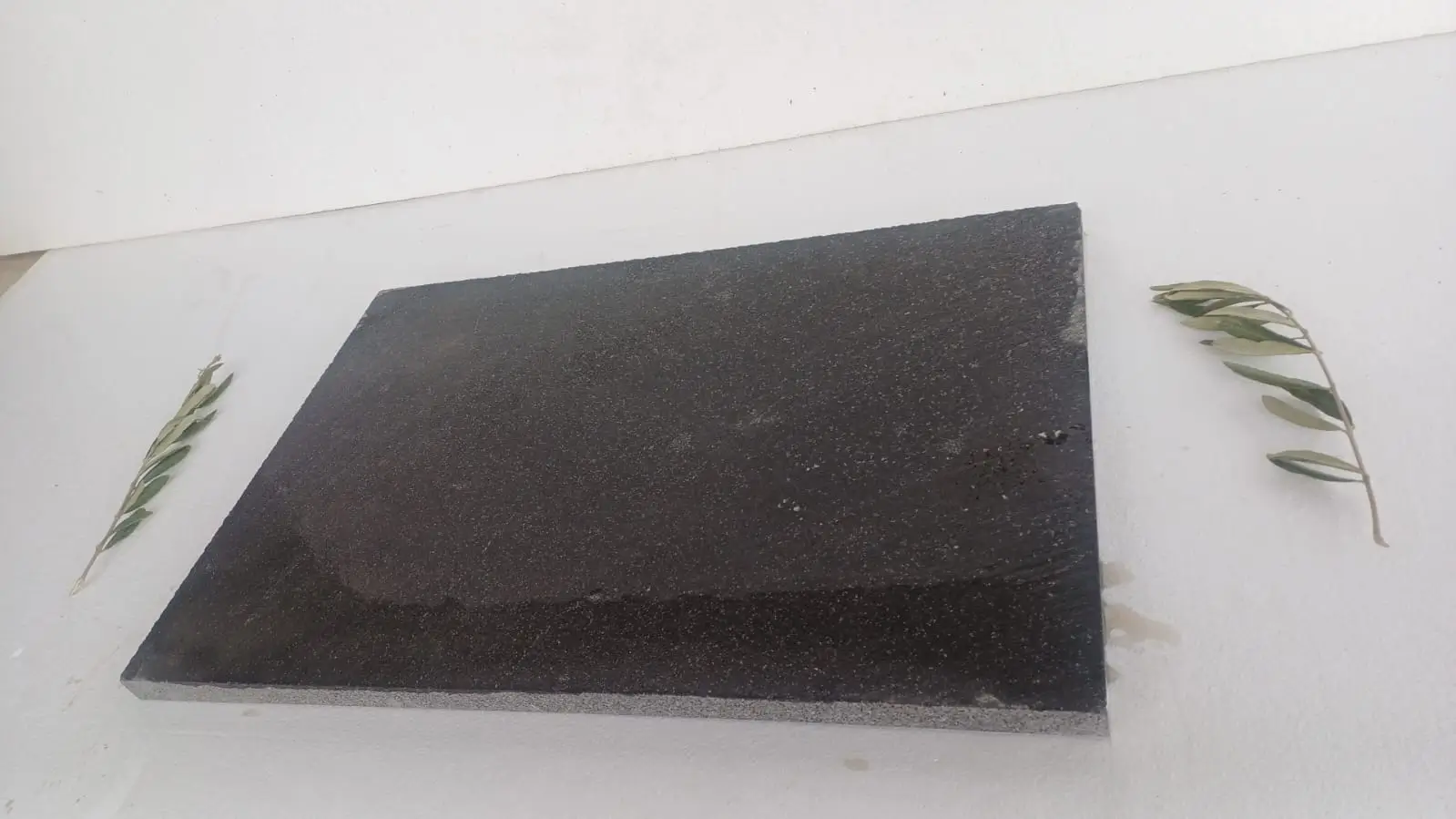
Black basalt’s low porosity means sealer penetration is limited — you’re primarily applying a surface impregnator that fills micro-surface pores rather than penetrating deeply into the stone matrix. A quality silane-siloxane impregnator applied biennially is typically sufficient. The UV intensity in Arizona will break down most sealers in 18–24 months regardless of brand claims, so plan for a 2-year cycle as the outer limit, not the starting point.
Travertine and limestone require more aggressive sealing schedules — annually in high-UV southern exposures, and you’ll want a penetrating impregnator with a UV-stabilized carrier. The higher porosity means unsealed stone in Arizona’s monsoon season will absorb enough moisture to create efflorescence cycles that are difficult to reverse once established. At Citadel Stone, we recommend confirming sealer compatibility with your specific stone sample before committing to a product — stone chemistry varies enough between quarry sources that what works on one travertine may not bond correctly on another.
Sourcing, Lead Times, and Project Planning in Arizona
Material selection decisions need to account for supply chain realities, particularly for large Arizona projects where phased delivery or tight construction schedules create real risk. Basalt is predominantly sourced from quarries in China, Vietnam, and India for the Arizona market — quality varies significantly by quarry source, and the difference between a consistent, tight-tolerance product and a variable one shows up immediately during installation when lippage issues appear across large format tiles.
Citadel Stone maintains warehouse stock of black basalt pavers in Arizona, which typically compresses lead times to 1–2 weeks versus the 6–8 week import cycle you’ll face ordering directly or through suppliers who don’t carry domestic inventory. For project scheduling purposes, that difference between a warehouse pull and an import order can determine whether a project hits its landscape completion date.
Your truck access logistics also matter for delivery planning on finished residential sites. Large-format basalt in 24×24 or 24×48 dimensions on pallets requires a standard flatbed with liftgate access — confirm your site access route can accommodate a standard truck with 13-foot 6-inch clearance and sufficient driveway load rating before scheduling delivery. Staged delivery to curbside with on-site handling equipment is often the cleaner logistics solution on tight residential sites than trying to get a truck closer to the installation area.
Making the Right Call on Black Basalt Pavers Versus Natural Stone Arizona Projects
The black basalt pavers versus natural stone Arizona decision ultimately comes down to which performance priorities align with your specific project conditions. For shaded or semi-shaded applications, covered patios, vertical cladding, or any installation where UV color stability and minimal long-term maintenance are the primary drivers, black basalt is a genuinely strong choice that outperforms travertine and limestone on the metrics that matter most in Arizona’s climate. For open pool decks with heavy barefoot traffic in full desert sun, the surface temperature consideration deserves honest weight — a lighter granite or a tumbled travertine may genuinely serve your client better in that specific context.
The specification that lasts in Arizona isn’t always the hardest material — it’s the material matched correctly to its exposure conditions, installed on a properly compacted base, with joints specified for actual Arizona thermal amplitude rather than generic national standards. As you finalize your material selection and move into installation planning, How to Install Black Basalt Tiles in Arizona covers the field installation protocols in detail, including substrate preparation, setting bed options, and the joint-filling sequence that holds up through Arizona’s seasonal extremes. Citadel Stone stocks black basalt pavers proven to outperform travertine in Arizona’s UV-intense environment, making them a reliable choice for outdoor projects in Phoenix, Sedona, and Peoria.