
Beige cream limestone cost Arizona projects hinge far more on your site’s terrain profile than most material guides acknowledge — elevation changes, hillside grades, and drainage geometry directly affect base specification, which in turn shapes your true installed cost. Flat desert floor installations in central Maricopa County look nothing like sloped foothill builds, and pricing a job without accounting for that difference is where budget overruns quietly begin. Understanding how terrain-driven engineering decisions intersect with material selection is where real cost control happens.
How Arizona Terrain Shapes Your True Material Cost
Your site’s elevation profile is the single biggest variable that separates a straightforward limestone installation from one that demands substantial engineered preparation. On flat desert plains, a 4-inch compacted aggregate base is often sufficient for residential pedestrian loads. Shift that same project to a 10–15% grade on a Scottsdale foothills lot, and you’re engineering retaining zones, positive drainage breaks, and geotextile separation layers — all of which add $4 to $8 per square foot before you’ve placed a single stone.
The material choice matters here in ways that go beyond aesthetics. Beige cream limestone, typically supplied in 2-inch nominal thickness for patio and walkway applications, provides enough compressive mass to resist lateral migration on moderate slopes without requiring full mortar-set installation. That mechanical behavior directly reduces labor complexity on grades up to about 12% — an advantage that thinner travertine formats simply don’t offer.
Drainage geometry is where terrain-related costs compound fastest. Arizona’s hard caliche subsoils don’t absorb runoff the way eastern clay profiles do. On sloped sites, you must engineer your base cross-fall to move water away from structures at a minimum 1.5% grade — and limestone’s relatively low absorption rate (typically 3–5% by weight) keeps hydrostatic pressure from building beneath the slab during monsoon inflow events.
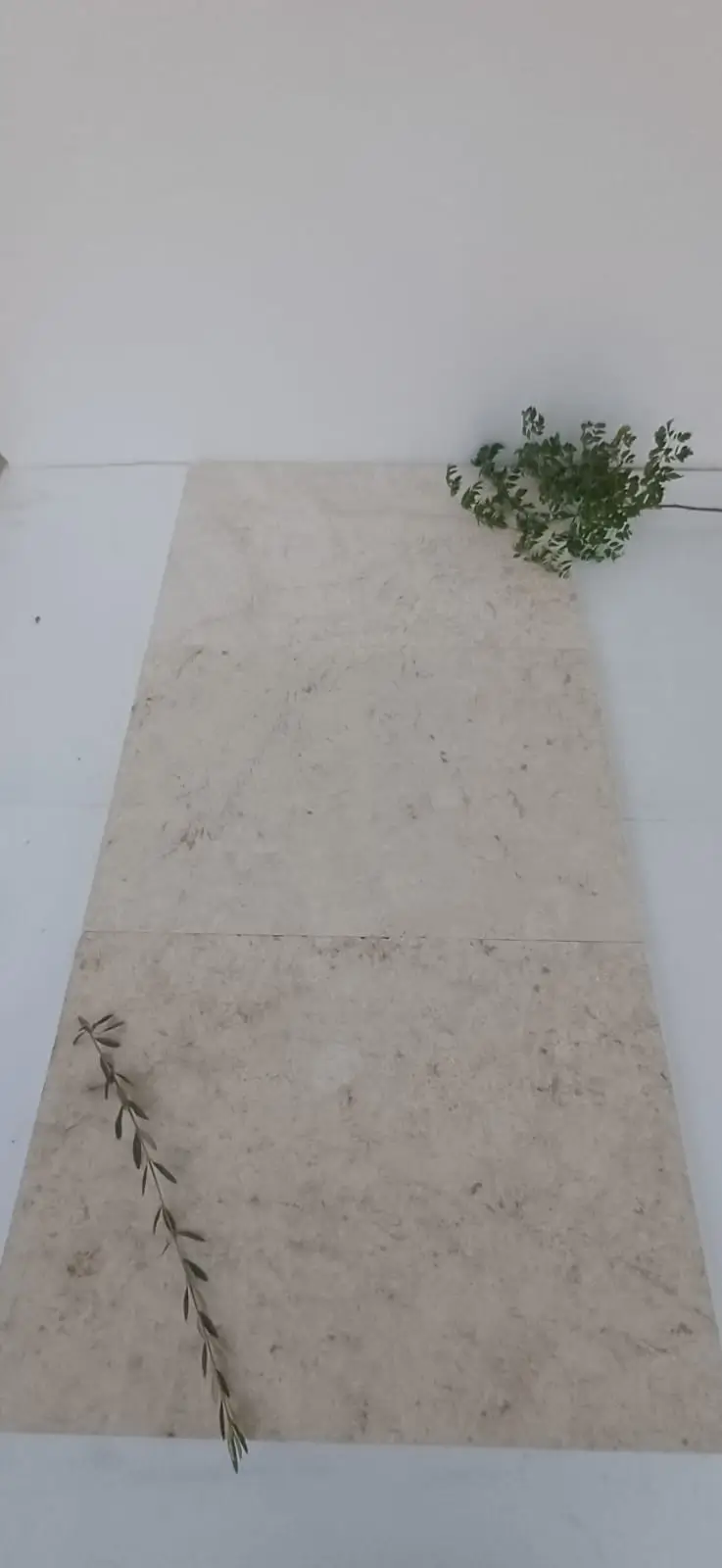
Limestone Versus Travertine Pricing in Arizona
The limestone versus travertine pricing in Arizona conversation comes up on almost every residential project in the East Valley, and the honest answer is that the gap is narrower than most homeowners expect at the material level — but wider when you factor in long-term maintenance cost. Imported travertine typically runs $6 to $11 per square foot at the supply level, depending on fill quality and slab thickness. Beige cream limestone generally lands in the $5 to $9 range for comparable dimensions, with domestic-sourced material sitting at the lower end of that band.
- Travertine’s voids require resin filling, which adds cost and creates a maintenance liability in UV-intense climates where resins degrade over 5–8 years
- Limestone’s denser surface reduces sealer consumption per application by roughly 15–20% compared to filled travertine
- Both materials benefit from penetrating silane-siloxane sealers in Arizona’s dry climate, applied every 2–3 years
- Travertine’s natural thermal conductivity is slightly higher, making it feel warmer underfoot on south-facing exposures late in the day
- Limestone’s tonal consistency is more predictable across orders, reducing field color-sorting time during installation
The natural stone cost comparison AZ homeowners weigh when evaluating these two materials should always include a lifecycle line item. The 5-year resealing and void-maintenance cost for travertine on a 600-square-foot patio can equal the initial material price difference three times over — a factor that shifts the value calculation decisively toward limestone on longer ownership horizons.
Grade Management and Drainage Design on Arizona Sites
Grade management isn’t a finishing detail — it’s a foundational engineering decision that runs through every cost line of your project. Projects in Mesa frequently encounter shallow caliche layers at 18–24 inches, which limits your ability to cut deep drainage swales without hitting rock. That constraint often redirects drainage design toward surface cross-slope management rather than subsurface systems, which shifts how you orient stone joints and select field cut patterns.
For hillside installations, break your limestone field into drainage zones no longer than 15 feet before introducing a grade break or collection channel. Longer uninterrupted runs concentrate velocity and erode the bedding course over time, especially during Arizona’s intense monsoon pulses where 1–2 inches of rain can fall in under 30 minutes. The base failure mode on sloped limestone projects almost always traces back to undersized or absent drainage channels, not material failure.
On sites with elevation changes exceeding 3 feet across the project footprint, plan for geo-grid reinforcement in your aggregate base at a minimum. This isn’t structural overkill — it’s what keeps your compacted base from creeping downslope under the freeze-thaw differential that Arizona’s 3,500–5,000 foot elevation zones actually experience during winter months.
Affordable Cream Limestone Options for Arizona Budgets
Affordable cream limestone options across Arizona aren’t hard to find, but value engineering this material requires knowing which specifications can flex and which ones can’t. Thickness is the first variable — 1.25-inch nominal material works for pedestrian-only patios on flat terrain and typically saves $1.50–$2.50 per square foot over 2-inch material. On any sloped site or application with occasional vehicle crossover, drop back to 2-inch minimum without compromise.
- Irregular-cut formats (tumbled or gauged but not calibrated) cost 20–35% less than precision-cut tiles and work well for informal garden paths and pool surrounds
- Selecting a consistent finish across the entire project avoids the upcharge for mixed-finish orders, which often carry a 10–15% premium
- For large flat areas, specifying 16×24-inch or 18×18-inch slabs reduces cutting labor compared to smaller mosaic formats
- Sourcing from a supplier with Arizona warehouse inventory cuts lead time and eliminates the freight volatility that can add $0.50–$1.20 per square foot on import orders
For projects in Gilbert, where newer residential developments often feature consistent flat pads with minimal grade change, the straightforward terrain profile opens the door to thinner material specs and simpler base design — which is exactly where cream limestone’s affordability advantage becomes most pronounced. The Arizona desert stone material budget for these flat-pad builds consistently comes in at the lower end of the installed cost range when terrain cooperation aligns with smart spec choices.
Base Preparation Specifications for Sloped Arizona Sites
Your base specification on any terrain-challenged Arizona site starts with a clear understanding of the native soil profile. Expansive desert soils with high silica and caliche content behave very differently from the sandy wash sediments common near river corridors. A standard compacted Class II road base works well in both contexts, but depth requirements vary: 4 inches on flat sites with stable subgrades, 6 inches minimum on slopes above 5%, and 8 inches where cuts or fills have disturbed native compaction.
The bedding layer above your aggregate base deserves equal attention. Coarse sand or a dry-pack mortar bed — typically 1 to 1.5 inches — is your tolerance buffer for minor grade variations. On sloped projects, a dry-pack bed gives you better control over setting plane precision than a pure sand bed, which can migrate before your limestone is fully loaded. The difference shows clearly in final surface flatness, especially across the transition zones where grade breaks occur.
Citadel Stone’s technical team recommends a minimum 4-inch perforated pipe underdrain at the low edge of any sloped limestone field installation — a detail that most residential specs omit but that pays back in system longevity. At Citadel Stone, we’ve reviewed failed installations where this single omission led to base saturation and progressive settlement within two monsoon seasons.
Comparing Stone Types: What the Cost Data Actually Shows
The Arizona desert stone material budget picture becomes clearer when you move past per-square-foot material pricing and look at total installed cost across a realistic 10-year window. Beige cream limestone cost Arizona projects consistently outperforms its sticker price when you account for lower maintenance frequency, better dimensional stability on sloped sites, and reduced base failure rates compared to thinner imported alternatives.
Granite pavers often compete directly in the same budget tier, but granite’s thermal mass characteristics create a different comfort profile — surface temperatures on exposed dark granite can run 30–40°F above ambient air temperature at peak exposure, while cream limestone’s light reflectance index (typically 45–55) keeps surface temperatures substantially more manageable. That’s not just a comfort consideration; it’s a durability factor for any sealer or joint compound in your system.
For current material pricing and availability, Citadel Stone cream limestone Arizona pricing provides up-to-date cost information for Arizona projects, including thickness options and delivery coverage areas. Verifying warehouse stock before committing to a project timeline matters when sequencing work around monsoon season or concrete pour schedules.
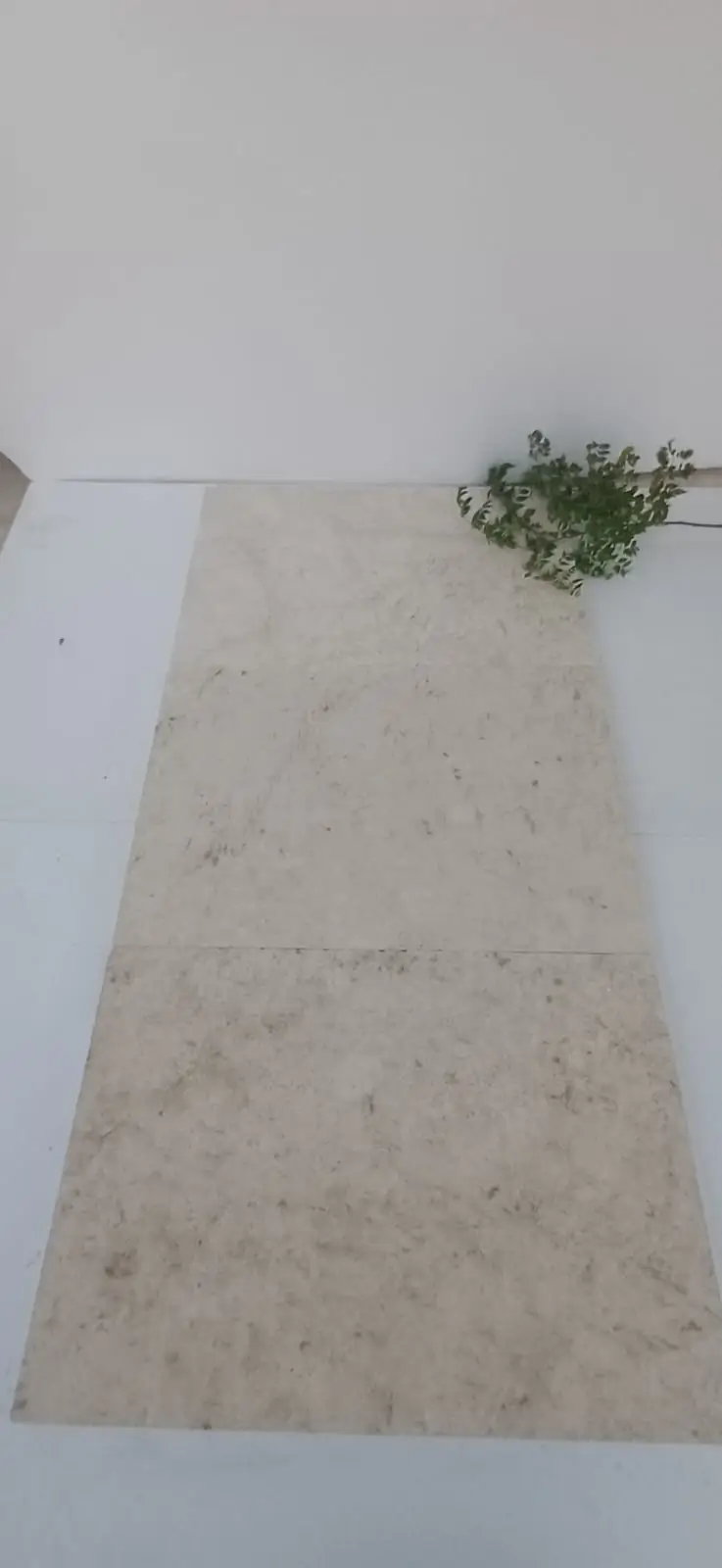
Joint Spacing, Thermal Performance, and Elevation Variables
Thermal expansion in limestone runs approximately 4.4 × 10⁻⁶ per °F — moderate compared to concrete but still meaningful across large field installations. At Arizona’s lower elevation zones around 1,000–2,000 feet, seasonal temperature swings of 70–80°F produce field expansion in the range of 0.03–0.04 inches per 10 linear feet. That’s manageable with standard 3/16-inch joints filled with polymeric sand. Push to Flagstaff-adjacent elevations around 7,000 feet, and the swing expands to 90–110°F annually — requiring you to adjust joint width to 1/4 inch minimum and specify a flexible polymer joint compound rather than rigid grout.
Elevation also affects installation timing in ways the spec sheets don’t mention. At higher Arizona elevations, afternoon thunderstorm patterns can compress your productive installation window to 4–5 hours in summer. Limestone set in a dry-pack bed during high humidity from approaching storm activity can trap moisture beneath the stone if you don’t allow sufficient cure time before loading the surface — typically 24 hours minimum, 48 hours preferred.
Projects in Chandler operate in a lower-elevation, high-heat context where thermal cycling is intense but freeze-thaw risk is negligible. That profile actually simplifies joint specification — you can run the 3/16-inch standard throughout the project without elevation-driven adjustments, focusing your engineering attention entirely on drainage and base compaction instead.
Logistics, Delivery Planning, and Lead Times
Truck access constraints shape delivery scheduling more than most people plan for. Full pallets of beige cream limestone in 2-inch thickness run approximately 4,200–4,500 lbs per pallet. A standard flatbed truck delivers 4–6 pallets at a time, and the unloading point needs to be within reasonable proximity to your installation zone — dragging stone across a long site multiplies labor cost quickly and increases breakage risk on larger format pieces.
For sloped or hillside sites, confirm whether a boom truck or standard flatbed is appropriate before finalizing your order. Boom delivery adds cost but eliminates the manual carry distance on steep-access lots where a standard pallet jack can’t operate safely. Planning this logistics question early — before finalizing your material order — prevents the schedule disruption that comes from discovering access constraints on delivery day.
Warehouse stock levels in Arizona vary seasonally. The October-through-March window is peak demand for exterior hardscape across the Phoenix metro, and popular formats in cream limestone can move quickly during that period. Verifying available inventory 4–6 weeks ahead of your installation date protects your schedule without requiring you to carry excess material on-site through summer heat. A supplier with dedicated Arizona warehouse capacity can confirm stock in real time, which matters when your project timeline is fixed around contractor availability.
Getting Beige Cream Limestone Cost Right on Arizona Projects
Treating terrain as a primary engineering input — not an afterthought — is what separates accurate budget projections from costly surprises on Arizona limestone projects. Your base depth, drainage design, joint specification, and logistics plan all cascade from the site’s elevation profile and grade conditions — and those variables define the gap between a project that stays within budget and one that discovers its cost overruns after the stone is already down.
The material comparison picture — limestone against travertine, granite, or manufactured alternatives — only makes sense when you’re comparing apples to apples: same site conditions, same base specification, same maintenance assumptions over a realistic ownership period. The natural stone cost comparison AZ homeowners weigh most carefully is the one that accounts for drainage compatibility, dimensional stability on grades, and long-term maintenance simplicity across the full ownership window. Beige cream limestone earns its place in Arizona’s desert stone palette on all three counts. For the full installation framework that supports this cost analysis, How to Install Beige Cream Limestone in Arizona walks through the base, bedding, and jointing sequence in detail — useful context for anyone finalizing their project specification.
Your final cost picture improves when you source through a supplier with genuine Arizona-specific knowledge — someone who understands how elevation zones, monsoon drainage demands, and truck access variables translate into real specification decisions, not just catalog descriptions. Projects across Phoenix, Flagstaff, and Gilbert benefit from Citadel Stone’s beige cream limestone, selected for its regional freight efficiency and consistent tonal range suited to Arizona residential builds.