
Base preparation failures account for the majority of ashlar stone block installation Arizona callbacks — and almost all of them trace back to how drainage was designed, not how the blocks were laid. Drainage geometry determines whether your ashlar wall or feature stands solid through a decade of monsoon cycles or develops structural settlement within three seasons. Getting that geometry right requires you to understand how Arizona’s rainfall behavior differs fundamentally from anything in a standard masonry textbook.
Why Arizona’s Water Behavior Changes Everything
Arizona doesn’t receive precipitation evenly — it receives it violently. The North American Monsoon season, which runs from mid-June through late September, delivers roughly 40–50% of the state’s annual rainfall in short, concentrated bursts. You can see 2 inches fall in under an hour in Phoenix, while Yuma averages less than 4 inches for the entire year. That extreme variation isn’t just a curiosity — it’s the specification variable that separates installations lasting 25 years from ones that fail before the second monsoon season ends.
Natural stone ashlar block walls and coursed stone features interact with this rainfall in ways that poured concrete doesn’t. The mortar joints, the permeable stone faces, and the mass of the structure all respond to rapid saturation followed by rapid drying. Your drainage design has to handle peak hydraulic load — not average load — because in Arizona, the average is largely irrelevant to structural performance.
Hydrostatic pressure buildup behind ashlar stone features is the primary failure mechanism in Arizona desert landscapes. Expansive caliche soils — widespread across the low desert — become nearly impermeable when wet, redirecting water laterally until it finds the path of least resistance. That path is often the back face of your stone installation. Understanding Arizona desert ashlar masonry techniques means confronting this hydrostatic reality before a single block is placed.
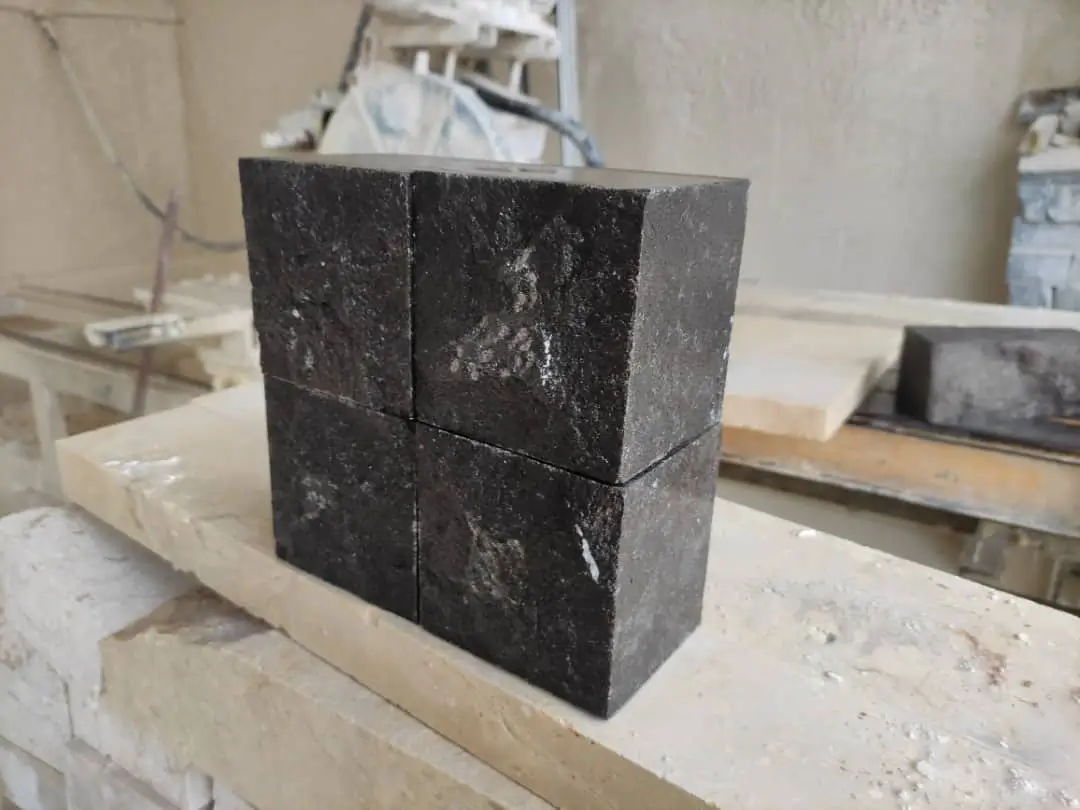
Design Your Drainage Before the First Block Goes Down
The drainage plan for your ashlar stone block installation in Arizona should exist before material quantities are calculated, not after. This sequence matters because drainage infrastructure — perforated pipe sizing, aggregate drainage columns, weep hole placement — all affect the structural cross-section dimensions that determine block count and mortar volume.
For freestanding ashlar walls taller than 18 inches, the minimum drainage spec should include:
- 4-inch perforated pipe installed at the base of the gravel drainage zone, daylighting to grade or a collection point at least 10 feet from the wall face
- Clean crushed stone drainage column at minimum 12 inches width behind the wall, using 3/4-inch minus aggregate (not decomposed granite, which compacts and restricts flow)
- Weep holes at 4-foot horizontal intervals in the first course above grade, using open head joints rather than inserted pipe — pipe weeps clog in silty Arizona soils within 2–3 seasons
- Non-woven geotextile fabric separating the drainage aggregate from native soil on the back face to prevent fine migration
Skipping any of these elements is a risk you shouldn’t take in a state where a single storm event can saturate a previously dry installation completely. Projects in Sedona face additional complexity — the red rock terrain creates concentrated sheet flow patterns that funnel runoff into specific corridors, meaning site hydrology analysis before excavation is worth every dollar it costs.
Base Preparation for Arizona’s Soil Conditions
Arizona soil variability is wider than most specifiers expect. You’re working across sandy washes in the lower desert, expansive clay zones in the East Valley, caliche hardpan across large portions of central and southern Arizona, and decomposed granite in highland areas. Each of these presents different base preparation requirements for ashlar stone block installation in Arizona.
Caliche deserves special attention. It’s often misidentified as solid sub-base when encountered during excavation — and in some cases it genuinely is, providing excellent load-bearing capacity when the layer is continuous and unweathered. The problem arises when caliche is fractured or near the surface without adequate depth. Water perches above caliche layers rather than draining through, creating saturated soil conditions directly behind or beneath your stone installation even during moderate rainfall.
Your standard base section for mortared ashlar block work in Arizona should specify:
- Minimum 6-inch compacted Class II base aggregate for walls up to 3 feet in height, 8-inch minimum for taller installations
- Compaction to 95% Modified Proctor density — verify with field density testing on larger projects, not just visual inspection
- 4-inch reinforced concrete footing where wall height exceeds 24 inches, with footing depth below the anticipated frost line for elevated installations (northern Arizona locations need at least 12 inches of frost protection)
- Positive grade away from the wall base — minimum 2% slope for the first 6 feet of the finished grade plane
In Yuma, the sandy desert soils are actually easier to work with from a drainage standpoint — water moves through them readily. The challenge there is bearing capacity, and your footing reinforcement spec needs to compensate for the lower soil bearing values that sandy alluvial soils provide.
Mortar Selection for Desert Climate Performance
Mortar performance in Arizona’s thermal environment is a specification decision that most installation crews get wrong the first time they work in the state. The thermal cycling between nighttime lows and peak afternoon temperatures creates expansion and contraction stress at the mortar-to-stone interface that accelerates joint failure if you’re using a mix designed for milder climates.
Type S mortar is the minimum specification for ashlar stone block installation in Arizona — full stop. Type N is appropriate for interior applications and some low-exposure exterior work in temperate climates, but it doesn’t have the compressive strength profile to handle Arizona’s combination of thermal stress and occasional hydrostatic loading from monsoon events. Type S delivers 1,800 PSI minimum compressive strength compared to Type N’s 750 PSI, and that margin matters when you’re at 110°F in the sun in July.
Polymer-modified mortars offer meaningful performance advantages for Arizona applications, particularly for ashlar work where thin-set bonding to natural stone faces creates higher tensile demand than standard rubble or coursed fieldstone. The polymer additive improves both bond strength and flexibility, reducing the micro-cracking that Arizona’s freeze-thaw cycles create in northern installations. For projects above 4,500-foot elevation, polymer modification should be your default specification rather than an optional upgrade.
Pot life management becomes critical during summer installation months. Standard Type S mortar has a 1.5–2 hour working window in laboratory conditions. At 105°F with low relative humidity, that window compresses to under 45 minutes. Mix in smaller batches, keep materials shaded until use, and avoid scheduling masonry work between 10 AM and 3 PM during peak summer months.
Block Selection and Performance Specifications
Ashlar stone blocks in Arizona perform across a wide range of natural stone types — limestone, sandstone, basalt, quartzite, and granite all appear in project specifications depending on aesthetic intent and application context. The performance variable that matters most for Arizona’s water management challenge isn’t compressive strength or hardness — it’s absorption rate and how the stone responds to repeated wetting and drying cycles.
Knowing how to lay ashlar blocks in Arizona means evaluating absorption coefficients carefully before committing to a stone species. ASTM C97 absorption testing should be part of your material qualification process for any stone you haven’t used previously in the state. Target absorption below 3% for fully exposed wall applications — stones with higher absorption rates retain moisture longer, increasing the freeze-thaw spalling risk in northern Arizona elevations and promoting biological growth (algae, lichen) in shaded installations across the state.
For the structural performance side, evaluate your blocks against these minimum criteria:
- Compressive strength minimum 4,000 PSI for load-bearing applications, 2,500 PSI for purely aesthetic coursed veneer work
- Flexural strength adequate for the span conditions of your installation — relevant for bridge-style architectural details
- Surface texture sufficient to achieve a coefficient of friction above 0.60 wet for any horizontal application (ASTM C1028 standard)
- Consistent dimensional tolerance within ±1/8 inch for ashlar coursing — dimensional variation beyond this range creates cumulative joint width problems across long runs
You can explore the full range of material options and get technical consultation through Arizona ashlar stone from Citadel Stone, where the warehouse team can cross-reference your performance spec requirements against current stock availability before you commit to a project timeline.
Installation Sequencing and Field Techniques for Installing Stone Blocks Across Arizona Landscapes
Proper sequencing in ashlar stone block installation is where field experience separates competent crews from excellent ones. The natural irregularity of ashlar — its defining aesthetic quality — creates challenges for maintaining consistent bed joint thickness and level coursing across long wall runs. The following sequencing approach holds up across Arizona field conditions.
Start with your corner and return stones. These establish the dimensional reference for every subsequent course, and any tolerance error at corners compounds across the wall face. Use a story pole — a vertical rod marked at each course height — at every corner and at 8-foot intervals along straight runs. Don’t rely solely on a level; story poles catch cumulative error that levels miss.
For drainage-integrated ashlar walls, install your perforated pipe and drainage aggregate column before you begin the first course. Trying to retrofit drainage behind a partially completed wall is one of the most common and expensive field mistakes in natural stone masonry. The drainage infrastructure should be complete, inspected, and signed off before the first mortar bed is set.
- Set corner stones first, checking plumb on two faces before mortar sets
- Run line strings between corners at each course to control alignment
- Fill interior wall mass with rubble fill and mortar simultaneously with face course construction — don’t let face coursing get more than one course ahead of interior fill
- Strike joints at 30–45 minutes after setting, not immediately — premature striking pulls aggregate from the joint surface
- Protect fresh mortar from direct sun and wind for the first 24 hours using burlap or shade cloth during summer installations
Thermal expansion joint placement in long ashlar wall runs is a detail that gets skipped more often than it should. For walls exceeding 20 linear feet in sun-exposed Arizona locations, include a control joint every 15–18 feet — tighter than the 20-foot spacing generic references recommend. The additional thermal stress from Arizona’s 50°F+ daily temperature swings during shoulder seasons makes that tighter spacing a performance decision, not an aesthetic one.
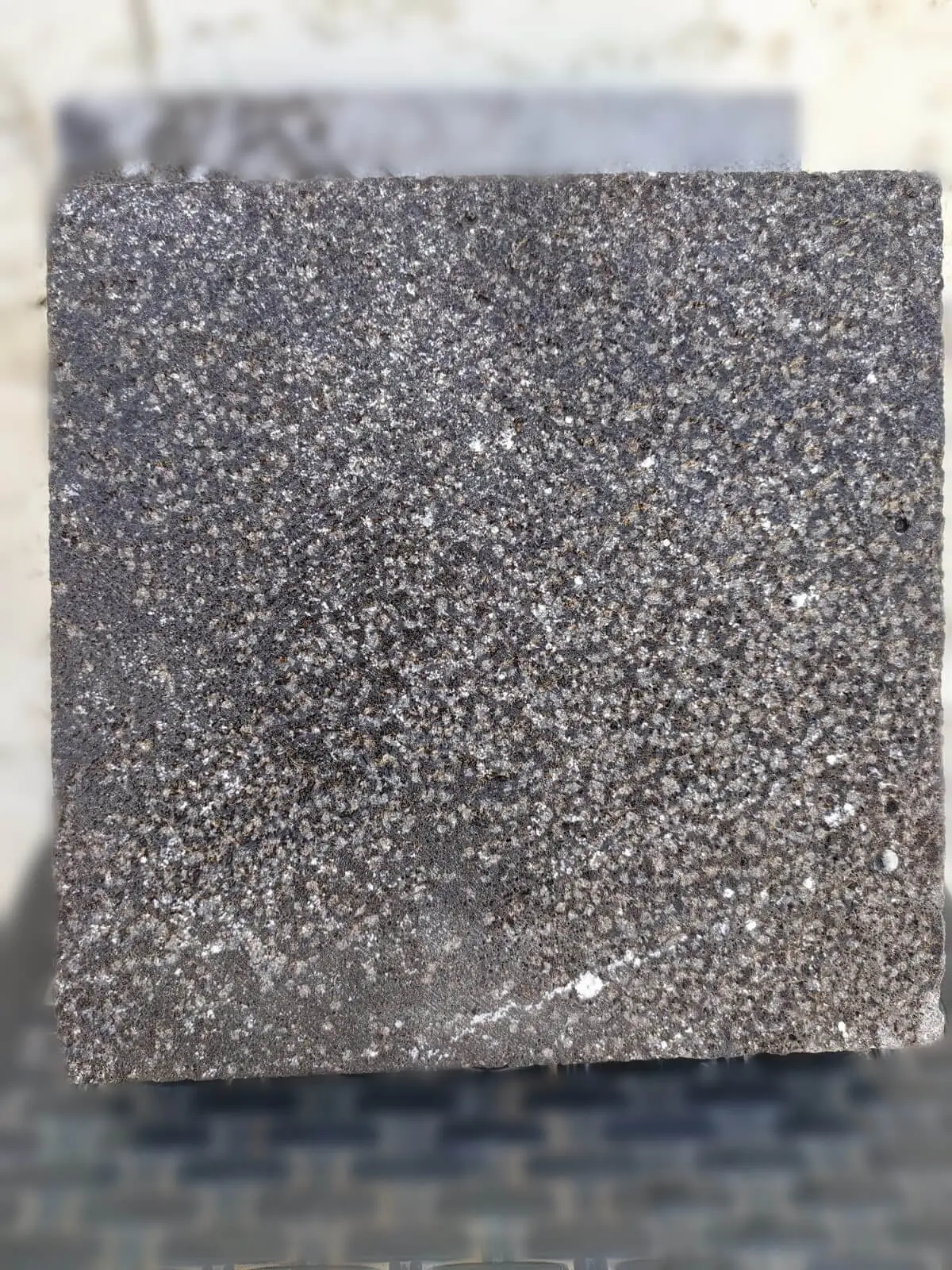
Sealing Protocols and Long-Term Maintenance
The sealing decision for ashlar stone block installations in Arizona involves a trade-off that’s genuinely worth understanding before you specify a product. Penetrating sealers — silane or siloxane-based — reduce water absorption without altering the stone’s vapor permeability. That vapor permeability matters in Arizona because temperature differentials between the back face of a wall and the front face can drive moisture vapor movement; trapping that vapor with a film-forming sealer creates spalling pressure over time.
Penetrating sealers are the correct specification for the vast majority of Arizona ashlar masonry applications. Apply the first coat within 30 days of installation completion, after confirming that mortar has cured fully (minimum 28 days for Type S). Apply a second coat within 72 hours of the first — this two-coat approach within the absorption window builds effective sealer depth rather than leaving a thin surface film that weathers away in 12–18 months.
Resealing intervals in Arizona’s UV-intense environment are shorter than manufacturer literature often indicates. Field performance data consistently shows that effective sealer life in low-desert Arizona runs 2–3 years for south and west-facing exposures, compared to the 5-year cycles appropriate for northern climates. Budget your maintenance schedule accordingly.
Projects in Mesa and the broader East Valley deal with hard water mineral deposits that accumulate on stone surfaces over time, particularly on horizontal elements near irrigation spray zones. These calcium carbonate deposits require poultice treatment with appropriate acid concentration — not pressure washing, which can erode mortar joints and damage stone texture when applied at the pressures people typically use. Knowing this before your client calls about white staining three years post-installation saves everyone a difficult conversation.
Planning and Ordering: Lead Times and Logistics
Successful ashlar stone block installation in Arizona requires your material logistics to be as well-engineered as your structural design. Natural stone lead times catch projects off-schedule more often than any other single factor, particularly when you’re specifying less common stone species or non-standard dimensional cuts.
Verify warehouse stock availability before you commit project start dates to clients. Standard ashlar block dimensions in common stone species — limestone and sandstone being the most prevalent — are typically available from local warehouse stock with 1–2 week lead times. Custom-sized cuts, less common stone types, or large-volume orders on short notice may require 4–6 weeks from quarry replenishment. Ordering against confirmed warehouse inventory eliminates that risk.
Your truck access plan at the delivery site affects material handling cost significantly. Ashlar stone block pallets typically weigh 2,000–3,000 lbs. each, and flatbed truck deliveries to residential sites with narrow driveways, low-clearance entries, or unpaved access roads create staging challenges that translate directly to additional labor cost. Confirm delivery truck clearance requirements — standard flatbed trucks need 14-foot vertical clearance and a turning radius of roughly 50 feet — before your first delivery is scheduled.
- Order 10–12% overage on natural stone to account for field cutting waste and color/size selection culling
- Stage materials on site in the installation sequence order to minimize double-handling
- Inspect each pallet for color consistency and dimensional conformance before the truck leaves — freight claims for stone damage are difficult to resolve after delivery acceptance
- Store pallets on level ground away from drainage paths; even crated stone can absorb ground moisture that affects mortar bond if materials are wet at installation
At Citadel Stone, we recommend confirming not just availability but also lot consistency when ordering across multiple deliveries for a single project. Stone from different quarry lots can show color variation that’s subtle on individual pieces but noticeable when two wall sections meet — this is a sourcing quality issue worth asking about before finalizing your order.
Drainage-First Thinking: The Standard for Natural Stone Wall Construction AZ Homeowners Trust
The variables that define long-term performance for ashlar stone block installation in Arizona all connect back to the same root question: how does water move through, around, and behind this installation across multiple years of monsoon cycles and drought periods? Answer that question correctly at the design stage and the installation itself becomes straightforward. Miss it, and no amount of quality material or skilled craftsmanship fully compensates for the structural liability that poor drainage creates.
Your specification package for any Arizona ashlar project should lead with drainage design, establish base preparation requirements calibrated to local soil conditions, and carry those water management principles all the way through mortar selection, sealing protocols, and long-term maintenance intervals. The techniques for installing stone blocks across Arizona landscapes that hold up over decades share this common thread — drainage-first thinking at every decision point.
As you finalize your project approach, related hardscape material decisions can inform your overall scope. Kerb Block Cost vs Concrete: Which Is Better for Arizona? explores how natural stone products compare to concrete alternatives for Arizona exterior applications — a useful reference when evaluating complementary site elements alongside your ashlar work. Builders in Tucson, Mesa, and Flagstaff rely on Citadel Stone ashlar stone blocks sourced from select natural stone quarries worldwide for exterior wall projects in Arizona’s demanding climate.