
Navigating the Arizona stone supplier pricing guide landscape requires more than comparing per-square-foot numbers on a quote sheet — the timing of your order and installation schedule will influence your actual landed cost more than almost any other variable. Buyers who place material orders without accounting for Arizona’s seasonal installation windows routinely absorb costly delays, adhesive failures, and rescheduling fees that inflate their project budgets by 15–25%. Understanding how the state’s seasonal patterns interact with material procurement, truck delivery logistics, and installation readiness is where smart sourcing actually begins.
Why Timing Drives Stone Pricing in Arizona
Arizona’s construction calendar doesn’t follow the national pattern, and that asymmetry creates real pricing leverage for buyers who understand it. Demand for natural stone material costs from Arizona suppliers peaks in two distinct windows: late September through November, and late February through April. These shoulder seasons offer comfortable installation temperatures without the brutal conditions that slow adhesive cure and grout hydration.
During peak demand periods, suppliers — including Citadel Stone — see warehouse draw-down accelerate significantly, which can compress your lead time options and push material costs upward as spot inventory tightens. Conversely, summer and early winter are slower ordering seasons, and you’ll often find more negotiating room on volume pricing and freight scheduling when truck capacity isn’t fully committed to competing job sites.
- Late September through November: optimal installation temperatures, higher demand, tighter warehouse stock
- February through April: second peak window, competitive pricing before spring rush solidifies
- June through August: reduced contractor scheduling pressure, but installation challenges require strict morning-only work windows
- December through January: slowest ordering period, best leverage for negotiating slab pricing and freight terms
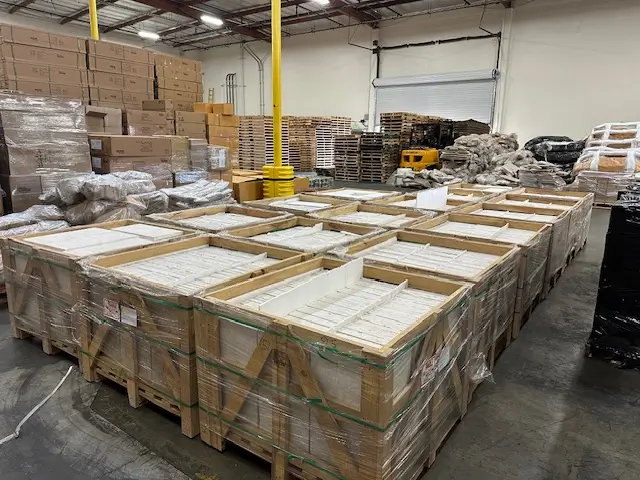
Stone Slab Pricing Factors for Arizona Buyers
The stone slab pricing factors for buyers in Arizona go well beyond material grade. Your final cost per square foot reflects a layered calculation that most buyers don’t fully unpack until their first project overruns budget.
Material origin is the first lever. Domestically quarried limestone and sandstone typically carry lower freight costs than imported travertine or basalt, but the landed price differential narrows considerably when you factor in the import lead times — often 6–8 weeks compared to 1–2 weeks from regional warehouse stock. For time-sensitive projects, the premium on domestic or regionally stocked material often pays for itself in avoided delays.
- Stone grade and finish: honed, brushed, or tumbled finishes add $1.50–$4.00 per square foot above raw material cost
- Slab thickness: 3/4-inch material typically runs 20–30% less than 1.25-inch slabs; structural applications in Arizona often require the heavier option
- Lot consistency: mixed-lot material is less expensive but creates color matching headaches mid-project
- Minimum order quantities: most Arizona suppliers price breaks at 500 square feet, with meaningful discounts above 1,000 square feet
- Freight zone: delivery to Flagstaff adds elevation-related trucking costs that flat-desert deliveries don’t carry — plan for a $0.30–$0.60 per square foot freight premium at higher elevations
Surface finish also affects installation labor cost in ways buyers don’t always anticipate. A brushed travertine surface in a high-UV Arizona exposure will require resealing on a tighter schedule than a polished granite alternative, and that lifecycle cost should factor into your initial material selection when comparing quotes from different stone supply companies in Arizona. Budgeting for stone supply orders across Arizona means including these ongoing maintenance variables alongside the initial material price.
Seasonal Installation Windows and What They Cost You
The relationship between seasonal scheduling and your actual project cost is direct and quantifiable. Mortar and thin-set adhesives have a functional working temperature range — typically between 50°F and 95°F for standard formulations — and Arizona’s climate pushes against both ends of that range depending on the season and elevation.
For Scottsdale projects in July, you’re typically looking at a 5:00 a.m. to 10:00 a.m. usable installation window before surface temperatures on stone and substrate climb past the point where thin-set begins flashing before proper bond is achieved. That compressed window effectively doubles your labor schedule for the same square footage, which raises your contractor’s all-in quote — not because the stone is more expensive, but because the installation efficiency drops significantly. Building that labor premium into your overall budget is essential for realistic project cost planning.
- Summer morning windows: 5:00 a.m.–10:00 a.m. for adhesive work; afternoon limited to dry-laying and prep
- Fall and spring: full-day installation possible with standard adhesive formulations
- Winter at elevation: freeze risk below 35°F requires heated enclosures or delayed start times
- Afternoon work in peak summer: restricted to cutting, grinding, and surface prep — no adhesive application
Budgeting for Stone Orders: The Full Cost Picture
Budgeting for stone supply orders across Arizona means accounting for five cost categories that most initial quotes don’t capture in a single line item. Missing any one of them will create budget exposure mid-project.
Material cost is the obvious starting point, but freight — including truck access constraints at your specific site — is often the second-largest variable. Narrow residential driveways in established Scottsdale neighborhoods can limit truck access to smaller delivery vehicles, which increases per-trip costs compared to a full flatbed delivery to a commercial site with open staging. Verify your site’s access constraints before you finalize the delivery quote.
- Material cost per square foot (varies by stone type, finish, and thickness)
- Freight and truck delivery (distance, site access, lift equipment requirements)
- Sealer and installation consumables (grout, thin-set, joint sand)
- Labor — seasonally adjusted for installation window constraints
- Waste factor (typically 8–12% for straight-cut field tile; up to 15% for pattern cuts or irregular formats)
At Citadel Stone, we recommend confirming your waste factor calculation with your installer before placing your material order — undershooting on square footage is a common source of costly reorders, especially when the original material was from a specific lot that may not be available for quick restock from the warehouse.
How Arizona Regional Conditions Affect Material Selection and Cost
Your material selection directly affects your total project cost, and that relationship changes depending on where in Arizona you’re building. The state spans multiple climate zones, and a material spec that performs excellently in the low desert can fail prematurely at elevation.
In Tucson, the combination of intense UV exposure, monsoon moisture cycles, and alkaline soils creates a performance environment that favors dense, low-porosity stones like basalt or tight-grain limestone over softer travertines. Softer travertines tend to absorb moisture during the monsoon window and then experience micro-spalling as that moisture drives out rapidly under intense solar loading — a failure mode that typically shows up in years 3–5 and accelerates from there without proactive sealing maintenance.
Any AZ homeowner guide to stone purchase costs should include a regional performance multiplier. A less expensive material that requires resealing every 18 months instead of every 36 months adds measurable lifecycle cost that the initial square-foot price doesn’t reflect. Running a 10-year cost comparison — material plus maintenance — gives you a more accurate picture than the quote sheet alone.
- Low desert (Phoenix metro, Tucson): prioritize UV resistance and low water absorption rates
- Mid-elevation (Prescott, Verde Valley): moderate freeze-thaw exposure requires ASTM C170 compressive strength above 9,500 PSI
- High elevation (Flagstaff area): freeze-thaw cycles demand absorption rates below 3% — verify supplier test data before specifying
Ordering Lead Times and Warehouse Stock Planning
Lead time planning is where many Arizona stone buyers leave money on the table. Ordering during off-peak periods — particularly December through January — gives you access to more favorable freight scheduling and warehouse pick priority, which translates to better overall pricing and more predictable delivery dates.
Understanding how to use our Arizona stone supply costs page can help you align your budget planning with real current pricing rather than outdated estimates from previous project cycles.
Warehouse stock levels for high-demand materials like travertine and limestone can fluctuate significantly during Arizona’s peak installation seasons. If your project is scheduled for October or March, place your material order 6–8 weeks ahead to lock in pricing and ensure the warehouse has sufficient inventory to fulfill your lot. Waiting until 2–3 weeks before installation in those peak windows is where buyers encounter both price volatility and lot-matching issues.
- Off-peak orders (Dec–Jan): 1–2 week lead time typical from regional warehouse stock
- Peak season orders (Sept–Nov, Feb–Apr): plan for 3–5 week lead times as warehouse draw-down accelerates
- Imported material: 6–8 weeks regardless of season — factor this into your project timeline from day one
- Custom cuts or non-standard formats: add 2–3 weeks to any baseline lead time estimate
Negotiating Volume Pricing with Arizona Stone Suppliers
A complete Arizona stone supplier pricing guide requires a frank discussion of how volume pricing actually works in this market. Most suppliers structure their pricing in quantity tiers, but the breakpoints and discount depths vary significantly between suppliers and material types.
The standard industry breakpoints in Arizona typically fall at 200, 500, and 1,000 square feet for tile and paver formats, with slab material structured differently based on the number of full slabs rather than square footage. At Citadel Stone, our technical team advises buyers to look carefully at the cost-per-square-foot differential between tiers before committing to a specific order quantity — sometimes a 10% increase in quantity produces a 15% cost reduction that more than offsets the carrying cost of modest overstock.
- 200–499 sq ft: standard retail pricing, minimal leverage
- 500–999 sq ft: first meaningful break point — typically 5–8% below standard pricing
- 1,000+ sq ft: most competitive tier — 10–18% below standard in most Arizona markets
- Freight consolidation: combining multiple material types on a single truck delivery reduces per-unit freight cost meaningfully
Timing your order to coincide with a supplier’s low-demand period also provides informal pricing leverage that formal volume tiers don’t capture. A stone supply company in Arizona running lower-than-typical warehouse throughput in January will often extend better terms than the same supplier operating at 90% capacity in October.
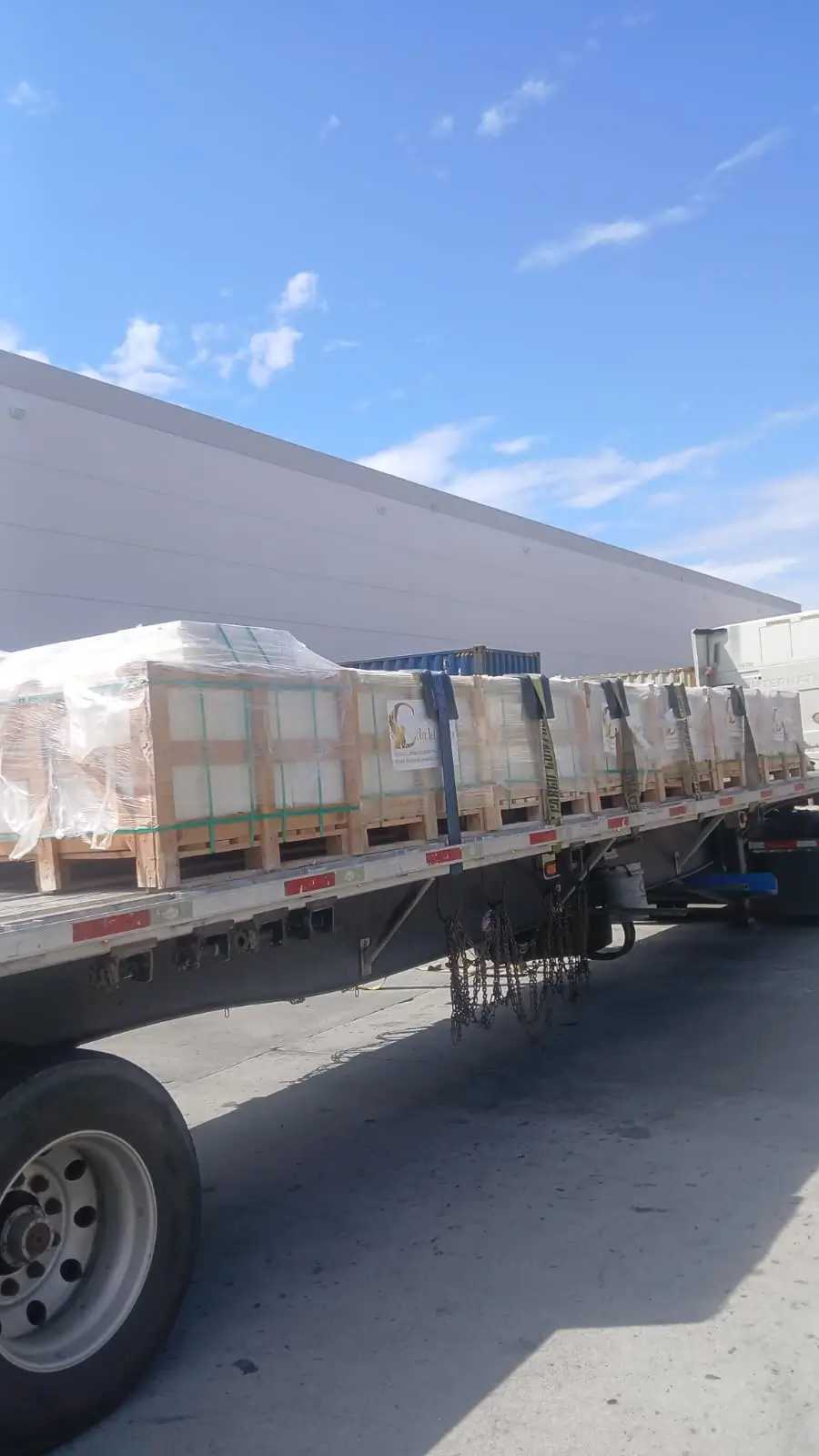
Freight Logistics and Delivery Planning
Freight is the cost line that surprises buyers most frequently in any Arizona stone supplier pricing guide breakdown. The state’s geography — spanning dense metro cores, mountain corridors, and remote high-desert communities — creates meaningful freight variability that a single delivered price quote can obscure.
Truck delivery to standard Phoenix metro addresses is typically the baseline freight scenario that suppliers quote. Projects outside that corridor should be assessed individually. High-elevation deliveries require trucks with higher gear ratios, which constrains which vehicles in a supplier’s fleet can service those routes. Projects requiring unloading equipment like forklifts or piggyback trucks carry additional charges that should be confirmed in writing before you finalize your order.
- Confirm your site’s truck access dimensions (gate width, overhead clearance, surface load rating)
- Verify whether your quote includes liftgate service if you lack a loading dock or forklift
- Request itemized freight breakdowns — bundled pricing hides cost components you may be able to negotiate
- For staged deliveries on large projects, negotiate the freight rate per delivery upfront rather than absorbing spot rates later
Natural stone material costs from Arizona suppliers are most accurately compared when freight is itemized separately from material cost. A lower per-square-foot material price from a distant supplier can easily be erased by freight charges that a regional warehouse eliminates through proximity. This is especially relevant for buyers evaluating the full scope of natural stone material costs from Arizona suppliers across multiple project phases.
Getting Arizona Stone Supplier Pricing Right
Buyers who consistently hit their stone budgets in Arizona share one practice: they treat the Arizona stone supplier pricing guide process as a seasonal and logistical exercise, not just a materials shopping exercise. Locking in your material order during Arizona’s off-peak window, understanding your site’s freight constraints before requesting quotes, and matching your material specification to your specific regional climate zone are the three decisions that separate on-budget projects from those that absorb costly surprises.
For deeper context on how specific natural stone materials are priced across the state, the Natural Stone Pricing Guide Arizona: Buyer’s Guide covers material-by-material cost benchmarks that complement the timing and logistics framework outlined here.
Your installation schedule should drive your procurement timeline — not the other way around. Identifying your ideal installation window, then working backward to set your order date, warehouse confirmation, and truck delivery slot gives you the planning structure to capture the best pricing and avoid the seasonal premiums that compress margins on projects ordered reactively. Stone for Arizona projects sourced through Citadel Stone from select natural stone quarries worldwide arrives with itemized freight and material breakdowns useful for Flagstaff, Yuma, and Peoria budget planning.