

The term “bedrock” in landscaping specifications gets misapplied more often than almost any other phrase in the trade — it refers to quarried, dimensioned natural stone selected for structural and decorative landscape use, not the geological substrate beneath a site. Bedrock landscaping materials cover everything from flagstone patios to retaining wall block, and the specification decisions made at the material-selection stage determine whether an installation holds up for eight years or twenty-five. Compressive strength ratings alone won’t tell you that story — porosity, joint design, and edge restraint carry equal weight once the material hits the ground.
What Bedrock Landscaping Materials Actually Include
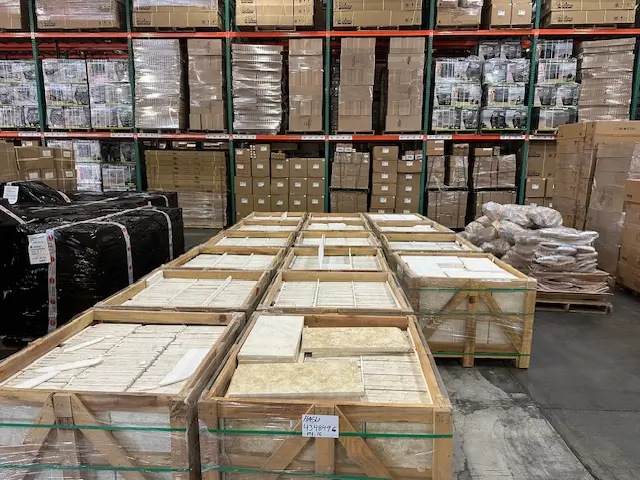
Bedrock landscaping materials, as the category is used across the supply trade, includes any dimensioned or semi-dimensioned natural stone product engineered for outdoor landscape construction — pavers, flagstone, cobblestone, wall block, curbing, and boulder groupings all qualify. Your project scope determines which subset matters: a patio rebuild pulls from a different inventory than a retaining wall or a dry-laid pathway. Citadel Stone maintains warehouse inventory across multiple product lines specifically because project scopes rarely stay confined to a single material category. Working with a national supplier of landscape stone that stocks multiple categories keeps a multi-phase project from stalling mid-build.
Stone Types That Fall Under This Category
Field experience across regions shows five material families account for the bulk of landscape specification: limestone, granite, basalt, travertine, and flagstone-grade sandstone or slate. Each brings a distinct density, absorption rate, and finish range to the table, and none of them perform identically once weather and foot traffic get involved. Understanding these differences up front saves you from a costly material swap mid-project.
- Limestone — moderate density, strong workability, widely used for patios and walkways
- Granite — high compressive strength, low absorption, favored for driveways and heavy-traffic zones
- Basalt — dense volcanic stone with excellent freeze-thaw and impact resistance
- Travertine — lighter, porous stone suited to pool surrounds and shaded patios
- Flagstone (sandstone, slate, or bluestone) — irregular or cut format, popular for walkways and stepping paths
National production data on landscape stone reflects steady demand across all five categories, with granite and limestone accounting for the largest volume share according to USGS dimension stone production figures. That volume matters practically — it affects lead times, regional stock availability, and how quickly a supplier can fill a large order without splitting it across multiple truck shipments.
Performance Criteria That Should Drive Your Selection
Your selection process should start with performance criteria, not aesthetics — color and finish are easy to adjust after the fact, but a poorly matched material can’t be fixed without tearing out the installation. Absorption rate, compressive strength, freeze-thaw rating, and slip resistance form the core four metrics worth checking on every product data sheet before you commit to a quantity. Skipping this step is the single most common reason a landscape stone installation underperforms its expected lifespan.
Absorption above 3% generally signals a stone that struggles in freeze-thaw regions, since trapped moisture expands and contracts with temperature swings and eventually spalls the surface. Compressive strength below 8,000 PSI can still perform fine on a patio but becomes risky under vehicle loads on a driveway. Natural stone pavers rated for exterior use typically list both figures on the technical data sheet, and it’s worth cross-referencing them against your specific application before ordering.
- Absorption rate under 3% for freeze-thaw regions
- Compressive strength above 8,000 PSI for vehicular applications
- Slip resistance coefficient appropriate to wet-use areas like pool decks
- Thickness matched to load — 1.25 inches for pedestrian paths, 2 to 3 inches for driveways
Here’s what most specifiers miss — a stone’s lab-tested absorption rate doesn’t always match its field performance once joint sand and sealing are factored in. A slightly higher-absorption limestone with proper sealing can outperform an unsealed granite in freeze-thaw regions over a ten-year span. That’s the kind of trade-off worth discussing with your supplier before finalizing a spec, since printed data sheets rarely capture how sealing schedules change long-term outcomes.
Comparing Stone Types for Landscape Applications
You’ll find that bedrock landscaping materials split cleanly between structural and decorative applications, which makes comparison easier once you separate the two categories. Driveways and vehicle-adjacent hardscape need granite or dense basalt; patios and walkways have more flexibility and can lean on limestone, travertine, or flagstone depending on climate and budget.
Limestone remains one of the most commonly specified landscape stones nationally because of its workability and moderate cost, according to the Natural Stone Institute’s landscape stone variety guide. Granite costs more per square foot but requires less long-term maintenance, which shifts the total cost of ownership calculation for larger installations spanning several thousand square feet.
- Limestone — moderate cost, good workability, moderate durability, needs periodic sealing
- Granite — higher upfront cost, minimal sealing needs, excellent load-bearing capacity
- Basalt — dense and heavy, strong impact resistance, limited color range
- Travertine — attractive and heat-moderating, requires more frequent joint maintenance
- Flagstone — natural irregular aesthetic, variable thickness complicates installation labor
Flagstone’s irregular shapes also pair naturally with the five-stone grouping tradition used across boulder and stepping-path layouts, which is why designers often reach for it when a natural, unstructured look matters more than uniform coverage.
What the data consistently shows is that natural stone pavers made from granite and basalt outlast limestone and travertine in high-traffic driveway applications by roughly a decade, though the gap narrows considerably on patios and walkways where loads are lighter. Factor expected traffic volume into your comparison before letting price alone drive the decision.
Wind Load, Storm Exposure, and Long-Term Durability
For storm-prone regions, selecting bedrock landscaping materials means accounting for more than static load — wind-driven rain, hail impact, and freeze-thaw cycling all stress a landscape installation in ways a sunny-day walkthrough won’t reveal. Loose-laid stepping stones and inadequately restrained pavers are the first components to fail when a storm event pushes water laterally through joint lines instead of straight down.
Impact resistance becomes a real factor with hail — basalt and granite shrug off hail strikes that can chip or crack softer limestone and travertine surfaces. Thicker nominal dimensions of 2 inches or greater also resist cracking under storm debris impact significantly better than thin veneer-style pavers, which is why driveway-grade material is rarely specified under that threshold.
Edge Restraint and Joint Integrity Under Wind-Driven Rain
Edge restraint is the detail that separates installations that survive severe weather from ones that don’t. A rigid concrete or steel edge restraint keeps the entire field of pavers locked together, preventing the lateral creep that wind-driven rain accelerates by washing out unstabilized joint sand along the perimeter.
Your installation crew should verify that base compaction reaches 95% Proctor density before laying material, since a soft base shifts under storm saturation and undermines even well-restrained edges over time. Polymeric jointing sand also resists washout far better than standard sand once wind-driven rain starts moving water sideways through a paved surface, and it’s a small material cost relative to the repair work it prevents.
- Rigid edge restraint anchored below frost depth in freeze-thaw regions
- Polymeric sand in joints exposed to wind-driven rain
- Minimum 2-inch nominal thickness for storm-debris impact zones
- Compacted aggregate base tested to 95% Proctor density before installation
Base Preparation and Installation Considerations
Base preparation determines more of an installation’s lifespan than the stone selection itself, which surprises a lot of first-time specifiers. A properly graded and compacted aggregate base — typically 4 to 6 inches for pedestrian areas and 8 to 12 inches for vehicular loads — carries the structural weight that the stone surface simply transfers downward.
- 4 to 6 inches of compacted aggregate base for pedestrian pathways and patios
- 8 to 12 inches of compacted aggregate base for driveways and vehicular loads
- Geotextile fabric layer between subgrade and base in clay-heavy or unstable soils
- Proper drainage grade to prevent standing water beneath the stone surface
Your specification should assume that natural stone pavers set on an inadequate base will crack, heave, or settle unevenly within a few seasons, regardless of how strong the stone tests in a lab. Clay-heavy soils expand and contract with moisture content, and that movement telegraphs straight through a thin base layer into the stone surface above it.
The detail that matters most in clay-heavy soil conditions is drainage — a geotextile fabric layer between subgrade and aggregate base prevents fines from migrating upward and destabilizing the compacted base over several wet-dry cycles. Skipping this layer to save a day of labor is one of the more common mistakes that shows up as a warranty claim two or three years later, long after the original crew has moved on.
Choosing a Landscape Stone Supplier: Lead Times and Delivery Considerations
Choosing the right landscape stone supplier involves more than comparing per-square-foot pricing — lead time, warehouse stock depth, and delivery logistics affect your project timeline just as much as material cost. Imported stone that isn’t held in domestic warehouse inventory can add six to eight weeks to a project schedule, which throws off contractor scheduling and labor costs.
Citadel Stone maintains warehouse inventory nationwide across its core product lines, which typically reduces lead times to one or two weeks compared to the six-to-eight-week import cycle many projects face when ordering direct from overseas quarries. You can review our stone supply for landscaping to check current stock depth and available formats before finalizing your material takeoff.
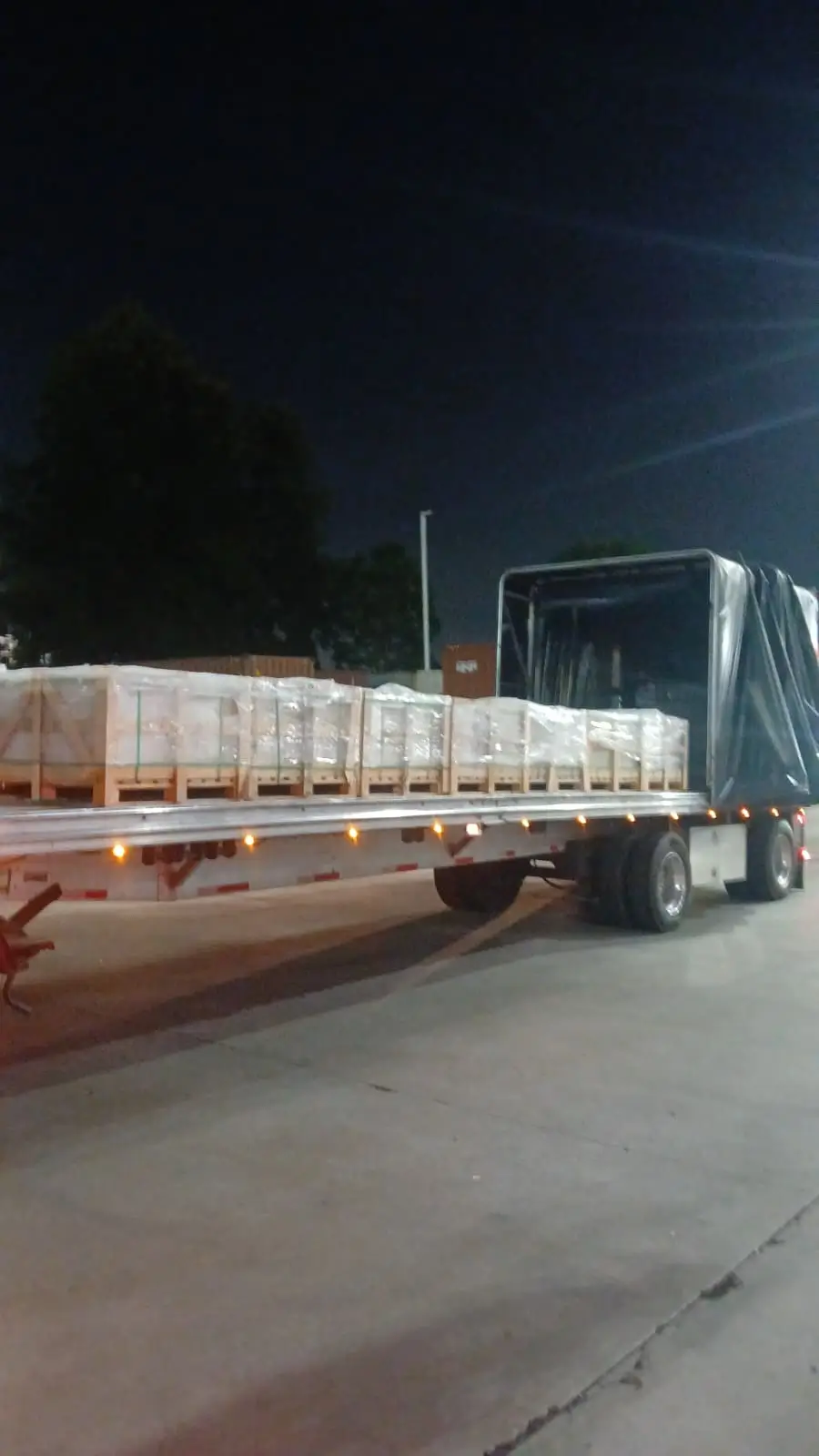
Truck access to the job site also deserves attention before delivery day — pallet weights for natural stone run heavy, and a standard flatbed truck needs a stable, level unloading area close to the work zone. Confirming truck access during the estimating phase avoids the expensive surprise of a delivery that can’t reach the site and requires re-handling material by hand.
What Drives Stone Pricing for Landscape Projects
Stones for landscaping prices swing on a handful of variables that have nothing to do with the stone’s visual appeal: quarry origin, finish process, thickness, and transportation distance from warehouse to job site all factor into the final delivered cost. Domestically warehoused material typically costs less per square foot than direct import specifically because it avoids container shipping and customs delays.
You’ll also see a meaningful cost swing from finish type — tumbled and honed finishes require additional processing labor compared to natural cleft or split-face material, and that labor shows up in the price per pallet. Thickness matters too, since 2-inch driveway-grade material costs more per square foot than 1.25-inch pedestrian-grade stone even within the same material family.
- Quarry origin and transportation distance to warehouse
- Finish process — tumbled, honed, polished, or natural cleft
- Thickness and format — cut dimensional stone versus irregular flagstone
- Order volume — full truck loads typically price lower per unit than partial loads
Total project budgets should also account for base materials, edge restraint, and labor, which combined often exceed the cost of the stone itself on smaller installations. A realistic per-square-foot estimate for a mid-range material, delivered and installed, typically lands in a wide range depending on base conditions and design complexity — request a written quote rather than relying on average figures found online.
Layout Principles: Grouping and Placement Strategy
Layout strategy affects both the finished look and the long-term durability of a stone installation, and it’s a step many DIY projects skip entirely. The five stones landscaping principle — grouping stepping stones or boulders in odd-numbered clusters rather than even pairs — remains one of the oldest layout conventions in landscape design, borrowed originally from garden tradition and still used across modern residential work.
You’ll notice odd-numbered groupings read as more natural to the eye than symmetrical pairs, and the technique extends beyond stepping stones to boulder placement, accent groupings near entries, and transitional stone clusters between hardscape zones. Spacing between individual stones in a grouping typically ranges from 18 to 24 inches for a comfortable stride length on a walking path.
According to landscape architecture design guidance, irregular groupings also improve stormwater permeability compared to solid poured surfaces, since gaps between stones allow water infiltration instead of sheet-flow runoff.
In storm-exposed sites, boulder placement deserves its own consideration — larger anchor stones set below grade resist frost heave and wind-driven soil erosion far better than surface-set stones with no embedment. Your layout plan should treat these anchor points as structural elements, not just visual accents.
Maintenance Needs and Common Installation Mistakes
Common installation mistakes tend to repeat across projects regardless of which bedrock landscaping materials you choose: inadequate base compaction, undersized edge restraint, skipped geotextile fabric, and joint sand that isn’t rated for the climate exposure. Any one of these shortcuts can cut an expected 20-year installation down to under 10.
- Skipping geotextile fabric over clay-heavy or unstable subgrade
- Using standard joint sand in wind-driven rain or freeze-thaw exposure
- Undersized edge restraint that shifts under storm saturation
- Insufficient base depth for the intended load — pedestrian versus vehicular
- Ignoring slope and drainage grade during initial layout
You should expect most natural stone pavers to need resealing every two to three years, along with joint sand replenishment after severe weather events. Twenty to thirty years of solid performance is realistic from a properly installed, well-maintained system, with drainage and periodic resealing doing most of the heavy lifting toward that lifespan.
Storm damage assessment after a major weather event should focus on joint integrity and edge restraint first, since these are the components most likely to shift even when the stone itself shows no visible damage. Catching a small edge restraint failure early is far cheaper than repairing the entire paver field it eventually undermines.
Frequently Asked Questions About Bedrock Landscaping Materials
A few questions come up repeatedly during material consultations, and the answers below cover the ones that affect specification decisions most directly.
How thick should bedrock landscaping materials be for a driveway?
Driveway-grade stone typically runs 2 to 3 inches in nominal thickness, set over 8 to 12 inches of compacted aggregate base. Thinner material may look identical on delivery but tends to crack under repeated vehicle loading within a few seasons.
Can bedrock landscaping materials be installed over an existing concrete slab?
Thin-set applications over sound, cracked-free concrete are possible for some stone types, but most landscape installations still perform better on a properly prepared aggregate base rather than a rigid slab, since drainage and flexibility matter more outdoors than indoors. Your installer should evaluate the slab’s condition and drainage slope before recommending this approach.
How do you protect landscape stone from storm damage?
Rigid edge restraint anchored below frost depth, polymeric jointing sand, and adequate base compaction are the three details that matter most in storm-exposed conditions. Regular inspection after major weather events catches small shifts before they become full paver-field failures.
Your Bedrock Landscaping Materials Action Plan
Getting bedrock landscaping materials right for your project comes down to matching performance criteria to your specific application, verifying base preparation matches load requirements, and confirming your supplier can deliver on the timeline your project needs. Skipping any one of these steps tends to surface as a problem within the first few years, not immediately — which is exactly why it gets overlooked during initial planning.
Your action plan should start with a written material comparison against the performance metrics covered here, followed by a base preparation plan suited to your soil conditions, and a supplier conversation about warehouse stock and truck delivery logistics before you finalize quantities. Factoring in how landscaping stone pricing shifts by volume and finish keeps that comparison realistic. Once the installation is complete, ongoing care extends its lifespan considerably — proper upkeep for landscaping stone covers the sealing and joint maintenance schedule that keeps these materials performing for decades.
At Citadel Stone, we work directly with selected quarries and maintain warehouse inventory nationwide, so your project gets the material data and delivery timeline needed to specify with confidence. Sourced from our selected premium quarries across multiple continents, Citadel Stone’s landscaping materials arrive in consistent slab thicknesses suited to both residential and commercial projects.
Related reading: best stone for landscaping · landscape stone prices per square foot · stone landscape edging installation.