

The real failure point in finding natural stone suppliers isn’t the search itself — it’s knowing what to evaluate once you have a list of candidates. Most buyers compare price per square foot and stop there, missing the variables that actually determine whether a project finishes on time, on budget, and with consistent material quality. Supply chain depth, warehouse inventory levels, stone classification accuracy, and the supplier’s ability to hold matched batches for phased projects all matter more than the unit price on a quote sheet.
What Separates Serious Suppliers from Distributors
The distinction between a genuine natural stone supplier and a mid-tier distributor becomes obvious the moment you ask detailed questions. A real supplier can tell you the quarry origin, the density range, the absorption coefficient, and what ASTM classification applies to the material in question. According to Natural Stone Institute stone variety specifications, each stone type carries distinct performance benchmarks that qualified suppliers should be able to cite without hesitation. If your contact goes quiet when you ask about absorption rates or compressive strength, that tells you something important about their sourcing depth.
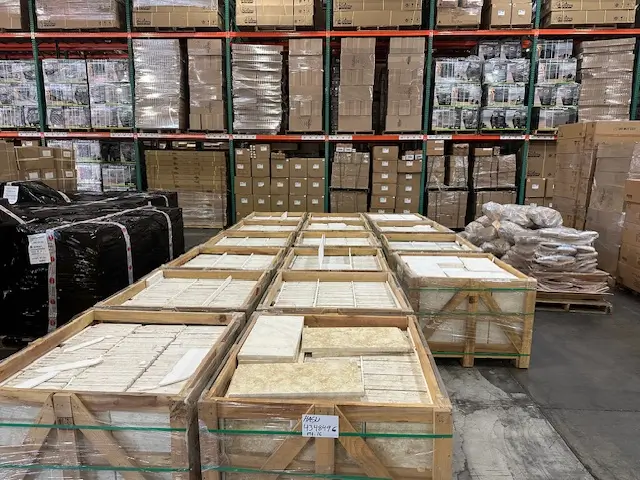
You’ll also want to probe their inventory model. Suppliers who hold genuine warehouse stock — rather than drop-shipping from a third-party importer — can commit to realistic lead times. Suppliers operating on a purchase-order-to-import model often quote 6–10 week timelines that create serious scheduling problems for contractors managing subcontractor sequencing.
At Citadel Stone, we evaluate every batch through physical inspection before it reaches warehouse racking — checking for color consistency, surface variation, and dimensional tolerances that catalog photos simply can’t capture.
Evaluating Stone Quality Before You Commit
Your specification review should start with ASTM standards, not sales literature. The USGS dimension stone production data outlines how stone is classified across quarry origins and end-use applications — a useful baseline for understanding what you’re actually buying. Limestone, granite, travertine, and sandstone each carry different density, porosity, and flexural strength profiles that directly affect which applications they’re suited for.
For structural or load-bearing applications, you need compressive strength data — not a general description of the material as “durable” or “suitable for commercial use.” Request the technical data sheet. If the supplier can’t produce one, that’s a disqualifier for serious specification work.
- Request quarry-of-origin documentation for any material going into a high-visibility project
- Ask for minimum compressive strength and maximum water absorption figures — not ranges, but actual lot test results
- Verify that the supplier’s ASTM classification matches your application type (interior vs. exterior, pedestrian vs. vehicular)
- Confirm whether the lot you’re quoting is in stock or on order — the distinction affects your project schedule significantly
How Ground Conditions Should Influence Your Supplier Conversations
Here’s what most buyers overlook when finding natural stone suppliers: your subgrade conditions should directly inform your material thickness and base specification — and your supplier should be able to advise on both. Expansive clay soils, for example, create differential movement that can fracture thinner-gauge stone regardless of surface finish quality. Sandy or loosely compacted subgrades require deeper aggregate bases, which affects your total material budget and installation timeline.
Certain subgrade conditions common in arid regions create drainage challenges that change your joint specification entirely — water that can’t percolate through a hardpan shelf will migrate laterally and undermine your base over time. A supplier with real field experience will flag these concerns when you describe your installation context. One that’s purely transactional won’t ask about subgrade at all.
- Expansive clay subgrades call for thicker-gauge stone (minimum 1.5 inches for natural stone pavers, 2 inches for heavy-use areas) to distribute point loads across unstable base material
- Rocky or hardpan subgrades need aggressive drainage planning — your stone selection should factor in joint width and pattern to manage surface runoff
- Sandy soils provide good drainage but poor bearing capacity — compacted aggregate depth becomes critical, and your supplier should factor this into the base spec they recommend
- Organic or fill soils are the highest-risk subgrade for natural stone — settlement is unpredictable, and a supplier worth working with will tell you that honestly
Reconstituted Stone Suppliers vs. Natural Stone: Understanding the Trade-Off
The conversation around reconstituted stone suppliers comes up frequently in bid-phase discussions, usually as a cost-reduction argument. Reconstituted stone is manufactured from natural stone aggregate combined with resins or cementitious binders — it delivers dimensional consistency and color uniformity that quarried stone can’t always match. That uniformity is genuinely useful for large-scale commercial projects where installation speed matters and visual variation is a liability.
The trade-off is long-term performance character. Natural stone develops a patina and surface texture over decades that most reconstituted stone suppliers’ products can’t replicate. For high-value residential projects, hospitality applications, or any installation where the material’s authenticity is part of the design intent, natural stone consistently outperforms manufactured alternatives in owner satisfaction over a 10–20 year horizon.
Your specification decision should hinge on the project’s performance requirements and aesthetic expectations — not on which material is easier to source in volume.
Assessing Delivery Logistics and Lead Times
Truck delivery logistics are a practical filter that many buyers apply too late in the sourcing process. You need to know whether your site can accommodate a standard flatbed delivery or whether you need to arrange a crane offload or split delivery. Stone arrives heavy — a pallet of 2-inch granite pavers can run 3,000 to 4,500 pounds — and suppliers who don’t ask about your site access during the quoting phase are setting you up for delivery-day problems.
For a natural stone supplier to deliver reliably, they need to maintain genuine warehouse stock, not just catalog access. Suppliers with centralized warehouse operations can typically commit to 1–2 week lead times on stocked material. Import-dependent suppliers may quote lower prices but routinely run 8–12 week lead times that compress your installation window and create coordination problems with other trades.
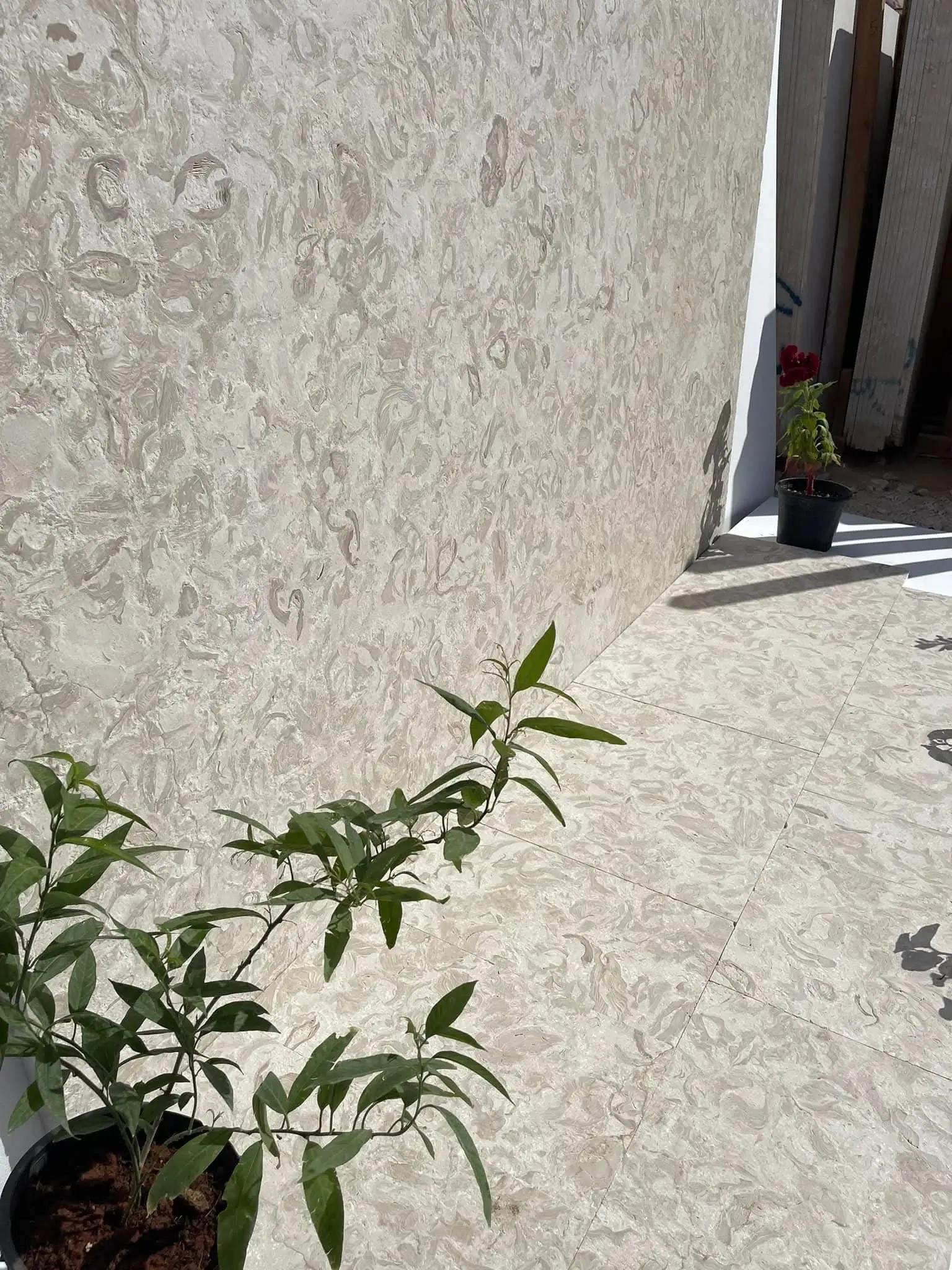
You should also confirm how the supplier handles batch matching for phased projects. If your project installs in two or three phases over several months, the supplier needs to hold matched material from the same quarry lot — color and veining variation between lots can be significant enough to be visible at joints, even within the same material designation.
Building Stone Suppliers and the Specification Depth Question
There’s a meaningful difference between building stone suppliers who understand the specification process and those who simply fulfill material orders. The former will engage with your architect or engineer on technical questions — thickness tolerances, thermal expansion coefficients, finish options, and surface texture data. The latter will tell you what they have in stock and quote a delivered price.
For structural applications — retaining walls, foundation facing, load-bearing steps — you need a supplier who can provide certified material data that supports your engineer’s calculations. For decorative applications, that technical depth matters less, but batch consistency and delivery reliability become the primary evaluation criteria. Knowing which category your project falls into helps you calibrate how demanding your supplier evaluation needs to be.
Connecting with the right source early makes a real difference. Citadel Stone supplier access covers what to expect from a national supplier with genuine inventory depth and technical consultation capability.
Natural Stone Pavers: Wholesale Pricing and Volume Structure
Natural stone pavers represent one of the highest-margin categories in the stone supply chain, which means pricing varies more than almost any other dimension stone product. The spread between retail yard pricing and wholesale pricing for natural stone pavers can run 25–45% on identical material — the difference is almost entirely about order volume and supplier relationship structure.
Most wholesale pricing thresholds start at full pallet quantities, typically 400–600 square feet depending on paver size and thickness. Below that volume, you’ll pay retail or near-retail pricing regardless of how you frame the order. Above full-truck quantities — generally 3,000 to 5,000 square feet — pricing drops again, and suppliers with warehouse stock can often negotiate delivery scheduling to reduce freight costs.
- Always request pricing at multiple volume tiers — per square foot, per pallet, and per truck load — before finalizing your budget
- Factor freight into your total cost comparison, not just material price — a lower material price plus higher freight can easily exceed a higher-priced alternative
- Ask whether the supplier can stage delivery across multiple truck drops without repricing — phased delivery is critical for larger projects where storage space is limited
- Verify that the quoted price includes material from a single quarry lot — mixed-lot pricing is sometimes used to hit a volume threshold, which creates consistency problems at installation
Red Flags in the Supplier Evaluation Process
Years of sourcing across diverse project types surfaces a consistent set of warning signs that indicate a supplier is unlikely to perform reliably. The detail that matters most isn’t price — it’s responsiveness and technical fluency during the quoting phase. A supplier who takes four days to return a technical inquiry will not improve when your project is under construction and you have a field question that needs a same-day answer.
The ASTM dimension stone quality and testing standards provide a reference framework for what qualified suppliers should be able to confirm about their material. If a supplier can’t reference these standards in conversation, that signals they’re sourcing from secondary markets without direct quarry relationships.
- Vague or evasive answers about quarry origin — legitimate suppliers know where their stone comes from
- No technical data sheet available for any product in their catalog
- Price quotes that don’t include freight or delivery conditions — surprises at the delivery stage indicate poor supplier process
- Inability to confirm warehouse stock levels in real time — this usually means they’re quoting from a catalog, not from confirmed inventory
- No clear batch-matching policy for large or phased orders
What Matters Most When Finding Natural Stone Suppliers
Finding natural stone suppliers who can genuinely support your project — rather than simply fulfill an order — requires asking the right questions early. Your evaluation should cover technical depth, inventory model, batch consistency practices, delivery logistics, and the supplier’s willingness to engage on subgrade and installation variables that affect long-term performance. Price matters, but it’s the last variable to optimize, not the first. Suppliers who lead with price and resist technical questions are the ones most likely to create field problems that cost more than you saved on the material.
As your project scope expands into different stone applications, understanding the full range of available material types becomes a genuine competitive advantage. For broader context on how different stone types perform across structural and decorative applications, building stone types and performance profiles covers the material landscape in practical detail worth reviewing before you finalize specifications. Builders who compare local yard availability against Citadel Stone’s wholesale catalog typically find broader slab and cut-stone options at consistent lead times.