Base Depth and Storm Readiness for Flagstone Paver Installation
Most flagstone paver installation failures don’t start at the stone surface — they start six inches below it. The compacted aggregate base is what determines whether your flagstone survives a hard rain event, a wind-driven flood surge, or repeated freeze-thaw cycling across the joints. Getting base depth right means reading your soil type first: clay-heavy subgrades need a minimum 6-inch compacted gravel base, while well-drained sandy soils can sometimes work with 4 inches — but in regions where storm events drop 2 or more inches of rain in under an hour, always default to the deeper spec regardless of soil classification.
Flagstone pavers behave as a semi-rigid system, not a monolithic slab. That distinction matters enormously when wind-driven rain pushes lateral water pressure through joint gaps. A poorly compacted base shifts unevenly under that hydraulic load, opening joints wider and accelerating erosion beneath individual stones. Establish your base compaction target at 95% Modified Proctor density — anything less and you’re building in early joint failure.
Excavation and Subgrade Preparation
Your excavation depth drives everything downstream in a flagstone paver installation. For pedestrian-grade patios and walkways, plan for a total excavation of 8 to 10 inches below your finished surface elevation — that accounts for 4 to 6 inches of compacted aggregate base, a 1-inch setting bed of either coarse sand or dry-pack mortar, and your flagstone thickness (typically 1.5 to 2.5 inches for standard natural stone pavers).
Subgrade preparation is where most DIY projects cut corners. Strip all organic material completely — roots, topsoil, and any soft fill — and proof-roll the exposed subgrade with a plate compactor. You’re looking for a firm, unyielding surface before aggregate goes down. If the subgrade pumps or deflects under compaction, you need to either over-excavate and replace with engineered fill or install a geotextile separation fabric before your aggregate base. Skipping this step is the single largest contributor to post-storm settlement in flagstone installations.
According to USGS flagstone and dimension stone paving data, natural stone paving slabs account for a significant share of dimension stone use precisely because of their long-term structural performance when correctly installed — a performance characteristic that depends entirely on what happens before the stone is ever placed.
Aggregate Base Installation: Layers, Compaction, and Drainage Geometry
Aggregate base installation for flagstone pavers is a layered process, not a single dump-and-compact operation. Place your clean crushed angular aggregate — 3/4-inch minus is the standard spec — in lifts no deeper than 3 inches. Each lift gets compacted independently with a plate compactor making at least two passes in perpendicular directions. This cross-compaction technique eliminates the longitudinal voids that become water migration pathways during storm events.
Drainage geometry is a detail that separates weather-resistant installations from ones that fail after the first serious downpour. Your finished base surface should maintain a consistent 1 to 2 percent cross-slope away from any structure. That slope needs to be built into the compacted aggregate, not corrected by manipulating your setting bed thickness. Trying to create drainage geometry at the setting bed level produces uneven stone seating and joint gaps that open under wind-driven rain pressure.
- Use angular crushed stone, never rounded river gravel — angular aggregate interlocks under load, rounded aggregate shifts
- Compact in 3-inch lifts maximum for consistent density throughout base depth
- Maintain 1 to 2 percent cross-slope in the compacted base, not corrected at the setting layer
- In freeze-thaw regions, extend base depth to 8 inches minimum to keep the frost line below the aggregate layer
- Install a perforated drain pipe at the base perimeter for sites with confirmed poor subgrade drainage
Laying Flagstone on Sand vs Mortar: Choosing Your Setting Method
The debate around laying flagstone on sand vs mortar isn’t simply about skill level — it’s about the mechanical stress your installation will face over its service life. Sand-set flagstone pavers allow individual stones to flex and resettle independently, which makes them more forgiving of minor base movement. Mortar-set systems create a rigid bond that distributes impact loads across multiple stones simultaneously, offering better resistance to point loading from hail impact or wind-blown debris strikes.
For residential patios and walkways in areas subject to moderate storm exposure, a dry-pack mortar setting bed (3 parts coarse sand to 1 part Portland cement, unhydrated) gives you the stability of a mortar system with the moisture-management flexibility of a sand bed. You’re not creating a full wet mortar bond — you’re creating a dense, stable setting surface that won’t migrate under hydrostatic pressure the way loose sand can. Once the flagstone pavers are set and seated, the ambient moisture in the subgrade slowly cures the dry pack from below, creating a firm matrix without trapping water above it.
Full wet mortar bedding — typically a 3/4-inch to 1-inch Portland mortar bed — is the right call for any flagstone installation adjacent to structures, over concrete substrates, or on slopes exceeding 3 percent. The stronger bond resists the shear forces that wind events and frost heave generate at the stone-to-base interface. The trade-off is that wet mortar systems require open control joints every 8 to 10 feet to manage thermal expansion, and any base movement beneath a fully bonded system will crack stone rather than simply shift it.
Edge Restraint Systems and Wind Load Performance
Edge restraint strength is the detail most specifiers underestimate in a flagstone paver installation, and it’s the one that storm events expose fastest. Flagstone pavers in a sand-set system have no lateral resistance without a properly anchored perimeter restraint. Wind-driven rain hitting an unrestrained edge will hydraulically undermine the outermost stones within a few storm cycles, and once that edge stone lifts, the entire field begins migrating inward.
Concrete edge restraints poured directly against the base aggregate remain the strongest perimeter option for residential flagstone paver installation. Pour them to a minimum 4-inch width and 6-inch depth, keyed into undisturbed subgrade. Plastic snap-in edge restraints are adequate for light pedestrian walkways but are not rated for the lateral loads a 50-mph wind event generates against a 500-square-foot stone field. If you’re specifying flagstone around a structure in a high-wind corridor, anchor your concrete edge restraint with #4 rebar pinned into the subgrade at 24-inch intervals.
The ASLA natural stone and flagstone outdoor paving guidance on permeable surfaces reinforces that perimeter edge detailing directly affects long-term structural performance — a point that becomes critical when wind loads are part of your site’s design conditions. Solid edge restraint also prevents the gradual widening of perimeter joints that exposes your base aggregate to surface runoff and accelerates erosion.
How to Set Flagstone Pavers Correctly for Long-Term Joint Integrity
Setting flagstone pavers correctly comes down to three variables that interact with each other: stone seating, joint width consistency, and joint fill material. Each stone needs full contact across its entire bearing surface — no bridging over voids in the setting bed. A flagstone that rocks even 1/16 of an inch under foot traffic will work its joint filler loose within a season, and loose joint material is the first casualty when wind-driven rain hits the surface at a low angle.
Seat each stone by pressing firmly and working it in with a rubber mallet. Don’t tap lightly — you want to hear and feel the stone fully bedding into the setting material. Check each stone with a 4-foot level against its neighbors: lippage between adjacent stones greater than 3/16 of an inch is a trip hazard and a structural weakness that wind uplift will exploit at the joint line. For flagstone paver installation on commercial-grade projects, maintain lippage below 1/8 inch.
- Minimum joint width for natural flagstone: 3/4 inch — narrower joints crack under thermal cycling and storm-driven impact
- Maximum joint width before structural fill is required: 2 inches for pedestrian applications
- Check bearing contact by lifting each stone after initial placement — you should see setting material adhering to at least 80 percent of the stone’s underside
- Work from the inside of the field outward toward the edge restraints, never from the edge inward
- Allow the setting bed to firm up for 24 hours before grouting joints in wet mortar systems
You can explore our flagstone installation stone range to review thickness options and surface finish characteristics before committing to your setting method — stone thickness directly affects the bedding depth calculation and the dry-pack mortar ratio your project requires.
Joint Fill Materials and Impact Resistance Under Storm Conditions
Joint fill material selection for flagstone paver installation affects both the appearance and the structural integrity of the finished surface. The three realistic options are polymeric sand, mortar grout, and dry-pack joint fill — and each behaves differently when hail, wind-driven debris, or hydrostatic pressure tests the surface.
Polymeric sand is the most common choice for sand-set flagstone installations. It activates with water to form a semi-rigid binder within the joint, resisting washout better than plain sand while still allowing micro-movement between stones. The limitation is impact resistance: a significant hail event or the direct strike of wind-carried debris can fracture the hardened polymeric binder, and once it cracks, the joint opens to water infiltration. Reapplication every 4 to 6 years is realistic in regions with frequent severe weather cycles.
Mortar grout joints — Portland cement-based — offer substantially higher impact resistance and are the right specification for any flagstone paver installation in areas subject to high wind and hail exposure. The trade-off is cracking at control joints when the base moves even fractionally. Specify a mortar joint mix with a water-to-cement ratio below 0.45 and add a latex polymer additive to improve both impact resistance and adhesion. According to flagstone sedimentary rock characteristics and paving use, the layered cleavage structure of most flagstone materials actually supports mortar bonding well at the joint face, provided the stone edges are clean and free of dust before grouting.
Flagstone Thickness, Load Capacity, and Hail Impact Tolerance
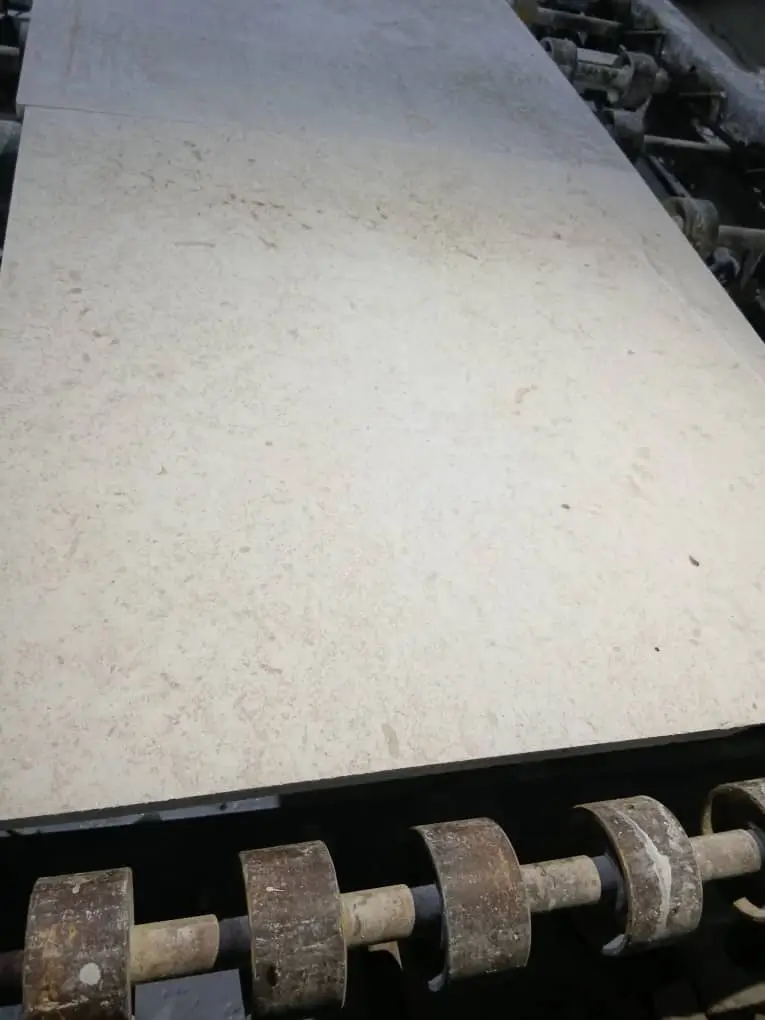
Flagstone thickness is not a one-size recommendation — it’s a load-path calculation that intersects with your base stiffness, stone type, and anticipated surface stress. For pedestrian-only applications on a well-compacted base, 1.5-inch nominal flagstone pavers perform reliably. Anywhere you expect concentrated point loads — rolling carts, occasional vehicle crossings, or high-impact hail exposure — step up to 2-inch minimum thickness without exception.
The principle of matching stone thickness to base stiffness is especially relevant in storm-prone areas. A thinner stone over a well-compacted base handles distributed loads well. The same stone over a slightly soft base will flex under point loads, and that flexure translates directly to joint crack initiation. Thicker stone reduces the bending stress at the unsupported span between base contact points — relevant when hailstones above 1 inch diameter strike the surface at terminal velocity.
At Citadel Stone, we carry flagstone pavers in both 1.5-inch and 2-inch nominal thicknesses precisely because project conditions vary enough that a single thickness recommendation would be a disservice to your specification. Our warehouse team can confirm current stock thickness distribution before your project begins — lead times from our distribution points typically run 5 to 10 business days for standard flagstone orders, which makes early stock confirmation worth the conversation.
- 1.5-inch thickness: pedestrian patios, walkways, and low-traffic garden paths on firm bases
- 2-inch thickness: high-traffic walkways, areas with occasional vehicle crossing, or any site in documented high-hail frequency zones
- 2.5-inch or greater: commercial applications, driveway aprons, or anywhere soil bearing capacity is marginal and base depth is constrained
- Irregular flagstone (natural cleft, variable thickness): always bed on dry-pack mortar to accommodate the thickness variation across each piece
Sealing Flagstone Pavers for Long-Term Storm Durability
Sealing your flagstone paver installation is a maintenance specification decision, not a finishing touch. A penetrating silane-siloxane sealer applied within 30 days of installation and reapplied every 2 to 3 years does two things that directly support storm durability: it reduces water absorption into the stone body, limiting the hydrostatic pressure that builds in pores during heavy rain events, and it strengthens the joint sand binder’s resistance to surface runoff washout.
Avoid film-forming topical sealers on exterior flagstone. They trap moisture beneath a surface membrane, and when wind-driven rain creates pressure differentials across a sealed joint, the film delaminates. You end up with a peeling sealer that accelerates stone surface degradation rather than preventing it. The penetrating sealer chemistry bonds within the stone’s pore matrix — it doesn’t create a surface layer that storm conditions can mechanically compromise.
The Natural Stone Institute technical stone specifications consistently recommend penetrating sealers for exterior natural stone precisely because of their superior performance under moisture cycling and thermal stress. Apply sealer to clean, dry stone — surface moisture above 5 percent moisture content will prevent adequate penetration depth, and an under-penetrated sealer wears off within a single winter cycle.
DIY Flagstone Paver Installation Tips: What the Manuals Don’t Tell You
DIY flagstone paver installation tips tend to focus on the visual placement process — fitting stone shapes together like a puzzle — and consistently underemphasize the two steps that determine whether the project survives its first serious weather event. The base compaction check and the edge restraint anchor depth are where DIY projects succeed or fail, and neither gets adequate coverage in standard how-to resources.
Here’s a compaction verification method that doesn’t require a nuclear density gauge: drive a 3/8-inch steel rod by hand into the compacted aggregate base. You should not be able to penetrate more than 1 inch with firm hand pressure. If the rod sinks freely, your compaction is inadequate regardless of how many passes you made with the plate compactor. This rod penetration test takes 30 seconds per location and will save you a full reinstallation.
For truck delivery of flagstone to residential projects, plan your access route carefully. A loaded flagstone delivery typically arrives on a flatbed or boom truck requiring a turning radius and surface bearing capacity that residential driveways often can’t support. Confirm truck access constraints with your supplier before scheduling delivery — having stone unloaded at the street and hand-carried across soft lawn adds hours to your installation day and risks damaging your subgrade compaction work.
- Wet-cut your stone outdoors with a diamond blade, never dry-cut — the silica dust from dry cutting natural flagstone is a genuine respiratory hazard
- Store flagstone on a flat, stable surface in your staging area — stacking irregularly increases breakage risk and creates dangerous unstable piles
- Keep joint sand dry until you’re ready to compact and activate — one rain event on unset polymeric sand in your joints means starting the jointing process over
- Plan your stone layout dry (no setting bed) before committing to placement — visual pre-planning reduces cutting waste by 15 to 20 percent on irregular flagstone fields
- Verify warehouse stock dimensions match your project’s thickness specification before the order ships — nominal flagstone thickness varies by up to 1/4 inch between quarry sources
Expert Summary: Getting Your Flagstone Paver Installation Right
A flagstone paver installation that holds up over decades of service — including the wind events, hail strikes, and heavy rain that test every joint and edge — starts with decisions made well before the first stone is placed. Your base depth, compaction standard, edge restraint anchor depth, and joint fill material are the four variables that collectively determine structural longevity. The stone selection matters, but it works in service of a base system that either supports it or fails it.
The setting method you choose — sand, dry-pack, or full wet mortar — should reflect the mechanical stress your specific site will generate, not just the difficulty level you’re comfortable with. Mortar systems provide superior impact resistance and joint integrity under storm loading. Sand-set systems offer flexibility and easier long-term maintenance. Neither is universally superior — the right answer depends on your base stiffness, stone thickness, drainage geometry, and the severity of weather your installation will face over its service life.
As you think through related hardscape specifications for your property, it’s worth understanding how flagstone compares to other natural stone paving options on a cost and performance basis — flagstone vs pavers cost comparison covers the key financial and specification trade-offs that inform that decision. A well-compacted base matters as much as the stone itself, and Citadel Stone’s team can help match flagstone thickness to the load requirements of your specific project.