

The UV Reality Check Most Comparisons Skip
White limestone vs sandstone pavers diverge most consequentially not on hardness charts but under prolonged UV exposure — and most specification guides skip that analysis entirely. Limestone’s calcium carbonate matrix responds to UV quite differently from sandstone’s silica-cemented grain structure, and understanding that difference upfront saves you from a costly specification regret five years down the road. Surface hardness numbers tell you how a stone resists physical abrasion; they tell you almost nothing about how it handles years of direct sun exposure, and that’s where the real long-term stakes live.
Sandstone’s iron oxide mineral content — the compound responsible for its warm amber, red, and tan tones — is also its vulnerability under prolonged UV exposure. Photochemical oxidation accelerates at the surface, progressively shifting warm hues toward a bleached, ashy tone that no amount of cleaning reverses. White limestone, by contrast, starts closer to its UV-stable endpoint. Its calcium carbonate base doesn’t carry the same reactive mineral load, so the color shift over time is far less dramatic — typically a slight creamy yellowing rather than a fundamental hue change.
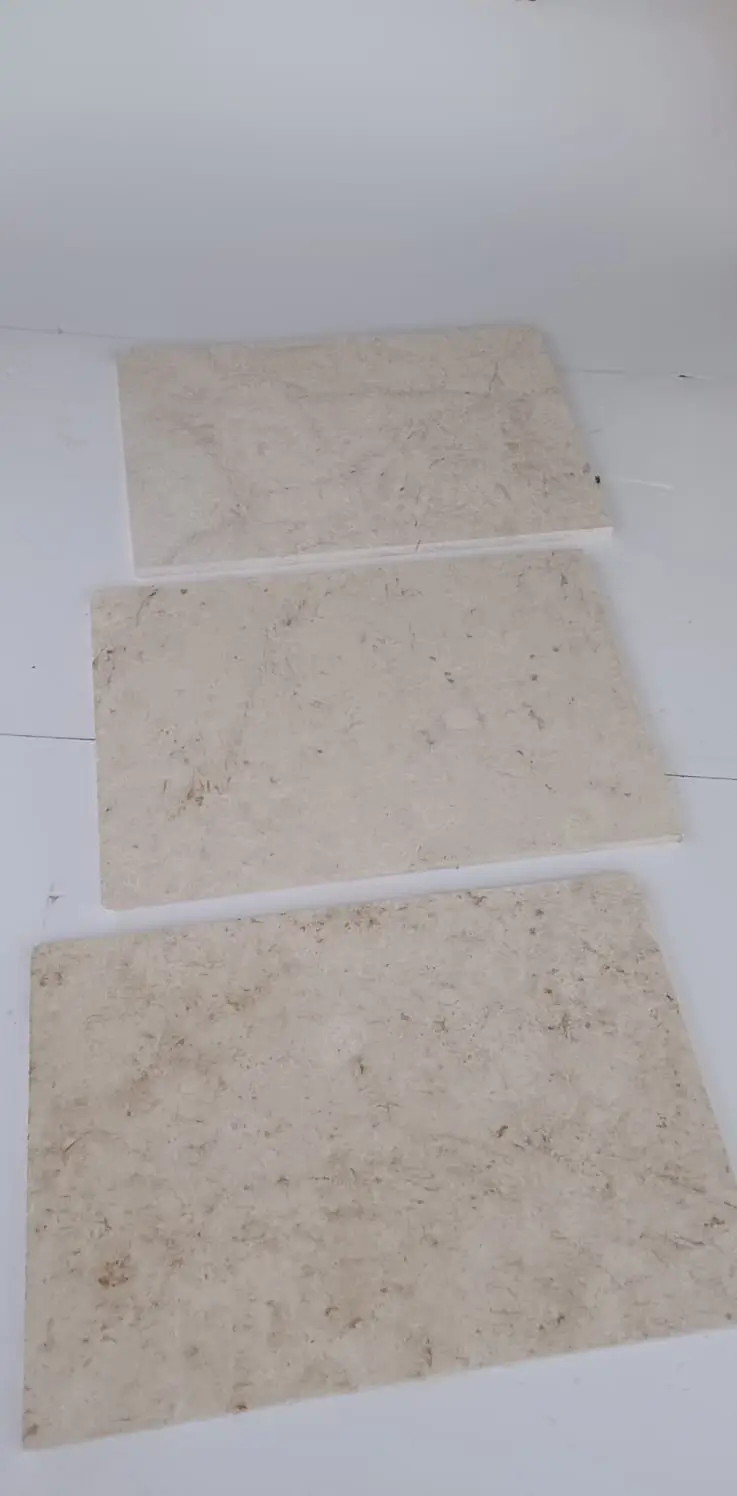
Natural Stone Paver Hardness: Where Limestone and Sandstone Actually Stand
On the Mohs hardness scale, white limestone typically registers between 3 and 4, while most sandstone varieties fall in the 6 to 7 range — a gap that looks decisive on paper but plays out differently in practice. The natural stone paver hardness comparison shifts significantly when you factor in porosity, surface finish, and UV-related surface degradation. Sandstone’s silica skeleton is harder in the mineral sense, yet its inter-granular bond strength varies enormously depending on the cementation quality of the specific deposit. A poorly cemented sandstone will spall and pit under thermal cycling long before a dense, low-porosity limestone shows equivalent distress.
Here’s what most specifiers miss: hardness and durability are not the same variable for porous stone paving performance outdoors. UV exposure dries out residual moisture in surface pores, contracts the grain structure, and — in sandstone especially — accelerates the micro-fracturing that eventually produces surface disaggregation. Limestone’s calcite crystal matrix tends to be more thermally stable at surface depth, which is why honed limestone installations in high-UV environments often look sharper at the ten-year mark than sandstone alternatives specified with better hardness ratings.
- Limestone Mohs hardness: 3–4; effective outdoor durability heavily dependent on density and porosity
- Sandstone Mohs hardness: 6–7; silica grain structure vulnerable to inter-granular UV and thermal fatigue
- Both materials require sealed surfaces in sun-exposed applications — hardness alone doesn’t prevent UV-driven surface deterioration
- Compressive strength is a more reliable field indicator than Mohs rating for paving specification decisions
Porosity, UV Exposure, and Sealing Schedules That Actually Work
Porous stone paving performance outdoors is fundamentally a sealing story — but the sealing schedule needs to match the material’s specific absorption rate and the intensity of its UV exposure. White limestone typically exhibits water absorption rates between 3% and 8% by weight depending on the formation, which means it accepts penetrating sealers readily and benefits from them substantially. Sandstone’s absorption range is wider — some varieties sit below 3%, others above 10% — and that variability makes a universal sealing recommendation unreliable without testing the specific material.
UV radiation degrades both the stone surface and the sealer itself. Solvent-based penetrating sealers generally outperform water-based products in high UV environments because they penetrate deeper into the pore network and are less susceptible to UV photodegradation at the surface layer. For white limestone in sun-exposed outdoor applications, a biennial resealing cycle is the practical minimum — inspect annually and reseal whenever a water droplet absorbs within 60 seconds rather than beading. Sandstone’s wider porosity range means some varieties need annual resealing, others can extend to three years, but the inspection standard is the same.
According to Natural Stone Institute limestone specifications, limestone’s interconnected pore structure means sealers distribute well through the stone but also means unprotected surfaces absorb surface contaminants rapidly — a critical consideration for any installation under consistent sun exposure where dust, pollen, and organic debris accumulate quickly on warm stone.
- White limestone: seal immediately after installation, reseal every 18–24 months in high UV environments
- Sandstone: test absorption rate before specifying sealer type; reseal annually for high-porosity varieties
- Use UV-stable, penetrating silane-siloxane sealers — film-forming sealers trap moisture and fail faster under thermal cycling
- Never apply sealer to a surface that is even slightly damp — UV-exposed stone can feel dry at the surface while retaining moisture 10–15mm below
Color Retention Under Sun: Finish Selection for UV Resistance
Finish choice has a larger impact on long-term color retention than most buyers anticipate. Polished surfaces look striking at installation but accelerate UV-related color shift on both limestone and sandstone — the mirror-flat surface concentrates solar energy rather than diffusing it, and micro-scratches from foot traffic create optical inconsistency that makes fading appear more pronounced. Honed and brushed finishes distribute UV impact more evenly across the surface plane, and the slight texture diffuses light in a way that camouflages minor tonal shifts over time.
For limestone vs sandstone outdoor durability assessed purely through appearance retention, honed white limestone holds its visual character substantially better over a 10–15 year horizon in sun-exposed settings. The combination of UV-stable calcium carbonate, a non-reactive mineral profile, and a honed finish that conceals minor weathering creates an installation that looks intentionally aged rather than neglected. Sandstone in the same conditions often develops an uneven tonal pattern — some areas bleach, others accumulate iron staining from surface oxidation — that reads as deterioration rather than patina.
Tumbled finishes on either material perform well in UV-heavy environments because the rounded edges and textured surface don’t show edge chipping or surface micro-spalling the way sharp-cut finishes do. If a project spec calls for a formal, contemporary aesthetic, budget for more frequent maintenance on either material — precision finishes demand more attention in any high-UV outdoor environment.
Base Preparation Requirements for Both Materials
Choosing between limestone and sandstone for outdoor paving doesn’t change base preparation fundamentals — but it does shift some priorities. Both materials need a minimum 4-inch compacted aggregate base for pedestrian applications, stepping up to 6–8 inches for vehicle loading. What changes is your tolerance for differential settlement. White limestone, being softer and more susceptible to edge chipping under point loads, punishes an uneven base faster than sandstone. A 2mm settlement differential that a harder sandstone panel bridges without visible distress can cause a limestone paver to crack across its thinnest section.
For Citadel Stone natural stone pavers, the recommended base approach in outdoor, sun-exposed settings includes a well-drained, compacted crushed stone base with a bedding layer of coarse washed sand — never limestone dust for the bedding layer, as it compacts too rigidly and doesn’t allow the micro-adjustment both materials need during seasonal thermal cycling. Drainage geometry matters as much as base depth: a minimum 1.5% fall away from structures prevents the moisture retention that accelerates UV-driven surface deterioration on both stone types.
- Minimum base depth: 4 inches compacted aggregate for pedestrian paving, 6–8 inches for vehicle access
- Bedding layer: 1-inch coarse washed sand — never limestone screenings or stone dust
- Maximum allowable differential settlement: 1.5mm for limestone, 3mm for most sandstone varieties
- Drainage fall: minimum 1.5% (3/16 inch per foot) away from all structures
- Edge restraint is mandatory for both materials — UV-exposed perimeter pavers experience the highest thermal stress and need lateral support
Thermal Cycling, Joint Spacing, and UV-Driven Expansion
UV exposure doesn’t just affect surface color — it drives thermal cycling at the stone surface that compounds over time. Surface temperatures on unshaded natural stone can exceed ambient air temperatures by 30–50°F on clear days, creating daily expansion and contraction cycles that stress both the material and its joints. White limestone’s coefficient of thermal expansion sits around 4.4 × 10⁻⁶ per °F, which is relatively low and contributes to its long-term dimensional stability in outdoor settings. Sandstone’s thermal expansion coefficient varies more widely — from around 3.8 to 6.5 × 10⁻⁶ per °F depending on mineralogy — adding another variable the specification needs to account for.
Joint spacing should be calculated using the stone’s specific thermal expansion data, not generic guidelines. For white limestone pavers in sun-exposed settings, 3mm joints are the practical minimum; 5–6mm joints are preferable if the installation spans large unshaded areas. Sandstone with higher silica content and lower thermal expansion can tolerate tighter joints in some configurations, but the risk of inter-granular surface failure under extreme UV-driven surface temperatures argues for erring on the wider side. Polymeric joint sand with UV-stable pigment is worth the modest cost premium — standard joint sand fades and erodes faster in high-UV conditions, leaving open joints that accelerate moisture infiltration and the freeze-thaw damage that compounds UV surface degradation.
Choosing Between Limestone and Sandstone for Sun-Exposed Installations
The practical decision framework for choosing between limestone and sandstone in UV-heavy outdoor settings comes down to four variables: your required appearance life, your maintenance commitment, your loading conditions, and your budget for initial specification versus ongoing upkeep. White limestone wins the appearance-life category in high UV environments when properly sealed — its UV-stable mineral profile and predictable aging character make it the lower-risk choice for projects where visual consistency over 15–20 years matters. Sandstone offers a harder surface mineral structure but requires more active management to prevent the uneven UV oxidation that compromises its long-term aesthetic.
For heavy-traffic commercial applications, the natural stone paver hardness comparison does favor sandstone in terms of abrasion resistance — a point worth weighing honestly if the installation sees consistent foot traffic on abrasive grit or fine aggregate. In residential and light commercial settings, the abrasion advantage is largely theoretical; the UV-appearance trade-off is very real. According to USGS data on limestone composition and construction applications, limestone’s calcium carbonate base makes it one of the most extensively used paving stones globally precisely because its performance characteristics are predictable and well-documented across decades of installation data.
Citadel Stone ships both white limestone and sandstone pavers nationally from warehouse inventory, which means you can typically confirm material availability and lock in project scheduling within days rather than waiting on import lead times. Verify warehouse stock levels before finalizing your project timeline — some specialty sandstone formats have tighter inventory turns than standard limestone sizing.
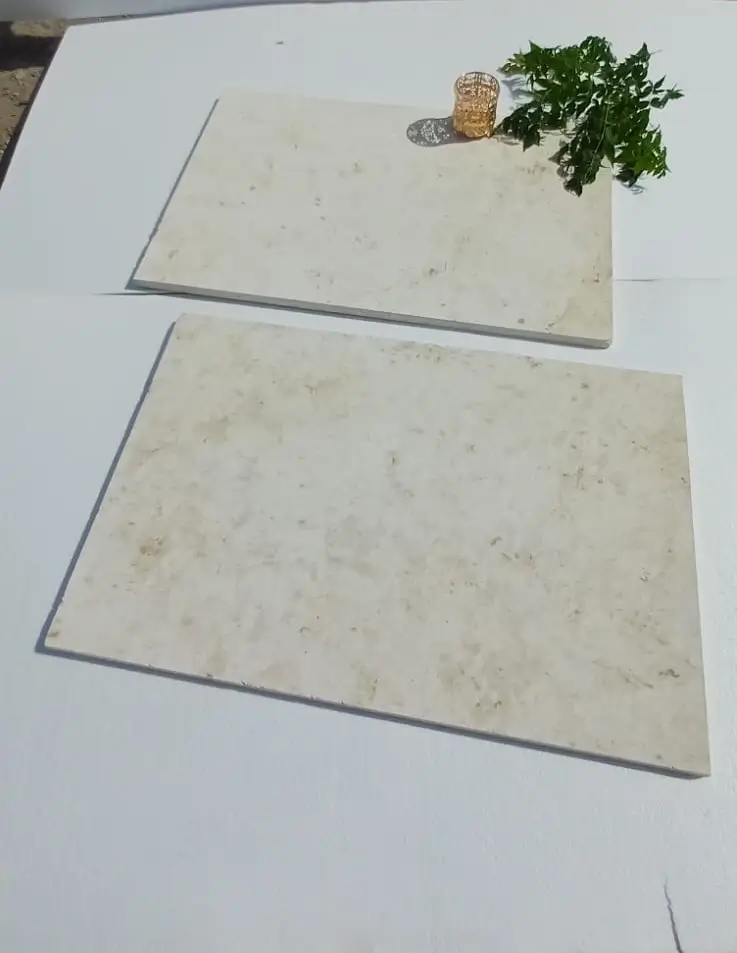
Long-Term Maintenance: What Sun Exposure Actually Costs You
The real cost of a natural stone paver installation isn’t the purchase price — it’s the 20-year maintenance budget, and UV exposure is the primary driver of that cost. White limestone in an outdoor sun-exposed setting with diligent biennial sealing and annual joint sand inspection will typically hold its specification for 20–25 years before any surface restoration work becomes necessary. Sandstone under equivalent conditions requires closer attention: annual resealing for higher-porosity varieties, more frequent inspection of joint integrity, and earlier intervention if surface disaggregation begins.
At Citadel Stone, we recommend specifying your maintenance protocol before installation rather than after — it informs finish selection, joint width decisions, and even paver thickness. Our technical team advises clients to document the stone’s initial absorption rate at installation so that future resealing inspections have a baseline rather than relying on subjective visual assessment. This approach is particularly valuable for sandstone, where the absorption rate varies enough between deposits that generic maintenance schedules frequently misalign with actual field conditions.
- White limestone: biennial sealing, annual joint inspection, 20–25 year performance horizon with proper maintenance
- Sandstone: annual to biennial sealing depending on porosity, more frequent joint monitoring in high UV settings
- Both materials benefit from annual cleaning with pH-neutral stone cleaner — acidic cleaners accelerate UV-related surface deterioration on limestone, alkaline cleaners can discolor iron-bearing sandstone
- Surface restoration grinding is available for both materials but is considerably more straightforward on limestone due to its softer, more uniform mineral structure
According to Britannica’s reference on limestone characteristics, limestone’s calcite and aragonite crystal structure gives it a relatively consistent response to surface treatment — a property that makes long-term maintenance planning more predictable than with many competing stone types that have more variable mineralogical profiles.
Final Recommendations: Getting Your White Limestone vs Sandstone Pavers Decision Right
Narrowing down the white limestone vs sandstone pavers decision requires honest prioritization. If appearance consistency under strong, direct sun is your primary criterion — and it is for most residential and upscale commercial projects — white limestone is the stronger specification. Its UV-stable mineral profile, predictable aging character, and responsive sealing behavior make it the lower-maintenance, longer-appearance-life choice in sun-exposed outdoor environments. Sandstone earns its place in applications where you’re prioritizing surface hardness, want a warmer natural color palette, and have a maintenance plan that accounts for its more active UV response.
Your specification should also account for logistics. Truck delivery of natural stone to your site is straightforward with both materials, but confirm that your access allows a full truck to reach the unloading zone — repositioning stone from a distant drop point adds labor cost that undermines budget assumptions. Both materials are available through our white natural stone paver selection guide, which covers sizing, thickness, and finish options to help you align material properties with project requirements. The difference between a specification that performs beautifully for two decades and one that needs remediation in eight years is usually a handful of upfront decisions — finish, joint width, sealing schedule, and base drainage — made with clear eyes about what UV exposure actually demands from each material. Stone from Citadel Stone is evaluated for surface hardness and weathering resistance before being made available for residential and commercial paving projects.