

Why Thermal Cycling Defines White Natural Stone Paver Performance
Thermal expansion coefficients in natural limestone run approximately 4.4 to 5.0 × 10⁻⁶ per °F — a figure that sounds small until you calculate what a 60°F day-to-night temperature swing does across a 20-foot patio run. White natural stone pavers amplify this challenge because their high solar reflectance changes their surface temperature profile relative to darker materials, creating a distinct thermal rhythm that affects joint integrity over time. Understanding this cycling behavior before you finalize your specification separates installations that stay tight for two decades from those that develop rocking pavers and blown joints within five years.
Freeze-thaw regions add another layer of complexity. Water that infiltrates open pore structures and joints expands roughly 9% when it freezes — and in climates where freeze-thaw cycles occur dozens of times per season, that mechanical pressure works cumulatively against the stone and its setting bed. Your specification has to account for both the daily thermal range and the seasonal extreme, because each drives a different failure mode.

What to Look for in Stone Pavers: Material Grade and Density
Density is the single most predictive variable for freeze-thaw durability in white natural stone pavers. The relevant standard is ASTM C97, which measures both absorption rate and bulk specific gravity. For outdoor applications in regions with significant temperature cycling, you want water absorption below 3% by weight — ideally below 2% for installations that will see hard freezes. According to NSI limestone technical specifications, dense-grade limestone consistently outperforms softer grades in repeated freeze-thaw testing precisely because tighter crystalline structure limits the pore volume available for ice crystal formation.
White stone paver quality and grading also comes down to visual and structural consistency within each batch. You’re looking for:
- Consistent bed depth tolerance — commercial-grade material holds ±⅛ inch; budget stone often runs ±¼ inch or worse, which creates lippage problems that worsen as thermal cycling shifts individual pieces
- Uniform crystalline structure without visible voids, soft inclusions, or resin fill — both compromise long-term strength under repeated load and temperature stress
- Quarry certification confirming the specific stratum the material was cut from, since material from different strata within the same quarry can vary significantly in density
- Surface flatness within 1/16 inch over 24 inches for any calibrated product — non-calibrated tumbled formats have different tolerances that must be addressed in your bedding mortar specification
At Citadel Stone, we inspect each pallet at our warehouse before it ships, checking bed depth consistency and surface integrity — because a rejected pallet discovered on a job site costs far more than one caught in our facility.
Natural Stone Paver Thickness for Outdoor Use
Thickness selection in white natural stone pavers isn’t a simple light-use versus heavy-use binary — it’s a structural calculation that has to account for thermal stress as well as mechanical load. A 1¼-inch (30mm) paver behaves very differently across a 70°F diurnal temperature range than a 2-inch (50mm) paver because the thinner section has less thermal mass to buffer the rate of temperature change at the surface-to-setting-bed interface.
Here’s a practical breakdown of natural stone paver thickness for outdoor use across common applications:
- ¾-inch to 1-inch nominal: appropriate only for interior or covered outdoor applications; insufficient section modulus for outdoor thermal cycling across significant temperature ranges
- 1¼-inch to 1½-inch nominal: the standard residential outdoor specification — handles typical foot traffic and moderate thermal cycling well when set on a properly prepared 4-inch compacted aggregate base with sand bedding
- 2-inch nominal: the correct specification for any application with vehicle access, heavy entertaining furniture, or locations with documented freeze-thaw cycles exceeding 30 per year
- 2½-inch and above: commercial pedestrian plazas, driveway approaches, and any area where point loads from concentrated patio furniture legs or equipment could exceed 300 lbs per square foot
The interaction between paver thickness and joint width matters too. Thicker pavers have greater edge stiffness, which means they can tolerate slightly narrower joints — but in freeze-thaw regions, you should never go below a ⅛-inch joint regardless of thickness, because you need that void to absorb the thermal expansion stack without transmitting stress into adjacent units.
Freeze-Thaw Performance and Joint Specification
The joint system in a white natural stone paver installation is doing more structural work than most buyers realize. In a well-designed installation, the joints absorb thermal expansion from the pavers themselves, accommodate minor differential settlement in the base, and provide drainage pathways that reduce the hydrostatic pressure that drives freeze-thaw damage. Get the joint specification wrong and all three functions degrade simultaneously.
For installations in freeze-thaw regions, the TCNA recommends polymer-modified joint sand rather than plain kiln-dried sand for any paver installation exposed to seasonal freeze-thaw cycling. Plain joint sand migrates out of joints over time — with the mechanical disruption of freeze-thaw cycles accelerating that loss. Once joint sand drops below about 85% fill depth, the exposed paver edges begin to chip and crack under thermal stress because they lose the lateral support the joint material provides. The TCNA installation standards provide joint fill depth minimums that apply directly to natural stone paver applications.
Your joint width specification should follow this framework:
- Calibrated pavers with machine-cut edges: minimum ⅛-inch joints, with 3/16-inch preferred in freeze-thaw regions to allow thermal expansion without stress transfer
- Hand-cut or tumbled pavers with irregular edges: joints naturally run ¼-inch to ¾-inch depending on edge variation — these wider joints actually perform better in thermal cycling because the extra void space buffers expansion
- Expansion joints at all fixed restraints (walls, edging, steps): minimum ¼-inch, filled with flexible backer rod and sealant, not joint sand
- Field expansion joints for large installations: every 12 to 15 linear feet in directions parallel to the longest dimension — not the 20-foot spacing commonly suggested in generic installation guides
Selecting Stone Paver Finish for Patios and Thermal Performance
Selecting the right stone paver finish for patios affects thermal cycling performance in a way most buyers don’t consider until they’re three years into an installation. A polished finish reduces the surface porosity that allows water infiltration — which sounds like a freeze-thaw benefit — but it also reduces the micro-texture that diffuses thermal stress across the surface. Polished white limestone under intense solar gain and rapid temperature drop (common at high elevations with significant day-night temperature swings) is more susceptible to thermal shock spalling than a honed or bush-hammered finish of the same stone.
Practical finish guidance for outdoor patios by application type:
- Honed finish: the best all-around outdoor specification — low enough porosity to resist staining, sufficient surface texture to manage both wet slip resistance and thermal stress distribution, and consistent appearance across the 20+ year life of a well-maintained installation
- Bush-hammered or flamed finish: optimal for high-thermal-cycling environments because the mechanical surface disruption creates micro-relief that distributes thermal stress and improves drainage; Per-finish wet DCOF results (ANSI A326.3) will be published here. or above
- Tumbled finish: excellent for informal patio applications; the rounded edges naturally accommodate minor joint width variation caused by thermal cycling without the edge chipping that affects sharp-edged calibrated material
- Polished finish: reserve for covered outdoor spaces, screened porches, or low-thermal-swing environments; requires annual resealing and more frequent inspection for surface micro-cracking
For white natural stone pavers that will see significant foot traffic in wet conditions, your target slip resistance should meet or exceed a Dynamic Coefficient of Friction (DCOF) of 0.42 per ANSI A326.3 — and you should request the test certificate from your supplier before finalizing the specification, not after the material arrives on a truck.
Base Preparation for Thermal Stability
The base system underneath white natural stone pavers does more to determine thermal cycling performance than the pavers themselves. A properly prepared base accommodates the differential movement caused by freeze-thaw cycling without transmitting that movement as a shear force at the stone-to-bedding interface — which is exactly where 80% of paver failures originate.
Your base specification for any white limestone paver installation in a freeze-thaw region should include:
- Minimum 4-inch compacted aggregate base for residential foot-traffic applications; 6 inches for mixed use with occasional vehicle or heavy equipment access
- Aggregate gradation that provides both stability and drainage — a well-graded crushed stone meeting ASTM C33 coarse aggregate specifications works reliably; avoid poorly graded river gravel which loses interlock under repeated thermal-cycle loading
- A 1-inch sand bedding layer — screeded level to ±⅛ inch — over the compacted aggregate; this bedding layer is your primary accommodation for minor differential thermal movement
- Geotextile fabric between native soil and aggregate base in any application on clay-bearing soils, where frost heave can transmit vertical movement of 1 to 3 inches into the paver surface during a single freeze-thaw season
The detail that gets skipped most often is base compaction verification. Target a minimum 95% modified Proctor compaction in the aggregate base layer — not just visual assessment. An uncompacted base that looks solid in summer will show measurable settlement after the first significant freeze-thaw season, creating the differential movement that cracks both pavers and grout joints.
Sealing White Limestone Pavers for Long-Term Performance
Sealing protocols for white limestone pavers differ from standard concrete maintenance because the pore geometry of natural limestone is more complex than cast concrete’s capillary structure. A penetrating impregnator — specifically a silane-siloxane formula at 40% solids or higher — provides the best freeze-thaw protection because it lines the pore walls without bridging pore openings. Film-forming sealers, by contrast, trap moisture that can’t escape during freeze cycles, which creates the subsurface ice pressure that causes spalling in the first place.
Sealing timing matters as much as product selection. Apply the initial sealer only after the installation has completed its first full thermal cycle — typically 30 days after installation in moderate climates, or after the first winter season in freeze-thaw regions. This allows any residual moisture in the setting bed to fully migrate out through the stone before you close the pore structure. Sealing too early traps installation moisture and almost always results in white haze efflorescence that requires expensive remediation. For scheduling purposes, allow for this curing window when planning your project timeline — and confirm with your warehouse contact that the material has been stored dry before delivery, since stone that arrives on a truck after sitting in open storage during wet weather may need additional drying time before sealing.
Resealing frequency in freeze-thaw environments should be every 18 to 24 months rather than the 3-to-5-year cycles recommended for interior or mild-climate applications. The mechanical disruption of freeze-thaw cycling degrades penetrating sealers faster than UV exposure or normal foot traffic, and the cost of biennial resealing is a fraction of the cost of replacing white natural stone pavers that have spalled due to ice crystal pressure in unsealed pores.
Ordering, Logistics, and Project Planning
Material quantity calculation for white natural stone pavers has to include a waste factor that accounts for freeze-thaw region realities — not just the standard 10% cut waste. In installations where thermal cycling is a documented concern, spec an additional 5% overage for future repairs. Natural stone is a quarried material, and getting a perfect dye-lot match three years after your initial installation is genuinely difficult. Ordering that 15% total buffer upfront and storing the overage flat in a dry location costs far less than sourcing replacement material after a failed winter season produces cracked pavers.
Lead time management is critical for stone projects. Citadel Stone maintains consistent warehouse inventory of white limestone pavers in the most common thicknesses and formats, which typically reduces lead times to 1 to 2 weeks for in-stock material. Import-sourced material on a special order typically runs 6 to 8 weeks — and if your project timeline requires installation before a hard-freeze season, missing that window by two weeks can push the entire installation to spring, with carrying costs on a prepared base that’s now sitting exposed through winter. Confirm warehouse stock levels before you commit to a project start date, and factor truck delivery scheduling into your base preparation timeline so the material arrives after the base is compacted and ready — not before, which forces you to stage stone on site and risks contamination of the setting bed.
For deeper technical guidance on matching stone variety to project conditions, our natural stone selection guidance covers the specific performance criteria that distinguish limestone grades for demanding outdoor applications.
Evaluating Suppliers and Specification Documentation
The documentation a supplier provides tells you as much about material quality as the stone itself. A credible white natural stone paver supplier should be able to provide, on request: ASTM C97 absorption and density test results for the specific batch, quarry source documentation, and surface finish slip resistance test certificates. According to USGS geological data on limestone composition, natural limestone varies considerably in density and mineral composition depending on formation depth and geological origin — which is exactly why batch-specific test data matters more than generic product descriptions.
Here’s what to ask any supplier before placing an order for outdoor white stone pavers:
- What is the documented water absorption rate for this batch under ASTM C97, and does it meet the sub-3% threshold for freeze-thaw region applications?
- Can you provide quarry certification identifying the specific stratum this material was cut from?
- What is the calibration tolerance on this format, and how was it verified?
- Is the warehouse stock from a single quarry batch, or is it mixed across multiple shipments that may show color variation?
- What is the current lead time from warehouse stock, and what is the truck delivery schedule to my project region?
A supplier who can’t answer these questions with specific data — not marketing language — is not equipped to support a specification-driven project. The Natural Stone Institute limestone specifications provide the industry benchmark for what qualified material testing looks like, and you can use that documentation as your baseline for supplier evaluation.
Your Action Plan for White Natural Stone Pavers
White natural stone pavers reward precise specification and penalize shortcuts — and the thermal cycling performance of your installation is determined almost entirely by decisions made before a single paver is set. Your specification checklist should confirm absorption rate below 3%, minimum natural stone paver thickness for outdoor use of 1¼ inches with an upsize to 2 inches in documented freeze-thaw regions, a honed or bush-hammered finish for outdoor patios, expansion joints at 12- to 15-foot intervals, polymer-modified joint sand, and a penetrating silane-siloxane sealer applied after the first full thermal cycle.
Material documentation, base compaction verification, and sealer timing are the three variables that separate 20-year installations from 8-year problem projects. Get those three right and the aesthetic performance of white limestone pavers — the brightness, the thermal reflectance, the clean surface that reads beautifully in both morning and evening light — will remain intact for the life of the installation. As you plan the broader scope of your hardscape project, related stone applications may also inform your material budget and specification strategy — flagstone paver cost per square foot explores how natural stone pricing compares across formats and materials, which is useful context when you’re comparing white limestone to alternative paving options.
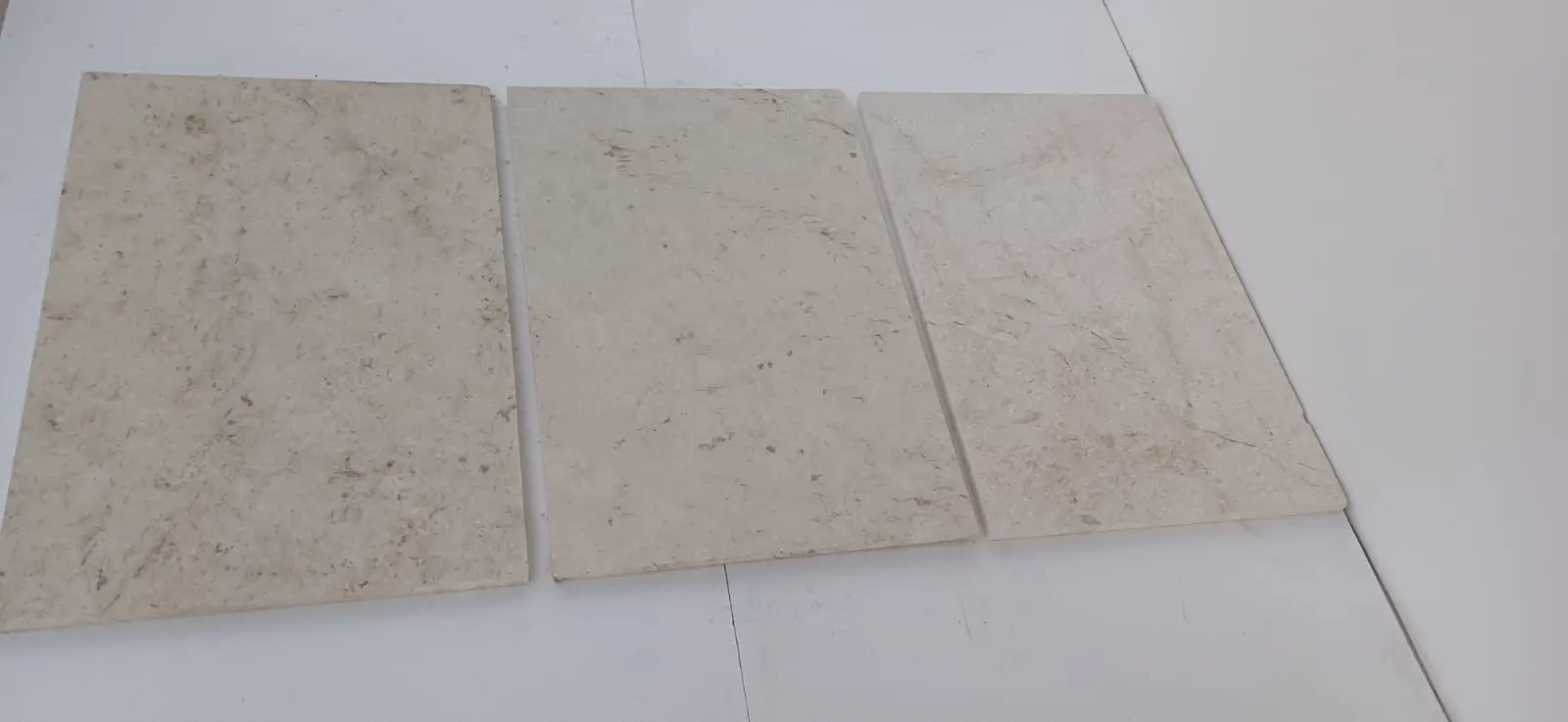
Citadel Stone supplies white natural stone pavers in multiple thicknesses to match both light foot-traffic patios and heavier outdoor entertaining areas.