

Code compliance shapes every structural decision in Arizona pool construction — and when you’re specifying 12×24 pool coping design ideas for Arizona spaces, the building code framework is where your planning starts, not the material catalog. Arizona’s regulatory environment under the International Building Code as adopted statewide sets minimum requirements for cantilever extension, edge restraint, and load-bearing continuity that directly govern how large format travertine coping slabs in Arizona perform at the waterline. Understanding those structural obligations before selecting your coping profile will save you costly rework and keep your installation on the right side of county inspections.
Structural Code Requirements Governing Arizona Pool Coping
Arizona jurisdictions adopt the IBC and the International Swimming Pool and Spa Code, and both documents place hard constraints on coping cantilever, substrate continuity, and edge restraint specifications. Your 12×24 travertine slab needs a minimum 3.5-inch bearing surface on the bond beam, with the cantilever overhang kept to 2 inches or under for unsupported projections. Exceed that, and you’re relying on flexural tensile strength alone — a calculation most inspectors will flag without documented engineering support.
The structural issue that catches specifiers off guard is the load transfer path at the coping-to-deck interface. Arizona’s caliche subsoil layers, common across the Phoenix metro and extending toward Yuma’s alluvial basin, create differential settlement conditions where the pool shell moves independently from the adjacent deck slab. Your detail must accommodate that movement, typically through a compressible foam backer rod at the coping-to-deck joint rather than a rigid mortar fill. According to PHTA pool deck coping safety standards, the joint between coping and deck should function as an expansion joint designed to absorb independent movement — something that becomes non-negotiable in Arizona’s thermal environment.
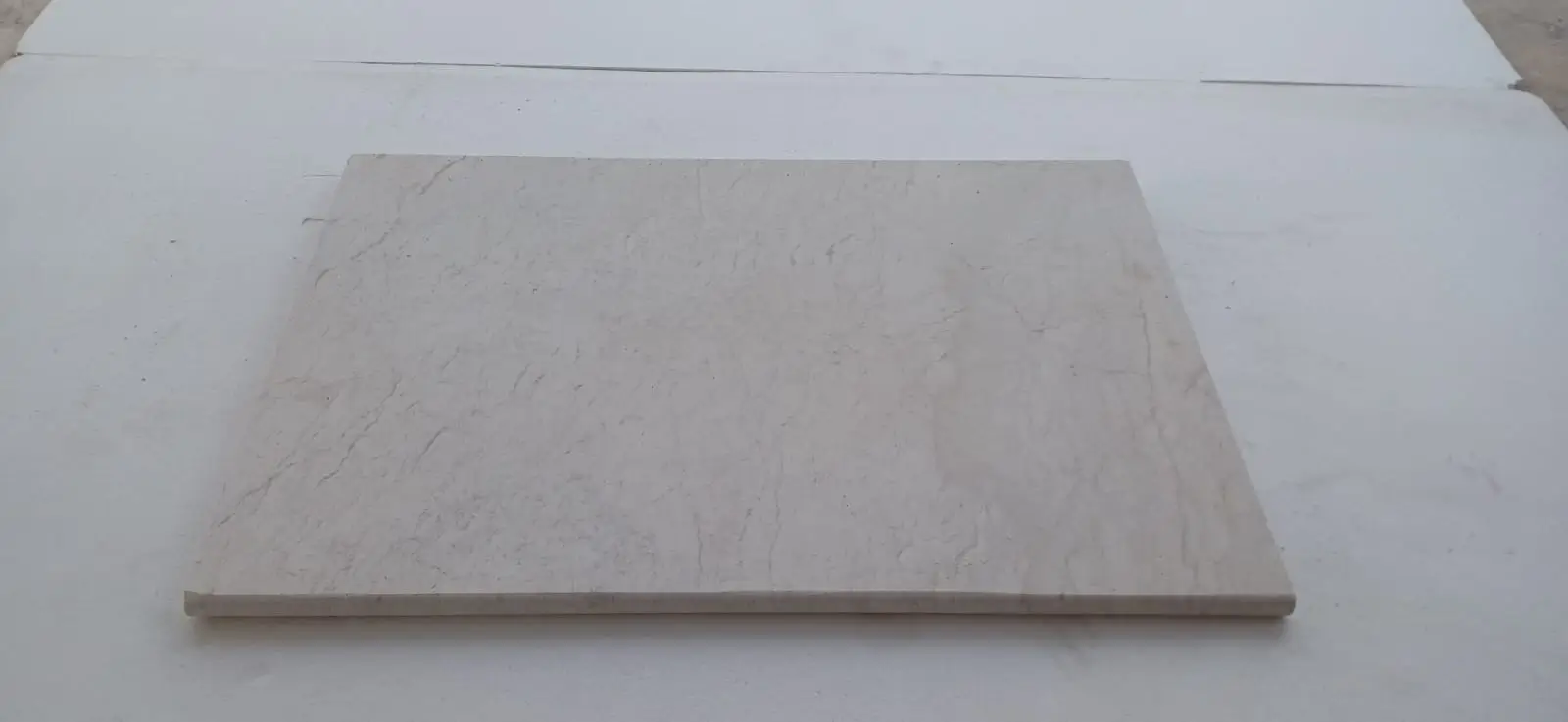
Idea 1: Flush-Mount Contemporary Profile
The flush-mount approach — where your 12×24 travertine coping sits level with the pool deck field tile — delivers the cleanest contemporary aesthetic and also happens to be the most structurally forgiving profile from a code perspective. There’s no cantilever load to calculate, and the bond beam bearing surface is maximized across the full slab width. For resort-style pool edge tile on AZ properties targeting a modern aesthetic, this profile eliminates the visual interruption at the water’s edge and creates that seamless horizontal plane that contemporary Arizona design demands.
The structural trade-off you need to address is drainage geometry. A flush profile relies entirely on your deck’s positive slope away from the pool edge — typically 1/8 inch per foot minimum under IBC — and on the integrity of the waterline tile to coping junction below. In Sedona’s red rock construction zones, where frost activity at the 4,500-foot elevation range creates shallow heave cycles between November and March, the flush-mount detail requires a flexible epoxy joint at the waterline rather than standard grout. Rigid grout at that junction will fail within two seasons under freeze-thaw cycling.
- Specify a 1/4-inch compressible foam backer rod at the deck-to-coping interface, not mortar fill
- Use a polyurethane or silicone sealant rated for continuous wet exposure at the waterline junction
- Confirm your bond beam width accommodates the full 12-inch slab bearing before ordering material
- Check local county amendments — Maricopa County adds specific slope requirements beyond the base IBC language
Idea 2: Bullnose Overhang with Integrated Drip Edge
The bullnose overhang remains the most specified profile in Arizona pool construction because it solves a practical problem: it keeps water sheeting off the coping face rather than tracking back onto the deck surface. With large format travertine coping slabs in Arizona at the 12×24 dimension, the large slab format means your bullnose detail covers significantly more linear footage per piece, which reduces grout joints and creates a cleaner horizontal reading from the water side.
From a code standpoint, any overhang beyond 2 inches requires you to document the cantilever capacity of the travertine slab. ASTM C1527 sets minimum flexural strength requirements for travertine dimension stone, and ASTM C1527 travertine dimension stone specifications establish the modulus of rupture data you’ll need when an inspector requests structural backup. Most 1.25-inch nominal travertine coping carries sufficient flexural capacity for a 2-inch cantilever without additional engineering, but document it anyway — it’s standard practice on commercial Arizona pools.
- Nominal thickness for cantilevered 12×24 coping should be 1.25 inches minimum — 1.5 inches preferred for commercial applications
- Set the back edge of each slab with full-coverage thinset, not spot-bonding — point loads under the 12-inch slab width concentrate stress if the adhesive footprint is incomplete
- In Yuma’s lower-elevation desert zone, thermal expansion at the coping surface can reach 180°F, so your drip edge geometry needs at least 3/4-inch projection to prevent water contact with the bond beam face
Idea 3: Elevated Coping on a Raised Bond Beam
Raising the bond beam 4–6 inches above the deck plane creates a defined pool edge that reads architecturally as a finished ledge rather than a transition detail. This is the profile that defines contemporary pool coping aesthetics across Arizona’s luxury residential market — you see it extensively on Scottsdale hillside pools and on the resort-tier projects in the Verde Valley. The 12×24 slab format works exceptionally well here because the elongated dimension runs horizontally, emphasizing the datum line at the water’s edge.
The structural requirement that governs this configuration is the raised bond beam’s own lateral load capacity. Arizona’s seismic design category — most of the state falls into SDC B or SDC C under ASCE 7 — means your raised beam detail needs to account for in-plane and out-of-plane loads. The coping slab sitting on top of a 6-inch raised beam adds moment demand at the beam-to-shell connection. Your structural engineer needs to review this detail if the raised beam exceeds 4 inches in height. This isn’t a detail you can skip on permitted work.
- Waterproof the raised beam faces before setting coping — the vertical face is the most vulnerable water infiltration point
- Specify a continuous stainless steel or HDPE edge restraint clip on the interior face to prevent lateral displacement of the coping slab during seismic events
- Allow for thermal movement joints every 10 feet along the coping run — not the 15-foot spacing common in cooler climates
Idea 4: Inset Coping for Negative Edge or Perimeter Overflow
Negative-edge and perimeter overflow pools require a fundamentally different coping specification because the structural edge doubles as a hydraulic weir. Your large format travertine coping slab needs to function simultaneously as a walking surface, a structural cap, and a precisely graded flow surface — and those three demands pull against each other in ways that simpler profiles don’t encounter. Arizona outdoor pool design with oversized coping works particularly well in this configuration because the 24-inch dimension running toward the water creates a generous weir surface that distributes flow evenly without requiring additional stone trimming.
The inset detail sets the coping face flush with or slightly recessed from the pool shell’s exterior face, allowing water to sheet cleanly over the edge. From a structural and code standpoint, this creates a situation where the coping slab is bearing on a thin shell section — typically 8–10 inches of gunite at the weir wall — rather than on a full bond beam. You need to confirm that bearing capacity with your structural engineer, and the stone supplier needs to verify slab flatness tolerances. A bow greater than 1/16 inch across the 24-inch slab width will create uneven flow distribution across the weir face, which is both a hydraulic and an aesthetic problem.
For this configuration, the Natural Stone Institute travertine outdoor performance data confirms that travertine’s surface porosity provides adequate wet-surface traction without aggressive texturing — an important consideration when the coping surface receives continuous water sheet flow. At Citadel Stone, we test slab flatness on every large format coping order before it leaves the warehouse, specifically because inset and negative-edge installations are unforgiving of dimensional variance.
Idea 5: Double-Stacked Coping for Architectural Depth
The double-stacked profile — two courses of travertine coping set at different projection depths to create a shadow line — is the least common of these five ideas and the most structurally demanding. You’re essentially building a small stone ledge at the pool’s perimeter, and the load path from the upper slab through the lower course to the bond beam needs to be engineered rather than assumed. In practice, this profile appears most often on high-end custom Arizona pools in the $250,000-plus construction range, where the architectural intent justifies the additional structural detailing and inspection documentation.
The lower course in a double-stacked detail typically sets at bond beam level using a full mortar bed, and the upper 12×24 travertine slab cantilevers from the lower course rather than from the bond beam directly. This means the lower course’s compressive capacity becomes your limiting factor — it needs to carry the upper slab’s dead load plus the live load from foot traffic, typically calculated at 100 psf for residential pool decks under most Arizona county requirements. Flagstaff projects add a complication: at 7,000 feet elevation, freeze-thaw cycling creates uplift pressure at the mortar bed joint between courses, and you’ll need to detail a drainage gap between the two stone faces to prevent ice lens formation.
- Use a stainless steel pin or dowel between the lower and upper coping courses to prevent lateral displacement — adhesive bond alone is insufficient at this scale
- Confirm that your total coping assembly height doesn’t exceed local code limits for pool deck barrier height calculations
- The shadow line between courses should be a minimum of 3/4 inch deep to read architecturally from poolside viewing distance — shallower reveals disappear in Arizona’s harsh midday light
- Both courses should be from the same travertine lot to ensure color and vein consistency across the stacked face
Slip Resistance, Finish Selection, and Safety Code Compliance
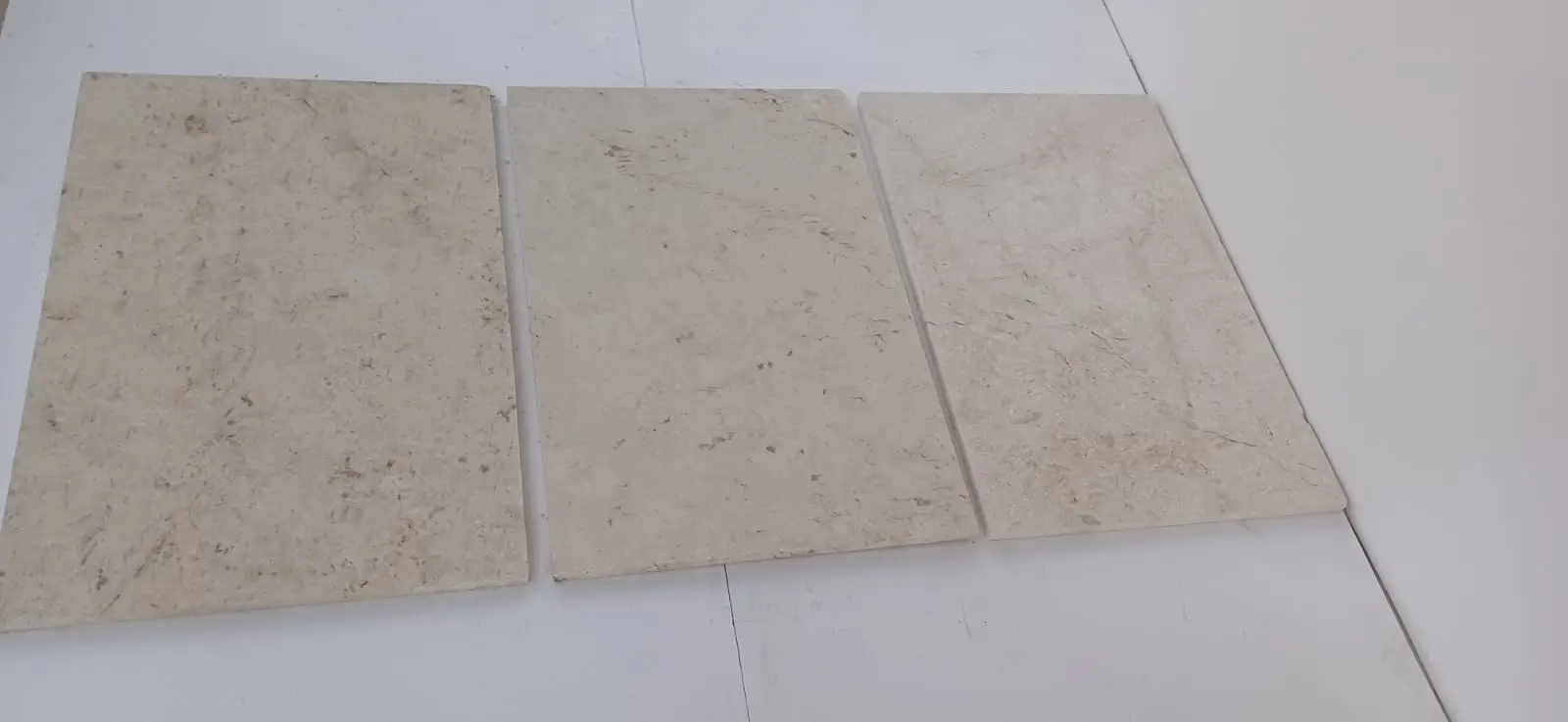
Finish selection for 12×24 travertine pool coping in Arizona isn’t purely aesthetic — it’s a safety code decision. Arizona pool decks are specified under ANSI A326.3, which sets a minimum wet dynamic coefficient of friction (DCOF) of 0.42 for level surfaces walked on wet. Honed travertine typically tests between 0.55 and 0.65 SCOF depending on fill condition and wear stage, which puts it right at the compliance threshold. Tumbled or brushed finishes test consistently above 0.65 SCOF and provide a comfortable code margin without the aggressive surface texture that damages bare feet over extended pool use.
The finish decision also affects your maintenance specification. Honed travertine requires biennial penetrating sealer application to maintain slip resistance as the surface micro-texture polishes under foot traffic. Your project specification should include a maintenance protocol document — some Arizona county inspectors have begun requesting these on permitted pool projects as part of the certificate of occupancy package. Polished travertine fails the wet SCOF threshold entirely and should not be specified for any horizontal pool coping surface regardless of its visual appeal. ANSI A326.3 provides the testing methodology your material supplier should reference when providing wet DCOF documentation for any coping finish you’re considering.
Base Preparation and Adhesive Specification for Arizona Conditions
Your bond beam surface preparation determines whether your large format travertine coping slab achieves full-coverage adhesive contact — and full coverage isn’t optional with a 12×24 slab. Partial coverage creates a hollow-sounding installation that fails inspection, and more importantly, it creates stress concentration points that will crack the slab at the first thermal expansion cycle. Arizona’s diurnal temperature swing of 35–45°F year-round means your coping surface cycles through significant expansion and contraction even in mild months.
Specify a polymer-modified large-format tile mortar meeting ANSI A118.4 at minimum, applied to both the bond beam surface and the back of each travertine slab using the back-buttering technique. Your adhesive coverage target is 95% contact area — verified by pulling test slabs during the first 30 minutes of installation. For Citadel Stone large format coping Arizona installations, Citadel Stone large format coping Arizona technical guidance recommends a minimum 1/2-inch mortar bed under large-format coping to accommodate bond beam surface irregularities common in gunite shell construction.
- Clean the bond beam surface to remove all form oil, curing compound, and efflorescence before setting — adhesive bond to a contaminated surface will test at half the rated strength
- Prime porous travertine slab backs with a stone primer 24 hours before setting to prevent rapid moisture absorption from the mortar bed
- Do not set coping when ambient temperatures exceed 95°F without extending pot life using a retarding admixture — Arizona summer conditions will gel your mortar before you achieve proper coverage
- Truck deliveries of large-format coping to Arizona job sites should be scheduled for morning arrivals — material stored in direct sun on a delivery truck bed can reach temperatures that affect adhesive performance immediately upon unloading
Specifying 12×24 Travertine Coping Correctly in Arizona
Getting these five 12×24 pool coping design ideas specified correctly in Arizona comes down to treating structural code compliance as the first filter, not an afterthought. Every design decision — profile geometry, finish selection, adhesive specification, movement joint placement — flows from the code requirements that govern your specific jurisdiction’s pool construction envelope. The aesthetic result you’re after is achievable within those structural constraints, and in most cases the code requirements actually push you toward better long-term performance details anyway.
Your material selection should account for the full regulatory picture: PHTA safety standards for slip resistance, ASTM C1527 for travertine dimensional compliance, local county amendments for slope and drainage, and seismic design category requirements for elevated or cantilevered profiles. Citadel Stone maintains Arizona warehouse inventory of large format travertine coping slabs in Arizona, which typically brings your lead time to 1–2 weeks rather than the extended import cycle that can delay permitted work. For projects that span multiple stone materials, exploring how dark stone performs in adjacent hardscape applications can round out your specification — dark stone flooring options in Arizona covers another dimension of stone performance worth reviewing alongside your pool edge specification, particularly for Gilbert and Chandler projects where coordinated hardscape palettes are common across both poolside and patio zones. Architects and builders in Phoenix, Gilbert, and Chandler select Citadel Stone 12×24 travertine coping for the uninterrupted slab face that defines contemporary Arizona pool edge aesthetics.