
Heavy duty flagstones in Arizona hold up under conditions that expose every weakness in a lesser specification — and the most underestimated threat isn’t summer heat, it’s the mechanical stress delivered by monsoon storms, wind-driven debris, and the sustained lateral forces that Maricopa County weather events generate seasonally. You’ll find that the flagstones that fail early in Arizona gardens almost always show the same pattern: edge spalling, joint washout, or whole-slab displacement that traces directly back to storm events, not thermal cycling. Choosing the right stone thickness, joint geometry, and edge restraint system is what separates a garden that looks as good in year fifteen as it did on installation day from one that needs a costly reset after the third monsoon season.
Why Storm Loads Define Flagstone Selection in Arizona
Arizona’s monsoon season delivers wind gusts that regularly exceed 60 mph in the Phoenix metro area, and those winds carry particulate matter — sand, gravel, and debris — that impacts stone surfaces at high velocity. Your flagstone selection needs to account for abrasion resistance, not just compressive strength. Dense sedimentary stones with low water absorption rates perform significantly better under repeated wind-driven impact than porous or laminar alternatives. The surface finish matters too: a riven or naturally cleft face actually deflects wind-carried particles more effectively than a polished surface, which creates micro-fractures at edges when struck repeatedly.
According to flagstone sedimentary rock characteristics and paving use, the structural integrity of flagstone under dynamic loading depends heavily on grain structure and mineralogical bonding — properties that vary significantly between quarry sources and material types. You need to request technical data sheets, not just product photos, before committing to a specification for high-wind zones. For Peoria projects particularly, where exposed mesa-adjacent properties channel wind through garden corridors, this step is non-negotiable.
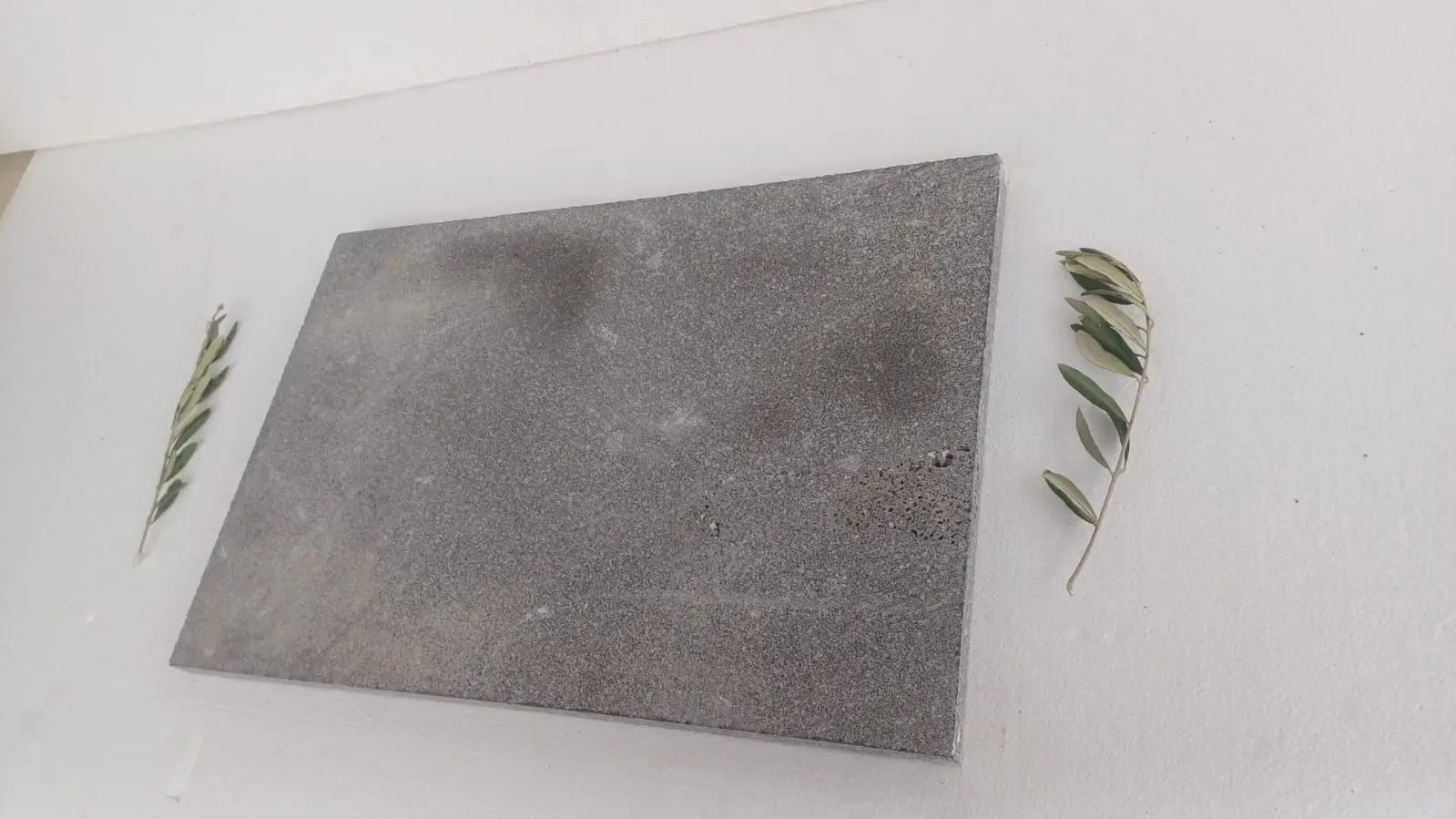
Thickness Requirements for Storm Resistance
The minimum thickness specification for heavy duty flagstones in Arizona outdoor garden applications is 2 inches nominal — but that’s the floor, not the target. For pathways and patios that carry regular foot traffic and sit exposed to direct storm impact, 2.5 to 3 inches is the range where you get genuine storm resilience. Thinner slabs flex under dynamic loading, and that flex cycles their mortar or sand bed adhesion loose over time. Once a slab develops micro-movement, the joint sand migrates outward with each wind-driven rain event until the entire installation loses its interlock integrity.
- Slabs under 1.5 inches nominal should be considered decorative only — not appropriate for primary garden circulation paths in storm-exposed Arizona locations
- The 2-inch minimum applies where slabs are mortar-set on a concrete base; dry-laid applications on compacted aggregate require a minimum of 2.5 inches to manage flex under point loads
- Edge zones — perimeter slabs and those adjacent to planted beds — need the full 3-inch specification because they absorb the highest lateral stress during storm events
- Hail impact, which occurs with increasing frequency in central Arizona counties, can fracture slabs thinner than 1.75 inches at their unsupported mid-span
The durable flagstone options in Arizona that hold up over decades consistently share one characteristic: they were specified at thickness values that engineers would assign to structural applications, not decorative ones. That mindset shift in how you approach the specification is what produces twenty-year installations.
Edge Restraint Systems That Survive Wind Events
Edge restraint is where most garden flagstone projects fail under storm stress, and it’s the detail that gets value-engineered out of projects most often. Your perimeter must be mechanically locked — a buried concrete haunching on the outside face of your border stones is the standard that holds under wind-generated lateral pressure. Landscape edging products made from plastic or thin aluminum are not adequate for Arizona monsoon conditions; they deflect enough under sustained wind load to allow border stone migration, and once the perimeter moves, the interior field follows within one or two seasons.
The joint integrity under wind-driven rain deserves equal attention. Polymeric jointing sand with a hardened binder performs far better than traditional kiln-dried sand in this climate because it resists the hydraulic erosion that heavy rainfall delivers at speed. You should reapply or top up jointing material after each major storm season — typically after the monsoon concludes in September — to maintain the lateral constraint that keeps individual slabs from rocking. Rocking slabs pump sand upward with each footstep, accelerating the joint failure cycle. For Tempe residential garden projects close to open desert corridors, this maintenance rhythm should be on a calendar, not left to inspection-based judgment.
Base Preparation for Arizona Storm Conditions
Your aggregate base has to handle two competing demands simultaneously in Arizona: it needs enough density to resist lateral movement under wind pressure, and it needs sufficient permeability to drain monsoon rainfall volumes without building hydrostatic pressure beneath your slabs. Those two requirements pull against each other, and the balance point is a well-graded crushed aggregate — not pea gravel, not decomposed granite alone — compacted to 95% of modified Proctor density.
- Base depth for heavy garden flagstones across Arizona outdoor projects should be a minimum of 6 inches of compacted aggregate for pedestrian applications and 8 inches for any area that receives vehicle access or heavy garden equipment
- A 2-inch bedding layer of coarse concrete sand, screeded level, goes directly beneath your flagstone slabs — this layer absorbs the micro-adjustment needed to keep the surface true after storm settlement
- Geotextile fabric between the native soil and your aggregate base prevents fines migration upward through the base during storm saturation events — skipping this layer is a false economy
- In clay-bearing soil zones typical of older Phoenix metro neighborhoods, allow an additional compaction cycle after the first rainfall before finalising your surface course
The USGS flagstone and dimension stone paving data confirms that dimensional stability in outdoor paving applications correlates directly with base preparation quality — the stone itself rarely fails first; it’s the system beneath it that gives way. That’s the detail worth spending the specification time on before a single slab gets placed.
Joint Integrity Under Wind-Driven Rain
Arizona’s monsoon storms aren’t just high-volume rainfall events — they’re horizontal events. Wind-driven rain enters joints at low angles that standard drainage design doesn’t anticipate, and that horizontal infiltration carries fine particulate directly into the joint cavity. Over one or two seasons, this creates a stratified sediment layer beneath the joint sand that lifts slabs unevenly and creates trip hazards. You need joint widths between 0.75 inches and 1.25 inches for heavy flagstone applications — narrow enough to restrict debris entry, wide enough to allow adequate jointing compound penetration to full depth.
Guidance on natural stone outdoor paving reinforces the importance of drainage geometry in paved garden areas — the surface cross-fall specification (typically 1.5% to 2% away from structures) determines whether joints drain efficiently or hold water that then freezes, expands, or softens base materials. That’s a detail you set during layout, not during installation. You can’t correct inadequate cross-fall once slabs are set without pulling them entirely.
For installations that use our heavy duty Arizona flagstone supply, we recommend discussing joint width targeting during the material selection stage — the dimensional tolerance of the specific stone batch affects achievable joint consistency, and we can advise on this directly based on what’s in warehouse inventory at the time of your order.
Hail and Impact Resistance: Stone Characteristics That Matter
Central Arizona hail events generate stones averaging 0.75 to 1.5 inches in diameter, and at terminal velocity those impact loads are substantial enough to pit or fracture stone surfaces that don’t have adequate flexural strength. The flexural strength specification you want for garden flagstones in exposed Arizona locations is a minimum of 1,500 psi — this is the value that correlates with adequate impact resistance in field performance, not just compressive strength, which is a different and less relevant measure for impact scenarios.
Dense limestone and basalt-family flagstones consistently outperform softer sandstone alternatives under hail impact testing. The crystalline structure in denser stone types distributes point impact loads laterally through the slab rather than concentrating stress at the impact site, which is the failure mode in softer or more laminar stone. Thick stone slabs for heavy use on Arizona properties should also avoid finishes that remove surface density — deep sandblasting or acid-washing treatments reduce surface hardness measurably and create a softer impact zone at the slab face.
- Request flexural strength data alongside compressive strength data when evaluating flagstone specifications for storm-exposed locations
- Avoid laminar stones with visible bedding planes parallel to the surface — these cleave under impact loads even when compressive strength data looks adequate
- A natural cleft or split face provides better impact resilience than machine-cut faces because the surface follows the stone’s natural grain rather than cutting across it
- Stones with visible fossil or shell inclusions may have localised weakness zones — these should be evaluated under magnification before specification for high-impact-risk locations
Arizona Flagstone Durability for Active Outdoor Spaces
Garden spaces that see daily use — children’s play areas, outdoor kitchen surrounds, high-traffic pathway networks — require a specification that combines storm resilience with surface durability under sustained foot traffic. Arizona flagstone durability for active outdoor spaces comes down to a combination of density, finish, and maintenance protocol, and getting all three right extends your realistic service life from ten years to twenty-five without requiring any structural intervention. The maintenance component is often undercommunicated at point of sale: you’ll need a penetrating impregnating sealer applied every two to three years to maintain the surface consolidation that resists both abrasion and storm-carried staining.
Phoenix residential installations in active use consistently show that unsealed flagstone in garden applications loses approximately 15% of its original surface hardness within five years of installation through abrasive foot traffic combined with UV degradation of surface minerals. That figure doesn’t mean the stone fails — it means the surface opens up and becomes more vulnerable to staining and moisture ingress. A quality penetrating sealer reverses and prevents this progression without changing the stone’s natural appearance in any meaningful way. The cost of sealing on a biennial cycle is a fraction of the cost of slab replacement. Selecting durable flagstone options in Arizona from the outset, paired with a consistent sealing schedule, is the combination that delivers genuine longevity in active residential settings.
Ordering, Logistics, and Project Timeline Planning
Your project timeline needs to account for material availability, not just installation scheduling. Imported flagstone varieties can carry six to eight week lead times from order to delivery, which creates a real risk of project delays if you commit to contractor schedules before confirming warehouse availability. Citadel Stone maintains active Arizona warehouse inventory on core heavy-duty flagstone lines, which typically compresses that lead time to one to two weeks for standard sizes and thicknesses — a meaningful difference when you’re coordinating landscaping contractors.
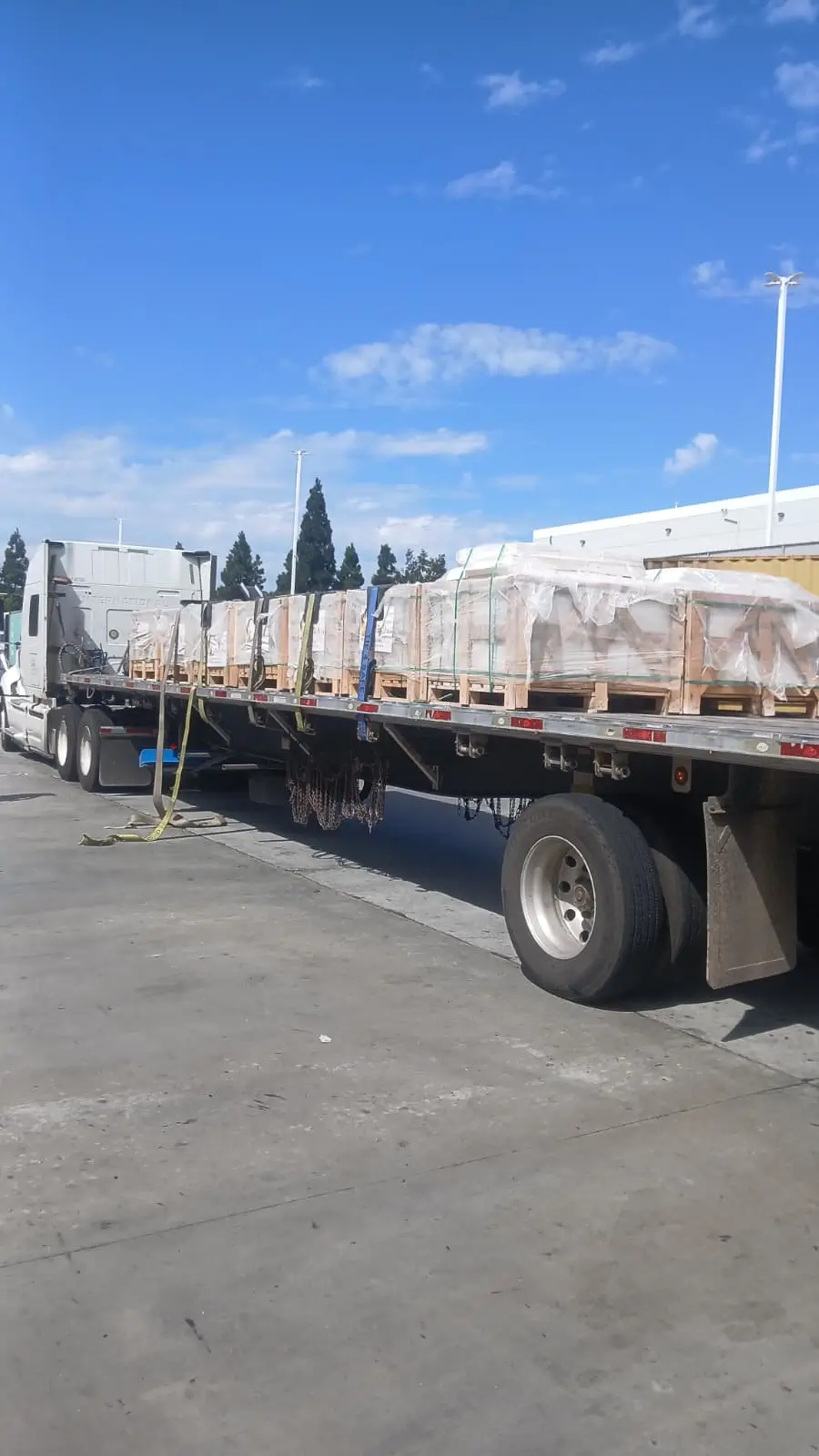
Truck delivery access planning is something many residential projects overlook until the delivery day. For heavy garden flagstones across Arizona outdoor projects — pallets of 2.5-inch to 3-inch material can run 3,000 to 4,500 pounds per pallet — your truck access route needs to accommodate a flatbed or boom truck with a working radius clear of overhanging trees, power lines, and parked vehicles. You should confirm truck clearance dimensions with your supplier before the order is finalised, not on delivery morning. Staging location matters too: placing pallets as close to the installation area as possible reduces double-handling significantly on larger garden projects. Chandler residential sites with narrow side-yard access in particular benefit from early truck route planning, since pallet weights in this specification range require unobstructed vehicle positioning.
- Confirm warehouse stock levels for your chosen stone type before scheduling contractor start dates
- Order a minimum 10% overage on square footage to account for cutting waste and future crack repairs — flagstone matching after years of weathering becomes difficult without surplus material
- Inspect each pallet on truck delivery for transport damage before signing off — edge chips on large-format slabs are common in transit and should be documented for replacement claims
- Store surplus material flat, not on edge, in a covered location — UV exposure degrades sealers on pre-sealed stone and can cause thermal stress cracking in thin surplus pieces stored upright
Specifying Heavy Duty Flagstones Correctly for Arizona Conditions
The garden transformations that hold up in Arizona — the ones that still look intentional and structurally sound after a decade of monsoon seasons, hail events, and daily use — share a common specification foundation. You chose stone with the right density and flexural strength for storm impact. You specified it at adequate thickness. Your edge restraint was mechanical, not cosmetic. Your base handled drainage without sacrificing lateral stability. None of those decisions are complicated once you understand the actual performance threats this climate delivers. The mistake most homeowners make is treating flagstone as a surface choice rather than a structural system choice — and the monsoon season has a way of clarifying that distinction within the first year. For your next Arizona stone project, it’s also worth exploring smart ways to budget for paving slabs in Arizona to balance performance specification with project cost. Projects across Phoenix, Peoria, and Chandler demonstrate how Citadel Stone heavy duty flagstones handle repeated foot traffic in Arizona outdoor spaces without surface degradation over time.