
Budget stone tile flooring in Arizona trips up more buyers at the subgrade stage than at any other point in the project — and the soil beneath your slab is almost always the reason. Arizona’s caliche layers, expansive clay pockets, and loosely consolidated desert soils create a foundation environment that can buckle even a well-chosen tile if the base preparation is skipped or undersized. Choosing affordable natural stone tiles in Arizona isn’t just about finding the lowest price per square foot; it’s about selecting a material and thickness combination that your specific ground conditions can actually support long-term.
Why Arizona Soil Conditions Drive Your Budget Decisions
The ground beneath an Arizona floor installation isn’t uniform, and that variability has a direct cost impact. Caliche — that dense, calcium carbonate-cemented hardpan layer — appears at depths ranging from 6 inches to several feet below grade depending on your location. In Yuma, caliche horizons tend to be shallower and more continuous, which can actually work in your favor once you’ve addressed drainage. The challenge is that caliche is nearly impermeable, so any moisture that infiltrates your stone floor system has nowhere to go vertically. That trapped moisture drives efflorescence, joint failure, and tile delamination over time.
Your soil assessment should happen before you finalize your stone selection, not after. A simple probe test or a consult with a local geotechnical firm reveals whether you’re dealing with caliche, expansive clay, or sandy alluvial fill — and each one calls for a different base preparation approach. Expansive clays, which appear more frequently in northern elevation zones, exert upward pressure during wet cycles that can crack even thick-format stone. For low-cost stone floor options in Arizona, this means your aggregate base depth and compaction specification matter more than the tile price tag itself.
Stone Types That Perform on a Budget in Arizona
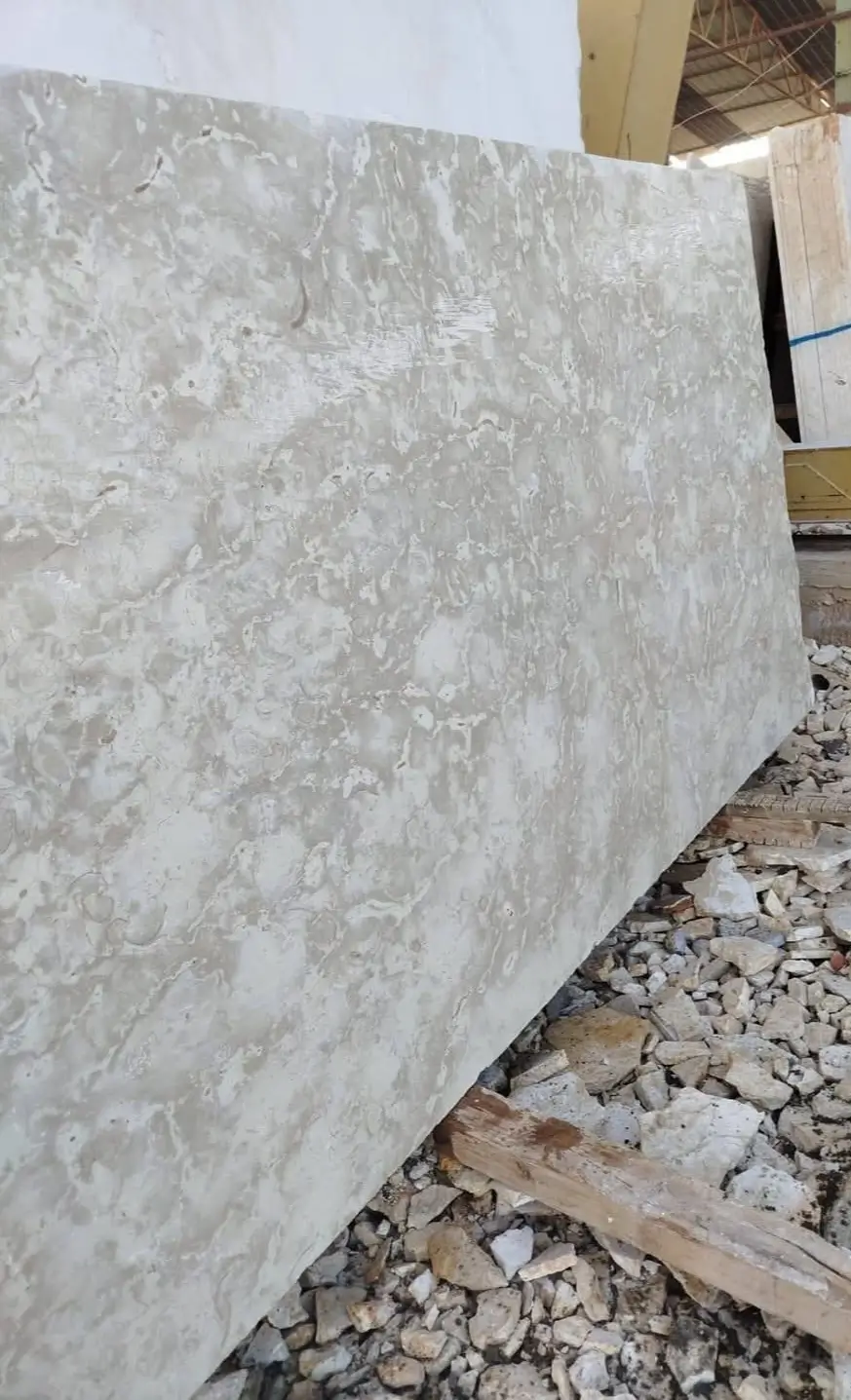
Not every natural stone carries the same price premium, and several perform exceptionally well in Arizona ground conditions without requiring top-tier budgets. Limestone tiles in the 3/8-inch to 1/2-inch format are among the most cost-effective options available — they deliver adequate compressive strength for residential foot traffic and respond predictably to the thermal cycling common across the state. According to Natural Stone Institute limestone specifications, limestone’s absorption and density characteristics make it a technically sound choice for interior and covered exterior flooring applications where base preparation is properly executed.
Travertine tiles in the 18×18 nominal size represent another solid value option. The fill-and-hone finished versions are typically priced more accessibly than premium unfilled travertine, and the denser surface reduces maintenance costs over the tile’s lifespan. Basalt tiles, while slightly higher in unit cost, require virtually no sealing schedule in indoor applications — a lifecycle cost advantage that often makes them genuinely cheaper over a 15-year horizon than a lower-priced limestone that needs annual sealing treatment.
- Honed limestone in 12×12 or 18×18 formats offers the best price-per-performance ratio for dry indoor zones
- Fill-and-hone travertine reduces long-term maintenance cost compared to unfilled formats
- Basalt tiles eliminate sealing costs in interior applications, shifting the true cost comparison
- Thin-format tiles (3/8 inch nominal) lower material cost but require a flatter, more rigidly prepared substrate
- Tumbled finishes hide minor lippage variation better than polished — a practical advantage on imperfect substrates
Base Preparation: The Non-Negotiable Budget Item
Here’s what most homeowners underestimate when pricing value stone tile buying across Arizona: the base system often costs more than the tile itself, and cutting it is the fastest way to turn a budget project into an expensive repair. For slab-on-grade installations over caliche, the priority is ensuring your concrete slab has adequate thickness — a minimum 4-inch slab with #3 rebar at 18-inch centers is the baseline, not the premium spec. Over expansive soils, post-tensioned slabs or moisture vapor barriers become necessary additions that aren’t optional.
For tile set directly over a prepared aggregate base in exterior applications, your compacted base depth should be no less than 6 inches of Class II aggregate base, compacted to 95% of maximum dry density per ASTM D1557. Arizona’s soil conditions, particularly in areas with sandy alluvial deposits, can allow differential settlement that shows up as cracked tile within 18 months if compaction is insufficient. The tile you specified correctly will fail not because of the stone, but because the earth beneath it moved.
At Citadel Stone, we consistently advise specifiers to allocate at least 30–35% of the total installed cost to base and setting materials before pricing the stone itself. That proportion prevents the false economy of selecting a low-cost stone tile option, then watching the installation fail prematurely because the substrate budget was compressed to offset the material savings.
Thickness and Format Selection for Arizona Ground Conditions
Your tile thickness choice directly interacts with your subgrade stability. Over a properly prepared concrete slab, 3/8-inch to 1/2-inch format tiles perform well for residential interior applications and deliver meaningful cost savings compared to 3/4-inch or 1-inch formats. The tradeoff is tolerance — thinner tiles require a flatter substrate. The ANSI A108 standard calls for a maximum variation of 1/8 inch in 10 feet for tiles with a face dimension greater than 15 inches; exceed that and you’ll see lippage that’s visible and potentially a trip hazard.
In Sedona, where many properties sit on reddish-brown clayey silt soils with moderate expansion potential, tile format selection needs to account for minor differential movement. Smaller tile formats in the 12×12 range accommodate slight substrate flex better than large-format 24×24 tiles, which bridge across movement without accommodating it — eventually cracking along the face or debonding at the setting bed. For Arizona stone flooring on a budget in these ground conditions, a 12×12 or 16×16 tile is genuinely the smarter format choice, not just a cost-cutting decision.
- 3/8-inch tiles: suitable for interior slab-on-grade with well-prepared, flat substrates only
- 1/2-inch tiles: the best balance of cost and installation tolerance for most Arizona residential projects
- 3/4-inch tiles: recommended for exterior applications or over less-than-perfect base preparation
- Formats above 18×18: require substrate flatness within 1/8 inch in 10 feet — tighten your base spec before upsizing
- Rectified edges: reduce grout joint width but demand superior substrate preparation — not always compatible with budget base systems
Understanding Moisture and Drainage on Arizona Soil
Arizona’s desert climate creates a deceptive moisture environment. The low annual rainfall leads many buyers to underestimate subsurface moisture, but monsoon infiltration through cracked caliche and flash flood saturation events can introduce significant moisture into floor systems that weren’t designed with vapor management in mind. The TCNA natural stone tile installation standards provide specific guidance on vapor emission testing requirements before tile installation over concrete — a step that’s frequently skipped on budget projects and almost always regretted.
Calcium carbonate stone like limestone and travertine is particularly sensitive to alkaline moisture migration from concrete slabs. The phenomenon shows up as white crystalline deposits on tile surfaces — efflorescence — that isn’t cosmetic damage but a sign that moisture is actively moving through your floor system. Your setting mortar selection matters here: a polymer-modified thin-set rated for natural stone reduces moisture transmission compared to unmodified mortars, and the cost difference between the two is negligible relative to the cost of the tile itself.
For projects in lower-elevation areas near Yuma where soils are sandier and drainage is better, vapor management is less critical — but it’s never irrelevant. A 6-mil polyethylene vapor barrier between the aggregate base and the concrete slab costs pennies per square foot and eliminates the moisture migration risk entirely. This is one of the more reliable low-cost stone floor options for protecting an entire installation against long-term moisture damage.
Smart Sourcing for Affordable Natural Stone Tiles in Arizona
Getting the best value on affordable natural stone tiles in Arizona comes down to understanding the supply chain. Most stone tiles available in the state travel a long route — quarried overseas, processed, containerized, and imported through West Coast ports before reaching a regional warehouse. That supply chain introduces meaningful lead time variability, typically 6–8 weeks from order to delivery for imported material. For projects on tight timelines, that lead time can force costly substitutions or construction delays.
Sourcing from a supplier with regional warehouse inventory changes the calculation. Citadel Stone budget stone flooring Arizona provides access to stocked material that can move on a 1–2 week lead time rather than the full import cycle — a genuine project management advantage when your contractor’s schedule is set. Our warehouse carries verified stock that’s been quality-checked for dimensional consistency and surface defects before it leaves the facility, which reduces field rejection rates and material waste on-site.
Request a material sample and a dimensional tolerance report before placing a large order. Nominal 18×18 tiles from different quarry batches can vary by 1/16 inch in actual face dimension — that variation affects grout joint sizing and can create visible inconsistency in large installations. Confirming batch consistency before the truck delivers is significantly less expensive than discovering the variance mid-installation.
Sealing and Long-Term Cost for Arizona Stone Floors
The true cost of value stone tile buying across Arizona includes the sealing and maintenance schedule over the tile’s lifespan, and that schedule varies considerably by stone type and finish. Polished limestone requires resealing every 12–18 months in high-traffic areas — in Arizona’s dry climate, the low humidity accelerates surface desiccation, which opens micro-pores faster than in coastal environments. Honed finishes on the same material extend the sealing interval to 24–36 months because the open surface is more consistent and holds penetrating sealers longer.
According to ASTM natural stone tile testing standards, water absorption rates for natural stone tiles range from under 0.5% for dense basalt to over 7% for some travertine formats. Higher absorption rates mean more frequent sealing and greater sensitivity to staining — both ongoing costs that buyers focused on upfront price often miss. A tile that costs $3.50 per square foot but requires annual professional sealing can cost more over 10 years than a $5.00 tile that needs sealing only every three years.
- Penetrating sealers work best for limestone and travertine — avoid topical coatings that peel in Arizona’s heat
- Apply sealer within 48 hours of installation completion, before grout haze removal chemicals contact the stone surface
- Test sealer effectiveness annually with a water droplet — beading means adequate protection, immediate absorption means resealing is due
- Budget approximately $0.15–0.25 per square foot per sealing event when calculating 10-year lifecycle costs
- Two-part epoxy grouts eliminate grout staining maintenance entirely — worth the premium on light-colored stone installations
Grout Joint Sizing and Setting for Arizona Conditions
Arizona’s thermal range — particularly the 60°F+ differential between winter nights and summer afternoons — creates measurable expansion and contraction stress in stone tile floors. Your grout joint width needs to accommodate this movement, and the industry-standard 1/8-inch joint used in moderate-climate installations is often undersized for Arizona projects. Specifying 3/16-inch joints for stone tiles in full-sun exterior applications and providing expansion joints every 12 to 15 linear feet is a better-performing specification than the generic guidelines suggest.
Flagstaff’s elevation introduces an additional variable: freeze-thaw cycles. At 7,000 feet elevation, exterior stone installations experience moisture freeze in joints that isn’t a factor in Phoenix or Tucson. For budget projects at elevation, choosing a stone with absorption below 3% — confirmed by ASTM C97 test data from the supplier — and using a flexible sealant in expansion joints rather than rigid grout prevents the joint cracking that freeze expansion causes.
Your setting mortar should be a large-format tile mortar (polymer-modified, meeting ANSI A118.15) for any tile format above 15 inches in either dimension. The back-buttering requirement for large-format natural stone — applying mortar to both the substrate and the tile back — ensures full coverage and eliminates hollow spots that crack under point loads. This is a labor cost, not a material cost, and it’s not optional on any format above 18×18.
Moving Forward with Budget Stone Tile Flooring in Arizona
Choosing budget stone tile flooring in Arizona with confidence comes down to understanding that value isn’t defined by the lowest material price — it’s defined by the lowest total installed and maintained cost over a realistic lifespan. Your soil conditions determine your base specification, your base specification determines your substrate flatness, your substrate flatness determines what tile formats you can realistically specify, and your tile format determines your material cost range. Start that analysis at the ground level, not the showroom floor, and the right stone selection becomes straightforward.
The beige stone tile outdoor options for Arizona resource covers how specific lighter-toned stone materials perform in Arizona’s exterior conditions — a useful complement to this guide as you move from base specification into final material selection. Stone for Arizona projects on tighter budgets can include thinner-format tiles from Citadel Stone, which are commonly specified by contractors in Tucson, Phoenix, and Tempe.