

Arizona’s building departments don’t treat flagstone size as an aesthetic preference — they treat it as a structural variable, and that distinction shapes everything about how you specify 24×24 flagstone vs smaller formats for outdoor projects across the state. The 24×24 flagstone vs smaller formats Arizona conversation starts not with visual scale or heat reflectance, but with load distribution, base engineering, and what your local jurisdiction actually requires before a permit gets approved. Getting this sequencing right saves you from costly re-dos and failed inspections that push project timelines well past your delivery window.
What Arizona’s Structural Baseline Actually Requires
Most specifiers assume that because flagstone is a natural, “dry-laid” material, it sits outside the formal code envelope. That assumption costs projects time and money every season. Arizona’s residential and commercial construction standards, administered through local jurisdictions under the International Building Code framework adopted statewide, treat any hardscape element above a certain square footage as a structural surface — and that classification directly affects your base depth specification, edge restraint requirements, and minimum material thickness thresholds.
Your first checkpoint is always the base depth requirement. Across Arizona’s low desert jurisdictions — including Maricopa and Pima counties — a minimum 4-inch compacted aggregate base is the accepted floor for pedestrian flagstone applications. But that number climbs when you factor in the material’s own weight. A 24×24 flagstone slab at 1.5 inches nominal thickness carries roughly 22–26 lbs per square foot depending on stone density. That cumulative load on an improperly compacted sub-base creates differential settlement that no surface sealant will fix.
- Minimum compacted aggregate base: 4 inches for pedestrian load, 6 inches for vehicular-adjacent applications
- Material thickness for 24×24 format: 1.25 inches minimum, 1.5 inches recommended for spans over 18 inches unsupported
- Edge restraint: required by most AZ jurisdictions when flagstone borders a drainage swale or grade transition
- Inspection trigger: patio surfaces exceeding 200 square feet may require a permit in many Arizona municipalities — verify before breaking ground
How Slab Size Affects Load Distribution and Base Engineering
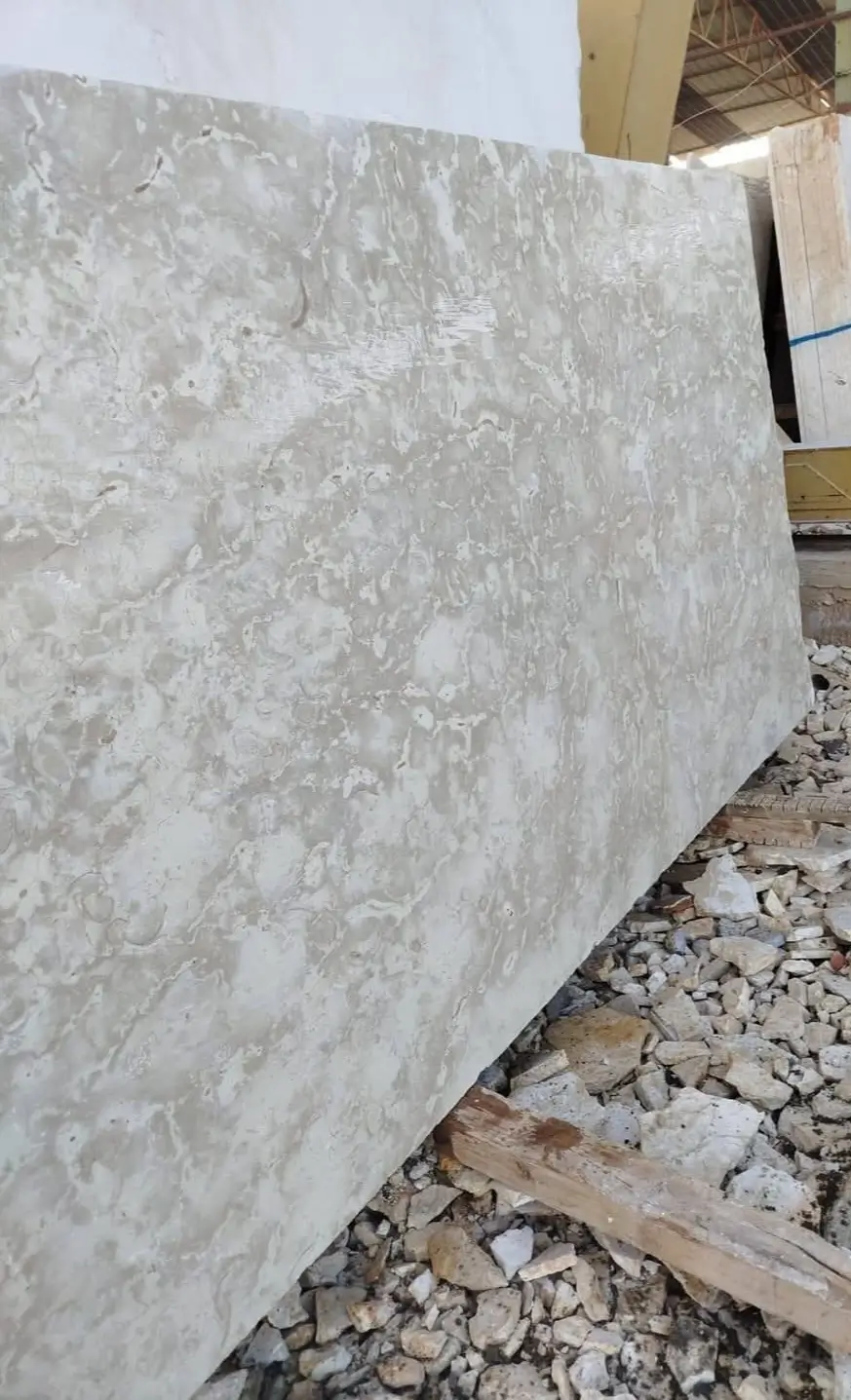
The engineering logic behind slab size selection is more nuanced than it appears on the surface. Larger slabs — the 24×24 format specifically — distribute point loads across a broader footprint, which reduces unit pressure on the sub-base at any given contact zone. This is genuinely useful in areas where the native soil is expansive clay or poorly graded sandy fill, both of which appear frequently in Arizona’s mid-elevation zones.
Smaller formats — 12×12, 16×16, or irregular cut flagstone — create more joint lines per square foot, which increases the total linear footage of edge exposure to soil movement. In a stable, well-drained sandy loam base, that’s manageable. In Arizona’s clay-heavy caliche zones, those joints become migration pathways for fine material uplift during monsoon saturation events. Projects in Scottsdale routinely encounter sub-surface caliche layers that compress moisture laterally rather than vertically, making fewer joints the structurally sound choice for those soil profiles.
The practical implication: if your base soils haven’t been tested, the 24×24 flagstone vs smaller formats Arizona choice often resolves in favor of the larger format. Fewer independent settlement points means a more stable installation over a longer performance horizon.
- 24×24 slabs: fewer joints, larger load footprint, more tolerant of minor sub-base inconsistency
- Smaller formats: increased joint density, greater sensitivity to sub-base settlement and clay uplift
- Hybrid layouts: 24×24 field stone with 6-inch border formats require careful transition detailing at format changes
- Seismic consideration: Arizona sits in a moderate seismic zone — larger slab formats with tight joints perform better in lateral ground movement scenarios than high-joint-count small format installations
Flagstone Slab Size Comparison in Arizona: Format by Application
The flagstone slab size comparison in Arizona that matters most is application-driven rather than aesthetics-driven. For pool surrounds and poolscapes, the 24×24 format wins on nearly every structural and maintenance metric — broader spans mean fewer grout or joint sand interruptions near water edges, and large-format slabs are less susceptible to the micro-heaving that occurs when pool water infiltrates perimeter joints during high-volume splash cycles. You can see how this plays out in practice by reviewing Citadel Stone Arizona poolscape flagstone specifications for Arizona pool deck applications.
For walkways under 48 inches wide, smaller formats often work better structurally because the narrower span doesn’t require a 24-inch slab to bridge it — and oversized slabs on narrow walkways create cantilevered edge conditions that accelerate corner chipping. The match between slab format and application span is a detail that experienced installers flag immediately but often gets missed in early specification stages. A thorough flagstone slab size comparison in Arizona always accounts for span width before format is locked in.
- Pool surrounds: 24×24 preferred — reduced joint infiltration, better thermal mass distribution at water edge
- Wide patios (12+ feet): 24×24 or large irregular cut flagstone — visual scale appropriate, structural load well-managed
- Narrow walkways (under 4 feet): 16×16 or smaller — avoids unsupported overhang conditions
- Outdoor dining areas: 24×24 works well — stable base for furniture legs, minimal rocking on properly set slabs
- Stepped entries: smaller formats recommended — easier to match riser-tread geometry without excessive cutting waste
Thermal Expansion and Joint Specification for Arizona Conditions
Arizona’s temperature swing from predawn minimums to peak afternoon heat can exceed 50°F in a single day during spring and fall shoulder seasons. Natural stone expands at rates ranging from 3.5 to 7.0 × 10⁻⁶ per °F depending on mineral composition, and a 24×24 slab sees roughly twice the absolute dimensional change of a 12×12 slab under identical thermal conditions — simply because it’s twice as long in each direction.
This doesn’t make the larger format problematic. It makes joint specification critical. For 24×24 flagstone in Arizona, plan expansion joints at 10- to 12-foot intervals in both directions rather than the 15- to 20-foot spacing commonly cited in generic installation guides. Those guides are written for moderate climates. Arizona’s thermal amplitude demands tighter joint frequency, especially in full-sun exposures where surface temperatures can reach 140–155°F in July.
Flagstaff projects require a different calibration entirely. At 6,900 feet elevation, Flagstaff introduces genuine freeze-thaw cycling — up to 100+ cycles annually — which imposes compressive stress in joints during ice expansion that lower-elevation Arizona projects never experience. Smaller formats with more joints actually perform better there because each individual joint absorbs less cumulative stress per cycle.
Poolscape Natural Stone Options in Arizona: Format Meets Function
Arizona poolscapes represent one of the most demanding specification environments for any natural stone product. You’re combining full UV exposure, chemical contact from pool water chemistry, thermal cycling, and slip-resistance requirements under a single material specification. Poolscape natural stone options in AZ narrow considerably once you apply all those filters simultaneously, and slab format plays a larger role than most designers initially account for.
Larger format slabs — the 24×24 specifically — offer a meaningful advantage around pool perimeters because they reduce the frequency of grout or joint sand joints that can absorb pool chemical residue over time. Sodium hypochlorite (standard pool chlorine) degrades polymeric joint sand faster than UV exposure alone, and every joint line is a potential infiltration pathway toward your sub-base. Fewer joints mean less maintenance intervention and a more predictable long-term performance curve. Among poolscape natural stone options in AZ, the 24×24 format consistently earns its place at the top of the specification list for these reasons.
- Slip resistance: look for ANSI A326.3 wet DCOF above 0.42 for pool deck applications — material selection matters more than format here
- Chemical resistance: limestone and certain basalt varieties handle pH fluctuation well — always verify stone type, not just format
- Joint sand: polymeric sand with pool-grade UV stabilization is non-negotiable in Arizona pool applications regardless of format
- Coping transition: where flagstone meets pool coping, 24×24 field stone requires careful cutting tolerance — budget 12–15% for waste at perimeter zones
Large Patio Stone Formats Across Arizona: What the Numbers Show
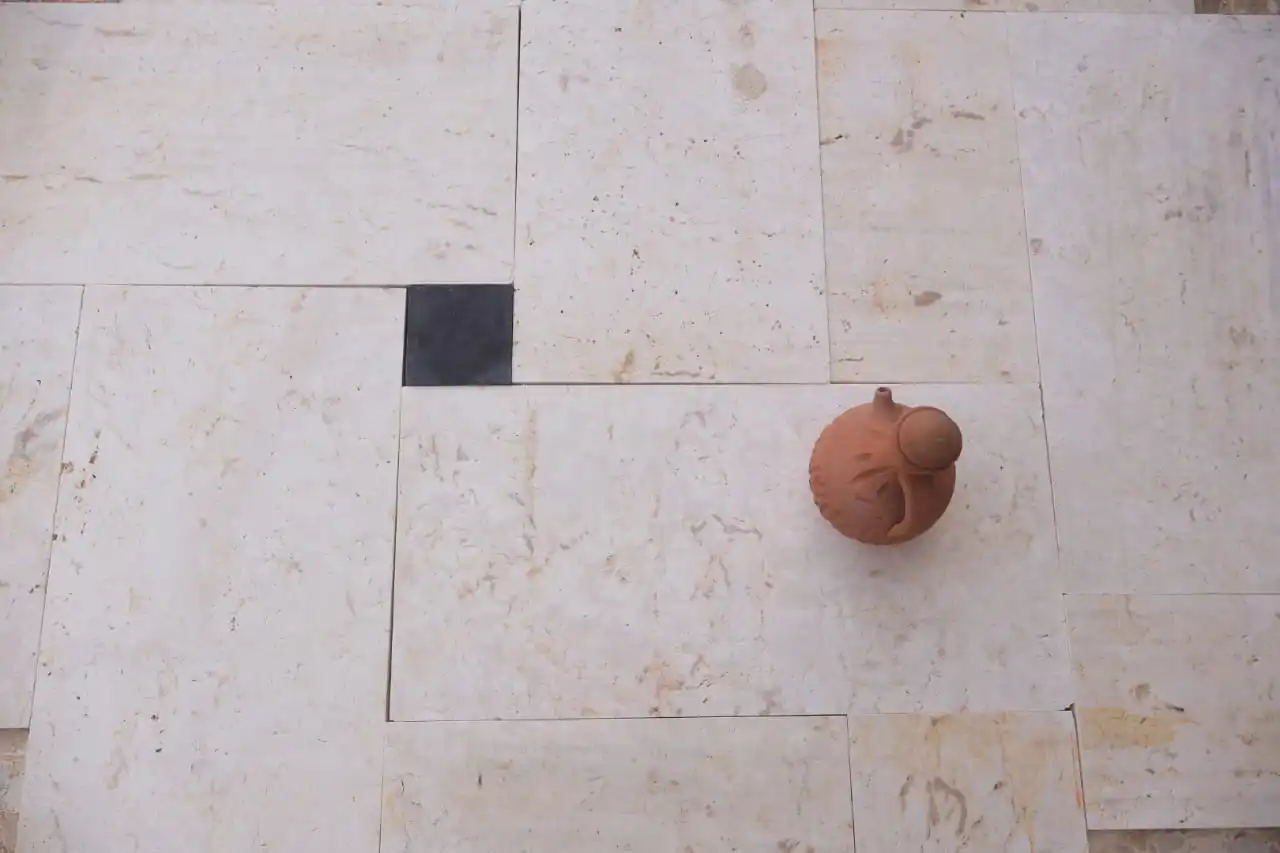
Large patio stone formats across Arizona have shifted toward the 24×24 standard over the past decade for reasons that go beyond visual preference. Field performance data collected from installations in Arizona’s three major climate bands — low desert, transition zone, and high plateau — consistently shows that larger formats deliver more predictable 10-year performance outcomes when the base is engineered correctly from the start. The caveat is real: base engineering is the operative condition.
Sedona’s unique geology adds another dimension to the format selection conversation. Sedona sits on sandstone formations with varying permeability, and the reddish iron-oxide soils in that area expand measurably during monsoon saturation events. Projects there benefit from a 6-inch compacted base minimum with a geotextile separation layer, and the 24×24 format’s larger footprint helps bridge minor settlement differentials that would cause smaller slabs to rock or tip.
At Citadel Stone, we source flagstone 24×24 in Arizona from quarries that maintain consistent thickness tolerances within ±⅛ inch — a specification detail that matters enormously when you’re setting large format slabs on mortar beds, because inconsistent thickness throws your slope calculation off at every course. That quality control starts at the quarry, not the warehouse.
Installation Variables That Should Drive Your Format Decision
Your format choice should be locked in before your truck delivery is scheduled — because changing from 24×24 to a smaller format mid-project affects your material order, your cutting allowance, your joint sand quantity, and your base preparation labor in ways that compound quickly. Here’s what experienced installers evaluate before committing to a format.
Sub-base soil type is the first variable. Expansive soils demand fewer joints, which favors larger formats. Well-drained, granular soils are more forgiving of smaller formats with higher joint density. The second variable is the project’s visual geometry — rectangular patios with clean 90-degree lines favor large format slabs because you can minimize cuts at field edges. Irregular outdoor spaces with curved pool surrounds or organic garden borders often work better with smaller formats that can negotiate curves without excessive waste. The Arizona outdoor stone size selection process should always run through these variables before any format is finalized.
- Truck access to the site: 24×24 slabs ship on pallets that require level delivery terrain — confirm truck clearance to your staging area before ordering
- Installer experience: large format slabs require two-person setting minimum — single installer can manage 12×12 but not 24×24 safely or accurately
- Base slope: 24×24 slabs require precise slope setting (1.5–2% toward drainage) because errors become visible over larger spans
- Cut complexity: 24×24 at perimeters may generate 15–20% waste; smaller formats typically run 8–12% waste at irregular edges
- Warehouse lead time: confirm stock availability with Citadel Stone before finalizing your schedule — large format slabs in specific stone types can run 2–3 week lead times from warehouse to delivery
Arizona Outdoor Stone Size Selection: The Permit and Inspection Checklist
The Arizona outdoor stone size selection guide most designers wish they had starts with the permit process, not the material catalog. Before any format decision is finalized, you should pull the project address and verify the local jurisdiction’s hardscape permit threshold. Maricopa County jurisdictions vary — Scottsdale’s standards differ from Tempe’s and both differ from unincorporated county rules. The 200 square foot threshold is a common trigger, but some cities use 150 square feet, and commercial applications often trigger review at any size.
Once you’re in permit territory, your specification package needs to address material thickness, base depth, drainage slope, and edge restraint — all of which are format-sensitive. A 24×24 flagstone specification at 1.5 inches thickness on a 6-inch compacted base with 2% drainage slope is a straightforward approval in most Arizona jurisdictions. A mix of formats with inconsistent thickness requires interpolated slope calculations that reviewers flag for additional documentation.
- Verify permit threshold by jurisdiction before ordering materials — thresholds range from 150–200 sq ft across Arizona municipalities
- Specification package: include material type, nominal thickness, base depth, compaction standard (95% modified Proctor), and drainage slope
- Edge restraint documentation: show restraint type and attachment method at any grade change or turf interface
- Seismic zone notation: Arizona falls under Zone 2B in most areas — your spec should acknowledge lateral load resistance at base connections for any elevated or tiered application
Flagstone Format Decisions That Hold Up in Arizona’s Field Conditions
The 24×24 flagstone vs smaller formats Arizona decision isn’t a style call — it’s a structural specification that cascades through your base engineering, permit documentation, installation logistics, and long-term maintenance schedule. Larger formats offer genuine structural advantages in Arizona’s clay-heavy and expansive sub-surface profiles, deliver better performance at pool perimeters, and reduce joint maintenance frequency over the installation’s life. Smaller formats earn their place on narrow walkways, stepped entries, curved layouts, and high-elevation freeze-thaw environments like Flagstaff where joint flexibility matters more than joint reduction.
Your specification process should always start with a soil assessment, a permit threshold check, and a realistic look at your truck delivery and staging logistics before any format gets locked in. Large patio stone formats across Arizona consistently reward projects that treat base engineering as the primary investment, with format selection flowing from that foundation rather than preceding it. For additional context on how these format decisions play out across Arizona desert patio projects, Best 24×24 Flagstone Patios in Arizona: Local Guide covers real installation scenarios worth reviewing before you finalize your specification. Sourced from select natural stone quarries worldwide, Citadel Stone 24×24 flagstone offers Arizona projects in Phoenix, Sedona, and Peoria a format known for visual scale and installation efficiency.