
Large format limestone sourcing problems Arizona contractors and homeowners encounter trace back more often to water behavior than to heat — and that’s the detail most buyers miss until a pallet of 24×24 slabs arrives and they realize the drainage design wasn’t part of the conversation. Arizona’s monsoon season delivers intense, concentrated rainfall events that can dump two inches in under an hour, and that moisture load interacts directly with your stone selection, base preparation, and joint design in ways that a quick phone call to a generic supplier won’t surface. Getting large format limestone sourcing problems Arizona right means addressing drainage geometry before you finalize material specs.
Why Drainage Drives Limestone Selection in Arizona
Arizona’s precipitation pattern is deceptive. You’ll get months of near-zero rainfall followed by monsoon events that overwhelm poorly designed drainage planes. For large format limestone tiles, that means surface runoff velocity increases dramatically across wide, low-slope installations — and the wrong finish or porosity rating accelerates both slip risk and subsurface saturation simultaneously.
The interconnected pore structure in most natural limestone allows moisture to migrate laterally through the stone body, not just vertically. Projects in Mesa frequently sit on caliche subgrades that resist vertical drainage, which forces water to travel horizontally beneath your tile bed — expanding your base material and creating the lippage and cracking patterns that look like a material failure but are actually a drainage failure.
- Limestone porosity ranges from 3% to 15% depending on quarry source and formation — higher porosity accelerates moisture uptake during monsoon saturation cycles
- Slope minimums for large format installations should be 1.5% to 2%, not the 1% minimum you’ll find in generic tile specs
- Caliche subgrades require a compacted gravel drainage layer of at least 4 inches before any sand or mortar bed
- Drainage swales positioned at the perimeter of large-format installations reduce hydrostatic pressure buildup at slab edges
Understanding Limestone Tile Sizing Issues in Arizona
Limestone tile sizing issues in Arizona compound when buyers select slab dimensions based on visual appeal without accounting for the structural deflection that occurs across wide unsupported spans during thermal cycling. A 24×24 slab on a 3/4-inch mortar bed behaves differently than the same slab on a properly engineered 1.25-inch setting bed — and in Arizona’s 110°F summers, the differential expansion between a saturated mortar bed and a dry limestone body creates micro-fractures at the bond line within three to five seasons.
Thickness matters here more than most sourcing conversations acknowledge. The 3/4-inch nominal thickness that works on interior floors becomes marginal on exterior applications where monsoon saturation cycles and thermal swings combine. For exterior large format applications, 1.25-inch minimum thickness reduces deflection stress by roughly 40% compared to the thinner profile — a specification detail that rarely appears in standard product listings but determines whether your installation is still tight at year ten.
- Slabs larger than 18×18 require a minimum 1.25-inch thickness for exterior Arizona installations
- Warping tolerance should be specified at 1/16 inch maximum across the diagonal before ordering — verify this with your supplier before warehouse shipment
- Rectified edges are mandatory for large format tiles; calibrated but non-rectified stock introduces inconsistent joint widths that allow moisture infiltration
- Panel weight per square foot increases with thickness — verify truck delivery access to your site before finalizing slab dimensions
Common Large Tile Purchasing Mistakes Arizona Buyers Make
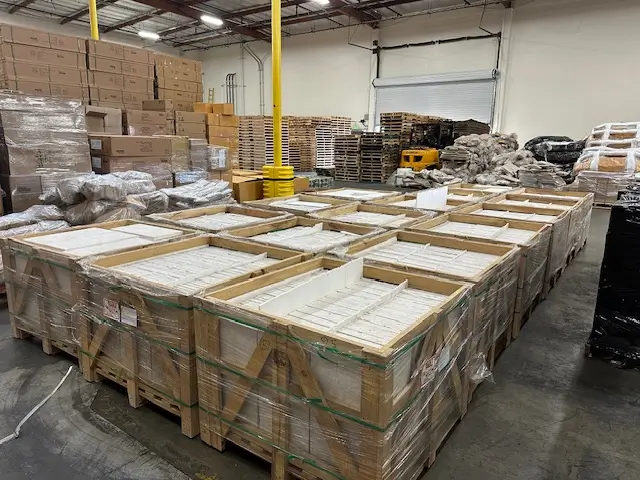
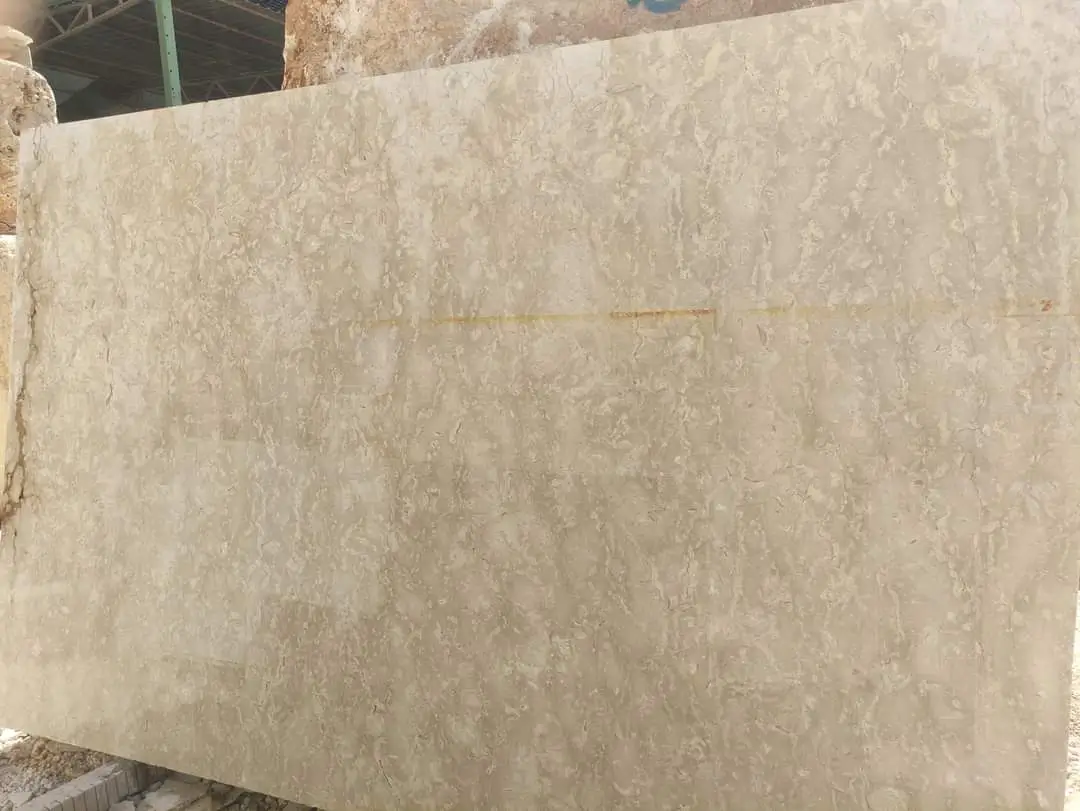
The most expensive common large tile purchasing mistakes in Arizona don’t happen at installation — they happen three weeks before the truck arrives. Buyers routinely order based on sample tiles that represent ideal quarry sections, then receive warehouse inventory pulled from different vein runs with noticeable color variation. Natural limestone has legitimate batch variation, and suppliers who don’t disclose this upfront are setting your project up for visible inconsistencies across the field.
At Citadel Stone, we review each batch at the warehouse before it ships, specifically checking for vein consistency, surface uniformity, and finish conformance — because the cost of a field rejection is always higher than the cost of a pre-shipment quality check. That kind of operational discipline separates a reliable supply partner from a distributor who’s simply moving product.
- Always request a full-range sample set — not a single tile — to see the natural variation within a batch before committing
- Confirm warehouse stock levels are sufficient to complete your entire project from a single batch run; mixing batches mid-project creates color inconsistency
- Verify the finish specification matches your drainage requirements — polished limestone becomes dangerously slippery during monsoon rain events
- Check that your supplier can provide a second truckload within 2 weeks if breakage during installation creates a shortage
- Confirm dimensional tolerances in writing — a 0.1-inch size variance across a large format pallet creates compounding lippage issues in the field
Natural Stone Finish Selection for AZ Homeowners and Drainage Performance
Natural stone finish selection for AZ homeowners comes down to a performance trade-off that most showroom conversations never fully address: the finishes that photograph best are often the worst performers under Arizona’s monsoon conditions. Polished limestone reflects ultraviolet beautifully and looks exceptional in design presentations, but its surface friction coefficient drops below 0.5 when wet — below the ANSI A137.1 minimum of 0.42 Dynamic Coefficient of Friction for wet exterior applications.
Honed and brushed finishes offer a middle ground, but the real performer for Arizona’s drainage-heavy environments is a sand-blasted or flamed surface that maintains 0.6 to 0.8 DCOF even under standing water. The surface texture also matters for how quickly runoff clears the tile during heavy rain — a textured face sheds water faster than a smooth face at equivalent slope, which reduces your effective saturation time during monsoon events. Natural stone finish selection for AZ homeowners ultimately depends on whether the installation is covered, sloped, and exposed to direct monsoon runoff.
- Polished finish: best for covered interior applications only — avoid for any Arizona exterior surface
- Honed finish: acceptable for low-traffic covered patios with slopes above 2%
- Brushed or tumbled finish: suitable for most exterior applications with proper slope design
- Flamed or sand-blasted finish: the correct specification for pool surrounds, walkways, and any surface exposed to direct monsoon runoff
Base Preparation Specific to Arizona Monsoon Conditions
Your base system does more moisture management work than the limestone itself, and specifying it incorrectly is the most common cause of large format limestone sourcing problems in Arizona escalating into field failures. The standard 4-inch compacted base that works in drier climates is inadequate where monsoon events introduce rapid saturation and equally rapid drying cycles — that expansion-contraction pattern destabilizes fine-grained base materials within two to three seasons.
Projects in Gilbert and surrounding east valley communities encounter expansive clay soils beneath the caliche layer that amplify this problem. A properly engineered base in these conditions uses a 6-inch compacted 3/4-inch crushed aggregate layer beneath a 1-inch sand setting bed, with geotextile fabric separating the aggregate from the native soil. This configuration allows monsoon water to drain vertically through the aggregate rather than saturating the setting bed — and it’s the detail that keeps 24×24 slabs from cracking at the corners after year two.
- Minimum base depth for large format limestone in expansive soil zones: 6 inches of compacted crushed aggregate
- Geotextile fabric prevents fines migration from native soil into your drainage layer — skip this and your base performance degrades within two monsoon seasons
- Mortar bed installations require open-time adjustments in summer heat — setting mortar in Arizona sun loses workability 30 to 40% faster than printed specifications indicate
- Expansion joints at 12-foot intervals (not the 15-foot generic recommendation) account for Arizona’s wider thermal swing range
For verified supply specifications and stock availability on large format slabs, Citadel Stone Arizona limestone supply provides regional sourcing details specific to Arizona project requirements.
Avoiding Limestone Sourcing Errors Across Arizona Regions
Avoiding limestone sourcing errors across Arizona requires recognizing that the state isn’t a single climate zone — it spans USDA hardiness zones 5 through 11, and your sourcing decisions need to reflect that range. A limestone specification that performs correctly in Chandler’s low desert environment may be entirely wrong for a higher elevation installation where freeze-thaw cycles introduce a different failure mechanism than monsoon saturation.
The critical sourcing variable that most buyers underestimate is absorption rate. ASTM C97 absorption testing measures how much water a limestone sample retains after immersion — and for Arizona applications, you want a rating below 3% for low desert locations and below 1% for any elevation above 4,500 feet where freeze-thaw risk exists. Suppliers who can’t provide ASTM C97 data for their limestone are selling you a material without a performance baseline. Avoiding limestone sourcing errors across Arizona also means specifying the correct absorption threshold before the order ships, not after the first monsoon season reveals a problem.
- Request ASTM C97 absorption rate data for every limestone product before ordering
- For Chandler and Mesa elevations (approximately 1,200 feet), absorption below 3% is acceptable for properly sealed installations
- For higher elevation Arizona projects, specify limestone with absorption below 1% and apply penetrating silane sealer annually
- Verify the country of origin — Turkish and Spanish limestones have well-documented performance data for hot-dry climates, while some Southeast Asian sources lack comparable field testing history in arid environments
Lead Times and Logistics for Arizona Large Format Projects
The logistics side of large format limestone sourcing problems in Arizona gets underestimated at the planning stage, and it creates real project delays. Large format slabs — particularly in 24×24 or 24×48 formats — require specialized crating and handling that extends lead times beyond what standard tile orders require. Import cycles from overseas quarries typically run 6 to 8 weeks from confirmed order to warehouse receipt, and that timeline doesn’t account for customs clearance delays that have been running 2 to 3 weeks longer than historical norms.
Projects in Chandler and the broader Phoenix metro area benefit from Arizona-based limestone warehousing that can reduce fulfillment timelines to 1 to 2 weeks for in-stock material. The practical implication is that confirming warehouse stock levels during your specification phase — not during procurement — is what separates projects that install on schedule from projects that push installation windows into monsoon season, creating exactly the moisture management problems you were trying to avoid.
- Confirm warehouse availability before finalizing your project schedule — not after securing the installation crew
- Large format slabs require flatbed or specialized truck delivery; standard box truck delivery is inadequate for 24×48 formats and increases breakage risk
- Order 10% to 12% overage on large format projects to account for cut waste and field breakage — reordering mid-project from a different production batch introduces color variation
- Request a hold on confirmed stock for 2 weeks while final measurements are completed — most reputable suppliers will accommodate this without a restocking fee
Sealing and Moisture Protection Protocols
Sealing large format limestone tiles in Arizona isn’t optional — it’s a performance specification decision that directly affects how the material handles monsoon moisture cycling. A penetrating silane-siloxane sealer applied before installation and reapplied every 18 to 24 months creates a hydrophobic barrier within the limestone’s pore structure that significantly reduces absorption during heavy rain events without altering surface texture or drainage performance.
The timing of initial sealing matters more than most installers acknowledge. Applying sealer to limestone that still contains installation moisture traps vapor beneath the surface layer, which then creates blistering and bond failure during Arizona’s rapid drying cycles post-monsoon. Allow a minimum of 72 hours drying time after installation before applying any penetrating sealer — and in high-humidity monsoon conditions, extend that window to 96 hours.
- Use penetrating silane-siloxane sealers rated for natural stone — surface film sealers peel under Arizona UV exposure within one season
- Apply sealer in the cooler morning hours; direct midday sun causes sealer to flash-dry before penetration, reducing effectiveness by up to 50%
- Grout joints require a separate sealer application after the limestone field treatment — joint sealers should be epoxy-based for monsoon-exposed applications
- Annual sealer maintenance in monsoon-exposed locations; 18-month intervals are acceptable for covered or shaded installations
Your Action Plan for Large Format Limestone Projects
Resolving large format limestone sourcing problems in Arizona starts with changing the sequence of decisions. Most project failures trace back to material selection happening before drainage design is finalized — and that order needs to reverse. Your drainage plane geometry, slope specification, and base engineering should be documented before you open a conversation about stone finish or slab size, because those structural decisions constrain your material options in ways that can’t be corrected after the order ships.
Verify your supplier’s ability to provide ASTM C97 absorption data, full-range batch samples, and confirmed warehouse stock before committing to any large format limestone specification. Confirm truck access to your site for crated slab delivery, and build your project schedule backward from your installation window to account for realistic lead times — not optimistic ones. The finish selection question is worth exploring in depth once your structural and drainage specifications are locked; for a closer look at how surface treatment options interact with Arizona’s climate demands, Limestone Tile Finishes vs Options: Better for Arizona Homes? covers the comparative performance data that informs that decision. Builders in Gilbert, Flagstaff, and Sedona rely on Citadel Stone to resolve finish selection challenges for limestone large format tiles, with each batch reviewed for surface uniformity before delivery across Arizona.