
Architectural stone supplier pricing Arizona projects hinge on one variable that most builders underestimate before the bid goes out: drainage infrastructure cost. The material itself — travertine, limestone, basalt — often lands within a predictable range, but the base preparation required to manage Arizona’s monsoon season can shift your per-square-foot budget by $4 to $9 depending on site conditions. Understanding how water behavior drives specification decisions is the real starting point for accurate cost planning.
Why Drainage Design Drives Your Stone Budget in Arizona
Arizona’s climate is deceptive. You’re not dealing with a single uniform condition — you’re managing extreme dry cycles followed by intense rainfall events that deliver 2 to 4 inches in under an hour during the monsoon window (roughly June through September). That combination of hardened soil, compacted caliche, and sudden saturation creates hydraulic pressure conditions that most base specifications from out-of-state suppliers simply don’t account for.
The drainage requirements for architectural stone in Arizona directly affect three cost layers: base aggregate depth, sub-base grading complexity, and the type of jointing material you specify. Skimping on any of these in the name of budget alignment tends to produce cracked field stone, heaved borders, and joint washout within two to three monsoon seasons.
- Base aggregate depth in Arizona typically runs 6–8 inches for pedestrian applications, compared to 4 inches in lower-rainfall states
- Permeable base compaction requires a minimum 95% Proctor density to resist hydraulic displacement
- Drainage slope specifications of 1.5–2% are standard; anything under 1% creates standing water risk in flat desert terrain
- Caliche layer penetration adds excavation cost of $1.50–$3.00 per square foot depending on depth and hardness
Accurate architectural stone supplier pricing for Arizona projects starts at the drainage design stage, not at the material selection stage. Get the base spec right first, then work backward to the surface stone budget.
Comparing Stone Grades from Arizona Suppliers: What the Numbers Actually Mean
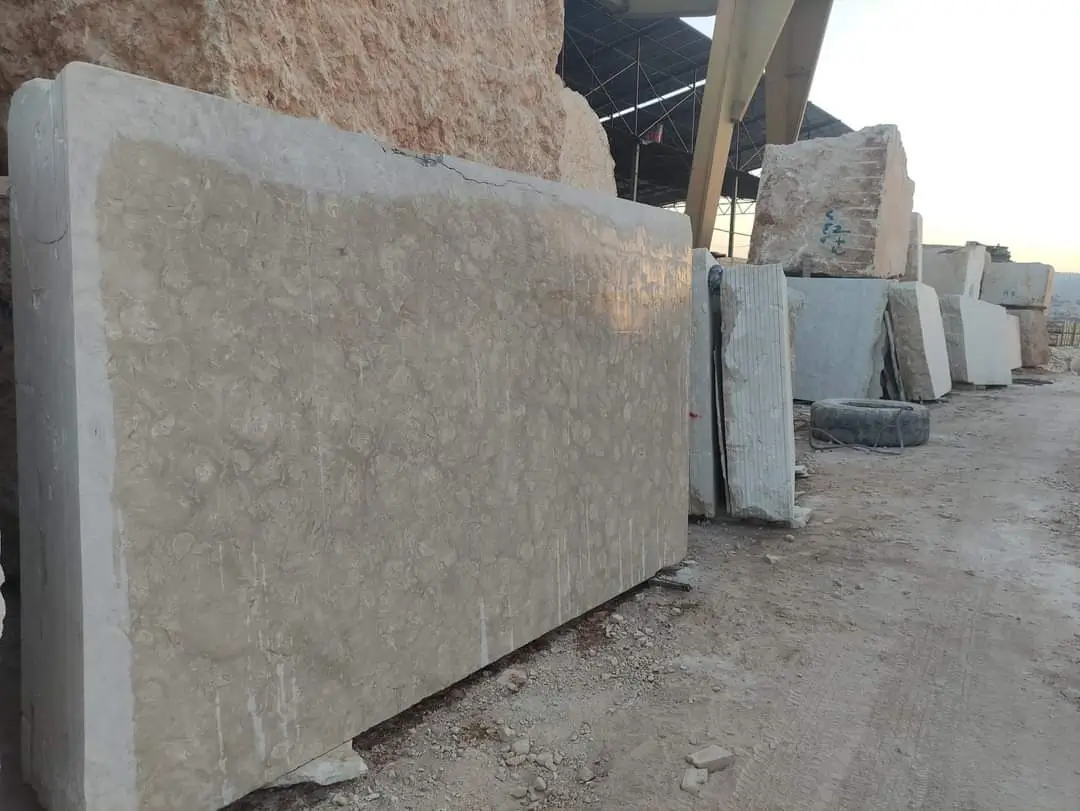
Natural stone material cost estimates in Arizona span a wide range — roughly $6 to $28 per square foot at the supply level — and the gap between the low and high end isn’t arbitrary. Grade classifications reflect consistency of dimension, surface finish tolerancing, and veining uniformity, all of which have direct implications for installation labor cost and long-term performance under Arizona’s weather cycles.
Here’s how comparing stone grades from AZ suppliers typically breaks down across the most common architectural materials:
- Select or Premium grade: dimensional tolerance within ±1/16 inch, consistent coloring, minimal surface variation — priced at $18–$28 per square foot at supply
- Commercial grade: tolerance within ±3/16 inch, moderate color variation, minor surface irregularities — priced at $10–$17 per square foot
- Economy or Builder grade: tolerance can vary by ±1/4 inch or more, higher void and variation rates, requires more labor to fit — priced at $6–$9 per square foot
The labor math matters here. Economy grade stone can look attractive on paper, but the additional cutting, fitting, and waste factor (typically 12–18% higher than premium grade) often erodes the material savings within the first 200 square feet of installation. For large commercial projects in Phoenix, where labor rates run $8–$14 per square foot installed, the grade decision has as much budget impact as the stone price itself.
Material Selection for Monsoon Season Performance
Your choice of stone species matters considerably when the design brief includes drainage structures, channel borders, or permeable paving sections. Not all architectural stone suppliers in Arizona stock the same material profiles, and the performance difference between a dense basalt and a high-porosity travertine under monsoon saturation is significant.
Travertine’s interconnected void structure — porosity ratings typically ranging from 2.5% to 5.5% — makes it a strong candidate for permeable paving systems because water migration through the field reduces surface runoff velocity. The trade-off is sensitivity to acidic soil conditions that can deepen voids over time, which means you’ll want to factor in penetrating sealer reapplication every 24–36 months in areas with organic debris accumulation.
Limestone performs differently. Dense varieties with water absorption rates below 2% are more suitable for drainage channels and border applications where saturation exposure is near-constant. Basalt, with absorption rates typically under 0.5%, is your best specification for below-grade or edge applications where standing water contact is probable. At Citadel Stone, we recommend matching stone species to hydraulic exposure zone before discussing surface aesthetics — the performance envelope needs to be established first.
- Travertine: 2.5–5.5% porosity, excellent for permeable field paving, requires sealing in organic soil zones
- Limestone (dense): under 2% absorption, suited for drainage-adjacent borders and channel edges
- Basalt: under 0.5% absorption, optimal for high-saturation exposure zones, edge restraints, and water feature surrounds
- Sandstone: not recommended for primary paving in monsoon zones without full bed-face orientation and sealed joints
Bulk Architectural Stone Pricing Across Arizona: Planning Your Supply Quantities
Bulk architectural stone pricing across Arizona shifts meaningfully at certain quantity thresholds, and understanding those break points before you finalize your takeoff protects your margin. Most suppliers operate on tiered pricing structures, with the first meaningful discount typically activating around 500 square feet and a second tier engaging at 1,500–2,000 square feet.
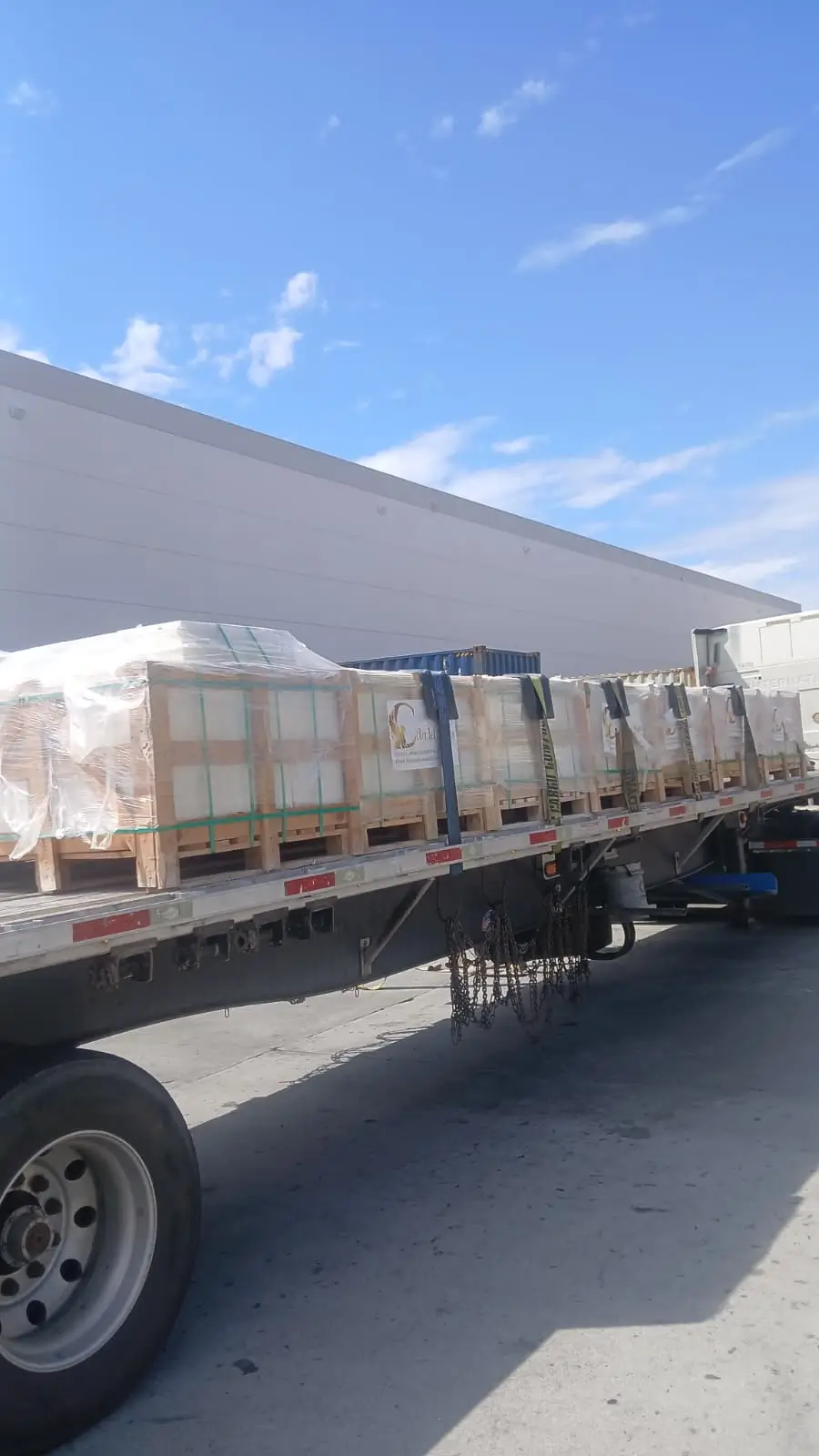
For large residential estates or commercial hardscape projects, the truck delivery model also affects your landed cost. A full truck load of stone — generally 20–24 pallets, depending on material density and pallet weight — reduces per-unit freight cost significantly compared to partial loads. Projects in Peoria and the northwest Valley often benefit from consolidated truck deliveries because the drive distance from supply warehouses is slightly longer than central Phoenix, making full load efficiency more important.
Arizona stone supply budget planning for builders should account for the following quantity-based cost variables:
- Partial pallet orders carry a 10–15% per-square-foot premium over full pallet pricing
- Mixed-material orders on a single truck delivery often qualify for freight consolidation discounts
- Warehouse lead times for in-stock material run 3–7 business days for standard grades; specialty cuts or premium grades may require 3–5 weeks
- Seasonal demand in Arizona peaks in October–March, which can affect warehouse availability and delivery scheduling
Reviewing Citadel Stone supply costs in Arizona early in the project planning phase gives you reliable benchmark numbers before your estimate goes to the owner or GC.
Base Preparation: The Hidden Cost Driver in Arizona Stone Projects
Drainage design doesn’t just affect long-term performance — it’s a significant line item in your project budget that often surprises builders who haven’t done extensive Arizona work. The combination of caliche hardpan, expansive clay soils in certain valley subregions, and the hydraulic loading from monsoon events means your base preparation scope in Arizona typically runs 35–50% higher than comparable projects in the Pacific Northwest or Mid-Atlantic states.
For projects where drainage management is central to the design — permeable courtyards, sloped terraces, water feature surrounds — the aggregate base specification typically involves a layered approach: native soil compaction, followed by 4 inches of Class II base aggregate, followed by 2–3 inches of compacted decomposed granite or coarse sand bedding. Each layer adds material and labor cost, but each layer also prevents the hydraulic displacement that causes joint failure and surface heave.
In Tempe, the soil profile often includes denser caliche at shallower depths than the northwest Valley, which can actually reduce excavation depth requirements while increasing per-hour equipment cost due to harder digging conditions. Knowing your soil profile before finalizing the base specification saves meaningful budget variance. Natural stone material cost estimates in Arizona that omit this base preparation detail routinely undershoot actual project spend by 20% or more.
- Caliche removal: $1.50–$3.00 per square foot depending on depth and hardness
- Class II aggregate base material: $0.45–$0.65 per square foot per inch of depth
- Decomposed granite bedding: $0.30–$0.50 per square foot at 2-inch depth
- Geotextile fabric (recommended for expansive soil zones): $0.20–$0.35 per square foot
- Edge restraint system for drainage slope retention: $3.50–$6.00 per linear foot installed
Reading Supplier Quotes Accurately for Arizona Projects
Most discrepancies between initial budget estimates and final project costs on architectural stone supplier pricing Arizona projects trace back to misread or incomplete supplier quotes. A quote line that reads “$12.50 per square foot” for limestone doesn’t tell you the full story — you need to know whether that includes cutting waste allowance, whether it’s based on nominal or net coverage, and whether freight to your site is included or separated.
Standard industry practice prices architectural stone on a net coverage basis, meaning the quoted square footage assumes perfect installation with no cuts, no waste, and no breakage. Your actual order quantity should include a waste factor: 8–10% for straight-lay patterns, 12–15% for diagonal or herringbone patterns, and 15–20% for complex cuts around water features, drainage channels, or custom pool perimeters.
- Confirm whether pricing is nominal or net coverage — the difference can be 8–20% on your total order
- Check freight terms: FOB warehouse versus delivered pricing can vary by $0.50–$1.50 per square foot for remote sites
- Verify thickness tolerance: “2-inch nominal” can mean 1-3/4 to 2-1/4 inches, which affects bedding depth calculations
- Clarify lead times for your specific grade and color before committing to a project schedule
- Ask about minimum order quantities for specialty items — these often carry premium pricing below 100 square feet
Our technical team at Citadel Stone reviews quote comparisons with builders regularly, and the most common gap we see is builders comparing landed cost without accounting for thickness variability, which affects both bedding material use and labor time. This is where comparing stone grades from AZ suppliers on a normalized cost basis — accounting for grade tolerances, waste factors, and freight terms together — produces a more accurate total cost picture than a simple line-item comparison.
Sealing and Maintenance: Building Realistic Long-Term Cost Projections
The initial supply cost is only part of your total cost-of-ownership picture. For architectural stone in Arizona’s climate — intense UV exposure from March through October, hard alkaline water in most Valley municipalities, and the annual hydraulic stress of monsoon season — sealing and maintenance costs are real budget line items that belong in your owner presentation.
Penetrating silane/siloxane sealers, which are the appropriate specification for most dense limestones and basalts, typically last 3–5 years in Arizona’s UV environment before reapplication is needed. Travertine and higher-porosity materials may require reapplication every 18–24 months in high-exposure locations. Sealer cost runs $0.15–$0.35 per square foot per application for professionally applied penetrating products, plus labor.
- Penetrating sealer (silane/siloxane): $0.15–$0.35 per square foot per application, 3–5 year interval
- Topical acrylic sealer (not recommended for primary paving in high-heat zones — surfaces above 140°F cause delamination)
- Joint sand replenishment after monsoon season: $0.10–$0.20 per square foot annually for polymeric sand joints
- Annual inspection for drainage channel debris, joint displacement, and surface cracking: essential for warranty-grade performance
You can realistically project 20–25 year service life on properly specified and maintained architectural stone in Arizona conditions. The failure cases that drag performance below 12 years almost uniformly trace back to inadequate drainage base preparation combined with deferred sealer maintenance — not material quality.
Coordinating Deliveries and Project Timelines for Arizona Stone Supply
Supply chain coordination deserves more attention in pre-construction planning than most project timelines allocate. For architectural stone projects in Arizona, the warehouse-to-site logistics involve several variables that affect your sequencing: material availability, truck access at the delivery site, and the temperature window for adhesive or mortar setting.
Truck delivery of full palletized stone loads requires confirmed site access — minimum 12-foot clearance width, solid grade for outrigger or forklift operation, and an unobstructed staging area of at least 30 by 40 feet for pallet placement. Projects in dense urban infill sites or properties with narrow access drives may require smaller partial-load deliveries, which add freight cost. Confirming truck access requirements with your supplier at the quote stage prevents schedule disruptions. Arizona stone supply budget planning for builders should incorporate these logistics variables into the pre-construction checklist, not as an afterthought once materials are en route.
Temperature windows also matter for mortar and adhesive applications. Arizona summers push ambient air temperatures above 105°F regularly, and surface temperatures on exposed stone can exceed 140°F by mid-afternoon. Most thin-set mortars have working times that drop from 30 minutes to under 12 minutes above 95°F ambient — which means early morning installation windows (5:00 AM to 10:00 AM) are the practical standard for summer projects. This affects your daily production rate and therefore your total labor cost projection.
Parting Guidance on Architectural Stone Supplier Pricing for Arizona Projects
The most reliable path to accurate cost planning for architectural stone supplier pricing Arizona projects is treating drainage infrastructure as a first-order specification decision, not an afterthought. Your stone species, grade selection, and supply quantities all flow downstream from the drainage design — and the drainage design in Arizona is shaped by monsoon hydrology, caliche profiles, and soil expansion characteristics that vary meaningfully across the Valley. Builders who get this sequence right consistently hit their stone budgets; those who reverse it tend to discover scope gaps mid-project.
For a closer look at how to evaluate suppliers beyond pricing alone, How to Choose Architectural Stone Suppliers Arizona provides guidance on vetting material sourcing, grade consistency, and technical support capabilities that matter for high-value Arizona projects. Stone for Arizona projects sourced direct from quarries in Turkey, the Mediterranean, and beyond through Citadel Stone gives contractors in Phoenix, Peoria, and Tempe a clear path to grade-based budget planning.