
Budget decisions on a limestone paver walkway entry Tempe project deserve more attention than most homeowners give them upfront — specifically, how freight distance and regional material availability quietly reshape your cost structure before a single stone gets set. Arizona’s position relative to major limestone quarries in Texas, Kansas, and the Midwest means you’re absorbing inland freight costs that simply don’t exist for projects in quarry-adjacent states. Understanding that dynamic before you commit to a material specification can save you 15 to 25 percent on your total project cost without compromising the design.
Regional Pricing Dynamics That Shape Your Tempe Project Budget
The delivered cost of limestone pavers in the Tempe metro doesn’t track directly with quarry price sheets — it tracks with regional freight corridors and warehouse positioning. Material sourced from Texas Hill Country limestone operations typically adds $0.60 to $1.20 per square foot in freight costs compared to what a Colorado or Kansas builder pays for the same stone. That gap compounds quickly on a 400-square-foot entry walkway. You’re looking at a $240 to $480 freight differential that never shows up in the per-unit material quote but absolutely appears in the final invoice.
The labor market in the greater Phoenix metro — which sets the compensation baseline for Tempe subcontractors — runs at a material-to-labor ratio of roughly 1:1.2 to 1:1.4 on residential hardscape projects. That’s higher than national averages, which typically land between 1:0.8 and 1:1.0. Understanding that your labor costs will likely exceed your material costs helps you make smarter value engineering decisions on the material side. Spending an extra $0.80 per square foot on higher-quality limestone that reduces long-term maintenance is often more cost-effective than choosing budget material and absorbing repeat sealing and repair costs over a five-year window.
How Sourcing Decisions Affect Total Project Cost
Your sourcing path determines more than just the material price — it determines lead time risk, quality consistency, and whether your project crew gets what they priced. Importing limestone directly from overseas quarries can appear attractive at the per-unit level, but the 6 to 10 week import cycle introduces scheduling risk that Tempe’s seasonal installation window doesn’t always accommodate. Fall and spring represent the prime installation months for Tempe front walkways and entry work in the Valley; a delayed container arrival can push you into summer heat that complicates setting compound performance and worker productivity.
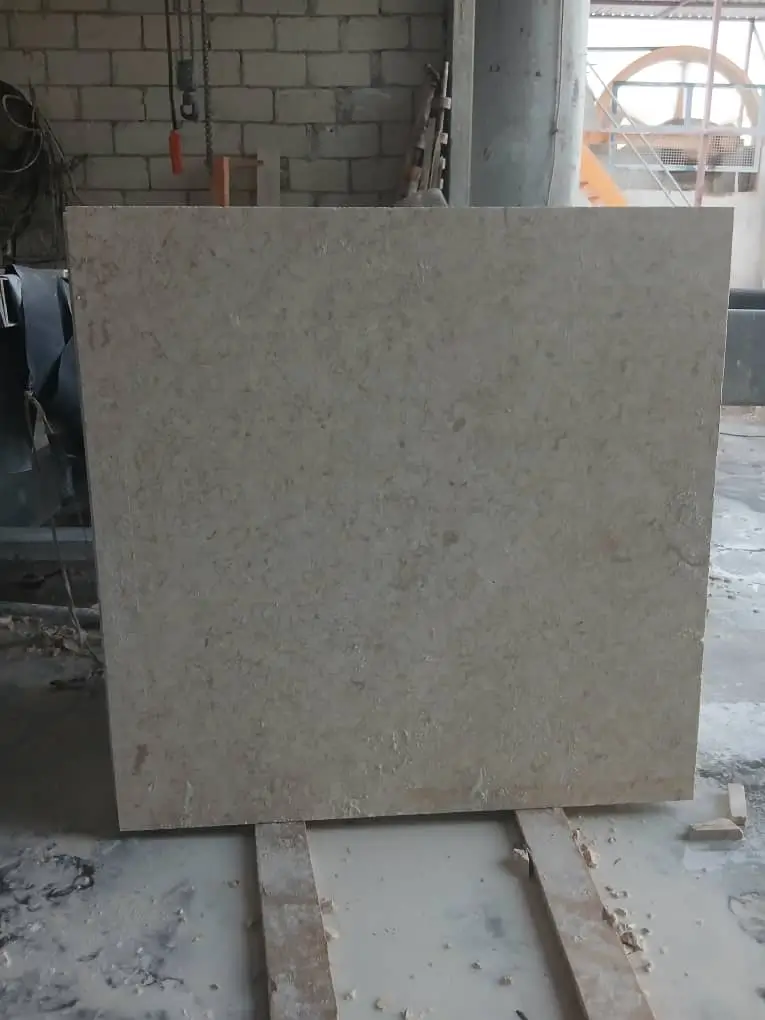
Domestically stocked limestone paver walkway entry Tempe inventory through regional suppliers eliminates that scheduling risk. Citadel Stone maintains warehouse inventory that covers the most common limestone formats — typically 12×24, 16×16, and 24×24 nominal cuts — which reduces lead times to one to two weeks on most residential quantities. For a standard entry walkway project in the 300 to 600 square foot range, that means you can confirm material availability before finalizing your contractor start date, rather than building speculative buffer time into your project schedule.
Value engineering on limestone entry paths Arizona doesn’t mean downgrading material — it means optimizing thickness selection. A 1.25-inch nominal thickness performs adequately for pedestrian-only walkway applications and typically prices out 18 to 22 percent lower than 2-inch material. The structural case for 2-inch limestone applies mainly where vehicle overhang, delivery carts, or frequent heavy equipment access is likely. For a purely pedestrian front entry approach, the 1.25-inch specification with a properly prepared 4-inch compacted aggregate base delivers equivalent long-term performance at a meaningfully lower material cost.
Base Preparation Cost Implications in the Tempe Market
Base preparation in the Tempe area introduces a cost variable that many project budgets underweight — caliche. The calcite-cemented hardpan layer that runs through much of Maricopa County requires mechanical breaking before you can establish a proper aggregate base, and breaking caliche adds $2.00 to $3.50 per square foot to excavation costs depending on depth and density. Your contractor’s excavation quote should explicitly address caliche risk, not just standard soil removal.
- Probe or test pit before finalizing excavation pricing — caliche depth varies significantly even within a single residential lot
- Specify a minimum 4-inch class II aggregate base compacted to 95 percent Modified Proctor density for pedestrian walkway applications
- Add a 1-inch setting bed of coarse sand or decomposed granite — not fine play sand, which migrates under thermal cycling
- Account for 2 to 3 percent waste factor on limestone cuts around curved or irregular entry geometries
- Budget for joint sand stabilizer application after installation — it significantly reduces joint sand loss from monsoon-season water infiltration
Getting base preparation right is where the real cost-performance trade-off lives on a limestone paver walkway entry Tempe project. Skimping on base depth to save $400 on a 400-square-foot project typically results in settlement and lippage within three to five years, generating repair costs that dwarf the original savings.
Material Selection and Smart Front Approach Design Elements
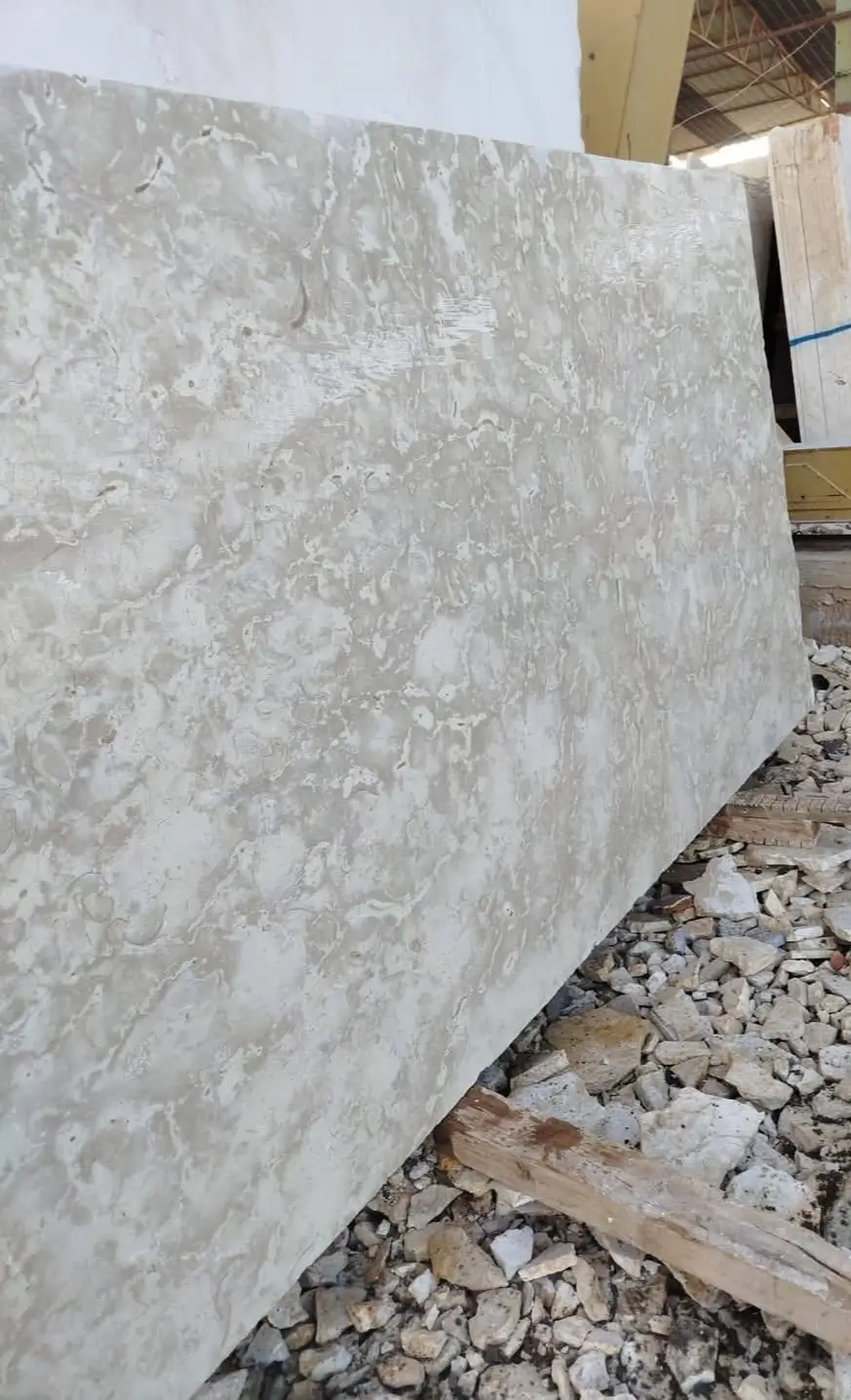
Limestone’s natural color palette — cream, buff, warm gray, and blond tones — works particularly well with the stucco and tile-roofed architecture prevalent across Tempe’s residential neighborhoods. The material creates a welcoming approach not through a single design decision but through the accumulation of several smaller choices: stone color relative to the home’s exterior finish, coursing pattern relative to the driveway width, and edge treatment relative to the surrounding landscape grade. These details are what transform a functional path into a genuinely Arizona inviting access point that sets the tone for the entire property.
In Scottsdale, high-end entry walk projects frequently specify bookmatched limestone with ashlar-pattern coursing to create visual length along approach paths. The same material in a running bond pattern with tighter 3/8-inch joints reads more casual and suits Tempe’s eclectic mid-century residential stock. Your design decision should be driven by the architecture it serves, not by current trend cycles.
- Cream and buff limestone reflects ambient heat better than dark stone, reducing surface temperature by 15 to 20°F compared to dark concrete at peak afternoon exposure
- Honed finishes offer better foot traction than polished surfaces — particularly important on entry paths where visitors unfamiliar with stone may encounter unexpected slipperiness
- Tumbled edge profiles soften the installation visually and reduce chipping risk at exposed corners
- Soldier course borders in a contrasting limestone tone add definition without increasing material cost significantly — typically adds 8 to 12 percent to total material cost for a standard entry width
Thermal Performance and Joint Spacing for Arizona Conditions
Limestone’s thermal expansion coefficient runs approximately 4.4 to 5.5 × 10⁻⁶ per °F. Across Tempe’s temperature range — from winter lows near 38°F to summer highs exceeding 115°F — that translates to a dimensional movement of roughly 0.048 inches per linear foot across a 77°F seasonal differential. For a 20-foot walkway run, you’re looking at approximately 0.96 inches of total seasonal movement. That number drives your expansion joint placement decision more than any other single factor.
Field practice in Arizona hardscape consistently shows that expansion joints placed every 10 to 12 feet (rather than the 15 to 20-foot intervals common in cooler climates) prevent the edge lifting and joint blowout that becomes visible after the first full seasonal cycle. Your installation specification should call this out explicitly — generic tile installation guidelines written for moderate-climate applications will underestimate the movement Arizona conditions generate. Citadel Stone’s black limestone operations in Arizona include technical consultation on joint spacing and sealing protocols specific to the desert Southwest climate.
The setting mortar or sand bed also responds to thermal cycling. Dry-set applications over a well-compacted aggregate base tend to outperform mortar-set installations in extreme heat environments because the pavers can micro-adjust through thermal movement without building stress against a rigid mortar bond. In Tempe’s soil conditions — typically sandy loam to caliche with relatively low clay content — dry-set installation over a properly prepared base is the specification of choice for most Tempe front walkways and front entry applications.
Sealing and Maintenance: Factoring Lifecycle Costs Into Your Budget
Limestone paver walkway entry Tempe applications require a sealing schedule that many entry-level project budgets don’t account for. The upfront cost of a penetrating silane-siloxane sealer runs $0.40 to $0.65 per square foot for materials and $0.80 to $1.20 per square foot for professional application on first-time treatments. Reapplication every two to three years — Tempe’s UV intensity accelerates sealer degradation faster than most sealer manufacturers’ published intervals suggest — adds a recurring cost line that factors into your 10-year total cost of ownership calculation.
- Avoid topical film-forming sealers on honed limestone in outdoor applications — they trap moisture under the surface film in rain events and create spalling risk
- Penetrating sealers allow the stone to breathe while reducing oil staining from driveway spill-over and organic matter accumulation
- Efflorescence is more common on mortar-set limestone in the first 12 to 18 months — budget for one professional efflorescence treatment if you go the mortar-set route
- Joint sand loss from monsoon season runoff is the primary maintenance driver on dry-set installations — stabilized polymeric joint sand significantly extends the re-sanding interval
Over a 15-year horizon, properly maintained limestone entry paths Arizona typically carry a lifecycle cost 20 to 30 percent lower than comparable concrete installations, primarily because limestone doesn’t require crack repair, resurfacing, or full replacement at the 12 to 15-year mark that stamped concrete commonly does.
Logistics, Delivery Planning, and Contractor Coordination
Delivery logistics for limestone paver projects in residential Tempe neighborhoods introduce practical constraints that affect your project schedule. Most residential front entry projects require a truck with a liftgate and pallet jack capability — standard flatbed delivery won’t work on properties without full driveway clearance for a forklift approach. Confirm your delivery address’s truck access limitations before finalizing your order and scheduling your crew start date.
Pallet weights for limestone run 2,800 to 3,200 pounds depending on thickness and format. A standard 400-square-foot entry project in 1.25-inch limestone will require two to three pallets — plan staging area accordingly, and verify that your driveway surface can support loaded pallet staging without cracking if it’s existing concrete or asphalt. Coordinating your warehouse pickup or delivery timing so that material arrives one to two days before the installation crew starts keeps stone exposure to weather minimal and reduces theft and chipping risk.
In Tucson, freight routes for Arizona-stocked material add approximately 90 minutes of transport time compared to the Phoenix metro corridor, which can affect single-truck delivery feasibility on same-day scheduling windows. For Tempe projects specifically, the central Valley location typically allows for morning delivery and afternoon installation start on the same calendar day — a scheduling efficiency that reduces rental equipment costs and simplifies crew coordination.
Contractor Selection and Labor Cost Realities
The Tempe hardscape labor market pulls from a Valley-wide contractor pool where experienced limestone installers command $65 to $95 per hour depending on crew composition and project complexity. That rate reflects both the regional cost of living and the genuine technical skill differential between installers experienced with natural stone versus those primarily working with concrete pavers or stamped concrete. Natural stone installation requires different judgment on layout, cut sequencing, and lippage management — attempting to save money by hiring a concrete paver specialist for a limestone entry project is a common decision that often generates expensive remediation work.
- Request references specifically for natural stone entry projects — not just general paving work
- Confirm the contractor carries liability coverage at $1 million minimum and workers’ comp for all on-site crew
- Get unit-price breakdowns, not just lump-sum bids — you need to understand the material, base prep, labor, and sealing components separately
- Ask how they handle lippage on irregular stone — the answer reveals their experience level more reliably than any portfolio photo
- Verify their base preparation specification matches your soil conditions — generic specs written for non-caliche environments will underperform in Maricopa County
At Citadel Stone, we recommend getting a minimum of three contractor bids and using our technical specifications as your baseline document for evaluating what each contractor proposes to include. Significant deviations from standard base preparation depth or sealing protocols in a low bid are usually the explanation for why that bid is lower — not superior efficiency.
Making Your Limestone Paver Walkway Entry Decision in Tempe
A limestone paver walkway entry Tempe project succeeds or struggles based on decisions made before the first stone gets set — material sourcing path, base preparation specification, joint spacing strategy, and contractor qualification. The regional budget dynamics in Arizona are real: freight costs, a labor market that runs above national averages, and caliche excavation risk all push your true project cost above what a surface-level material quote suggests. Building those factors into your planning from day one puts you in control of the budget rather than reacting to surprises at invoice time. Limestone entry paths Arizona that perform over decades share one common trait: they were specified and installed with regional conditions in mind, not generic national standards. As you evaluate complementary hardscape investments for your Arizona property, Black Limestone Driveway Luxury Appeal for Gilbert High-End Properties offers useful perspective on how premium stone selections perform across different application contexts in the Valley — a natural extension of the same commitment to quality material sourcing and Arizona-specific installation standards. Citadel Stone’s mastery of limestone paver driveway in Arizona creation ensures every installation becomes a neighborhood showcase.