
The grade change on a Gilbert luxury lot dictates nearly every decision you’ll make about a black limestone driveway luxury installation — from the depth of your aggregate base to the spacing of your drainage channels. Most specifiers focus on material aesthetics first, but the terrain profile is where performance is actually determined. Understanding how elevation transitions, even subtle ones, interact with black limestone’s density and surface geometry gives you the edge that separates a 25-year installation from one that starts shifting at year eight.
Why Terrain Defines Black Limestone Performance in Gilbert
Gilbert sits within the East Valley’s transition zone, where residential lots can shift several feet in grade over a single parcel — a detail that doesn’t always appear obvious in plan view. You’ll encounter both constructed slopes managing desert-wash drainage and natural terrain that gently tilts toward retention basins. That combination creates differential settlement pressure across a driveway’s length that flat-desert markets like Yuma rarely experience at the same intensity. Your base preparation strategy needs to account for this variation, not just the surface aesthetic.
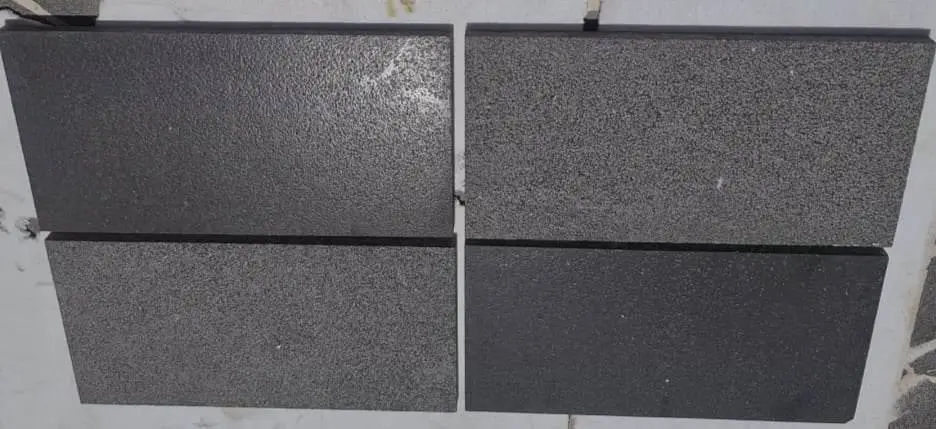
Black limestone’s density — typically 165 to 170 pounds per cubic foot — actually works in your favor on graded sites. The mass resists lateral creep better than lighter travertine or concrete pavers when bedding layers are properly compacted. The trade-off is that subgrade preparation becomes less forgiving: a five-percent variation in base compaction across a slope translates directly into visible surface displacement within two to three seasons. For Gilbert upscale driveways, that compaction discipline is the single most controllable performance variable available to the specifier.
Base Preparation for Sloped Gilbert Driveways
The detail most Gilbert installers underestimate is the compaction transition zone — the area where your excavation depth shifts to follow grade changes. On a driveway with a three-to-five percent cross slope, your compacted aggregate base needs consistent 95% Proctor density across every linear foot, but achieving that uniformly on a sloped profile requires lift-by-lift compaction in 4-inch increments rather than the single-pass approach that works on flat sites.
- Minimum 8-inch compacted aggregate base on flat sections, extending to 10–12 inches on grades exceeding four percent
- Class II road base or crushed granite compacted in 4-inch lifts — never single-pass on slopes
- Geotextile fabric separation layer between native soil and aggregate where expansive clay is present
- One-inch bedding sand layer above the aggregate, screeded parallel to finished grade — not horizontal
- Drainage slope minimum two percent cross-fall or longitudinal grade toward designated collection points
The bedding sand layer deserves special attention on sloped sites. You need to screed it parallel to your finished driveway plane, which means your screed rails follow the grade rather than level. This sounds obvious, but field crews often default to leveling the sand layer, which creates a wedge effect that introduces long-term differential thickness in your black limestone driveway luxury Gilbert installation.
Drainage Design for Gilbert Upscale Driveways
Drainage on a Gilbert luxury entry isn’t just a civil engineering checkbox — it’s the primary determinant of whether your black limestone prestige Arizona installation maintains its appearance through monsoon season. The East Valley’s summer storm events deliver intense short-duration rainfall that generates sheet flow exceeding what most residential drainage calculations assume. You need catch basins or channel drains sized for a 10-year storm event, not just the 2-year design standard commonly applied to standard residential work.
Channel drain placement on a graded driveway follows a different logic than on flat surfaces. The channel position should intercept grade-driven flow before it reaches the transition between your black limestone driveway and the public sidewalk or street. Placing collection at the bottom of a grade change rather than mid-slope prevents hydraulic pressure from building beneath your bedding layer during intense rainfall events.
- Channel drains positioned at grade-change transition points, not centered between features
- Minimum 4-inch NDS or equivalent channel capacity for residential luxury driveways exceeding 1,200 square feet
- Outlet connections to approved drainage infrastructure — not surface discharge toward neighbors
- Cleanout access every 30 linear feet for channel drain maintenance
- French drain perimeter option for sites with sub-base moisture infiltration from adjacent irrigation zones
Smart Gate Installation on Luxury Graded Sites
Smart gate installation on luxury homes introduces a foundation challenge that intersects directly with your terrain management strategy. Gate posts need concrete footings that extend below the influence zone of your aggregate base compaction — typically 36 to 42 inches in the Gilbert area, deeper than standard footing depth — to prevent post movement from affecting gate alignment as your base settles through the first wet season cycle.
The grade transition immediately adjacent to gate posts creates a concentrated drainage shadow: water tends to pool against the post footing before finding its way to your channel system. Specifying a small catch basin or pop-up emitter within 24 inches of each gate post prevents this pooling from saturating the post footing and introducing differential settlement. This detail rarely appears in standard gate installation drawings, but it’s consistently where failures originate on graded luxury entries.
- Gate post footings minimum 36 inches deep, isolated from driveway base aggregate with a compressible foam collar
- Footing diameter minimum 16 inches for swing gates, 20 inches for heavy automated slide gates
- Drainage provisions within 24 inches of each post — pop-up emitter or small basin connected to main drain line
- Conduit for gate automation wiring installed before black limestone driveway base compaction — not after
Selecting Black Limestone Thickness for Arizona Driveway Applications
Your thickness specification for a black limestone driveway in Arizona depends on two intersecting variables: expected vehicle loading and the grade profile. On flat sites, 1.25-inch nominal pavers typically handle standard passenger vehicle loading without issue. On sloped driveways, the lateral force component during braking and acceleration introduces shear stress at the bedding interface that argues for stepping up to 1.5-inch or 2-inch nominal material.
For projects in San Tan Valley, where new construction lots often feature engineered fill sections with grade changes of four to eight percent, the 2-inch nominal thickness paired with a polymeric sand joint fill offers the best long-term resistance to bedding layer disturbance. The additional thickness adds meaningful mass that resists lateral creep on fill sections that haven’t fully consolidated.
You can verify the material quality and dimensional consistency of your black limestone driveway pavers by visiting our walkway limestone facility, where our technical team can review your site grade profile and recommend the appropriate nominal thickness for your specific load and slope conditions.
Joint Sand and Sealing on Graded Surfaces
Polymeric sand is non-negotiable on any graded black limestone driveway installation. Standard kiln-dried joint sand migrates downslope during the first significant rain event — not dramatically, but enough to open joint width by 15 to 25 percent within a single monsoon season. Once joints open, lateral stability degrades rapidly on sloped surfaces because the interlocking tension between pavers depends on fully consolidated joint material.
Sealing protocol for black limestone driveway installations in Arizona’s desert climate serves a dual function: UV protection for the stone’s characteristic dark matrix color and joint sand stabilization. A penetrating impregnating sealer — not a topical film sealer — applied six to eight weeks after installation allows the polymeric sand to fully cure before you introduce any wetting from the sealer application process. Reapplication every three years is a reasonable maintenance cycle in the Phoenix metro area’s UV exposure range.
- Polymeric sand only — standard joint sand is inappropriate for any grade exceeding one percent
- Sealer application after minimum 6-week polymeric sand cure period
- Penetrating impregnating sealer — avoid topical film types that trap moisture on sloped sections
- Reapplication cycle every 3 years in East Valley UV conditions, every 2 years in western Arizona locations
- Clean and re-sand any joints showing greater than 25% depletion before resealing
Thermal Expansion and Grade Interaction in Arizona Conditions
Arizona elegant entries face a thermal dynamic that flat-market installers often underestimate: the combination of grade-induced lateral stress and thermal cycling creates a cumulative joint displacement that exceeds either factor alone. Black limestone’s thermal expansion coefficient runs approximately 4.5 × 10⁻⁶ per °F — lower than concrete, which makes it well-suited for Arizona’s temperature swings from winter nights near 35°F to summer pavement surface temperatures exceeding 140°F.
The interaction with grade comes through the bedding layer. On a sloped surface, thermal expansion pushes pavers both outward and slightly downslope simultaneously. Expansion joints placed every 15 linear feet — tighter than the 20-foot spacing common in generic specifications — allow this combined movement to relieve without displacing individual pavers. On grades exceeding five percent, reduce that spacing to 12 feet in the downslope direction specifically.
Projects in Avondale on the west side of the metro see marginally higher summer ground temperatures due to urban heat island effects in denser residential corridors, which argues for the tighter expansion joint spacing even on relatively flat sites. The thermal mass of black limestone actually works in your favor for surface temperature management — it absorbs heat more slowly than concrete and radiates it more gradually after sunset, a property that residents of Arizona elegant entries consistently notice and appreciate.
Material Logistics and Project Planning for Gilbert Properties
Your project timeline for a black limestone driveway luxury Gilbert installation should build in lead time for material delivery and sequencing with other trades. Citadel Stone maintains warehouse inventory in Arizona, which typically compresses lead time to one to two weeks compared to the six-to-eight week import cycle that direct-order projects face. Confirming warehouse stock levels before committing your installation date to a client prevents the schedule disruption that cascades through gate installation, landscape, and irrigation finishing work.
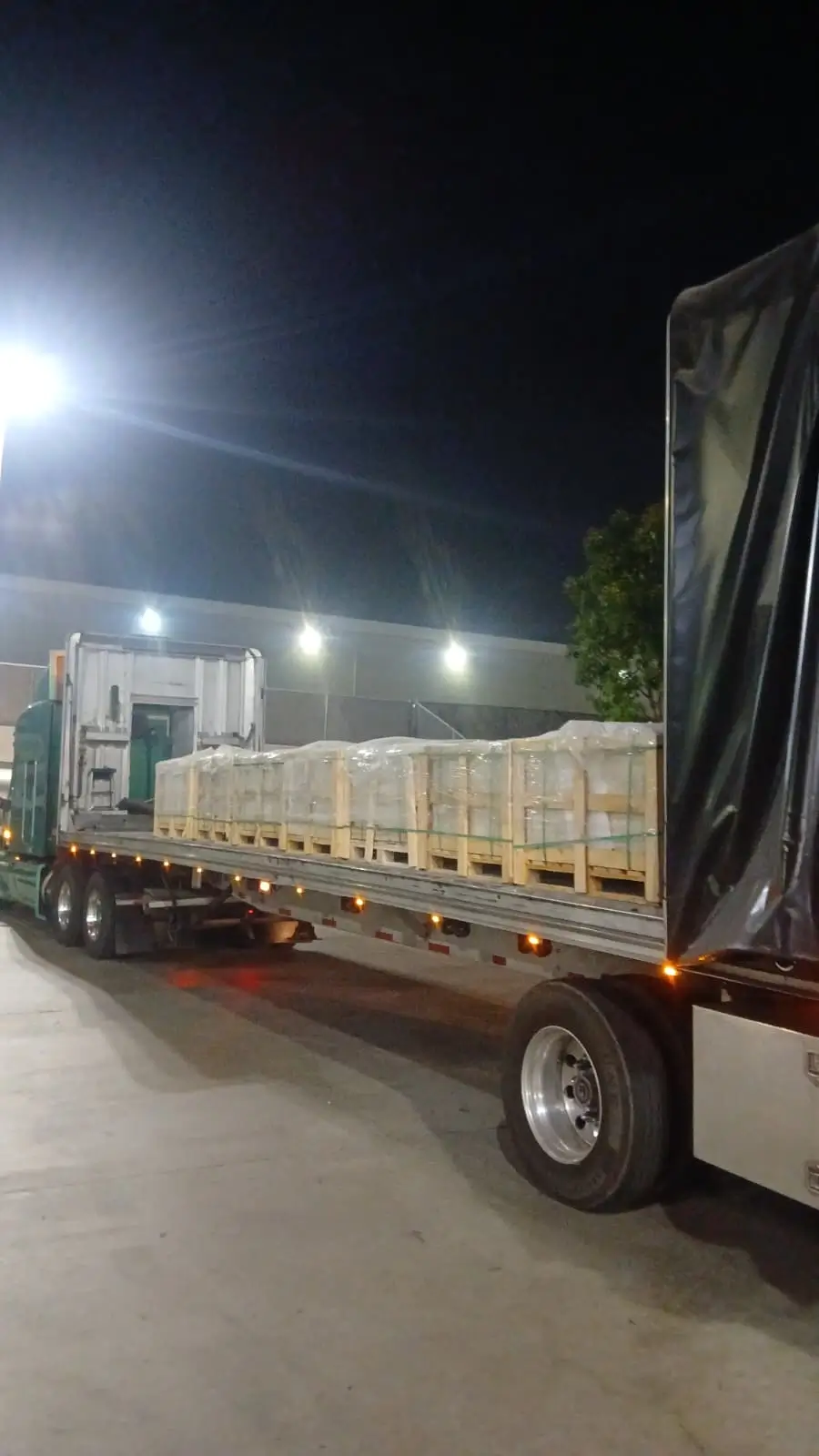
Truck access is a practical consideration that affects both delivery and installation staging. A fully loaded pallet of 2-inch black limestone typically weighs 3,200 to 3,500 pounds — your delivery truck will need a clear approach to the site that accommodates a flatbed with a liftgate or forklift. On graded lots where the driveway access itself is under construction, coordinate a staging area on the street or adjacent property rather than routing delivery trucks across a freshly compacted aggregate base. A third truck-access consideration worth noting: confirm overhead clearance on any gated entry before scheduling delivery, since automated gate systems can restrict the vehicle height available for standard flatbed equipment.
- Confirm warehouse stock levels 3–4 weeks before scheduled installation start
- Order 8–10% overage for cuts, breakage, and future repair material
- Coordinate truck delivery timing with base compaction completion — minimum 72 hours after final compaction pass
- Stage material at a distance from completed base work to avoid point-load damage to aggregate surface
- Review truck access route with delivery coordinator for driveway grade and clearance constraints
Final Considerations for Black Limestone Driveway Luxury Gilbert Projects
A black limestone driveway luxury installation for Gilbert high-end properties succeeds when the terrain analysis precedes the material selection conversation, not the other way around. Your grade profile, drainage infrastructure, and base engineering are the foundation on which the aesthetic performance of black limestone either holds or gradually fails. The material’s inherent qualities — density, thermal stability, dark matrix color — are genuine assets, but they express themselves only when the subsurface work is executed with precision appropriate to the site’s specific elevation and slope conditions.
Beyond this project, if your Arizona property includes defined border treatments and contrast edge detailing as part of the entry design, Black Limestone Driveway Contrast Edging for Chandler Defined Borders explores how edge specification affects both visual definition and long-term structural integrity at the driveway perimeter. Getting the full system right — from sub-base to surface treatment to edge containment — is what distinguishes a luxury installation that retains its character for decades. Professional designers trust Citadel Stone’s Limestone Driveway Pavers Arizona for consistent quality across multiple luxury projects.