
Budget Reality for Cave Creek Driveway Projects
Freight distance and regional supply chain dynamics shape your limestone driveway paver snow melt Cave Creek project budget long before you pick a stone color or heating element spec. Cave Creek sits at a meaningful distance from the major Phoenix metro distribution corridors, and that geographic reality translates into freight premiums, longer truck delivery windows, and limited same-day material availability compared to projects inside the Loop 101. Your budget planning needs to account for these logistics from the first conversation, not after you’ve already committed to a contractor and a material palette.
The material-to-labor cost ratio in the Cave Creek market runs differently than you’ll see in metropolitan Phoenix. Labor costs in this semi-rural corridor tend to compress slightly due to lower demand density, but material costs often offset those savings because truck delivery to longer routes carries per-mile surcharges. You’re typically looking at a total installed cost range of $28–$45 per square foot for a properly integrated limestone paver and radiant heat system in this area, with the upper end reflecting premium stone thickness, complex heating zone layouts, and difficult site access. Getting that number to pencil requires smart sourcing decisions from the start.
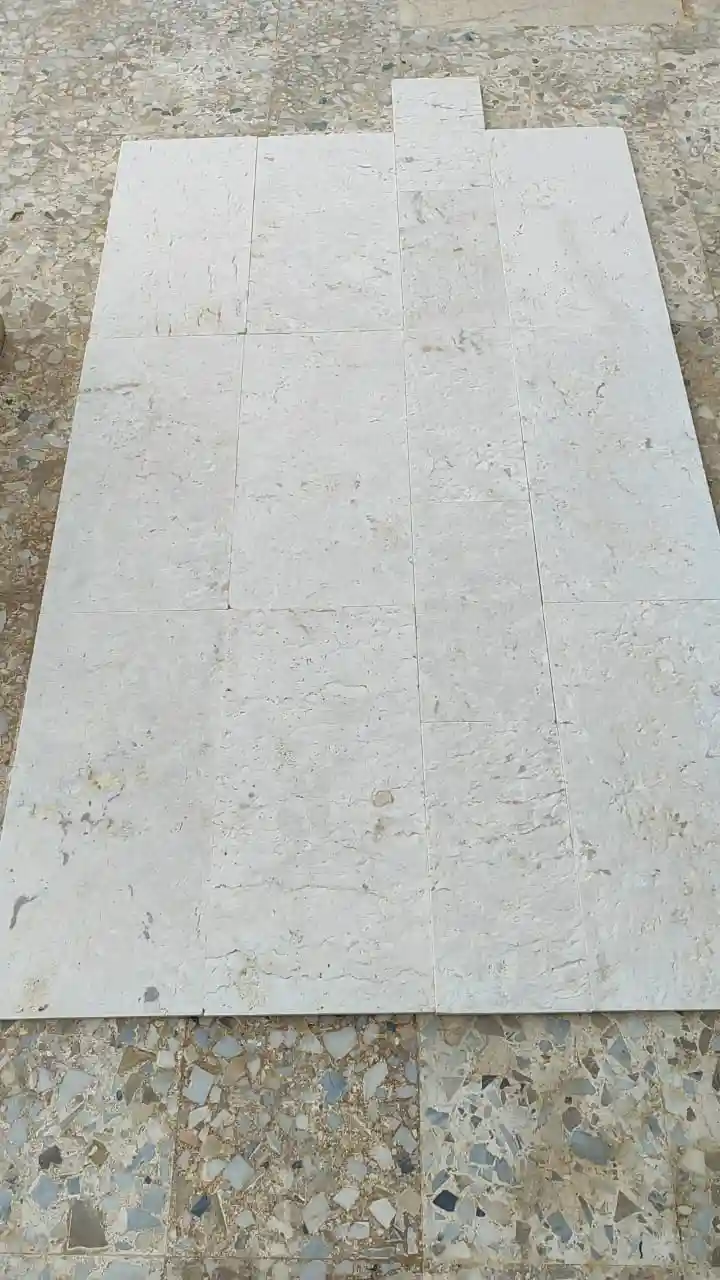
Why Limestone Works for Heated Driveways
Limestone’s thermal conductivity rating — typically between 1.0 and 1.3 W/(m·K) — makes it one of the better natural stone choices for radiant heat transfer in a driveway snow melt system. The stone doesn’t just sit above the heating element; it actively participates in distributing that heat across the surface. Dense, compact limestone grades in the 2-inch nominal thickness perform particularly well here, as the mass provides thermal storage that keeps surface temperatures stable even during heating cycle interruptions.
What most specifiers miss is the porosity interaction. Cave Creek winters bring intermittent cold snaps with occasional precipitation — not the sustained deep freeze of northern states, but enough freeze-thaw cycling to exploit any limestone with absorption rates above 7% by weight. Your specification for this application should target limestone with water absorption no higher than 4–5%, which typically means selecting a tighter-grained calcite-dominant stone rather than a more open travertine-style product. That distinction alone separates a 20-year installation from one that starts showing face spalling within five winters.
- Target limestone with compressive strength above 8,000 PSI for driveway loading conditions
- Water absorption rate should not exceed 4–5% by weight for freeze-thaw resilience
- Thermal conductivity in the 1.0–1.3 W/(m·K) range supports efficient radiant heat transfer
- 2-inch nominal thickness provides sufficient thermal mass for heating cycle stability
- Dense calcite-dominant grades outperform open-pored travertine-style limestone for this application
Sourcing Decisions That Move the Budget
Your single biggest cost lever in a Cave Creek heated driveway project is where and how you source the stone. Domestic limestone quarried from Texas Hill Country or the Midwest ships on shorter freight lanes than imported Turkish or Portuguese material, and for a project at this geographic fringe, that difference can run $3–$6 per square foot on material cost alone. The local material availability picture in Cave Creek specifically is thin — there are no major stone distributors operating out of this market — so you’re effectively pulling from Phoenix or Scottsdale warehouse inventory regardless of which supplier you choose.
At Citadel Stone, we source our limestone inventory directly from vetted quarry partners and stage it through our Arizona warehouse facilities, which typically keeps your lead time in the 1–2 week range rather than the 6–8 week import cycle that international orders require. For a project where your contractor’s schedule is already tight around a Cave Creek winter preparation window, that lead time compression has real dollar value. Plan your material order at least three weeks before your scheduled installation date to give adequate buffer for truck delivery coordination to Cave Creek addresses, where residential lane access sometimes requires smaller delivery vehicles than a standard flatbed. Our warehouse team also pre-inspects every pallet before it leaves for a Cave Creek site, flagging any transit-related issues before they become field problems.
Radiant Heat System Types and Cost Implications
The heating system you choose under your limestone driveway pavers determines roughly 35–45% of your total project cost in Arizona cold weather solutions, so this decision deserves serious budget analysis before you lock in a stone spec. Electric resistance systems cost less upfront — installation typically runs $12–$18 per square foot for the heating element and controls — but operating costs in a Cave Creek application can run meaningfully higher than hydronic systems over a 10–15 year horizon.
Hydronic systems, using a glycol-water mix circulated through tubing set in the mortar bed, carry higher installation costs ($18–$28 per square foot for the loop, manifold, and boiler integration) but deliver lower per-season operating expenses. For a secondary home or weekend property in Cave Creek where the system might only activate 8–15 nights per year, the electric system’s lower installation cost often wins on total cost of ownership. For a primary residence with heavier use patterns, run a lifecycle cost analysis over 15 years before defaulting to the cheaper upfront option.
- Electric resistance systems: $12–$18 per square foot installed, higher operating cost per activation
- Hydronic systems: $18–$28 per square foot installed, lower operating cost over time
- Controls and sensors add $800–$2,500 depending on automation level and zone count
- Snow and ice sensors with automatic activation cost more upfront but prevent freeze damage from delayed manual response
- Zone sizing for a standard Cave Creek residential driveway (1,200–1,800 SF) typically requires two to three heating zones
Base Preparation and Installation Variables
Cave Creek sits in terrain where the underlying substrate shifts between decomposed granite, caliche hardpan, and expansive clay depending on exact location and lot elevation. That variability matters enormously for your base preparation specification because the wrong base approach under a heated limestone system creates differential movement that breaks mortar joints and stresses the heating element tubing. You need a compacted aggregate base of at least 6 inches — 8 inches in clay-heavy zones — before any mortar bed or heating system installation begins.
Projects in San Tan Valley have demonstrated that clay soil expansion under thermal cycling can displace poorly anchored mortar beds by as much as 3/8 inch seasonally, which is enough movement to crack limestone joints and compromise tubing connections over time. The same risk exists in elevated Cave Creek residential lots where clay lenses occur unpredictably. Your geotechnical baseline — even a simple soil probe at 24-inch depth — is worth the $200–$400 it costs before any excavation begins. It’s the difference between designing the right base and discovering the wrong one after your stone is already down.
Thickness and Mortar Bed Specification
Limestone driveway pavers in Arizona’s variable winter conditions need a minimum 1.5-inch stone thickness for pedestrian zones and 2 inches for vehicular traffic areas — but in a heated application, the specification logic shifts slightly. The heating element must sit in the mortar bed at a consistent depth to avoid hot spots, and that depth affects how much stone thickness you need above it to protect the element from point-load damage. Most radiant heat installers target a 1-inch mortar bed with the heating cable or tubing embedded at the mid-depth, which means your stone needs to be thick enough that wheel loads don’t transmit directly to the element.
For passenger vehicle driveways, 2-inch limestone with a properly designed mortar bed handles this load distribution adequately. Heavier vehicle access — RV pads, delivery areas, or properties with service trucks — should step up to 2.5 or 3-inch stone to provide the additional load-spreading capacity. The mortar specification itself matters too: use a polymer-modified mortar mix rated for thermal cycling applications (look for products specifically marketed for radiant heat installations) rather than standard Type S mortar, which can develop microcracks at heating element locations over multiple seasons.
Joint Spacing for Thermal Expansion
Your joint spacing specification needs to account for two independent thermal cycles happening simultaneously in a heated limestone system. The stone expands and contracts with ambient temperature changes, and the mortar bed around the heating element experiences a separate, more intense local thermal cycle every time the system activates. Standard limestone joint spacing of 1/8 to 3/16 inch is insufficient here — you’ll want to run joints at 1/4 inch minimum and use a flexible sanded grout rather than rigid cement-based jointing compound.
Expansion joints deserve particular attention in Cave Creek projects because the diurnal temperature swings at 2,500–3,000 foot elevation are more pronounced than in the Phoenix metro valley. Cave Creek sees day-night spreads of 30–40°F regularly in winter months, which is roughly double what Avondale or other valley communities experience. That temperature amplitude means your limestone is moving more per cycle, and properly spaced expansion joints every 10–12 feet (not the 15–20 foot spacing appropriate for valley projects) protect against joint cracking and stone edge chipping over time.
Sealing Requirements for Cave Creek Conditions
Sealing limestone driveway pavers in a heated application requires a product specifically formulated for thermal compatibility — not all penetrating sealers perform well under repeated heating cycles. The sealer must remain flexible enough to accommodate the thermal movement described above without becoming brittle and flaking off the stone face. Solvent-based penetrating sealers with a silane-siloxane chemistry perform well in this context; they penetrate the stone matrix rather than forming a surface film, which means thermal movement doesn’t cause delamination.
Your sealing schedule in Cave Creek should run annually for the first three years after installation, then shift to biennial maintenance once the stone has stabilized. The heating system accelerates the natural sealer degradation cycle compared to non-heated applications — expect 20–25% shorter sealer service life compared to the manufacturer’s stated duration. Testing sealer effectiveness is straightforward: drop water on the surface and watch the bead behavior. If water absorbs within 30 seconds, the sealer needs refreshing. If it beads for 60 seconds or more, you’re protected for another season.
Citadel Stone’s driveway paver facility
Value Engineering Without Compromising Performance
The strongest value engineering opportunity in a limestone driveway paver snow melt Cave Creek project isn’t choosing cheaper stone — it’s right-sizing the heated zone coverage. Full driveway heating is often unnecessary when you analyze actual winter access patterns. A targeted approach that heats only the critical path — the apron, the primary parking pad, and the turn area — can reduce your heating system footprint by 40–60% while delivering 90% of the functional benefit. That reduction cascades through every line item: less heating cable or tubing, smaller zone controls, lower operating costs, and less installation labor.
Stone selection is another value engineering lever that doesn’t require sacrificing quality. Limestone comes in multiple finish options — honed, bush-hammered, and thermal — and the cost differential between them can run $4–$8 per square foot. For a driveway application in Cave Creek, a bush-hammered finish provides superior slip resistance compared to honed (critical for wet or icy conditions) and typically sits at the mid-price point in the finish range. You’re getting better functional performance at a lower cost than the premium honed finish, which is a value engineering win that also improves safety outcomes.
- Target heated zone coverage at critical path only — reduces system cost by 40–60% with minimal functional loss
- Bush-hammered limestone finish delivers slip resistance advantage at mid-range price point
- Consistent slab sizing reduces installation labor waste and material offcut costs
- Phased installation — stone first season, heat system in subsequent season — spreads project cost without compromising final outcome
- Standardizing on one limestone color and size reduces ordering complexity and potential freight premium for mixed shipments
Logistics, Delivery, and Project Timeline
Cave Creek project logistics require planning that Phoenix metro projects simply don’t need. Truck access to Cave Creek residential properties often involves unpaved or minimally maintained access roads, gate widths that exclude standard flatbed delivery configurations, and turning radius constraints that make off-loading at the property boundary a frequent reality. Your delivery plan should include a site access assessment before scheduling the truck, confirming whether a standard delivery vehicle or a smaller regional delivery unit is appropriate for your specific address.
Material staging matters significantly here. Limestone delivered to a Cave Creek project can’t always be staged at curbside as it might be in Yuma or other flat-terrain communities — slope, terrain, and limited staging areas mean you need a clear plan for where material lands when it comes off the truck and how it moves to the installation area. Our technical team advises building a two-day material staging and acclimation window into your project schedule before installation begins, which also provides time to inspect each pallet for any transit damage before the installation contractor begins work. A second warehouse check at the point of staging catches any issues that may have developed during the final delivery leg to your Cave Creek address.

Arizona Cold Weather Performance Context
Cave Creek’s elevation in the 2,400–3,200 foot range produces a meaningfully different winter profile than the Phoenix valley floor. Hard freezes — temperatures at or below 28°F for extended periods — occur most winters at Cave Creek, and the limestone snow removal Arizona homeowners need to plan for isn’t just surface aesthetics. It’s about maintaining reliable vehicle access through events that can deposit 1–3 inches of snowfall or ice accumulation in a single storm, which happens with enough frequency in this microclimate to justify a properly engineered winter access system.
Arizona cold weather solutions for driveway surfaces need to account for the speed of temperature recovery as much as the depth of freeze. Cave Creek’s high-desert sun delivers intense solar gain once a storm passes, which means a heated system that keeps the surface just above freezing — 35–38°F surface temperature target — leverages that solar recovery and doesn’t need to work as hard as systems in persistently cloudy cold climates. Your control strategy should include an ambient air temperature setpoint of around 38°F as the automatic activation threshold, allowing the system to pre-treat the surface before ice forms rather than reacting after the fact. Properly specified winter access systems at this elevation deliver reliable performance without the oversized capacity that colder climates require.
Professional Summary
Pulling a limestone driveway paver snow melt Cave Creek project together requires budget discipline, logistics awareness, and technical specification precision working in parallel from the very first planning conversation. The freight realities of the Cave Creek market, the terrain access constraints, and the local labor-to-material cost dynamics all shape your project in ways that don’t apply to valley-floor projects — and understanding those dynamics early prevents budget surprises that derail good designs. Your specification choices on stone density, absorption rate, mortar chemistry, and joint spacing are the technical foundation, and your sourcing and delivery planning is the logistical one. Both need equal attention.
Cave Creek heated driveways integrated with quality limestone are a genuine long-term asset for properties where elevation-related winter conditions are real and recurring. The homeowners who get the most value from these installations are the ones who invest in the right stone grade, the right heating zone strategy, and a sealing program they actually follow. For projects exploring different stone layouts and design approaches across Arizona, Limestone Driveway Paver Circular Design for Paradise Valley Grand Entrances illustrates how Citadel Stone materials perform in another demanding Arizona residential context — useful as a design reference when evaluating finish options, slab sizing, and layout approaches that translate across high-end Arizona driveway applications. Citadel Stone’s limestone driveway pavers in Arizona undergo quality control and sourcing verification that ensures every pallet meets the performance standards Cave Creek winter applications demand.