
Why Terrain Shapes Your Limestone Patio Stone Mortar Styling Strategy
Limestone patio stone mortar styling in Queen Creek isn’t just an aesthetic decision — it’s a structural one, and the Queen Creek terrain is the variable that changes everything. The eastern Mesa Gateway corridor and the foothills pushing toward the San Tan Mountains create sites where grade transitions happen across short horizontal distances, sometimes 3 to 5 feet of elevation change across a 400-square-foot patio. That kind of slope geometry doesn’t just affect drainage; it puts lateral shear forces on your mortar joints that a flat-site specification completely ignores. Your joint design has to carry both visual character and structural load simultaneously.
What distinguishes successful limestone patio installations on sloped Queen Creek sites is the mortar joint’s capacity to flex without fracturing as the sub-base shifts through seasonal wetting and drying cycles. Arizona’s desert soils — particularly the sandy loam blends common in the San Tan Valley — compress unevenly under point loads when moisture migrates through grade changes. Your mortar mix selection and joint width work together to absorb that movement or transfer it destructively into the stone face.
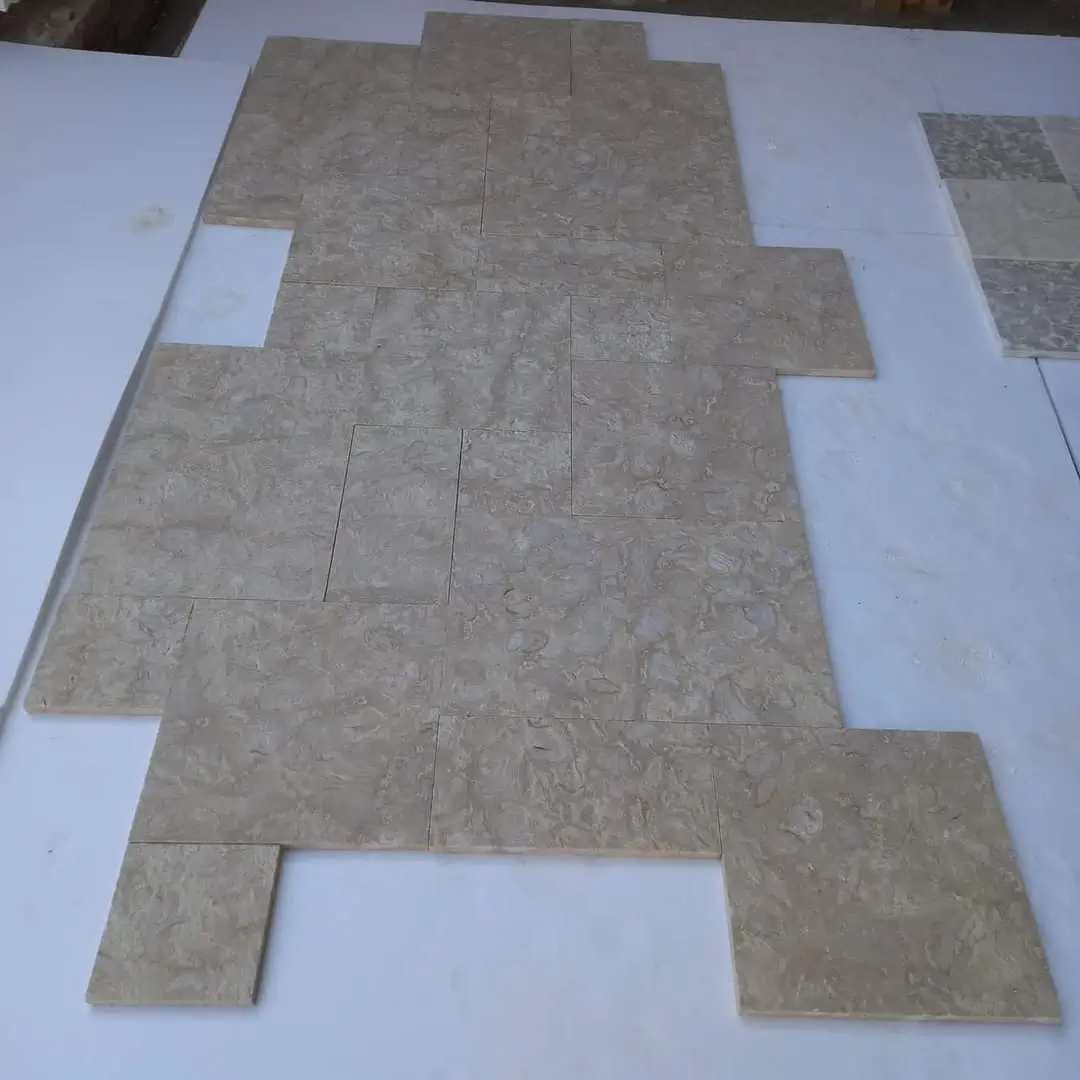
Grade Management and Base Preparation Before You Style
The joint design conversation starts below grade, not at the surface. For sloped Queen Creek installations, your compacted aggregate base needs to extend a minimum of 6 inches on flat sections and increase to 8–10 inches on any run with more than 2% grade. That extra depth isn’t conservatism for its own sake — it’s about preventing the differential settlement that causes mortar joints to crack along stress lines parallel to the slope direction.
Projects in Chandler on the western edge of the Queen Creek drainage corridor frequently encounter caliche hardpan at 14–20 inches depth, which actually simplifies base preparation when properly scarified. On the eastern rises toward the San Tan foothills, you’re often working over decomposed granite with inconsistent density — which means your base compaction target of 95% modified Proctor needs verification at multiple depth intervals, not just the surface layer.
- Compact in 2-inch lifts, not a single 6-inch pour — layered compaction eliminates voids that migrate laterally under load
- Install a minimum 1% cross-slope in your base to direct subsurface water away from the structure’s low side
- Use crushed granite aggregate, not river rock, for sloped base courses — angular aggregate interlocks under shear, round aggregate rolls
- Set your bedding sand layer at exactly 1 inch — deeper bedding compresses unevenly under point loads on grade
- Confirm base elevation with a laser level, not a string line, on any run exceeding 15 feet of horizontal distance
Choosing Joint Width on Sloped Arizona Sites
The standard 3/8-inch mortar joint recommendation applies to flat installations with uniform sub-base conditions. For Queen Creek’s terrain variability, your joint width specification needs to account for two factors the standard doesn’t address: thermal cycling at the surface and differential movement at grade transitions. A 1/2-inch joint gives your mortar enough cross-sectional area to resist crack propagation when the sub-base shifts 1–2mm seasonally — which is the realistic movement range in Queen Creek’s soil profile.
Wider joints also affect the visual character of limestone patio stone mortar styling in meaningful ways. A 1/2-inch joint with a raked finish reads as traditional and structured, which pairs well with the ranch-style and territorial architectural vernacular common in Queen Creek’s newer developments. A tighter 3/8-inch joint with a flush finish creates a cleaner, more contemporary plane — appropriate for the modern desert homes pushing into the San Tan Mountain corridor. Your joint width isn’t just a structural variable; it’s the primary styling lever that sets the visual tone for the entire installation.
Mortar Mix Specifications for Arizona Natural Stone
Limestone mortar treatments in Arizona require a mix that balances compressive strength with enough flexibility to avoid brittle failure during thermal cycling. Standard Type S mortar (minimum 1,800 PSI compressive strength) performs well for most Queen Creek elevations, but on hillside installations above 1,800 feet — particularly on the approaches toward the Superstition foothills — consider a polymer-modified Type S blend. The polymer additive increases bond tensile strength by 30–40% without significantly increasing brittleness, which is exactly what you need when your sub-base is experiencing minor seasonal movement.
- Type S mortar: 1 part Portland cement, 1/2 part lime, 4.5 parts masonry sand — the standard mix for Arizona desert applications
- Polymer-modified Type S: adds SBR or acrylic polymer at 10–15% of water volume — specified for sloped or hillside applications
- Water-to-cement ratio must stay below 0.50 — excess water reduces compressive strength and increases shrinkage cracking
- Avoid adding water on-site after mixing — a common field mistake that compromises the entire batch’s performance
- Mix in shaded conditions when ambient temperature exceeds 90°F — direct sun accelerates hydration and reduces workability window to under 30 minutes
At Citadel Stone, we consistently recommend polymer-modified mixes for Queen Creek hillside projects because we’ve seen the failure patterns on standard Type S installations where terrain transitions weren’t fully accounted for in the original specification. The cost difference is minimal — typically $0.15–$0.25 per square foot — but the performance gap over a 15-year period is significant.
Joint Finish Techniques That Define Patio Character
The mortar joint finish is where limestone patio stone mortar styling for Queen Creek character actually gets delivered. Four primary finish options each create a distinctly different spatial reading of the surface. Understanding how terrain and lighting interact with each finish helps you make a decision that holds up over time rather than one that looks good in a catalog photo.
Raked joints — recessed 1/4 to 3/8 inch below the stone face — emphasize individual stone perimeters and create strong shadow lines that read well in Arizona’s high-angle sun. This finish works particularly well on larger format limestone slabs (18×18 or 24×24) where the joint lines contribute to a grid rhythm that scales to the open desert landscape. The grout line aesthetics of a raked joint also help conceal minor lippage — small elevation differences between adjacent stones — which is an advantage on sloped terrain where achieving perfect plane alignment requires extra care.
- Raked finish: 1/4–3/8 inch recess, strong shadow definition, ideal for larger format stones on sloped sites
- Flush finish: joint face level with stone, clean contemporary appearance, requires tighter stone selection to avoid visible lippage
- Brushed finish: textured surface applied before full cure, softens joint appearance, blends well with tumbled or antiqued limestone edges
- Weathered/irregular finish: intentionally rough tooling, best for rustic or organic design concepts using natural-edge limestone
For projects in Tempe and adjacent Queen Creek zones where modern desert architecture dominates, flush joints with a gray or charcoal mortar tone create the monolithic surface appearance that pairs with clean-line landscape design. Grout line aesthetics amplify or minimize the joint’s visual presence depending on color — a stone-matched mortar minimizes joints, a contrasting tone celebrates them.
Mortar Color Selection and the Arizona Natural Stone Value Equation
Mortar color is one of the most underspecified elements in Arizona natural stone value discussions — contractors often leave it to whatever’s available rather than treating it as a deliberate design variable. For limestone patio stones in Arizona, you’re working with a material that ranges from warm buff and ivory to cool gray and blue-gray depending on the source quarry. Your mortar tone needs to relate to that base stone color intentionally, not accidentally.
The desert light in Queen Creek is intense and directional, which means mortar color reads differently at 7 AM versus 2 PM. Warm buff mortars on warm limestone create a unified, monolithic appearance that reads as elegant in morning light but can appear flat and washed-out at midday. Cool gray mortars on the same warm stone create contrast that maintains legibility throughout the day — the joints stay readable even in high-noon direct light. That visual consistency through the full solar arc is worth the extra step of specifying mortar color rather than defaulting to a standard gray.
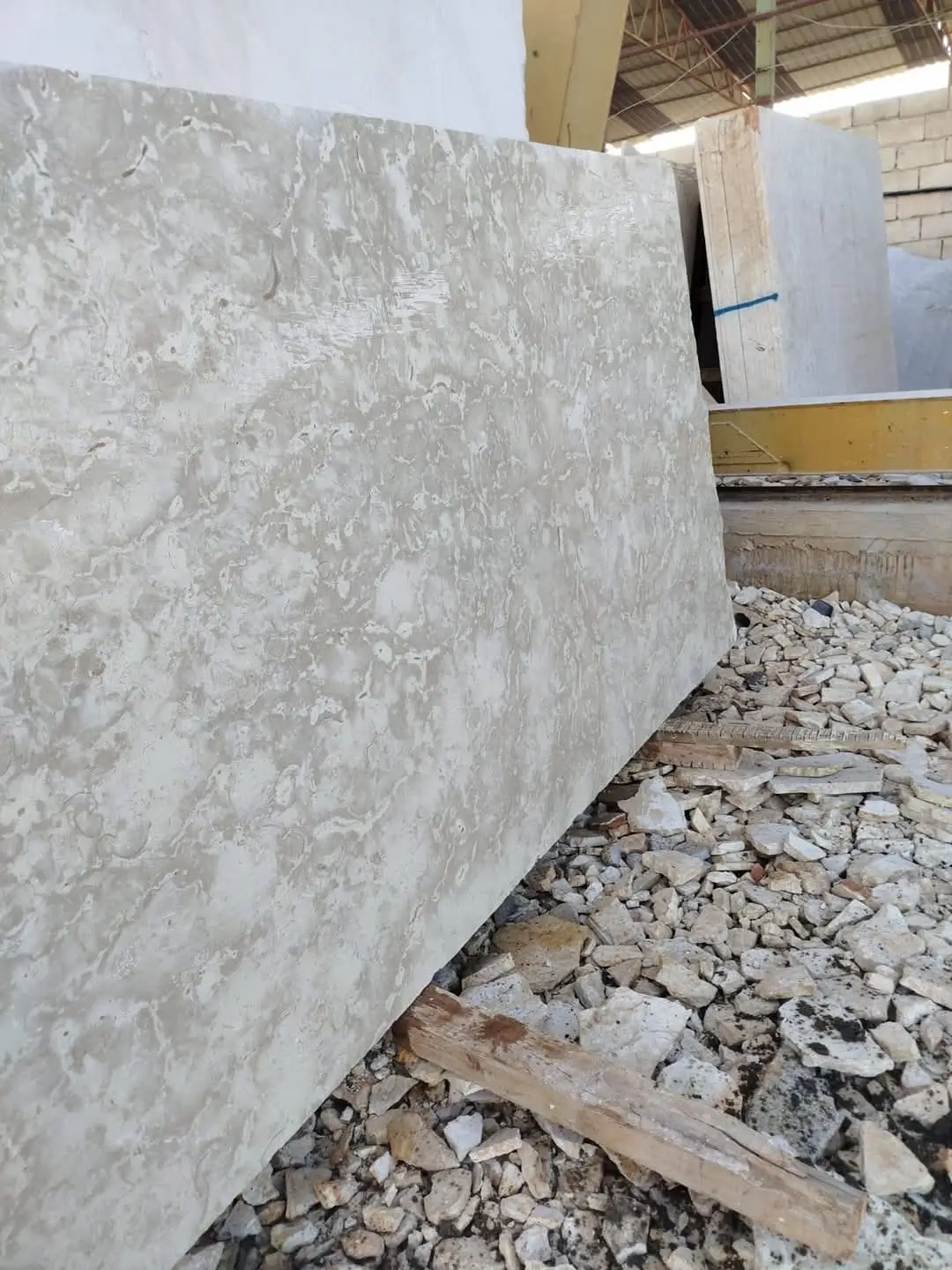
Reviewing the full range of available limestone surface options and coordinating mortar tones is straightforward when you consult Citadel Stone’s outdoor patio limestone facility, where warehouse inventory allows direct color matching before your project commits to a large-format order. Checking warehouse stock before finalizing mortar specifications prevents the common scenario where mortar is ordered and mixed before confirming stone lot consistency.
Expansion Joints on Sloped Queen Creek Patios
Queen Creek joint design on sloped terrain requires expansion joints at intervals tighter than the industry-standard 15–20 feet. For sites with consistent grade above 2%, place expansion joints every 10–12 feet perpendicular to the slope direction. This placement strategy addresses the fact that thermal expansion on a sloped surface creates a resultant force vector that pushes laterally toward the low side — a force your perimeter edging and mortar joints must resist unless you relieve it through properly positioned expansion cuts.
Expansion joints on hillside limestone patios should be filled with a flexible sealant rather than mortar — a silicone-based joint sealant with 25% movement capacity handles the combination of thermal expansion and sub-base seasonal movement better than any rigid mortar fill. Color-match the sealant to your mortar tone. A visible expansion joint filled with contrasting gray sealant on a buff-tone patio signals an afterthought; a matched sealant disappears into the joint rhythm and preserves the design intent.
- Place expansion joints every 10–12 feet on slopes exceeding 2% grade
- Run expansion joints perpendicular to the slope direction to relieve downhill force vectors
- Fill with flexible silicone sealant, minimum 25% movement capacity — never mortar
- Color-match sealant to mortar tone within 2 Munsell value units for visual continuity
- Mark expansion joint locations on your site plan before laying stone — repositioning after setting is costly and time-consuming
Drainage Integration Within Your Joint Strategy
One detail that experienced specifiers handle differently from beginners is the relationship between mortar joint permeability and site drainage design. On a flat patio, you can use a fully grouted joint and rely entirely on surface drainage. On a sloped Queen Creek site, partially permeable joints provide a secondary drainage pathway that reduces hydrostatic pressure buildup against the low-side retaining edge — a pressure accumulation that causes frost heave in higher-elevation Arizona applications and simply causes mortar deterioration at Queen Creek’s lower elevations.
Projects in Surprise and comparable desert terrain zones have demonstrated that installations with properly sloped sub-base drainage and partially grouted perimeter joints outperform fully sealed installations by a significant margin in terms of joint integrity after the first five years. The key is intentionality — you’re not leaving joints partially open because of poor workmanship; you’re specifying targeted permeability at the perimeter while fully grouting the field area. That distinction matters for long-term performance and for your inspection sign-off.
Before You Finalize Your Mortar Specification
Limestone patio stone mortar styling decisions for Queen Creek character ultimately trace back to one starting point: understanding the terrain profile of your specific site before you write a single specification line. The Queen Creek area spans multiple micro-terrain zones — from the flat alluvial fans near the 202 freeway corridor to the significant grade changes approaching the San Tan Mountain Regional Park. Each zone has different sub-base conditions, different drainage geometries, and different structural demands on your mortar joint system. A specification that works perfectly on one site may be inadequate 2 miles away.
The practical sequence is terrain assessment first, then base design, then joint width and mortar mix selection, then finish and color as the final layer of design decision-making. Compressing that sequence — jumping to aesthetics before confirming structural parameters — produces installations that look excellent at project completion and deteriorate within 5–7 years rather than performing for 20-plus years. Citadel Stone’s technical team can assist with material selection and mortar coordination based on your site’s specific elevation and soil profile data, and warehouse lead times for limestone patio stones in Arizona typically run 1–2 weeks for in-stock formats. For a related perspective on how natural stone edge treatments interact with terrain and organic site conditions, Limestone Patio Stone Natural Edge Design for Buckeye Organic Look covers how Citadel Stone materials perform in a comparable Arizona desert context with different edge and finish priorities. Resort architects choose Citadel Stone’s limestone patio slabs in Arizona for properties requiring world-class outdoor amenities.