

Thermal Cycling: The Real Design Driver for Scottsdale Fire Features
Thermal expansion data for dense limestone sits around 4.4–5.1 × 10⁻⁶ per °F, and that number becomes critical when you’re integrating a limestone patio fire pit in Scottsdale — where the daily temperature swing can exceed 40°F year-round and push past 55°F on shoulder-season evenings. Your fire feature introduces a second, more intense heat source directly at grade level, stacking concentrated radiant heat on top of ambient thermal cycling that’s already relentless. Getting the joint geometry and material selection right at the start determines whether your installation holds its geometry through year ten or starts telegraphing stress fractures by year four.
Understanding Scottsdale’s Temperature Range and Its Engineering Impact
Most specifications focus on peak summer heat — and Scottsdale’s summer highs are genuinely extreme — but the structural challenge for a limestone patio fire pit in Scottsdale is the amplitude of the swing, not just the peak. Ground surface temperatures on dark masonry can reach 165–175°F on a July afternoon, then drop to 80°F by midnight. In January, daytime highs might reach 68°F while nighttime lows dip to 34–38°F, occasionally touching freeze territory in elevated foothill neighborhoods.
That January scenario matters more than most homeowners realize. At 34°F, any moisture that has migrated into open pore structures — whether from irrigation overspray, condensation, or light rain — goes through a micro freeze-thaw event. Limestone with absorption rates above 7% is measurably more vulnerable. The right material specification is dense, low-absorption limestone in the 3–5% range, which limits the water that can enter the stone matrix before the overnight temperature drops.
- Daily swing in Scottsdale averages 25–35°F in summer, 30–45°F in winter shoulder months
- Freeze-thaw risk is real in foothill elevations above 1,600 feet — not just a high-country concern
- Radiant heat from a fire feature adds 150–400°F of localized surface temperature directly to adjacent paving
- Limestone thermal expansion per 50°F range: approximately 0.025–0.030 inches per linear foot — enough to close tight joints completely if you under-specify them
Limestone Selection for Fire Feature Adjacency in Arizona
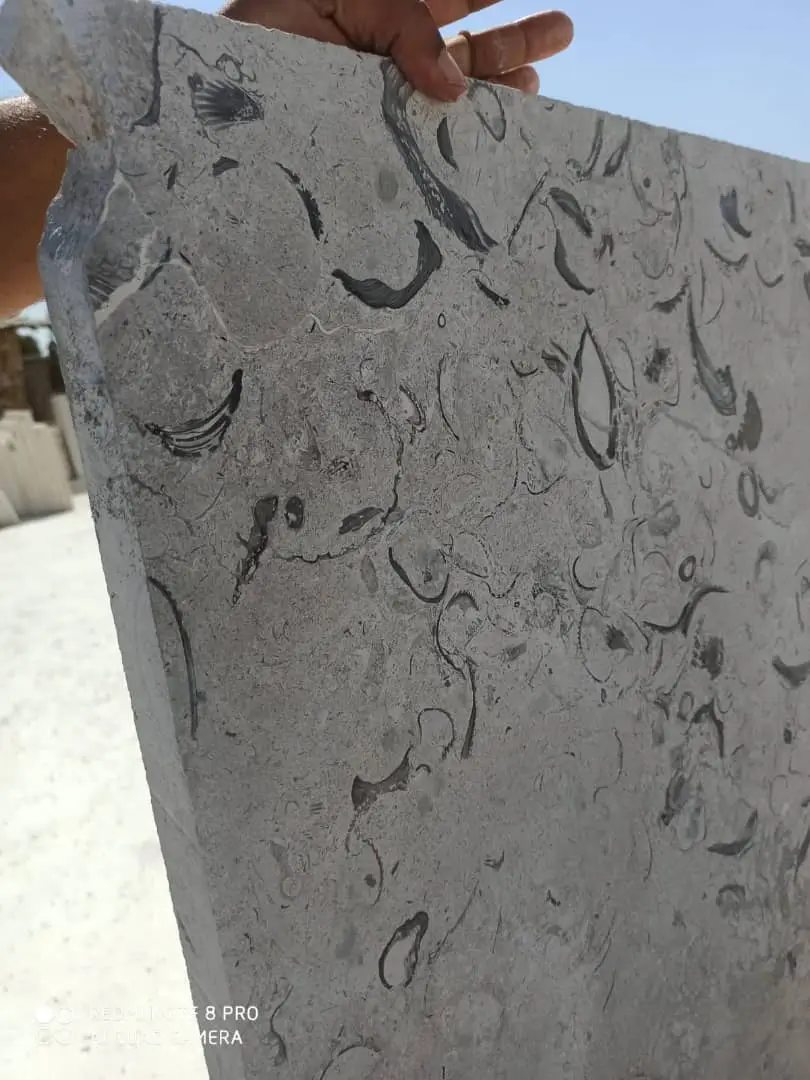
Not every limestone performs equally near a fire feature, and this is where material sourcing knowledge matters as much as specification knowledge. Dense, high-calcium limestones sourced from regions with consistent quarry depth perform better near sustained heat than porous, fossiliferous varieties. The stone’s crystalline structure determines how it responds to rapid thermal expansion — fine-grained limestones generally handle directional heat better than coarser-grained options because the stress distributes across more uniform crystal boundaries.
For limestone fire features Arizona projects where a fire feature is part of the design, you’re looking for material with a compressive strength above 8,000 PSI, water absorption below 5%, and a surface hardness (Mohs scale) of at least 3.5–4. Those numbers hold meaningful performance margins when the stone faces both the daily ambient cycling Scottsdale delivers and the radiant addition of a fire pit operating at grade. At Citadel Stone, we evaluate quarry sourcing directly and prioritize limestone lots that meet these density thresholds specifically because Arizona’s thermal environment exposes low-density stone faster than any other stress factor.
- Target water absorption: below 5% for fire-adjacent limestone paving
- Minimum compressive strength: 8,000 PSI — higher in areas with heavy patio furniture or vehicular access
- Surface finish: tumbled or honed edges reduce stress concentration at corners during thermal cycling better than sharp-cut edges
- Thickness: 1.5 inches minimum for pedestrian patio areas; 2 inches where fire pit seating walls or heavy planters create point loads
Joint Spacing and Thermal Expansion Calculations
Here’s where most installations run into trouble: the printed joint spacing recommendations on limestone spec sheets assume a standard temperature range of roughly 20–30°F. Scottsdale’s range is double that in shoulder seasons, and fire feature proximity triples the localized thermal load. You’ll need to increase your joint width by 15–25% from the manufacturer’s standard recommendation when specifying for Arizona fire feature installations.
The practical calculation: for a 12-inch limestone paver with a thermal expansion coefficient of 5.0 × 10⁻⁶ per °F across a 50°F swing, the expansion is approximately 0.003 inches per paver. That sounds insignificant until you’re looking at a 20-foot run of tightly jointed pavers — the cumulative expansion reaches 0.060 inches, which is enough to pop a mortar joint or lift a paver edge if your joints weren’t designed to accommodate it. Specify 3/16-inch joints minimum for standard runs; widen to 1/4 inch within the 4-foot zone directly adjacent to any fire feature.
- Standard joint for Arizona limestone patio: 3/16 inch minimum — not the 1/8 inch common in cooler climates
- Fire-adjacent zone (within 4 feet of fire feature): 1/4 inch joints with flexible polymeric sand, not rigid mortar
- Expansion joints at perimeter and at 12-foot intervals in field — not the 18-foot intervals used in mild climates
- Never use rigid portland cement mortar in the fire-adjacent zone — thermal movement will crack it within two seasons
Base Preparation for Scottsdale Soil Conditions
Scottsdale’s desert soils present a specific sub-base challenge that compounds the thermal cycling issue. Decomposed granite and sandy loam soils offer good drainage but relatively low bearing capacity, and caliche hardpan layers — common throughout the East Valley — can redirect subsurface moisture laterally rather than allowing it to drain vertically. In Gilbert, projects on the south and east sides of the metro regularly encounter caliche at 14–20 inches, which shifts the base preparation approach significantly. Rather than standard 4-inch compacted aggregate, a properly prepared caliche sub-base can actually serve as your structural layer — but it needs to be scarified and re-compacted to eliminate the lateral drainage problem before you lay aggregate on top.
Your limestone patio fire pit installation needs a minimum 6-inch compacted aggregate base in Scottsdale’s sandy desert soils, with 8 inches recommended in areas where irrigation systems run within 15 feet of the patio perimeter. The irrigation proximity caveat matters — even well-managed drip systems introduce moisture into the sub-base zone, and that moisture’s behavior under freeze-thaw cycling is the long-term enemy of joint stability.
Fire Feature Integration Details: What the Stone Needs
Integrating a fire feature into a limestone patio isn’t just about setting a fire bowl on pavers — the structural and thermal details at the interface define long-term performance. The fire feature surround itself should use a refractory-rated limestone or a natural stone with verified high-heat tolerance; standard patio limestone isn’t rated for direct flame contact and can spall when heat concentrates at an edge or corner. Your fire pit surround should be specified separately from your field paving, using material with demonstrated performance above 1,200°F surface contact.
The transition zone between the fire feature’s structural surround and the field limestone paving is where most installation failures originate. A non-compressible mortar joint at that interface creates a rigid connection between two elements with different thermal mass and different expansion rates. You want a 3/8-inch flexible joint filled with a heat-resistant, silicone-based sealant — not polymeric sand, not mortar. That joint will compress and expand with each fire cycle and prevent the stress transfer that cracks field pavers within the first two years of heavy use.
- Fire feature surround: refractory limestone or verified high-heat natural stone — separate spec from field paving
- Transition joint at surround-to-field interface: 3/8 inch minimum, heat-resistant silicone sealant
- No rigid mortar within 18 inches of any fire feature structure
- Fire bowl or burner placement: minimum 6-inch elevation above paver surface to reduce direct radiant transfer to stone
Sealing Protocols for Arizona Thermal Conditions
Sealing limestone patio pavers in Arizona serves a different primary function than in most other climates. In the Pacific Northwest, sealing is about moisture exclusion. In Arizona, the dominant function is reducing the absorption rate before freeze-thaw micro-events can exploit open pore structure — but a secondary benefit that’s often undervalued is UV protection. At Scottsdale’s solar radiation levels, unsealed limestone experiences accelerated mineral migration and surface oxidation that dull the finish within 18–24 months.
For Yuma and the low desert generally, a penetrating silane-siloxane sealer applied at 18-month intervals is standard practice for seasonal patio use areas. For fire feature areas specifically, you need a sealer rated to at least 400°F surface temperature — most standard penetrating sealers begin to off-gas and lose effectiveness at 250–300°F. Check the technical data sheet before specifying. The fire-adjacent zone within 3–4 feet of the feature should be re-sealed annually due to the additional thermal stress that Scottsdale outdoor heating use cycles impose on the stone surface.
- Field paving sealer type: penetrating silane-siloxane, not film-forming
- Field application interval: every 18 months in low desert conditions
- Fire-adjacent zone sealer: high-temperature rated, 400°F minimum — re-apply annually
- First application: 28–30 days after installation to allow residual moisture to escape the base
- Application temperature: 50–85°F ambient — avoid sealing during peak summer midday in Arizona
Citadel Stone’s limestone garden operations
Seasonal Use Patterns and Ongoing Patio Maintenance
Scottsdale outdoor heating use follows a pattern that’s almost the inverse of most U.S. markets — peak fire feature use runs October through April, when the evenings are cool enough to make a fire genuinely comfortable. That shoulder-season window is also when the most significant day-night temperature swings occur, which means your fire feature and patio are experiencing their greatest thermal cycling stress precisely when they’re seeing their heaviest use. Building a maintenance check into your October startup routine makes a measurable difference: inspect all joints adjacent to the fire feature before the season begins, reapply fire-adjacent sealer if more than 12 months have passed, and replace any polymeric sand that has washed out or cracked.
Summer maintenance in Mesa and broader central Arizona is primarily about managing the cumulative UV exposure and thermal expansion effects on joints. Mid-summer is actually a good time to assess whether expansion joints are performing correctly — if you’re seeing paver rocking or lippage that wasn’t present in spring, it typically indicates that thermal expansion has consumed all available joint space and the stone is transferring load laterally. Catching this in August allows you to address it before the fall Arizona outdoor fire features season begins and peak use resumes.
Ordering, Logistics, and Project Planning in Arizona
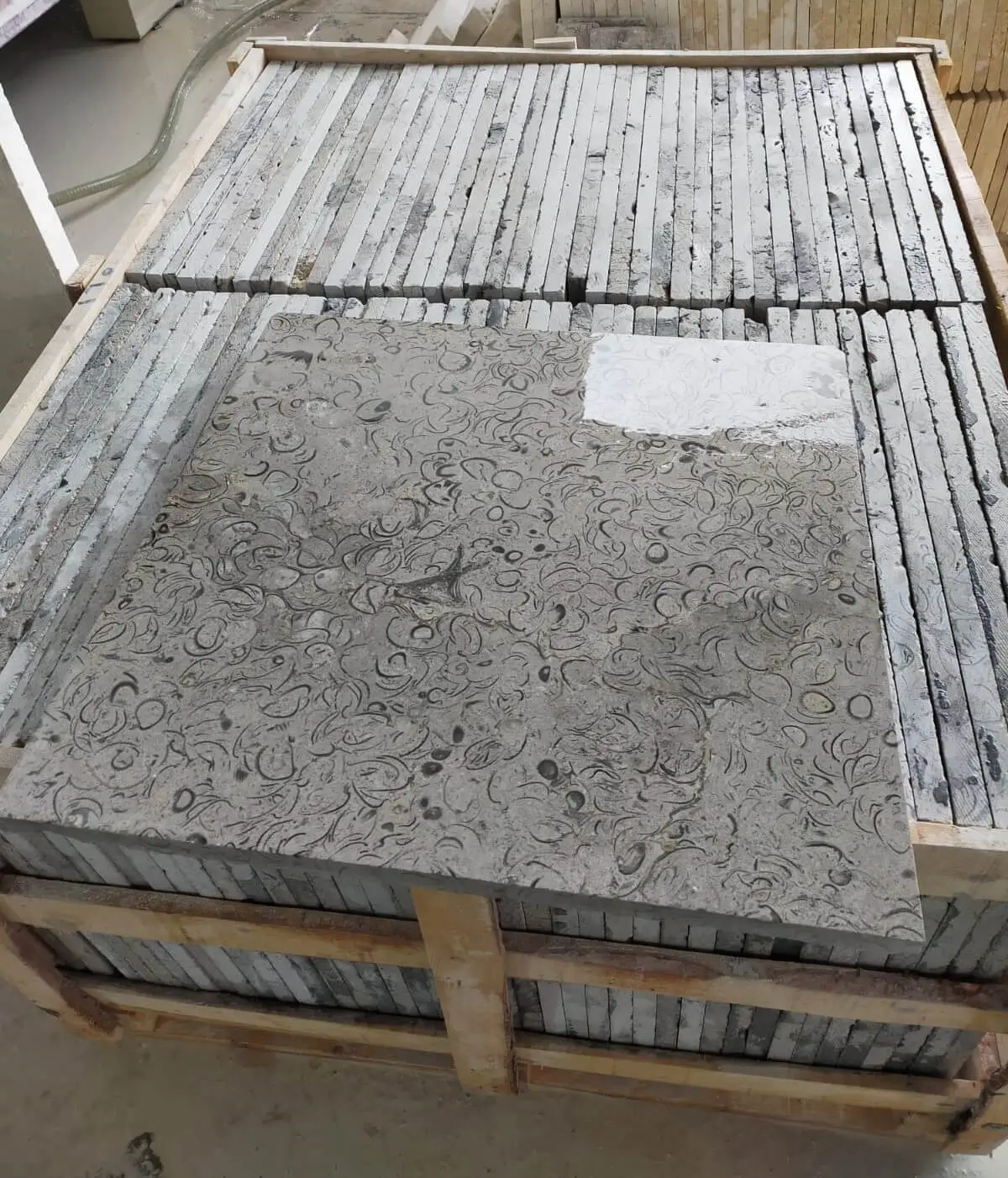
Planning a limestone patio fire pit project in Scottsdale involves material lead times that most homeowners underestimate. Dense, low-absorption limestone in the 1.5–2 inch thickness range isn’t always in standard warehouse stock — it’s a specialty spec that competes with general landscape paving demand across the Phoenix metro. You’ll want to confirm warehouse availability at least 6–8 weeks before your installation date, especially for fall projects when contractor schedules and material demand both peak simultaneously.
Delivery logistics for limestone patio pavers in Arizona also deserve advance planning. Most truck deliveries to residential sites in Scottsdale’s foothill neighborhoods involve access restrictions — tight turns, limited staging areas, and HOA requirements about delivery hours. Confirming truck access constraints and coordinating a delivery window with your contractor before ordering prevents the last-minute re-routing and additional delivery fees that are genuinely common in hillside zip codes. Citadel Stone’s warehouse inventory in Arizona typically supports 1–2 week lead times on in-stock material, which is substantially faster than the 6–8 week import cycle for specialty orders — a real advantage when your project timeline is firm.
What Matters Most for Your Limestone Patio Fire Pit in Scottsdale
The specification decisions that define long-term performance for a limestone patio fire pit in Scottsdale come down to three things: material density that resists freeze-thaw micro-cycling, joint geometry that accommodates the full thermal range rather than just the peak heat, and a sealing program that differentiates between the field paving and the fire-adjacent zone. None of these are complicated once you understand the engineering rationale — but all three are routinely under-specified on projects where the designer is thinking about aesthetics and the contractor is thinking about standard installation methods from milder climates.
Arizona outdoor fire features deserve a specification written for Arizona’s actual thermal envelope — not a generic pavement spec adapted from a national manufacturer’s guidelines. The day-night cycling that Scottsdale delivers is genuinely unique in its amplitude, and it rewards stone and joint systems that are engineered with that amplitude in mind rather than simply adjusted after the fact. For homeowners planning adjacent outdoor improvements, Limestone Patio Expansion Planning for Phoenix Growing Families covers how to scale limestone patio systems as your outdoor living area grows — useful context if your fire feature project is part of a larger phased plan. Citadel Stone’s mastery of limestone patio in Arizona design helps Arizona homeowners maximize their outdoor living investment.