
Designing large limestone slab fountains Scottsdale requires you to reconcile two competing structural demands before you ever select a stone thickness — managing the gravitational load distribution across varied terrain while maintaining precise drainage geometry that keeps water moving the way you intend. Most fountain projects that fail within a decade do so not because of poor material selection but because the base engineering ignored what the ground beneath was actually doing. Scottsdale’s terrain is far from uniform, and that variability is the starting point for every specification decision that follows.
Terrain-Driven Base Fundamentals for Scottsdale Fountain Sites
Scottsdale spans a significant elevation range — from roughly 1,100 feet in the southern flats near the Salt River corridor up to 2,800 feet in the McDowell foothills. That elevation shift translates into meaningfully different soil behavior, drainage runoff velocity, and frost exposure frequency. Before your slab specification begins, you need a soil report that goes deeper than a basic compaction test. The distinction between decomposed granite substrates and the silty alluvial fill that dominates lower desert terrain will determine your aggregate base depth and your rebar spacing requirements.
For hillside fountain installations, grade management becomes the dominant structural concern. A slab platform set on a 3% to 8% slope requires a keyway footing on the downhill edge — without it, hydrostatic pressure from pooled water at the base of the fountain will gradually undermine the foundation. The limestone slab itself is not the weak point in these systems. The interface between the concrete pad and the native slope almost always is.
- Decomposed granite base: minimum 6-inch compacted depth for flat terrain, 10 inches on grades exceeding 4%
- Keyway footing depth should equal at least one-third of the total slab thickness on any slope
- Drainage swales must carry water away from the fountain base at a minimum 2% grade regardless of the slab orientation
- Rebar grid spacing tightens from 18-inch centers to 12-inch centers on hillside installs to resist lateral soil movement
Limestone Slab Thickness and Load Distribution
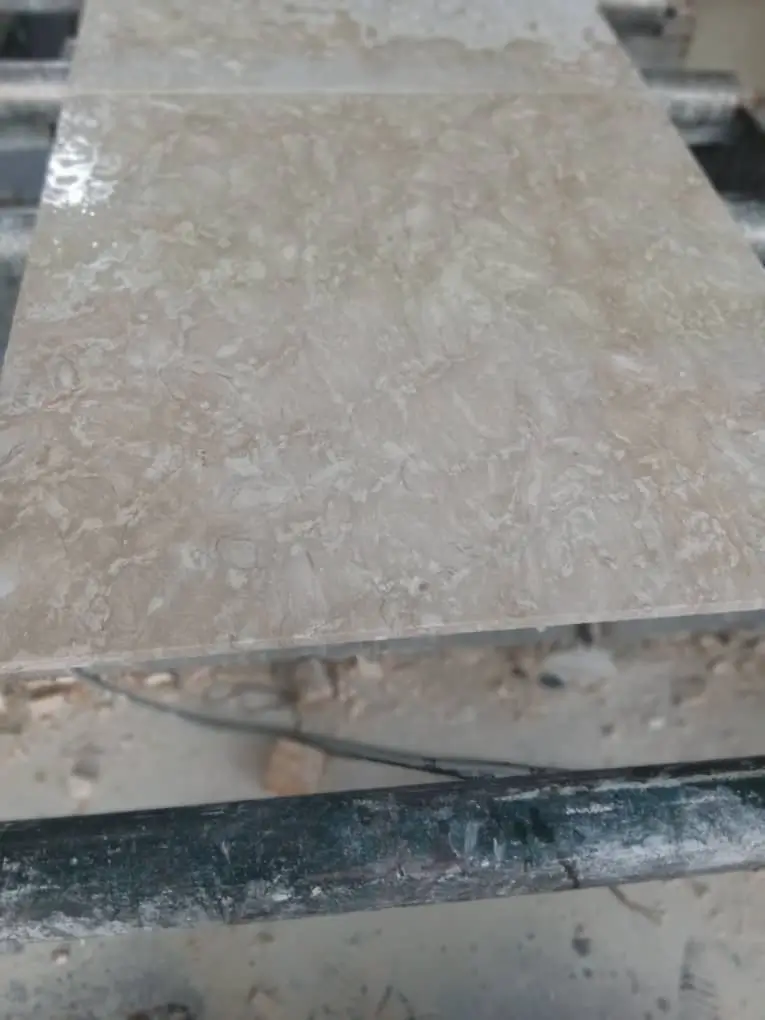
The stone you’re working with for large limestone slab fountains Scottsdale needs to carry both the static weight of the water basin and the dynamic load of moving water — and those two demands pull in different directions when you’re sizing thickness. A standard residential fountain basin holding 200 to 400 gallons exerts roughly 1.7 to 3.3 pounds per square foot of water weight alone. Add the stone basin itself, any overflow lip detail, and the pump housing, and you’re regularly exceeding 80 PSI at the slab contact points.
For platform slabs in the 24-inch to 48-inch range, you’ll generally land on 3-inch nominal limestone as your minimum viable thickness for Arizona water feature bases. In Mesa, where expansive clay soils can shift seasonally and apply upward pressure on foundations, bumping to 4-inch slabs is worth the material cost — the additional mass resists differential heave far better than any adhesive or mechanical fastener can compensate for after the fact.
- 3-inch nominal: appropriate for flat terrain, engineered sub-base, fountain basins under 300 gallons
- 4-inch nominal: recommended for slope installations, expansive soil zones, basins 300 gallons and above
- Thermal expansion coefficient for quality Indiana-style limestone: approximately 3.0 × 10⁻⁶ per °F — lower than concrete, which matters at platform joints
- Compressive strength should exceed 7,500 PSI for structural fountain platform slabs — verify the quarry certification before you commit to material
At Citadel Stone, we inspect slab thickness tolerances at the warehouse before they ship because a nominal 3-inch slab that measures 2.6 inches at the corner creates a stress concentration point that fails under load cycling. That half-inch variance is the kind of detail that doesn’t show up until year three of a fountain’s life.
Drainage Geometry and Slope Management
Your aquatic element foundation lives or dies on where the water goes when it leaves the basin. This is particularly true for Scottsdale water feature bases, where summer monsoon events can deliver 1 to 2 inches of rain in under an hour — an event that overwhelms any drainage design that was sized only for normal fountain overflow. You need to think about your water feature base as existing within a catchment system, not as an isolated installation.
The slab platform itself should pitch at a minimum 1/8 inch per foot away from the fountain structure toward the drainage perimeter. That sounds small, but on a 6-foot platform it translates to 3/4 inch of fall — enough to move standing water decisively. For large stone slab fountain platforms Arizona designers spec for elevated terrain, the drainage outlet sizing should be calculated at two times normal overflow rate to handle storm event surcharge.
- Perimeter drain sizing: minimum 4-inch diameter for fountains under 500 gallons, 6-inch for larger installations
- Catch basin placement: at the lowest grade point of the platform perimeter, not the nearest convenient wall penetration
- Non-slip surface texture on the slab approach zones: honed limestone at 400 grit provides adequate grip without compromising aesthetics
- Expansion joint placement at the junction of the limestone platform and any concrete structure: every 10 to 12 feet and at all direction changes
Site-Specific Engineering at Grade Transitions
Grade transitions — the points where your fountain platform meets a staircase, a retaining wall, or a grade change — are the most commonly underspecified elements in Scottsdale water feature design. The limestone slab performs well in a uniform field, but movement at transition joints concentrates stress in ways that flat-plane specifications don’t anticipate. You need a 3/4-inch open joint filled with polyurethane sealant wherever the slab abuts a different structural element, and that joint needs to be designed into the stone layout from the beginning, not caulked in as an afterthought.
For projects in Yuma, the terrain challenge shifts slightly — the extreme low elevation and dense caliche sub-base means drainage velocity is lower and lateral water migration through the base becomes the primary failure mechanism. Your waterproof membrane under the slab platform needs to extend at least 12 inches up any adjacent wall surface to redirect that lateral migration. This detail is different from Scottsdale’s hillside drainage requirements, but it’s just as critical to long-term performance.
Specifying uniform square limestone paving for the approach and transition zones surrounding the fountain creates a cohesive surface geometry that also simplifies your drainage pitch calculations — when every unit is identical in dimension, your layout coordinates directly with your grade targets without custom cutting at transition points.
Material Selection and Water Exposure Performance
Large limestone slabs in Arizona face a specific combination of stressors that doesn’t exist in most other climates — prolonged UV exposure, periodic freeze events at elevation, sustained mineral-laden water contact, and thermal cycling that can swing 40°F in a single day. Your material specification needs to address all four simultaneously, not sequentially.
Porosity is the variable that controls most of these performance factors. Dense limestone with an absorption rate below 3% by weight (per ASTM C97) will resist mineral staining from hard water far better than a more porous travertine alternative. Scottsdale’s water supply typically runs 250 to 400 parts per million total dissolved solids — high enough that an unsealed limestone surface will develop calcium carbonate deposits within six months of continuous fountain operation.
- Specify limestone with ASTM C97 absorption rate below 3% for direct water contact zones
- Apply penetrating silicone sealer (not topical acrylic) annually for horizontal surfaces in continuous water exposure
- Select stone with a minimum modulus of rupture of 1,500 PSI to handle the flexural stress at overhanging basin edges
- Avoid highly veined or foliated limestone for structural platform slabs — the foliation planes become failure paths under sustained point load
- Lighter-colored limestone (cream, buff, white) reflects solar radiation more effectively and reduces thermal cycling stress on the slab and its setting bed
Our technical team at Citadel Stone tests absorption rates on every quarry lot before it enters warehouse inventory — not every stone marketed as “low-porosity limestone” actually meets the ASTM C97 threshold when you pull samples from different positions in the quarry block.
Installation Sequencing and Base Preparation
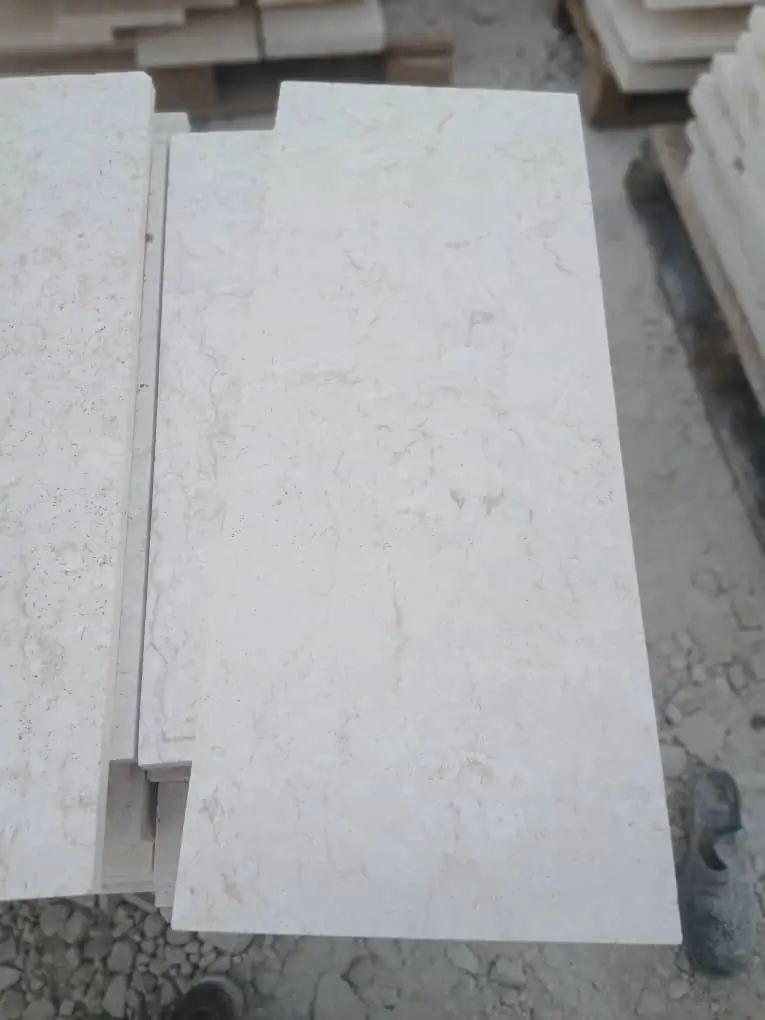
The sequence of your installation matters as much as your material specification, particularly for hillside fountain sites where base compaction can shift between your survey date and your pour date. Arizona monsoon season — June through September — can introduce significant moisture into your sub-base, causing compaction values that tested at 95% Proctor to drop to 88% or lower after a heavy event. Schedule your foundation pours in the dry months if your project allows it, or re-test compaction within 48 hours of your last rainfall event before proceeding.
Your concrete setting bed for the limestone slab platform should use a minimum 3,500 PSI mix with a fiber reinforcement additive rather than relying solely on rebar. The fiber reinforcement distributes micro-crack formation across the full slab plane rather than allowing it to concentrate at rebar lines — this matters at the basin perimeter where the stone cantilevers over the water edge and flexural stress is highest.
- Sub-base compaction: minimum 95% Proctor density, re-tested after any rainfall event over 0.5 inches
- Concrete setting bed: 3,500 PSI minimum, 4-inch depth under limestone slabs 3 inches thick or greater
- Mortar type for limestone: white Type S mortar with latex polymer additive — avoid standard gray Type S in visible joint zones
- Curing time before water contact: minimum 28 days for the concrete bed; 7 days for the mortar joints before any water flow
- Truck access for material delivery: confirm site access for large-format slab delivery — slabs over 36 inches square require mechanical off-loading equipment, not hand carry
Coordinating your truck delivery schedule with your concrete pour schedule saves a significant amount of repositioning cost. You want your slabs on-site and acclimated to ambient temperature for 24 to 48 hours before setting — stone that comes off a truck at 70°F and gets set in 95°F Arizona conditions before it equilibrates will show joint width variance that your grout cannot fully compensate for.
Long-Term Maintenance for Scottsdale Water Feature Bases
Large limestone slab fountains Scottsdale homeowners and commercial property managers install should carry a realistic 20 to 30-year service life when the base engineering is correct from day one. The maintenance schedule that gets you there is straightforward but non-negotiable: annual sealer application, semi-annual joint inspection, and immediate repair of any joint sealant that shows cracking or separation.
The joint sealant is where most installations degrade first, particularly at the transition between the limestone platform and the fountain basin wall. Thermal cycling creates differential movement between the dense limestone and the concrete basin that opens joint gaps progressively over time. Polyurethane sealant in those transition joints should be replaced every five to seven years regardless of visual condition, because UV degradation weakens the elastomeric properties before you see visible cracking.
In Gilbert, where the combination of alkaline soils and high water table in some areas creates a more aggressive environment for subgrade moisture migration, you’ll want to inspect the underside of any accessible slab overhang annually for calcium carbonate buildup — this signals that water is wicking through the stone and depositing minerals as it evaporates, which indicates your sealer application has lapsed and needs immediate attention before the deposition cycle causes surface spalling.
- Annual penetrating sealer application: spring, before peak heat season begins
- Semi-annual joint inspection: look for cracking, gap widening, or biological growth in mortar joints
- Five-year full joint repointing: plan for this in your lifecycle cost model when you spec the project
- Quarterly pump and basin inspection: mineral scaling on the stone basin interior indicates water chemistry is outside the 7.2 to 7.8 pH range optimal for limestone contact
Arizona Water Displays and Design Coordination
Coordinating large limestone slab fountains Scottsdale specifications with your landscape architect and structural engineer from the earliest design phase prevents the majority of change orders that inflate project budgets. The structural engineer needs to be involved before the fountain location is finalized — particularly on hillside or grade-change sites — because foundation requirements that seem manageable in schematic design become expensive once the landscape grading is already established.
Your Arizona water displays specification should document the base engineering requirements, not just the stone selection. The architectural drawings should show the sub-base depth, the drainage outlet location, the expansion joint pattern, and the slab thickness schedule as separate callouts — these details are frequently missing from landscape drawings and create field interpretation problems during installation. What gets built in the field defaults to the subcontractor’s standard practice when the drawings are ambiguous, and that standard practice is rarely site-specific.
- Include sub-base compaction specification (95% Proctor) as a written note on the structural plan sheet
- Coordinate fountain basin water supply line penetrations through the slab before the concrete bed is poured
- Specify the exact slab joint pattern and joint width in millimeters — “standard grout joint” is not a specification
- Document waterproofing membrane brand and thickness as a specified product, not a generic performance requirement
Citadel Stone’s warehouse carries consistent lot inventory for large-format limestone, which reduces the color matching risk on multi-phase projects where you’re installing fountain surrounds in stages across a construction schedule. Truck delivery coordination for large slabs — particularly pieces over 48 inches — requires 72-hour advance scheduling to ensure proper off-loading equipment is available on delivery day.
Before You Specify Your Scottsdale Water Feature Base
Getting large limestone slab fountains Scottsdale right starts with honest site assessment before any stone is selected. Your terrain dictates your drainage system, your drainage system dictates your base engineering, and your base engineering dictates the slab thickness and joint specification that will actually hold up. Skipping the site assessment to move faster into stone selection is the single most common mistake on Scottsdale water feature projects — and it’s the one that creates the most expensive corrections three to five years into the installation’s life.
The material itself — quality limestone with verified low absorption, adequate compressive strength, and proper thickness — will serve you well for decades when it’s sitting on the right foundation. The Scottsdale Sonoran terrain rewards careful base engineering and penalizes shortcuts more aggressively than most markets, simply because the combination of elevation variability, thermal cycling, and monsoon intensity creates conditions that expose every compromise in your specification. Beyond your fountain project, if other Arizona stone features are in your design scope, the Large Limestone Slab Outdoor Fireplace Hearth for Phoenix Fire Features article covers how Citadel Stone limestone performs in a complementary outdoor application worth reviewing as you plan your full hardscape package. Citadel Stone supplies large limestone slab fountains and water feature foundations across Arizona, backed by hands-on technical guidance from quarry to installation.
Prestigious golf communities specify Citadel Stone’s rectangular limestone pavers in Arizona for clubhouse and amenity areas.