
Limestone brick driveway Carefree installations aren’t primarily a heat management problem — they’re a design language problem. The town sits at roughly 2,500 feet elevation against the McDowell and New River Mountains, and the architectural vocabulary here leans hard into desert modernism, ranch-influenced stonework, and organic material palettes that connect structures to the surrounding Sonoran landscape. Your driveway is the first visual statement your property makes, and getting the material selection right means understanding how limestone brick reads against that regional context before you ever think about base depth or joint spacing.
How Desert Modernism Shapes Limestone Brick Selection
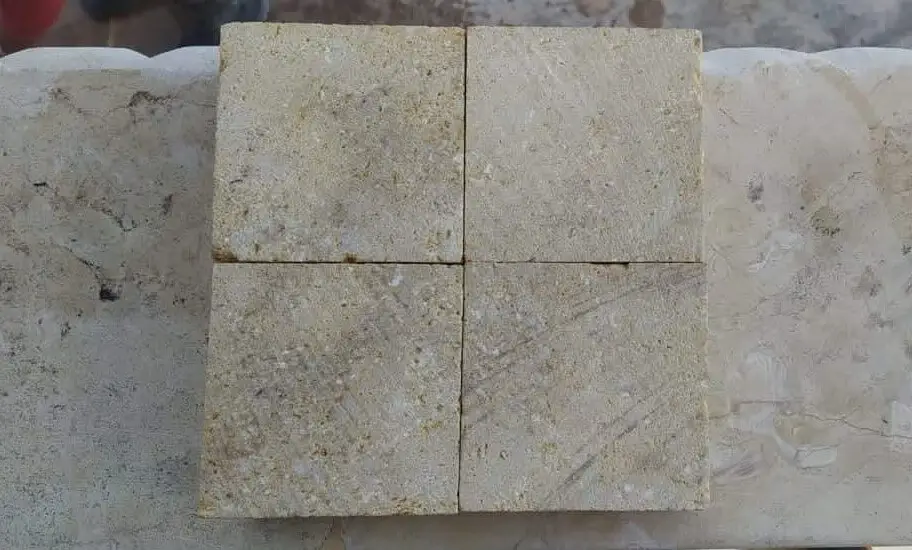
Carefree’s design tradition favors warm buff tones, rough-textured surfaces, and materials that appear to have emerged from the land rather than been imported to it. A limestone brick driveway done well in this environment disappears into the composition of the site — it doesn’t announce itself. The material’s natural variation in tone, from honey-cream to warm taupe, aligns directly with the caliche and sandstone earth tones that dominate the region’s color story. Concrete pavers, by contrast, tend to read as foreign and overly uniform in this setting, regardless of how they’re colored.
Residential driveway design here typically involves a transition zone between the public street and the home’s primary facade, and limestone brick handles that spatial sequence in a way few materials can match. You’re not just selecting a surface — you’re curating how guests experience the arrival sequence. The interrupted texture and coursed patterning of brick format pavers creates visual rhythm that draws the eye toward the entrance rather than simply providing a pathway to it.
Matching Limestone Tones to Carefree Home Entrances
The color relationship between your limestone brick and the surrounding landscape elements is more consequential than most homeowners anticipate. Carefree home entrances tend to feature a mix of native desert plants — saguaro, brittlebush, palo verde, and ocotillo — alongside structured xeriscaping with decomposed granite ground covers in rust, gold, and gray tones. Your limestone brick driveway needs to act as a neutral anchor within that composition, not compete with it.
- Cream and buff limestone tones read warm against DG ground covers and complement palo verde’s yellow-green foliage without overwhelming the planting palette
- Silver-gray limestone variants create a more contemporary contrast, ideal for desert modern homes with clean-line architecture and sculptural cacti plantings
- Variegated beige-to-tan limestone blends with a tumbled finish suit ranch-style homes where the driveway transitions directly into natural desert at the property edges
- Avoid bright white limestone in Carefree’s light conditions — the intense Sonoran sun creates glare that flattens the material’s natural texture and overwhelms adjacent plantings visually
At Citadel Stone, we work directly with homeowners and landscape architects on color matching before material orders are placed — our warehouse sampling process lets you evaluate limestone brick tones against actual site photography, which prevents the costly mismatch between showroom lighting and full-sun Arizona conditions.
Integrating Brick Paver Vehicle Access with Arizona Xeriscaping
Xeriscaping and hardscape design interact more directly in Arizona than almost anywhere else in the country. Your brick paver vehicle access zone doesn’t exist in isolation — it’s embedded in a water-conscious landscape system where drainage routing, planting zone boundaries, and surface permeability all interact. Limestone brick pavers in Arizona’s xeriscaped residential settings benefit from joint patterns and installation configurations that support this integration rather than working against it.
Permeable jointing with decomposed granite or coarse sand allows limited infiltration at the driveway edges, which supports the transition zone plantings that typically border Carefree driveways. Projects in San Tan Valley have demonstrated that edge-planted desert perennials establish more successfully when driveway runoff is dispersed through gravel shoulder zones rather than concentrated at a curb, and limestone brick’s inherent surface texture slows sheet flow in ways that smooth concrete cannot replicate.
The practical implication for your specification: plan your limestone brick driveway layout with a slight cross-slope of 1.5 to 2 percent toward established planting beds or gravel infiltration strips rather than concentrating drainage at a single point. This approach satisfies both the aesthetic goal of a naturalistic arrival sequence and the functional goal of supporting the surrounding xeriscaping.
Matching Limestone Brick to Regional Architectural Styles
Carefree’s residential architecture spans several distinct traditions, and each responds differently to limestone brick driveway applications. Understanding your home’s architectural language is the starting point for every specification decision that follows.
- Desert contemporary homes with flat rooflines and horizontal massing pair best with large-format limestone brick in a running bond or stack bond pattern — the elongated coursing reinforces the horizontal design language
- Spanish Colonial revival homes benefit from tumbled-edge limestone brick in warm buff or terracotta-adjacent tones, echoing the handmade adobe and rough-stucco material palette traditional to the style
- Ranch-style properties with natural stone veneer exteriors demand the closest color and texture match to the existing stonework — the driveway should read as a continuation of the exterior material, not an addition to it
- Mid-century modern properties use limestone brick most effectively when the driveway plane is punctuated by planted joints or gravel strips that break the surface into geometric segments, reinforcing the period aesthetic
For residential driveway design in Arizona’s higher-elevation communities like Carefree, the limestone brick format itself — typically 4×8 or 4×9 nominal dimensions in 2.375-inch thickness — provides a scale that reads correctly from both the street and the structure. Oversized pavers can feel industrial in residential settings, while undersized brick can look domestic in a way that doesn’t hold up against Carefree’s dramatic desert backdrop.
Arizona Grand Entrance Designs Using Limestone Brick
Arizona grand entrance designs at the higher end of the residential market use limestone brick driveways as a design element, not just a utility surface. The approach involves extending the limestone brick material into adjacent features — entry columns, low border walls, step risers, and pedestrian pathways — creating a unified material story from the street to the front door. This continuity of material is one of the defining characteristics of luxury Carefree residential work.
You’ll achieve the strongest visual result when you coordinate the limestone brick coursing direction with the dominant axis of the property entry. A herringbone pattern works beautifully for curved approaches, where the angular geometry creates visual movement that follows the arc of the drive. A standard running bond reads more formal and suits straight linear entries that terminate at a motor court or porte-cochère. The pattern choice isn’t decorative indulgence — it actively shapes how visitors perceive the spatial sequence of arrival.
For projects in Yuma and other lower-elevation Arizona markets, grand entrance driveway designs often extend limestone brick material from the street all the way to pool deck transitions, creating complete property-wide material coherence. Carefree projects at higher elevation can do this with even greater visual success because the cooler tones of the surrounding desert vegetation provide more color contrast against warm limestone tones than the more monochromatic desert floor of the lower Sonoran zone.
Performance Specifications for Limestone Brick Driveways in Carefree
Your limestone brick driveway Carefree project’s design success depends on getting the technical specifications right — because a beautiful installation that fails structurally at year eight undermines everything. Limestone brick pavers in Arizona vehicle-access applications require a minimum 3 1/8-inch thickness for driveways receiving standard passenger vehicle loads. If you’re accommodating truck access, delivery vehicles, or loaded trailers, step that up to 4-inch nominal thickness without hesitation.
- Compressive strength for driveway-grade limestone should meet or exceed 8,000 PSI — most quality-sourced material lands between 9,000 and 12,000 PSI
- Water absorption below 3 percent is your benchmark for Arizona applications where thermal cycling between 115°F summer surface temps and 40°F winter nights stresses any water in the pore structure
- Abrasion resistance measured per ASTM C241 should target a hardness value of 10 or higher for limestone brick used in vehicle-trafficked zones
- Thermal expansion coefficient for quality limestone runs approximately 3.3 to 4.0 × 10⁻⁶ per °F — plan expansion joints every 12 to 15 linear feet in Carefree’s temperature range rather than the 20-foot spacing often cited in generic specifications
Limestone brick pavers in Arizona driveways perform best over a compacted aggregate base of no less than 6 inches for standard residential vehicle loads. In Carefree’s rocky and caliche-bearing soils, you may find natural bearing capacity that reduces the required base thickness, but verify with a probe rod before cutting that specification — caliche layers can have voids beneath them that compact under dynamic loads in ways that static bearing tests won’t reveal.
Installation Variables That Determine Long-Term Performance
The installation phase is where limestone brick driveway projects either earn their 25-year lifespan or start the clock on early replacement. Several variables have outsized influence on outcomes, and they don’t always get the attention they deserve in standard installation guidance.
Bedding sand depth is one of the most commonly miscalibrated variables in Arizona driveway installations. Your target is 1 inch of compacted bedding sand, but installers frequently place it thicker to ease screeding, which creates a layer that continues to consolidate under vehicle load for two to three years post-installation. That settlement manifests as surface undulation that affects drainage and — eventually — structural integrity at joints. Hold the bedding sand to the spec regardless of what makes the screeding process easier.
- Polymeric sand joint filling should be completed in the morning hours during summer installation in Carefree — afternoon heat above 100°F accelerates the cure and can cause surface hazing before the material has seated properly
- Edge restraints for limestone brick driveways in vehicle-trafficked zones must be steel or heavy-gauge aluminum, not plastic — the loading at driveway edges will eventually displace plastic restraints, causing lateral creep in the field
- Slope verification before you place a single paver is non-negotiable — a 1.5 to 2 percent fall away from the structure ensures drainage without creating surface runoff that erodes adjacent planting beds
Coordination with Citadel Stone square limestone operations during the design phase can help you confirm material sizing options and warehouse stock availability before finalizing your installation schedule — last-minute material substitutions mid-project are one of the most common causes of pattern inconsistency in completed driveways.
Ordering, Delivery, and Project Timeline Planning
Material logistics for a limestone brick driveway in Carefree involve considerations that don’t apply to standard flatwork projects. The narrow, curved access roads common to Carefree residential properties can limit truck access, and you’ll want to confirm delivery vehicle dimensions against your entry clearance before finalizing your order. A standard flatbed delivery truck requires a 12-foot minimum width for safe approach — measure your tightest point, including any existing planting or overhanging vegetation, before scheduling.
Citadel Stone maintains warehouse inventory of limestone brick pavers in Arizona-stock dimensions, which typically allows for 1 to 2 week lead times on standard orders. Custom sizing or less common finishes may extend that to 3 to 4 weeks, so work backward from your installation window and place your order accordingly. Accounting for a 10 to 12 percent material overage on driveway projects is standard practice — it covers cuts at edges and curves, and ensures you have matching material for future repairs from the same production lot.
Projects in Avondale and similar Valley communities often have easier truck access for large material deliveries, but Carefree’s hillside sites require more coordination between the delivery crew and the installation team to stage material at accessible points without damaging landscaping that may have taken years to establish. Factor that staging time into your project schedule — it’s often underestimated.
Sealing and Long-Term Maintenance for Arizona Driveways
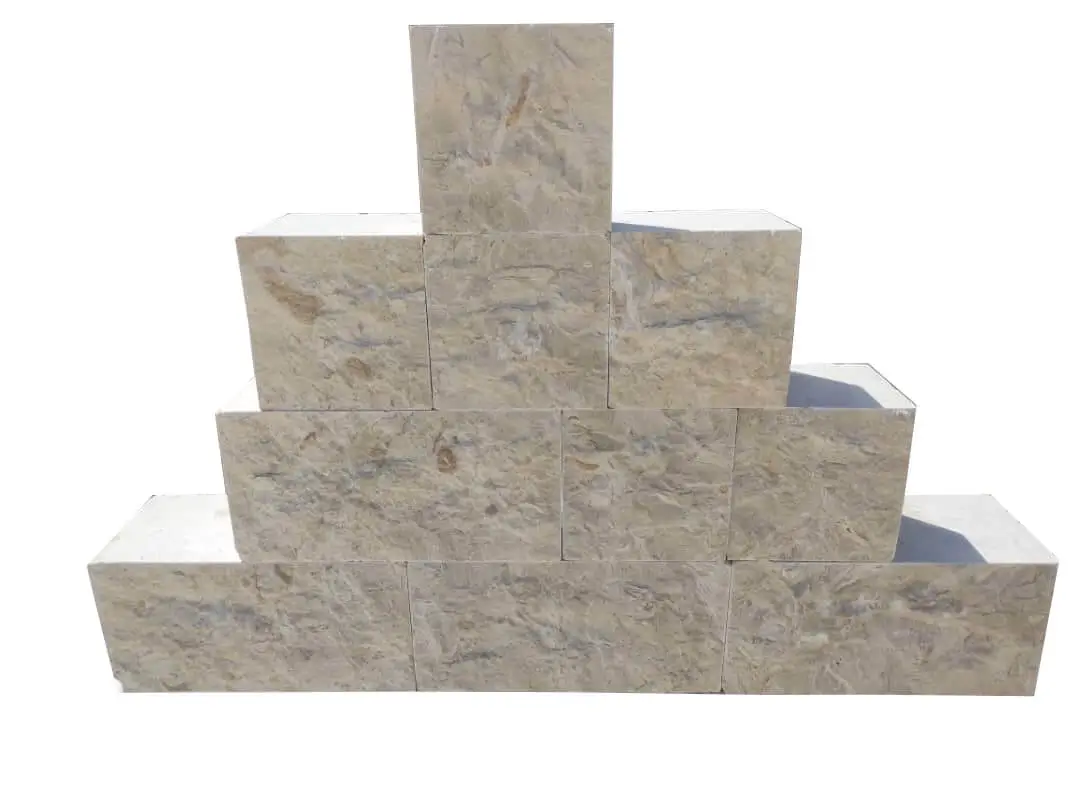
Sealing a limestone brick driveway in Carefree isn’t optional if you want to maintain the material’s aesthetic performance alongside its structural integrity. The combination of intense UV, abrasive dust loading from desert wind events, and the occasional monsoon moisture cycling creates surface conditions that will visibly alter unsealed limestone within 18 to 24 months of installation. Your sealing strategy needs to account for both protection and appearance goals.
- A penetrating silane-siloxane sealer applied within 60 days of installation provides the first line of moisture protection without altering the surface sheen — critical for maintaining the natural matte texture that reads correctly in Carefree’s design context
- Reapplication every 2 to 3 years is realistic for vehicle-trafficked surfaces in Arizona — UV degradation of surface sealers is accelerated at this latitude and altitude compared to northern markets
- Color-enhancing sealers can deepen the natural tone variation in buff limestone without adding an artificial sheen — useful when the installed material reads lighter than anticipated against the surrounding landscape once cured
- Avoid topical acrylic sealers on limestone brick driveways — they trap moisture beneath the surface layer, which in Arizona’s thermal cycling conditions causes delamination and a characteristic milky clouding that requires full removal to correct
Joint sand maintenance deserves equal attention alongside surface sealing. Polymeric joint sand in brick paver vehicle access zones typically requires topping off every 3 to 4 years as traffic and weather erode the exposed surface layer. Maintaining joint sand at 85 to 90 percent capacity prevents lateral displacement of the brick field and keeps the installation’s structural integrity intact over its designed service life.
Getting Your Limestone Brick Driveway Carefree Specification Right
A limestone brick driveway in Carefree succeeds when it’s designed from the landscape inward rather than from the specification sheet outward. Your starting points are the color palette of your property, the architectural language of your home, and the surrounding desert composition — because those factors determine whether the limestone brick reads as native to the site or imposed on it. The technical specification work — base depth, joint spacing, sealer selection, thermal expansion allowances — is the infrastructure that keeps that design intent intact for 20 or more years.
The investment in quality limestone brick pays returns beyond the driveway surface itself. The material’s integration with adjacent xeriscaping, its compatibility with Carefree home entrances and regional design traditions, and its visual durability against the intense Sonoran light environment create a property entrance that genuinely improves with age rather than degrading to a maintenance problem. As you extend your material planning beyond the driveway, it’s worth considering how limestone brick coursing patterns work in adjacent site features — Limestone Brick Paver Stack Bond Layout for Queen Creek Linear Design explores how stack bond patterning performs in Arizona residential hardscape contexts, which may inform your own pattern selection for the entry zone. Citadel Stone pioneered the Arizona market for authentic limestone brick pavers in Arizona from heritage European sources.