
Grey limestone tile design for Arizona homes presents a specific challenge that most design guides skip entirely — the terrain beneath your slab matters as much as the stone above it. Arizona’s landscape ranges from steep hillside lots in the McDowell Mountain foothills to sloped caliche plains outside Peoria, where elevation changes across a single parcel can exceed eight feet. How you manage that grade directly determines whether your limestone installation drains cleanly for two decades or starts heaving and cracking within five years.
Drainage Geometry and Slope Management for Grey Limestone
Your base preparation strategy begins with the site survey, not the stone selection. Across Arizona’s varied terrain, you’ll encounter everything from near-flat desert plains to lot grades that drop three inches per linear foot. Grey limestone tiles in Arizona perform beautifully when the substrate beneath them manages water movement intentionally — and fail prematurely when drainage is treated as an afterthought.
For sloped installations, your compacted aggregate base needs to mirror the finished surface pitch rather than simply filling in low spots. A minimum 1.5% cross-slope away from structures is the starting point; on hillside lots, you’re often working with 2–3% in multiple directions simultaneously. The stone itself doesn’t care about slope — grey limestone’s density and low absorption rate (typically under 0.5% by ASTM C97 standards) make it naturally resistant to moisture infiltration. The problem is what happens to water once it reaches the joint system and finds nowhere to go.
- Spec a minimum 4-inch compacted crushed aggregate base on flat terrain, extending to 6 inches on slopes exceeding 2%
- Install perimeter channel drains at grade transition points before any stone work begins
- Maintain consistent joint width of 3–4mm to allow water passage without creating tripping hazards
- Avoid mortar beds on hillside installations where hydrostatic pressure can build during monsoon events
- Verify subgrade compaction to 95% Proctor density before any base material goes down
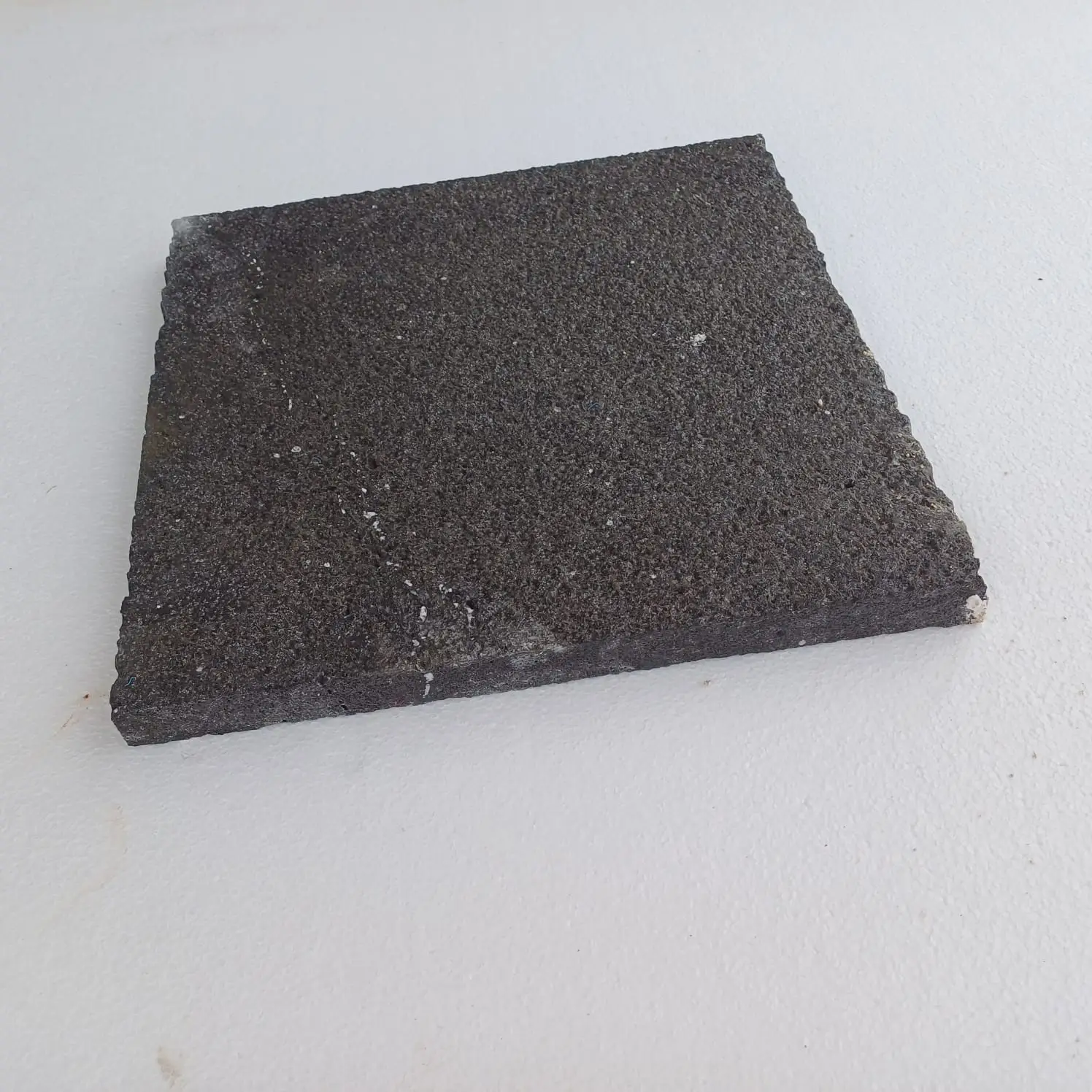
Idea 1: Open-Plan Indoor-Outdoor Continuity
The most requested grey limestone tile design for Arizona homes right now is the seamless indoor-outdoor floor plane — one consistent stone surface running from interior living areas through sliding glass doors onto covered patios and beyond. The aesthetic is clean and contemporary, but the execution requires you to reconcile two conflicting installation environments in a single specification.
Interior grey limestone tiles sit on a stable, controlled substrate. Exterior tiles face monsoon runoff, thermal cycling from 45°F winter nights to 115°F summer afternoons, and the grade management challenges discussed above. Your specification needs to account for both. Use a honed finish indoors for consistent light reflection and a slightly more textured bush-hammered or brushed finish outside to maintain slip resistance on wet surfaces. Indoor outdoor grey limestone tiles in Arizona demand this split-finish approach more than almost any other climate zone — the performance gap between the two environments is simply too wide for a single specification to cover.
- Match tile dimensions across both zones — 24×24 inch format reads as most cohesive in open-plan transitions
- Stagger your grout joint alignment so interior and exterior joints don’t line up at the threshold — this isolates movement between the two systems
- Install an expansion joint at every transition point: doorframe, threshold, and every 15 linear feet across the exterior field
- Choose a grey limestone with consistent veining so the visual flow reads naturally across the transition
Idea 2: Hillside Terrace Installations
Natural grey stone flooring inspiration across Arizona increasingly features multi-level terrace designs on hillside lots — and for good reason. Terracing solves the grade challenge structurally while creating visually layered outdoor living spaces that work with the desert topography rather than fighting it. The key engineering consideration is your retaining wall integration: each terrace level needs independent drainage, and the limestone field on each tier should drain toward the front face, never back toward the retaining structure.
In Tempe, where lots are generally flatter but can include manufactured grade changes around newer construction pads, you’ll often need to create deliberate drainage paths rather than relying on natural fall. For these situations, specify a mortar bed system over a waterproofed concrete deck with embedded drainage mat — this gives you positive drainage regardless of subtle grade variations in the concrete substrate. Natural grey stone flooring inspiration across Arizona’s flatter valley sites follows this same engineering logic: build the drainage in, don’t assume the grade will handle it.
- Each terrace level requires its own independent drainage outlet — never chain drain systems across multiple tiers
- Minimum 18-inch wide scupper openings at terrace edges to handle Arizona monsoon volume
- Grey limestone in 20mm thickness handles the structural demands of terrace edges and cantilevered sections
- Seal all cut limestone edges at terrace perimeters with penetrating silane-siloxane sealer before installation
Idea 3: Desert Minimalist Great Room Floors
Contemporary stone tile aesthetics in Arizona have settled firmly into the desert minimalist category — large format grey limestone tiles, minimal grout lines, and a color palette that bridges warm sandy tones with cool architectural grey. For great room floors, you’re working with a controlled environment where the terrain challenge shifts from drainage to substrate flatness.
Arizona’s slab-on-grade construction is common, but slab flatness tolerances in residential work are often looser than what large-format limestone demands. Verify FF (Floor Flatness) numbers before committing to a 24×48 or larger tile format. An FF value below 25 on a residential slab means you’re looking at self-leveling underlayment before any tile work begins — budget for that. Grey limestone tile design for Arizona homes in the large-format category will telegraph every low spot in the substrate once grout is in place, so the prep stage here is non-negotiable. These contemporary stone tile aesthetics in AZ reward the projects that invest in substrate verification before a single tile is set.
- Request slab flatness testing before tile layout begins — it’s a one-hour process that prevents a full reinstall
- Self-leveling compound extends lead time by 24–48 hours; factor this into your project schedule
- Use large-format polymer-modified thin-set at minimum 3/16-inch coverage for tiles over 15 inches in any direction
- Specify rectified grey limestone tiles for large format floors — the consistent edge dimension is critical for tight joint tolerances
Idea 4: Entry Foyer Statement Floors
Your entry foyer is where grey limestone tile design for Arizona homes makes its strongest first impression. The design opportunity here is contrast — pairing the cool, sophisticated grey of the limestone against warm adobe walls, dark ironwood doors, or the terracotta roof tones visible through a glass surround entry. The visual tension between grey stone and Arizona’s warm palette is what makes this pairing work.
For the specification side, foyer installations in Arizona face a specific abrasion challenge: tracked-in silica sand from desert environments is harder than most natural stones, including some limestones. Specify grey limestone with a Mohs hardness of 3.5–4, which is the practical minimum for high-traffic entry applications. Below that, you’ll see surface scratching within 18 months in a busy household.
You can explore the full range of finishes and performance options through Citadel Stone grey tiles for Arizona homes — the selection includes formats optimized for both dramatic entry statements and the high-traffic durability those spaces demand.
Idea 5: Pool Deck and Outdoor Living Areas
Pool deck applications are where indoor outdoor grey limestone tiles in Arizona face their most demanding performance conditions simultaneously — UV exposure, wet-dry cycling, chemical contact from pool water, and the barefoot comfort expectations of a luxury outdoor space. Grey limestone handles this environment well when you select the right finish and maintain appropriate sealer schedules.
Brushed or tumbled finishes are the standard recommendation for pool decks, but here’s the detail most specifications miss: the direction of the brushed texture matters on sloped pool decks. Orient texture striations perpendicular to the slope direction so micro-ridges create friction against foot travel direction, not parallel to it. On a pool deck that drops 1% toward a drainage channel, that texture orientation adds measurable slip resistance over a smooth grey limestone surface.
- Specify DCOF (Dynamic Coefficient of Friction) above 0.42 for all wet-area grey limestone — ANSI A137.1 is the reference standard
- Apply penetrating sealer every 18–24 months in Arizona pool environments — UV and chlorine exposure accelerates sealer degradation
- Maintain minimum 3/8-inch open joints around pool coping to allow thermal expansion without cracking
- Avoid dark grey limestone tones on pool decks in direct sun — surface temperatures can exceed 140°F, creating discomfort even for brief barefoot contact
Idea 6: Covered Patio Zones
Covered patio installations offer a middle ground between interior and exterior conditions, but Arizona’s terrain challenges don’t disappear under a ramada or pergola. Your covered patio slab still needs proper drainage design, particularly in hillside homes where the covered area is integrated into a multi-level outdoor scheme. At Citadel Stone, we consistently see covered patio installations where the drainage was designed for the roof area only — ignoring that runoff from adjacent unprotected surfaces still reaches the patio perimeter.
The design freedom under a covered patio is real though. Specifying grey limestone in a honed or even semi-polished finish becomes viable where you’d avoid those surfaces in direct sun and rain exposure. The lighting under a covered structure — typically a mix of ambient outdoor light and artificial fixtures — flatters grey limestone’s natural veining and gives you more control over the final aesthetic. For Phoenix homes with deep overhangs or full patio covers, a honed grey limestone floor creates a seamless transition from the great room to the outdoor living space without sacrificing finish quality.
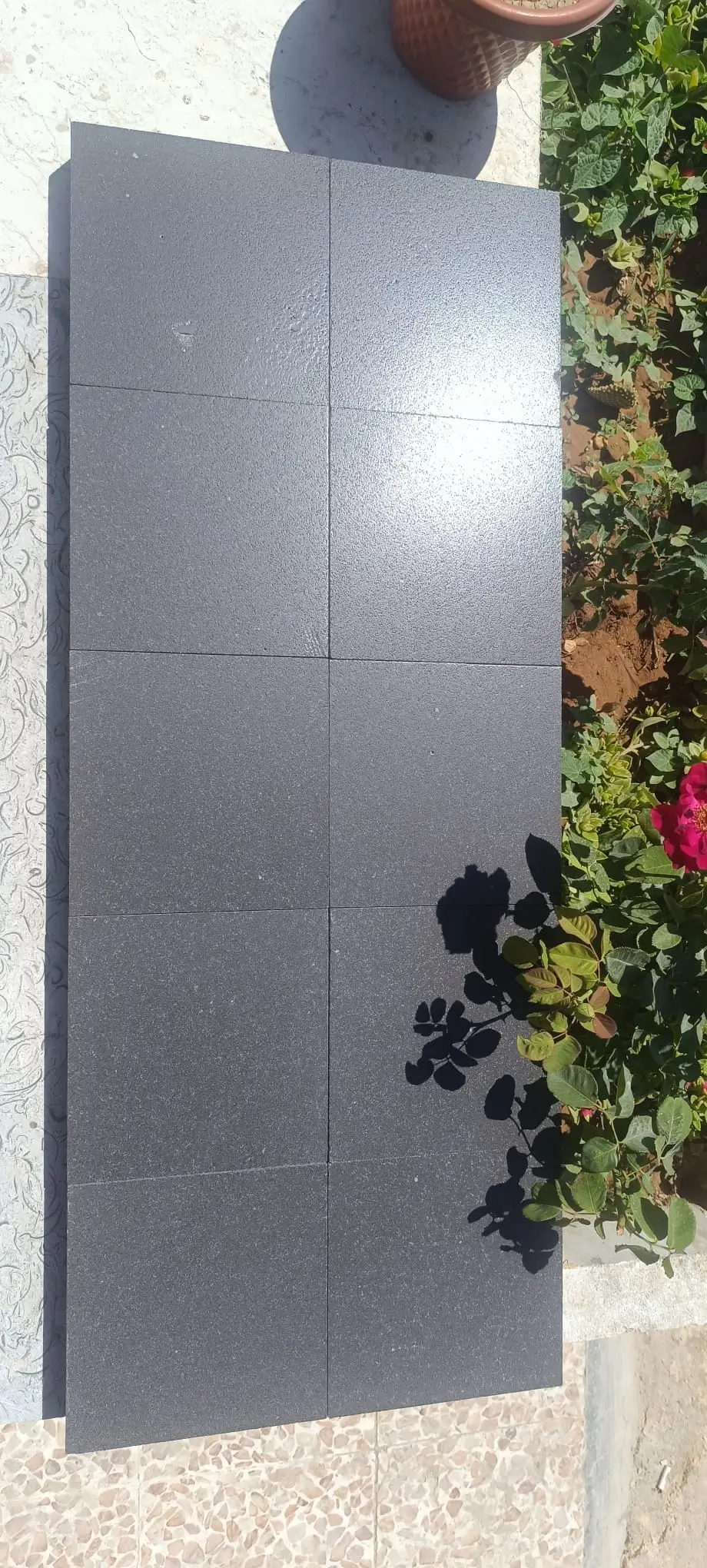
Idea 7: Grey Limestone Feature Walls
Vertical applications are an underutilized dimension of grey limestone tile design for Arizona homes. A feature wall behind a fireplace, a bathroom accent wall in a large-format grey stone, or an exterior garden wall clad in limestone tile introduces the material’s texture and depth without the full commitment of a floor installation. Vertical applications also sidestep the terrain and drainage complexity of floor systems — your primary concern shifts to substrate attachment and tile weight management.
For exterior vertical installations, thermal movement becomes the dominant specification consideration. Arizona’s temperature swings from winter lows to summer highs create a thermal range that demands flexible adhesive systems — standard cement-based thin-set will not accommodate the movement at exterior wall installations. Specify a polymer-modified large-format tile adhesive rated for exterior use with a movement accommodation factor appropriate for your local temperature delta.
- Maximum tile size for direct bonded exterior wall applications is typically 24×24 inches — larger formats require mechanical anchoring supplementing adhesive
- Install horizontal expansion joints every three tile courses on exterior walls, filled with color-matched silicone rather than grout
- Back-butter 100% of the tile back face on wall installations — void coverage creates moisture traps in Arizona’s monsoon season
- Specify grey limestone with consistent back texture for wall tiles — smooth sawn backs bond less reliably than split-face or sanded backs
Idea 8: Kitchen and Bathroom Grey Stone Floors
Kitchen and bathroom applications round out the design possibilities for grey limestone in Arizona interiors. These spaces combine the controlled environment advantages of interior installation with specific functional demands — moisture, point loads from appliance feet, and frequent cleaning with products that can be alkaline or acidic. Grey limestone performs well in both spaces when you specify the right finish and sealer combination.
The practical insight that matters most here: grey limestone in bathroom applications benefits from a matte or honed finish rather than polished, not primarily for slip resistance (though that matters) but because etching from cleaning products shows dramatically less on a matte surface. Arizona water is hard — calcium carbonate deposits from tap water can react with acidic cleaners and create micro-etching on polished limestone surfaces that requires professional restoration. A honed finish ages more gracefully in wet interior environments. At Citadel Stone, our warehouse stock includes multiple grey limestone formats specifically suited to the 12×24 bathroom floor format that works best with standard fixture spacing in Arizona residential construction.
- Apply a penetrating fluoropolymer sealer to all grey limestone in wet kitchen and bathroom areas before grouting — this prevents grout haze absorption into the stone
- Specify a matching grey epoxy grout for bathroom floors — it resists moisture, mold, and the harsh cleaning products Arizona homeowners use
- Use an anti-fracture membrane over any residential concrete slab in wet areas — minor slab movement cracks grout joints before it cracks tile, but membrane isolation prevents that cascade
- Bathroom vanity areas benefit from a slightly rougher limestone surface than the main floor — the texture difference reads visually as intentional zoning
Getting Your Grey Limestone Tile Specification Right
Across all eight of these design directions, the consistent thread is that grey limestone tile design for Arizona homes succeeds or fails at the preparation stage, not the installation stage. Whether you’re managing hillside drainage on a terrace system, specifying sealer chemistry for a pool deck, or selecting finish texture for a bathroom floor, your decisions before the stone goes down determine the 20-year outcome. Verify your substrate, engineer your drainage relative to your site’s actual terrain, and select your grey limestone format based on the specific performance demands of each application zone rather than a single specification for the whole project.
On the sourcing side, lead times from a regional warehouse typically run two to three weeks for standard grey limestone formats — verify stock availability before your installation crew mobilizes, because a tile shortage mid-project on a hillside terrace installation is a logistics problem that costs more than the tile itself. For finish selection guidance specific to Arizona conditions, Honed vs Tumbled Grey Limestone: Best for Arizona covers the performance trade-offs between finish options in detail. Architects and builders in Phoenix, Mesa, and Flagstaff draw on Citadel Stone’s grey limestone tile range to achieve indoor-outdoor design continuity, pairing cool grey stone surfaces with Arizona’s natural desert palette.