
Base preparation failures account for the majority of premature flat cobblestone installations across Arizona — and almost none of them originate from the wrong stone. They originate from specifications written without accounting for the state’s soil classification requirements, municipal load-bearing thresholds, and the structural depth mandates that vary significantly between low-desert jurisdictions and high-elevation counties. Installing flat cobblestones in Arizona starts with understanding what your local building department actually requires before you set a single stone.
Code Compliance Before Material Selection
Arizona doesn’t operate under a single statewide paving code for residential hardscape — municipalities interpret the International Building Code independently, and the result is a patchwork of base depth requirements, edge restraint mandates, and load classifications that can catch specifiers off guard. In Scottsdale, the development standards for residential driveway surfaces require aggregate base compaction to 95% Proctor density, which is meaningfully more demanding than what generic installation guides recommend. You’ll need to pull the current city standard before finalizing your spec, not after.
The structural layer beneath flat cobblestones carries the real engineering burden. For pedestrian walkways, most Arizona jurisdictions accept a 4-inch compacted aggregate base over native subgrade that achieves 90% compaction. Driveway applications typically require 6 to 8 inches of Class II base aggregate, and any surface that will receive vehicle traffic above 10,000 lbs GVW — including service trucks or RVs — should be specified at 10 to 12 inches with a geotextile separation layer to prevent subgrade migration into the aggregate. Natural stone walkway pavers across Arizona must meet these base depth thresholds regardless of the stone variety selected.
Frost Line, Seismic, and Structural Depth Requirements
Here’s where Arizona’s regional diversity becomes a genuine engineering variable. The Phoenix metro sits in USDA Hardiness Zone 9–10 with essentially zero frost depth, which means you can specify a 4-inch base without freeze-thaw heave concern. Travel north to Flagstaff at 6,900 feet elevation and the calculus changes entirely — Coconino County references a 12-inch frost depth for structural footings, and while flexible paver systems aren’t footings, the subgrade movement from seasonal freeze-thaw still affects joint stability over time. For flat cobblestone installations in Flagstaff and the surrounding high country, increasing your base depth to 8 to 10 inches and using angular crushed aggregate rather than rounded gravel provides the interlock needed to resist frost-induced shifting.
Arizona sits within seismic Zone 2B in several western counties, which introduces horizontal load considerations that most paver specs ignore. The primary impact for cobblestone installations isn’t vertical settlement — it’s lateral migration at edge restraints. You should specify concrete edge restraints with #4 rebar pinned every 18 inches along driveway edges and any border running parallel to a slope. Plastic edge restraints meet code for pedestrian applications, but they don’t perform reliably under seismic lateral movement or heavy vehicle approach loads near garages.
Selecting Flat Cobblestone Thickness for Installing Flat Cobblestones in Arizona
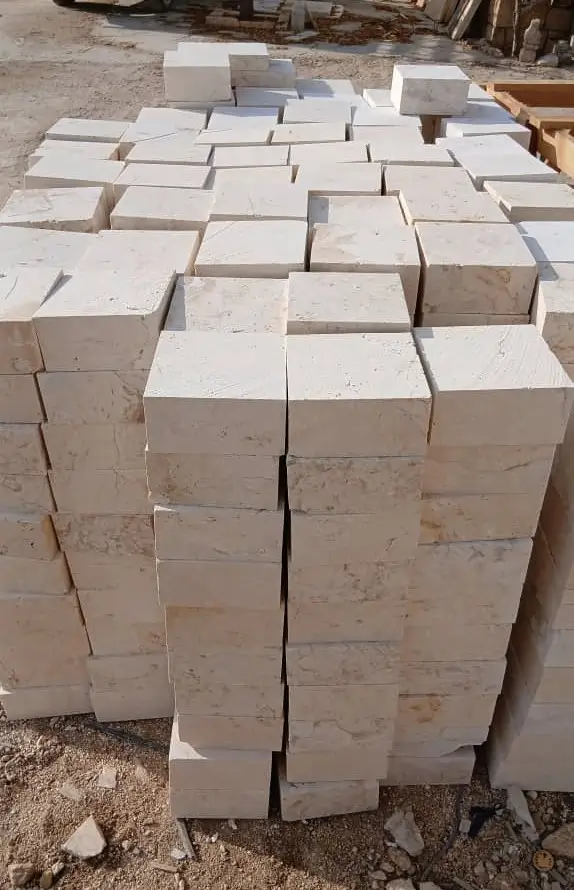
Thickness specification drives more installation outcomes than almost any other single decision. The industry standard for flat cobblestone in pedestrian applications runs 1.5 to 2 inches nominal — but a desert-rated flat cobblestone laying guide should push you toward the upper end of that range for any surface that sees intermittent vehicle overhang or lawn equipment crossings. A 2-inch cobblestone on a properly prepared base handles point loads up to approximately 3,500 PSI before fracture risk becomes meaningful; a 1.5-inch stone under the same conditions reduces that threshold by roughly 30%.
For flat stone paving steps in Arizona yards and driveway installations, flat cobblestones in the 2.5 to 3-inch range provide an additional margin that justifies the modest cost premium. Quality-sourced material from reputable suppliers arrives with calibrated faces that keep bedding sand depth uniform — typically 1 inch of coarse bedding sand over compacted aggregate. Inconsistent thickness in bargain material forces you to compensate in the sand layer, which creates differential settlement within 2 to 3 seasons.
- Pedestrian walkways: 1.5–2 inch nominal thickness on 4-inch compacted base
- Residential driveways: 2–2.5 inch thickness on 6–8 inch base, 95% Proctor compaction
- Heavy vehicle areas: 2.5–3 inch thickness on 10–12 inch base with geotextile separation
- Sloped surfaces above 2%: add drainage channel at base perimeter, increase bedding sand to screeded 1.25 inches
- Flagstaff and high-elevation zones: minimum 8-inch base to accommodate freeze-thaw subgrade movement
Base Preparation and Subgrade Assessment
The single most common error in natural stone walkway pavers across Arizona is treating all desert soil as equivalent. It isn’t. Caliche — calcium carbonate hardpan — appears at depths ranging from 6 inches to 36 inches depending on location, and it behaves completely differently under drainage stress than sandy loam or silty desert soils. Caliche is actually a structural asset when you encounter it below your aggregate base: it provides a stable, non-compressible sub-base that reduces settlement risk. The problem emerges when caliche appears within your aggregate zone, because water perches on top of it rather than draining through.
Probing your subgrade before writing a base specification is non-negotiable. A steel rod driven by hand will tell you within a few minutes whether you’re dealing with soft sandy soil, firm native desert, or caliche hardpan. For installations over caliche, specify a minimum 2% cross-slope on the surface and incorporate a perforated drainage pipe along the uphill edge. Without active drainage planning, hydrostatic pressure from monsoon rain events — which in Arizona can deliver 2 to 3 inches in under an hour — will compromise even a well-prepared base by forcing moisture laterally under the paver field.
At Citadel Stone, we consistently advise project managers to schedule subgrade testing before committing to base aggregate quantities. The difference between a soil that needs 6 inches of base and one that needs 10 inches changes your material order by several tons on a standard driveway installation — and that’s a truck delivery decision you want to make before breaking ground, not after.
Bedding Sand and Joint Fill Requirements
Coarse washed concrete sand — ASTM C33 gradation — remains the correct bedding material for flat cobblestone installations in Arizona. Fine masonry sand is sometimes specified in generic guides, but its finer gradation compacts less predictably under thermal cycling, which is relevant even in Phoenix where surface temperatures can swing 60°F between a summer midnight and midday peak. The bedding sand layer should be screeded to exactly 1 inch before stone placement; Arizona’s low humidity means sand dries faster than in coastal climates, so screen and place in sections rather than screeding the entire area at once.
Joint fill selection matters for long-term structural performance, not just aesthetics. Polymeric sand has become the default for good reason — it resists ant tunneling (a genuine issue in desert installations), prevents joint washout during monsoon events, and maintains interlock that contributes to the load distribution the paver system depends on. For flat cobblestone driveways, use a heavy-traffic polymeric sand rated for joints up to 1.5 inches wide, since natural cobblestone edge variation produces wider joints than machine-cut concrete pavers.
- Bedding sand: ASTM C33 coarse washed concrete sand, 1-inch screeded depth
- Joint fill: heavy-traffic polymeric sand for driveways, standard grade for pedestrian areas
- Joint width target: 0.5–1 inch for machine-cut stone, 1–1.5 inches for natural cobblestone
- Activation: mist activation of polymeric sand in morning hours — avoid midday Arizona heat which can cause premature skinning
- Re-sanding schedule: inspect annually after monsoon season, re-sand any joints showing more than 20% depletion
Slope, Drainage, and Arizona Monsoon Performance
A flat cobblestone driveway installation in AZ that doesn’t account for monsoon hydrology is going to show stress within the first two or three seasons. The desert-rated flat cobblestone laying approach that performs consistently incorporates a minimum 2% cross-slope for pedestrian surfaces and 1.5% for driveways — just enough to move water without creating a slip hazard. Steeper sites need channel drains positioned perpendicular to flow, not just relying on cross-slope alone. These drainage principles apply equally when installing flat stone paving steps in Arizona yards on sloped terrain.
For projects in Sedona, where red rock soils carry high clay content and the topography creates concentrated runoff paths, drainage detailing becomes structurally critical. Clay soil beneath a cobblestone field expands when saturated and contracts during dry periods, producing a cyclical movement that fatigues the edge restraints and gradually opens joints. Adding a 6-inch perimeter French drain backfilled with clean 3/4-inch crushed rock interrupts this cycle by keeping subgrade moisture more consistent between storm events and dry periods.
You can access Arizona flat cobblestone supply Citadel Stone to review material specifications and discuss drainage-specific installation requirements for your project zone before finalizing your design.
Surface Sealing and Long-Term Maintenance
Sealing flat cobblestones in Arizona isn’t optional for installations that face daily UV exposure and periodic water contact — it’s a structural maintenance step as much as an aesthetic one. Unsealed natural stone in the Phoenix basin shows iron oxide migration and mineral leaching within 18 to 24 months due to the combination of intense UV and the high mineral content in Arizona groundwater used for irrigation. A penetrating silane-siloxane sealer applied 28 to 30 days after installation — once the polymeric sand has fully cured — provides the right level of protection without creating a surface film that traps moisture.
The resealing schedule for Arizona flat cobblestone installations should run every 24 to 36 months for pedestrian applications and every 18 to 24 months for driveways. You’ll know resealing is needed when water no longer beads on the surface — instead of running a calendar-based schedule, run a simple water bead test annually. High-gloss topical sealers look impressive in product photography but they create slip hazards when wet and require complete stripping before reapplication, making penetrating sealers the more practical long-term choice for outdoor installations.
- Initial sealer application: 28–30 days post-installation, penetrating silane-siloxane formula
- Driveway reseal interval: 18–24 months based on water bead test results
- Pedestrian area reseal: 24–36 months under normal Arizona UV exposure
- Avoid topical film-forming sealers on exterior cobblestone — they trap moisture and create slip risk
- Clean with pH-neutral stone cleaner before sealing — avoid acid-based cleaners that etch natural stone surfaces
Material Sourcing, Delivery, and Project Planning
Material planning for installing flat cobblestones in Arizona requires you to account for natural variation in cobblestone coverage rates. Unlike concrete pavers, natural flat cobblestones don’t come with a guaranteed square footage per pallet — thickness variation and irregular face dimensions mean you should order 10 to 15% overage minimum, and 20% for patterns that involve significant cutting. Running short of material mid-installation creates a matching problem that can delay your project by weeks if the original production batch is exhausted.
Warehouse stock availability in Arizona varies by season. Contractors who plan spring installations — the busiest hardscape season in the Phoenix metro — should confirm warehouse inventory in January and place orders by February at the latest. Truck deliveries to residential sites require you to verify site access: a loaded flatbed typically needs 12 feet of clearance width and a turning radius that many suburban cul-de-sac properties don’t accommodate without a tailgate-unload plan. Coordinating with your supplier on truck configuration before delivery day prevents the kind of logistics problem that stops a job cold. Our team at Citadel Stone evaluates material directly at the source — checking for consistent face thickness, edge integrity, and lot-to-lot color consistency before it reaches our warehouse — so what you order matches what your project requires.
Getting Your Arizona Flat Cobblestone Specification Right
Installing flat cobblestones in Arizona correctly comes down to one discipline: letting the structural requirements drive your specification, not your design preferences. The aesthetic outcome follows naturally when the base depth is right, the edge restraints meet municipal load standards, the drainage geometry accounts for monsoon hydrology, and the material thickness is matched to the actual load class of the surface. Skipping any one of those decisions — or deferring to a generic installation guide rather than your jurisdiction’s current standards — introduces a failure mode that typically doesn’t reveal itself until the second or third monsoon season, when it’s both expensive and disruptive to correct.
As your Arizona hardscape project takes shape, related stone applications may intersect with your overall site design. How to Choose Granite Setts in Arizona: The Complete Buyer’s Guide offers technical detail on a complementary natural stone surface option that pairs well with flat cobblestone border treatments and driveway apron applications. Builders in Tucson, Chandler, and Tempe rely on flat cobblestones from Citadel Stone sourced from quarries across the Mediterranean and Middle East, chosen for their consistent thickness that simplifies bedding depth calculations in Arizona desert soil.