
Antique cobble pavers in Arizona don’t fail because of heat — they fail because of what heat does when it reverses. The Sonoran Desert’s notorious 40°F to 50°F day-to-night temperature swings put stone and joint systems through micro-expansion and contraction cycles that accumulate stress far more destructively than sustained high temperatures ever could. Specifying antique cobble pavers for Arizona means engineering for that cycle first, and everything else — aesthetics, thickness, surface texture — falls into place once you understand how thermal movement governs your decisions.
How Thermal Cycling Shapes Every Antique Cobble Decision
Arizona’s temperature range is what separates a properly specified installation from one that starts rocking and cracking within three to five years. In the Phoenix metro, daily swings of 45°F are routine in spring and fall, and even in summer you’ll see 95°F nights dropping to 75°F by dawn — then climbing past 110°F by early afternoon. That’s a 35°F cycle happening every single day. Natural cobblestone carries a thermal expansion coefficient of roughly 4.5 to 6.5 × 10⁻⁶ per °F depending on density and mineralogy. For a 12-inch cobble paver running a 50°F daily swing, you’re looking at dimensional movement in the range of 0.003 to 0.004 inches per stone per cycle. That sounds trivial until you realize a 20-foot run of antique cobble pavers undergoes that movement collectively — and the joint system either accommodates it or begins to fail.
The practical implication: your joint width and material selection carry as much engineering responsibility as your base system. Rigid grout in a thermal environment like Tempe will crack within one to two seasons regardless of compressive strength, because mortar’s modulus of elasticity doesn’t accommodate the cyclic differential movement between adjacent cobbles. Polymeric sand or flexible joint compound rated for 120°F+ surface temperatures is the correct specification here, full stop.
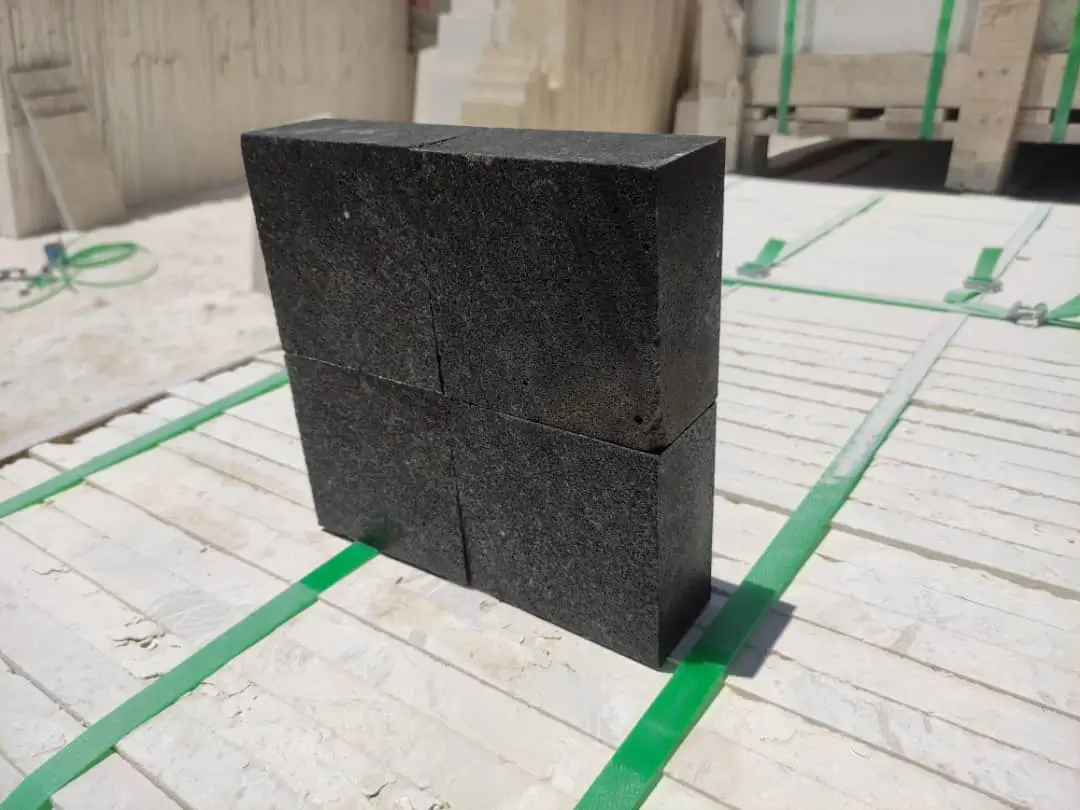
Choosing the Right Weathered Cobble Paver Finishes in Arizona
The weathered cobble paver finishes in Arizona that hold up best through thermal cycling are the ones with moderate surface relief — not perfectly smooth, not aggressively rough. Here’s the nuance most buyers miss: deeply textured surfaces trap debris and hold moisture longer after monsoon rains, which accelerates spalling in pavers with absorption rates above 5%. The antique tumbled finish that looks so appealing in showroom samples behaves differently once Arizona’s monsoon season deposits fine sediment into every crevice.
For patios and walkways, you want antique cobble surface textures for Arizona patios with enough relief to provide slip resistance — targeting a wet dynamic coefficient of friction above 0.60 per ASTM C1028 — but shallow enough to drain within a few minutes of rainfall. A medium tumble with lightly worn edges achieves this balance. The aged cobblestone look you’re after doesn’t require extreme texture depth; the color variation, edge rounding, and micro-pitting from the tumbling process deliver the visual character without creating drainage problems.
How Finish Type Responds to Thermal Stress
Thermal expansion creates differential stress at surface irregularities. Cobbles with deep pitting or sharp angular faces concentrate stress at those points during expansion cycles, making micro-fractures more likely over time. A consistently tumbled surface distributes thermal stress more evenly across the face. At Citadel Stone, we examine surface consistency at the warehouse before palletizing shipments — uneven tumbling across a batch creates mismatched stress profiles when stones are installed adjacently, which shows up as differential cracking after two or three seasons of Arizona cycling.
Antique Stone Paver Thickness for AZ Outdoor Use
Antique stone paver thickness for AZ outdoor use depends on three factors your contractor may not volunteer upfront: the application load, the base compaction rating, and the specific cobble’s modulus of rupture. For residential patios and walkways in Phoenix or Tucson, 2.5-inch nominal thickness is the practical minimum for natural cobble. The 2-inch pavers you’ll see at lower price points are acceptable for purely decorative garden paths with no foot traffic concentration, but they don’t carry the structural reserve to handle Arizona’s thermal cycling stresses plus point loading without risk of cracking.
Driveway applications require a different calculation entirely. Your minimum there is 3 to 3.5 inches of cobble thickness with a properly graded aggregate base of at least 8 inches compacted to 95% modified Proctor density. The combination of vehicle loading and repeated thermal cycling demands that structural margin. One thing that catches specifiers off guard: thicker cobbles actually moderate the thermal cycling effect on your base system because their greater mass slows the rate of temperature change at the stone-base interface, reducing differential expansion stress between the paver and the compacted aggregate beneath it.
Base Preparation and Thermal Movement Compatibility
The base system and the cobble thickness work as a coupled system in thermal terms. A 3-inch cobble on a poorly prepared base will perform worse than a 2.5-inch cobble on a properly engineered base. Your aggregate base needs to be crushed granite or road base compacted in lifts no greater than 4 inches, with each lift verified at 95% compaction before adding the next. Arizona’s native caliche layers can be deceptive — they feel solid underfoot during installation but expand and contract at rates different from your compacted base aggregate, creating differential heave that shows up as rocking cobbles within a year or two.
In Phoenix‘s west valley areas, expansive soil conditions add another variable. Clay content in those soils responds to moisture — and Arizona’s monsoon season delivers moisture in short, intense bursts. Your base design needs to address drainage geometry so water doesn’t pond against the underside of your cobble installation; standing water trapped in a clay-heavy subbase expands more dramatically than the aggregate above it, pushing pavers upward unevenly.
What to Know About Sourcing Aged Cobble Pavers Across Arizona
Sourcing aged cobble pavers across Arizona involves more supply chain complexity than most buyers anticipate. Genuine antique cobblestones — reclaimed from European streets and plazas — are available but come with variable geometry, inconsistent thickness, and limited batch sizes. Most projects in Arizona’s residential and commercial market are better served by tumbled natural cobble produced specifically to replicate that aged appearance with consistent dimensions and predictable structural properties. The production cobble gives you the aesthetic without the installation headaches of trying to set stones with 0.5-inch to 1-inch thickness variation in the same course.
Lead times from the warehouse to your project site deserve careful planning. Stock availability for antique cobble varies significantly by stone type and color. At Citadel Stone, we maintain Arizona warehouse inventory that typically supports 1 to 2 week delivery timelines — but for larger projects requiring full-pallet quantities of a specific finish or color, confirming warehouse stock levels 4 to 6 weeks before your installation date prevents costly scheduling delays. When your truck delivery window aligns with your crew’s installation schedule, the project runs efficiently; when it doesn’t, you’re either paying for storage or rushing preparation.
Batch Consistency and What to Check Before Delivery
Request a physical sample from the production batch before committing to full delivery. Color variation is inherent and expected in natural stone, but thickness consistency within a batch should be within 0.25 inches across the run. Ask your supplier to confirm the batch’s absorption rate — for Arizona applications, you want cobble with absorption below 4% by weight per ASTM C97 to minimize moisture-related spalling risk during monsoon season. Batches with absorption above 6% will require more aggressive sealing schedules and carry higher long-term maintenance costs.
You can review our antique cobble pavers for Arizona to see available stock options and batch specifications that meet these performance thresholds for the Arizona climate.
Day-Night Swing Performance: What the Numbers Actually Mean
Arizona doesn’t have the severe freeze-thaw cycles you’d find in Colorado or Utah, but the elevation gradient across the state creates more exposure than most buyers realize. Tucson sits at 2,389 feet and experiences genuine sub-freezing nights multiple times each winter — the freeze-thaw cycles that occur there are real, not theoretical. Flagstaff sees dozens of true freeze-thaw cycles annually. Even in the low desert, nights dropping to 35°F to 38°F in December and January while days climb to 65°F to 70°F create enough thermal cycling stress to damage improperly specified antique cobble pavers over a decade.
The engineering concern isn’t whether water actually freezes inside the stone — it’s cumulative fatigue from cyclic stress. Each day-to-night temperature swing loads and unloads the joint system and the stone itself. Over ten to fifteen years of Arizona’s 300+ daily cycles annually, that fatigue accumulates. Cobble with higher density and lower absorption weathers this cumulative stress better than porous stone, which is why specifying absorption rates matters even in climates that don’t experience hard freeze conditions consistently.
Expansion Joint Spacing for Arizona’s Temperature Range
Generic installation guides suggest expansion joints every 20 feet for natural stone. In Arizona’s thermal environment, reduce that to 12 to 15 feet. The math supports this: with 50°F daily swings and a 60-foot patio, cumulative thermal movement across that run exceeds what polymeric joint sand can absorb without the individual stones beginning to bind against each other. Your perimeter gaps at building edges and hardscape transitions need to be at least 0.5 inches — not the 0.25-inch gap you’d see in moderate climates — to accommodate peak summer expansion without the cobble field pushing against fixed elements.
Specifiers often underestimate the interaction between morning solar exposure and thermal expansion rate. On an east-facing patio, the surface can go from 45°F at dawn to 90°F within 90 minutes of sunrise in April — a 45°F swing in less than two hours. That rate of change is more stressful to joint systems than the same temperature differential achieved slowly over six hours. Orient your expansion joint layout to account for the direction of fastest thermal loading, not just the total run length.
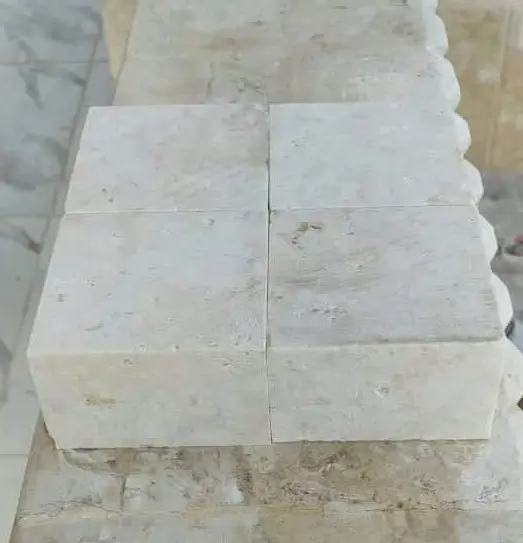
Sealing Protocols That Match Arizona’s Thermal Reality
Sealing antique cobble pavers in Arizona is a non-negotiable maintenance step, but the product selection and application timing matter more than most guides acknowledge. A penetrating silane-siloxane sealer with UV inhibitors is the correct product class for Arizona’s solar exposure. Film-forming sealers — the ones that leave a visible sheen — trap moisture beneath the film during monsoon season and then fail at the bond line when the surface temperature exceeds 140°F under direct July sun. You’ll see the resulting bubbling and peeling within 18 to 24 months.
- Apply penetrating sealer when surface temperature is between 50°F and 85°F — early morning in summer, midday in winter
- Allow 72-hour cure minimum before exposure to foot traffic or moisture
- Re-seal on a 24-month schedule in low-desert elevations, 18-month schedule in areas with more freeze-thaw cycles like Tucson’s surrounding foothills
- Clean the surface with pH-neutral cleaner before each application — acidic cleaners etch cobble surfaces and increase absorption rate over time
- Avoid applying sealer immediately after monsoon season — wait until the stone has fully dried, typically 5 to 7 days after the last rainfall
The interaction between sealer performance and thermal cycling is worth understanding in detail. Sealers expand and contract along with the stone surface — a silane-siloxane product rated for -20°F to 250°F surface temperatures maintains bond integrity through Arizona’s full thermal range. Products rated for narrower ranges begin micro-cracking within the penetrating matrix, which compromises moisture exclusion exactly when you need it most during monsoon season.
Design Applications Where Antique Cobble Performs Best
Antique cobble pavers in Arizona projects earn their highest performance-to-cost ratio in applications where the thermal mass of natural stone is an asset rather than a liability. Walkways, courtyard surfaces, and pool surround borders are the ideal use cases — areas where thermal mass moderates foot surface temperature and the cobble’s natural color variation reduces the visual impact of any minor differential movement over time.
- Entry courtyards with partial shade: thermal mass stabilizes surface temperature through the hottest hours, making barefoot walking comfortable after 4 PM
- Raised terrace borders: cobble used as border definition rather than full field coverage reduces cumulative thermal movement concerns
- Motor court edging: structural loads are carried by the primary driveway surface, with cobble providing decorative framing that experiences lighter loading
- Pool deck perimeter: keep cobble away from chemical exposure zones directly adjacent to pool edges — sealer degradation from pool chemistry accelerates thermal cycling damage
- Garden pathway networks: the forgiving aesthetic of antique cobble means minor differential settlement reads as character rather than defect
Projects in Tucson‘s historic neighborhoods benefit particularly from antique cobble’s visual compatibility with the region’s Sonoran and Spanish Colonial architecture. The warm earth tones and worn edges complement adobe walls and terracotta rooflines without the visual disconnection that occurs when contemporary concrete pavers are used in historic design contexts.
Buyer’s Checklist: Confirming Your Antique Cobble Paver Order
The purchasing decision for antique cobble pavers involves more technical verification than most natural stone products because the performance variables matter so significantly in Arizona’s thermal environment. Work through these confirmations before signing off on any order.
- Confirm absorption rate per ASTM C97 — request the test certificate, not a verbal assurance
- Verify modulus of rupture per ASTM C99 — minimum 1,200 PSI for residential applications, 1,800 PSI for vehicular areas
- Check thickness tolerance across the batch — pull five samples from different pallet positions and measure
- Confirm the stone type’s thermal expansion coefficient — limestone and granite behave differently in thermal cycling
- Ask about batch size availability — undershooting your quantity and reordering from a second batch risks color inconsistency
- Verify truck access to your delivery site — large pallet deliveries require adequate vehicle clearance and a drop zone that doesn’t create staging problems for your crew
- Confirm warehouse lead time against your installation schedule — 2 weeks of buffer minimum
- Request manufacturer’s recommended joint spacing for thermal applications in climates with 40°F+ daily swings
The difference between a successful antique cobble project and a problematic one often traces back to pre-order verification that takes less than 30 minutes. Test certificates, batch measurements, and delivery logistics don’t take long to confirm — but skipping them costs significantly more to correct after installation.
Getting Your Antique Cobble Paver Specification Right for Arizona
The installations of antique cobble pavers in Arizona that perform well for 20 or more years share a consistent foundation: the thermal cycling reality of the desert was engineered into the specification from the start, not addressed as an afterthought. Your joint selection, expansion spacing, stone thickness, base compaction, and sealer product all need to work together as a system calibrated for Arizona’s daily temperature ranges — not adapted from a generic national guideline that treats the Sonoran Desert like a moderate-climate environment. Get the thermal engineering right and everything else — the aesthetics, the maintenance schedule, the long-term cost profile — falls into line. For a thorough examination of the cost considerations involved in your next Arizona hardscape project, How to Choose Cobblestone Pavers in Arizona: Buyer’s Guide provides detailed guidance on pricing, material comparison, and budget planning for cobble applications across the state. Architects and builders in Scottsdale, Chandler, and Peoria select Citadel Stone antique cobble pavers for their naturally weathered surface textures, which complement Arizona’s desert architectural palette without requiring additional finishing treatments.