
Code compliance is the first variable that determines whether your stone block installation survives Arizona’s inspection process — and that reality shapes every decision that follows, from base depth to block thickness. Installing natural stone blocks in Arizona isn’t just a material performance challenge; it’s a structural engineering exercise governed by county-level requirements that vary meaningfully across the state. Understanding where those requirements live before you break ground separates projects that pass first inspection from those that require expensive rework.
Arizona Building Codes and What They Require for Stone Block Installations
Arizona operates under the International Building Code (IBC) as its adopted baseline, but county amendments create real variation you need to account for. Maricopa County, which governs the areas around Chandler, has specific requirements for retaining walls exceeding 30 inches in exposed height — anything above that threshold typically triggers a permit, a soils report, and engineered drawings. You can’t skip that process with natural stone block walls the way you might with smaller decorative landscape features.
Seismic design categories are often overlooked in Arizona stone block projects, but the state sits in moderate seismic zones in several regions. The IBC’s seismic provisions require that retaining structures account for lateral earth pressure plus a seismic surcharge — this directly affects your block mass specification and the depth of your dead-man anchor courses. Stone block retaining wall installation in Arizona means you’re not just stacking weight; you’re designing a gravity structure that needs to resist dynamic loading.
- Walls over 30 inches (exposed height) require permits in most Arizona jurisdictions
- Engineered drawings are mandatory when surcharge loads (driveways, structures) exist within a 1H:1V zone behind the wall
- Seismic surcharge calculations per IBC Section 1803 apply in designated seismic zones
- Local amendments in Maricopa, Pima, and Yavapai counties add layer-specific requirements beyond the base IBC
- Dead-man anchor courses must be specified at intervals determined by wall height and soil bearing capacity
Desert Soil Prep for Stone Blocks Across Arizona Landscapes
Desert soil prep for stone blocks in AZ starts with recognizing that Arizona’s native soils are not uniform — caliche hardpan, expansive clay lenses, and loose aeolian sand can appear within the same project footprint. A visual assessment at grade level tells you almost nothing useful. You need a test pit or at minimum a 36-inch hand probe to understand what you’re actually working with before you spec your base aggregate depth.
Projects in Peoria frequently encounter caliche at 18 to 30 inches — that dense calcium carbonate layer can actually function as a stable sub-base when it’s continuous and unweathered. The problem is discontinuous caliche, where hard pockets alternate with loose soil. That condition creates differential settlement that will crack or tip your stone block wall within three to five seasons regardless of how well you laid the courses above it.
- Excavate 8–12 inches below final grade for base aggregate on freestanding walls; 12–18 inches for retaining applications
- Replace expansive clay within 24 inches of your footing zone with compactable fill (Class II base rock or crusher run)
- Proof-roll your sub-base with a plate compactor before placing aggregate — soft spots will deflect visibly
- Target 95% relative compaction per ASTM D698 for all aggregate base layers
- In sandy desert soils with low bearing capacity, extend your base footprint 6 inches beyond the block face on each side
Caliche removal is expensive and often unnecessary. At Citadel Stone, we recommend testing the caliche layer with a pick — if it’s continuous and takes significant force to break, incorporate it as sub-base and focus your preparation energy on the 8-inch aggregate layer above it. If it’s soft or fractured, remove it completely and replace with engineered fill.
Load-Bearing Specifications for Installing Natural Stone Blocks in Arizona
The structural performance of your installation depends on selecting stone blocks with the right compressive strength for the load category. For residential retaining walls, you’re looking for a minimum compressive strength of 1,800 PSI (ASTM C170), but for walls with vehicular surcharge — driveways, parking areas — that threshold moves to 3,000 PSI minimum. Natural stone blocks in the granite and basalt families routinely exceed 10,000 PSI compressive strength, which provides significant safety margin over engineered concrete block alternatives.
Block thickness drives your wall’s capacity to handle batter (the slight backward lean that distributes lateral pressure) without shear failure at the joint interface. For walls up to 4 feet in exposed height, a 6-inch nominal block thickness is the standard minimum. Go to 8-inch blocks when you’re pushing 5 to 6 feet or when you have saturated soil conditions behind the wall — water-saturated soil can triple the lateral pressure your wall needs to resist compared to dry conditions.
- Minimum compressive strength: 1,800 PSI residential, 3,000 PSI under vehicular surcharge
- Natural stone blocks typically deliver 5,000–12,000 PSI — factor in the surplus when designing for seismic loading
- Batter spec: 1 inch of backward lean per foot of exposed wall height is the standard field practice
- Block thickness minimum: 6 inches for walls to 4 feet, 8 inches for 4–6 foot walls
- Dead-man anchor courses: every third course for walls exceeding 3 feet of exposed height
Base Depth and Edge Restraint: What Arizona’s Regulatory Environment Requires
Arizona’s frost line depth is technically listed at 0 to 6 inches for the low desert (Phoenix metro, including Tempe and Chandler), but don’t let that number create false comfort. The thermal cycling between summer and winter in the desert isn’t about frost heave — it’s about expansion and contraction of the stone itself and the underlying soils under extreme temperature swings. You need a minimum 6-inch compacted aggregate base for any freestanding stone block installation, and 8 inches for anything carrying foot traffic or light vehicular loads.
For communities in Tempe, where urban heat island effects push surface temperatures 10 to 15°F above regional averages, the thermal expansion coefficient of your stone blocks becomes a real specification factor. Natural stone has a thermal expansion coefficient roughly half that of concrete — approximately 3–5 × 10⁻⁶ per °F compared to concrete’s 5.5–7 × 10⁻⁶ — which is one of the reasons natural stone block walls in dense urban environments outperform concrete masonry block installations over multi-decade timeframes.
- Minimum base depth: 6 inches compacted aggregate (low desert), 8 inches for traffic-bearing applications
- Edge restraint is mandatory for any paving application adjacent to stone block walls — use steel or aluminum edging pinned at 12-inch intervals
- Geotextile separation fabric between native soil and base aggregate is standard practice in Arizona’s sandy soils — it prevents migration that degrades compaction over time
- For installations on slopes exceeding 3:1, a concrete toe footing may be required per local grading ordinances
- Drainage aggregate (3/4-inch clean stone) behind retaining walls is not optional — Arizona monsoon events can deliver 2–3 inches of rain per hour in concentrated bursts
Step-by-Step Installation Process for Natural Stone Blocks in Arizona
Follow a clear sequence here — skipping steps to save time on a stone block installation is the most reliable way to create expensive remediation work later. The process below reflects how to lay stone blocks across Arizona landscapes where soil conditions and code requirements create a more demanding installation environment than most generic guides acknowledge.
Site Layout and Excavation
Stake your wall line with batter boards and establish grade control before any excavation begins. Your excavation needs to account for base aggregate depth plus one course of buried block below finish grade — that buried course is non-negotiable structurally and is typically required by Arizona’s grading inspectors on permitted walls. Cut your trench width to the block depth plus 12 inches for working room and drainage aggregate placement.
Base Aggregate Placement and Compaction
Place your Class II base rock or crushed aggregate in 3-inch lifts and compact each lift to 95% relative compaction before adding the next. This is where most field installations fail — single-lift placement of 8 inches of aggregate compacted in one pass leaves the lower portion under-compacted and subject to consolidation settlement. Rent a plate compactor rated for your material — a 200-pound plate compactor is minimum for 3/4-inch aggregate; step up to a 300-pound unit for crusher run.
First Course: Your Most Critical Elevation Decision
Level your first course to within 1/8 inch over 10 feet using a level and string line. This is not the place to save time. Any error in the first course amplifies with every course stacked above it. Natural stone blocks don’t have the manufactured tolerances of concrete masonry units, so you’ll need to adjust individual blocks with a rubber mallet and fine sand or bedding sand for leveling.
Explore Arizona stone blocks from Citadel Stone to confirm available block dimensions before finalizing your course layout — dimensional consistency within your block selection affects how tightly you can control your level tolerance across long runs.
Coursing with Staggered Joints
Running bond pattern — where each block’s vertical joint is offset by at least one-third of the block length from the course below — is the structural minimum for any retaining application. Stacked joints (vertical joints aligned between courses) create shear planes that can propagate under lateral load. Your Arizona building inspector will typically check for this on permitted walls, and it’s a standard rejection point during inspections.
Drainage Core and Backfill Sequence
Install your drainage aggregate (3/4-inch clean crushed stone) in the 12-inch zone directly behind the wall as you build up each course — don’t wait until the wall is complete and try to pour drainage aggregate over the top. Compact your structural backfill in 6-inch lifts using a hand tamper or jumping jack compactor within 3 feet of the wall; full plate compactor distance starts at 3 feet back to avoid lateral pressure during compaction. This sequence matters because premature backfill compaction against an unrestrained wall is a common cause of first-course displacement.
What Arizona Building Inspectors Actually Check
Understanding the inspection sequence for permitted stone block retaining wall projects in Arizona is practical knowledge that saves you re-inspection fees. Most Arizona counties conduct at least two inspections on permitted wall projects: a footing inspection before you place your first course, and a final inspection after completion. Some jurisdictions in Maricopa County require a special inspection by a third-party inspector for walls over 4 feet or those carrying surcharge loads.
- Footing inspection: base depth, width, compaction (bring your compaction test results if available), geotextile placement
- Drainage aggregate: type, placement zone, depth — inspectors will probe the drainage zone with a rod
- Batter compliance: they’ll measure the back face lean against your permit drawings
- Dead-man anchor course installation: depth of embedment and spacing must match engineered drawings
- Final grade: drainage away from the wall base is required — minimum 2% slope for the first 6 feet
Documentation matters more than most installers realize. Keep your material data sheets for the stone blocks on site — inspectors in stricter jurisdictions may ask for evidence of compressive strength compliance. Our technical team at Citadel Stone provides material documentation with every order, which has helped Arizona contractors clear inspection queries without project delays.
Selecting the Right Natural Stone Block for Arizona Structural Applications
Arizona stone block projects demand material that handles thermal cycling, UV exposure, and physical loading simultaneously. The desert environment doesn’t give your material a recovery period — temperature swings from 115°F surface temperature at noon to 65°F at 3 a.m. during summer monsoon season create real stress at joint interfaces and within the stone matrix itself. Blocks with low absorption rates (below 3% per ASTM C97) prevent moisture infiltration during monsoon events from accelerating spalling cycles — a specification point the Arizona-rated stone block wall building guide principle reinforces directly: match your material’s physical properties to the specific load and moisture exposure your application creates.
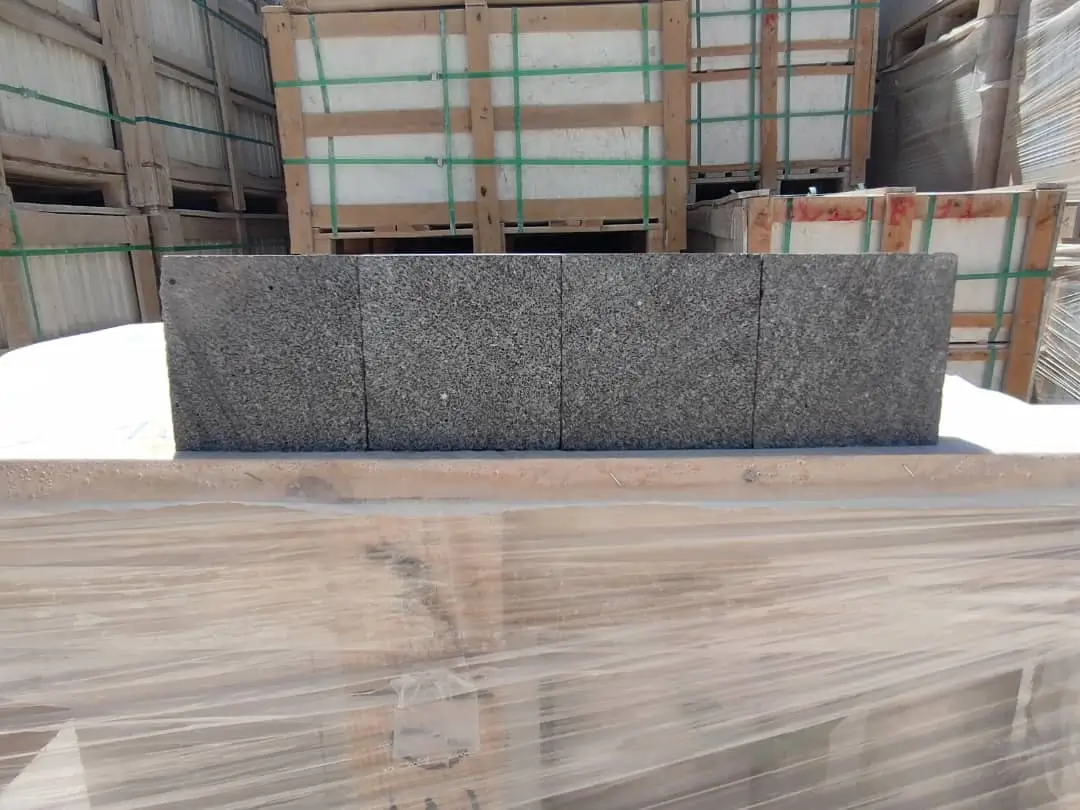
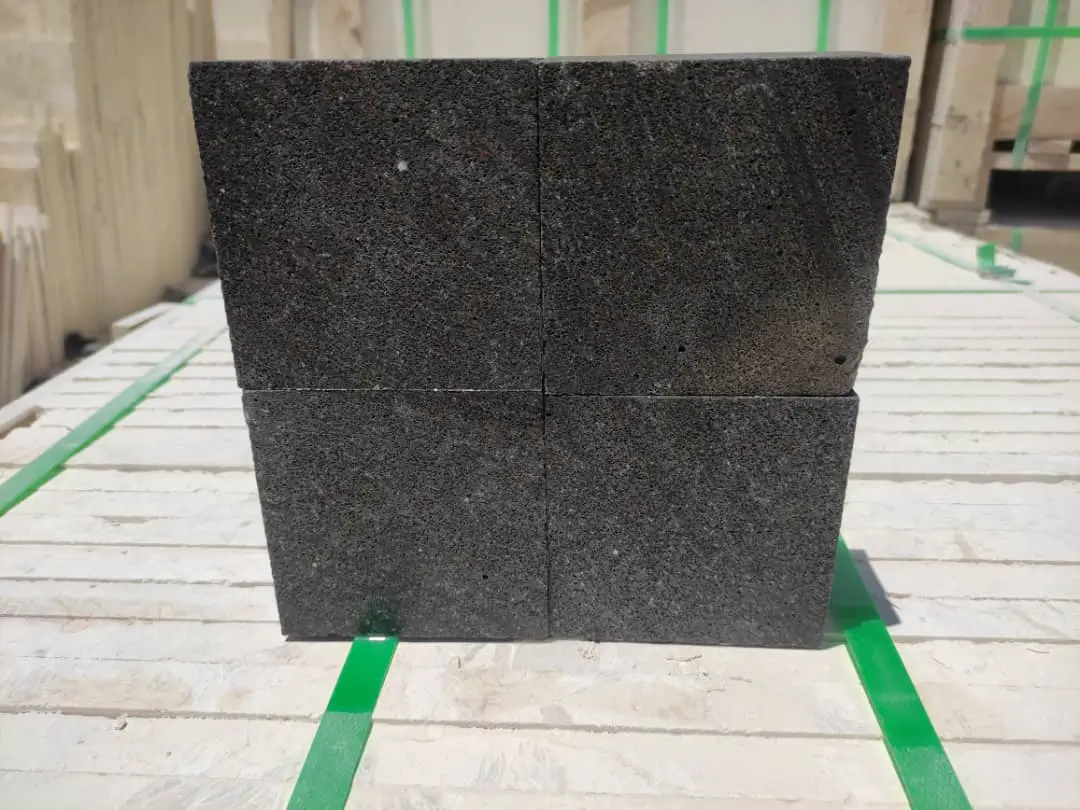
Granite and basalt natural stone blocks are the workhorses for structural Arizona applications. Their density (typically 160–175 lb/ft³) provides the gravity resistance that makes them reliable in retaining applications without mortar. Limestone and sandstone can work in freestanding decorative applications, but their higher absorption rates (often 5–10%) make them less suitable for below-grade retaining wall use in Arizona’s monsoon rainfall environment.
- Granite blocks: ideal for retaining and structural applications — low absorption, high compressive strength, excellent thermal stability
- Basalt blocks: similar performance to granite with distinctive dark color — excellent for contemporary architectural applications
- Limestone blocks: appropriate for freestanding garden walls and raised planters — avoid below-grade retaining use without enhanced drainage
- Sandstone: decorative applications only in Arizona — absorption rates too high for structural retaining wall use
- Verify block flatness tolerance before ordering — blocks with more than 1/4-inch warp over the bed face require additional shimming time in the field
Ordering, Delivery Logistics, and Project Timeline Planning
Your project’s truck access constraints directly affect your delivery planning — natural stone blocks are heavy materials, and a standard delivery truck loaded with 20 tons of stone needs at minimum a 12-foot clearance width and a turning radius of 40 feet to maneuver without damaging your site or neighboring property. Plan this before you order, not after the truck arrives at a gate it can’t pass through.
Warehouse stock availability varies seasonally in Arizona. Spring and fall are peak installation seasons, and popular granite and basalt block sizes can move quickly through regional warehouse inventory between February and May. Confirming warehouse availability before finalizing your project schedule is a straightforward step that prevents the most common project delay we see — a job that’s fully permitted and site-prepped waiting on stone that won’t arrive for three additional weeks because it needs to be re-ordered from the quarry.
- Verify truck access: minimum 12-foot width, 40-foot turning radius for standard stone delivery vehicles
- Confirm warehouse inventory 4–6 weeks before your installation date during peak season (Feb–May, Sept–Oct)
- Order 5–8% overage to account for breakage, cutting waste, and course adjustments — returning pallets is easier than waiting for a supplemental delivery
- Block weights typically run 40–200 lbs per unit depending on size — factor in your mechanical handling equipment requirements before the truck arrives
- Coordinate your delivery date with your permit approval timeline — having stone on site before your footing inspection is approved creates storage and access complications
Getting Your Installing Natural Stone Blocks Arizona Project Right
Treating code compliance as the foundation of your specification process — not an afterthought you address when the inspector shows up — is what separates durable installations from costly callbacks. The soil preparation, base depth, drainage design, and material selection decisions all flow from understanding what Arizona’s regulatory environment requires and what the desert’s physical conditions demand. Projects that skip that sequence tend to produce walls that look right initially and reveal their structural weaknesses two or three monsoon seasons later — when the repair cost is far higher than the upfront specification work would have been.
Ongoing care extends the life of any stone block installation significantly. Once your wall is built and inspected, the same Arizona climate factors that shaped your installation decisions — thermal cycling, monsoon moisture, UV intensity — continue acting on the stone surface over time. How to Maintain Garden Stone Blocks in Arizona’s Climate covers the long-term maintenance practices that keep Arizona stone block installations performing across decades, making it a natural next step after completing your project.
Builders in Scottsdale, Chandler, and Flagstaff rely on Citadel Stone natural stone blocks sourced from select natural stone quarries worldwide, chosen specifically for their density and resistance to Arizona’s shifting desert subsoils.