
Surface oxidation is the detail that separates graphite paving that looks stunning after a decade from installations that look tired within three years — and installing graphite block paving in Arizona puts that variable front and center from day one. The UV index across Arizona’s low desert consistently ranks among the highest in North America, and natural stone responds to that radiation in ways that most installation guides don’t fully address. Your specification decisions before a single block is laid determine how the material holds its depth of color and surface integrity through years of direct sun exposure.
Why UV Exposure Defines Graphite Paving Performance in Arizona
Graphite’s visual appeal comes from its iron-mineral matrix — the dense, dark tones that make it read as sophisticated and bold in any hardscape design. That same mineral composition makes it reactive to prolonged UV bombardment in ways that lighter stones don’t experience as dramatically. Photochemical oxidation breaks down surface iron compounds gradually, shifting the color from deep charcoal toward a washed-out gray that no amount of cleaning reverses without professional restoration. You’re not dealing with fading the way a painted surface fades — you’re dealing with a chemical change in the top 2–3mm of the stone face.
Arizona’s UV radiation isn’t uniform either. South and west-facing installations in open desert exposures receive meaningfully more cumulative radiation than installations with afternoon shade cover. Your design orientation directly affects how aggressively you need to protect the surface and how frequently you revisit your sealing schedule.
- UV index in Arizona low desert averages 10–12 during summer months, with peak values exceeding 13
- South-facing surfaces can accumulate 30–40% more annual UV load than north-facing equivalents
- Iron-rich stones like graphite oxidize faster under direct UV than silica-dominant materials
- Surface oxidation begins within 12–18 months without sealer protection in unshaded Arizona installations
- Restoration grinding to remove oxidized surface layers costs significantly more than preventive sealing
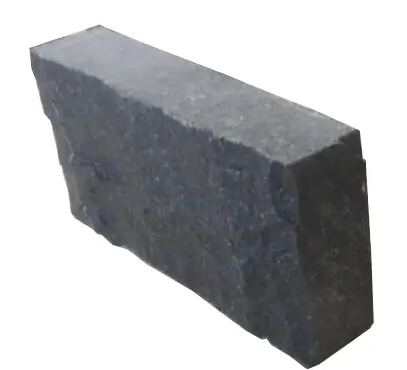
Base Preparation: Getting the Foundation Right Before You Think About Stone
The compressive strength of graphite block — typically ranging from 8,000 to 12,000 PSI depending on quarry source and finishing — is genuinely impressive, but it means nothing if the base beneath it moves. Arizona’s native soils present two distinct challenges depending on your project location. Caliche hardpan, common across much of the Chandler and Gilbert corridor, is structurally excellent when properly excavated but creates drainage problems if you don’t cut through it to establish a weep layer below your aggregate base.
Sandy desert soils at the western fringes, including parts of Peoria, are looser and more susceptible to lateral migration under load. In these conditions, your aggregate base needs to run a minimum of 6 inches for pedestrian applications and 8–10 inches for driveway loads — not the 4-inch minimums you’ll find in general paving guides written for temperate climates. Desert-rated block paving across Arizona driveways demands this deeper base preparation to perform as specified over time.
- Excavate to a minimum of 10–12 inches below finished grade for driveway installations
- Compact subgrade to 95% proctor density before introducing base aggregate
- Use 3/4-inch crushed angular aggregate — rounded river rock creates shear planes under cyclic loading
- Establish a 1–2% cross-slope in the base to direct drainage away from structures
- Install a geotextile fabric layer at the subgrade interface in sandy soil conditions to prevent aggregate migration
- Allow compacted base to settle 48–72 hours before setting bedding sand
Your bedding sand layer should run 1 inch nominal before compaction, settling to roughly 3/4 inch after you’ve set and tamped the blocks. Coarser bedding mixes — anything above a ASTM C33 sand spec — create inconsistent set heights that telegraph through the finished surface, which is more visible on dark graphite than on lighter materials.
Selecting the Right Thickness for Your Arizona Application
Thickness selection for graphite block paving in Arizona isn’t purely a load calculation — it’s also a thermal mass decision that affects UV performance. Thicker blocks, in the 2.5–3 inch range, retain more subsurface temperature stability, which reduces the micro-cracking stress at the surface that accelerates UV-related oxidation. Thinner blocks, while cost-effective, experience greater differential expansion between their exposed face and their shaded underside, and over time that cycling opens surface microfractures that trap oxidation byproducts.
For residential driveways with standard passenger vehicle loads, 2.375-inch (60mm) nominal blocks are the practical minimum. At Citadel Stone, we recommend stepping up to 3.125-inch (80mm) blocks when you’re dealing with SUVs, trucks, or any commercial delivery traffic — the point load differential at a truck tire contact patch is enough to crack 60mm blocks over caliche subgrades that have any vertical relief variation.
- 60mm blocks: residential pedestrian patios, walkways, low-traffic areas
- 80mm blocks: residential driveways, light commercial pedestrian plazas
- 100mm blocks: heavy vehicle access, commercial driveways, loading zones
- Consistent thickness within a single delivery lot matters — verify tolerance at warehouse before accepting the order
How Your Laying Pattern Affects Long-Term UV Performance
The geometric pattern you choose isn’t just aesthetic — it has a real effect on how UV stress distributes across the installed surface. Herringbone patterns at 45 or 90 degrees interlock the blocks so that lateral load transfers through the joint network rather than concentrating at individual block edges. That interlock reduces micro-movement between adjacent blocks, which is the mechanism that breaks down joint sand fill and eventually exposes the bedding layer to UV and moisture cycling.
Running bond patterns look clean and contemporary, but they create continuous straight joints that act as fault lines under thermal expansion. In Chandler, where surface temperatures on dark paving regularly exceed 160°F in July, that thermal expansion load is real and measurable. A graphite block with a coefficient of thermal expansion around 4.5–5.5 × 10⁻⁶ per °F will expand roughly 0.07 inches across a 20-foot run between morning and peak afternoon temperature — and your joint pattern determines whether that movement is distributed or concentrated.
- Herringbone 45°: highest interlock, best load distribution, recommended for driveways
- Herringbone 90°: strong interlock, easier cutting at borders, suitable for patios
- Basket weave: moderate interlock, aesthetic appeal, suitable for low-traffic pedestrian applications
- Running bond: lowest interlock, continuous straight joints — avoid on driveways and sun-exposed large areas
- Stack bond: not recommended for outdoor installation in Arizona
Installing Graphite Block Paving in Arizona: The Sequence That Matters
Installing graphite block paving in Arizona follows a logical sequence, but a few steps in that sequence are non-negotiable in ways that generic guides understate. Screeding your bedding sand in the early morning hours is one of those details — by mid-morning in summer, exposed sand in direct sun begins losing moisture rapidly, and dry bedding sand doesn’t consolidate properly under the blocks. Your first few hours of morning work are the most productive and the most technically important.
Set your string lines before any blocks go down, checking diagonal measurements across the installation area to verify square. Any angular drift compounds as you work outward from the starting corner, and correcting a drift at row 40 requires pulling and resetting from the point it started — a half-day of lost work on a large project. Snap chalk lines at 4-foot intervals across your screed plane as a visual guide to keep rows tracking true.
- Step 1: Excavate, prepare subgrade, compact to specification
- Step 2: Install geotextile, place and compact angular aggregate base in two lifts
- Step 3: Set edge restraints — concrete haunching or purpose-made plastic edge restraint systems both work, but concrete provides better resistance to thermal expansion forces
- Step 4: Screed bedding sand to 1-inch depth in small working sections — never screed more than you can set in 2–3 hours
- Step 5: Set blocks hand-tight, maintaining uniform 3mm joint gaps using spacers
- Step 6: Plate compact in two passes — first at 50% power, second at full power — using a rubber-soled compactor plate to avoid surface scoring
- Step 7: Fill joints with polymeric sand, compact lightly, then activate with water mist per manufacturer instructions
- Step 8: Allow joint sand to cure 24 hours before traffic
For desert-rated block paving across Arizona driveways, polymeric joint sand is not optional — standard sand migrates under the combination of UV heat cycling and the occasional monsoon washout that hits southern Arizona every summer. You’ll lose standard joint fill within 18 months in a typical Peoria or Gilbert installation without polymeric product.
You can explore the full product range available for your project through Arizona graphite block paving Citadel Stone, where warehouse stock levels and current sizing availability are updated regularly.
The Sealing Schedule That Actually Protects Against Arizona UV
Sealing graphite block paving in Arizona is the single highest-leverage maintenance decision you’ll make — and the timing of the first seal matters as much as the product you choose. Most installers apply sealer immediately after joint sand activation, which sounds logical but actually traps residual moisture in the block and joint system. Wait a minimum of 7 days after installation, and 14 days if your project coincides with monsoon season, before applying your first sealer coat.
Penetrating impregnator sealers — silane-siloxane chemistry at 40%+ active solids concentration — are the correct product class for graphite block in Arizona UV conditions. Film-forming topical sealers look impressive initially, but they UV-degrade from the top down, developing a milky or yellowed appearance within 18–24 months of direct Arizona sun exposure. The film itself then becomes a maintenance liability, requiring strip-and-recoat cycles that are labor-intensive and risk surface damage during stripping.
- First application: 7–14 days post-installation, two coats with 2-hour inter-coat drying time
- Annual inspection: check for water beading performance — loss of beading indicates sealer depletion
- Reapplication cycle: every 2–3 years for south-facing unshaded installations; every 3–4 years for shaded or north-facing applications
- Apply sealer in early morning — afternoon application in Arizona heat causes flash evaporation before adequate penetration
- Color-enhancing impregnators restore oxidation-dulled graphite tone without creating a surface film
- Avoid petroleum-based sealers — they soften in sustained 160°F+ surface temperatures common to Arizona summers
Finish Selection and UV Resistance: What to Specify and Why
The finish on your graphite blocks is your first line of UV defense, and laying natural stone pavers AZ homeowners rely on in desert conditions consistently perform better when they’re sawn-and-flamed or sandblasted rather than polished. A honed or polished graphite surface has a thin micro-crystalline layer that UV radiation attacks directly, causing differential surface oxidation that reads as uneven color patches. Textured or flamed finishes, by contrast, have a diffuse surface that scatters UV rather than concentrating it at a continuous flat plane.
Flamed finishes also offer practical safety benefits — surface roughness values above 0.8 BPN (British Pendulum Number) are easily achieved with a proper flame treatment, keeping your installation well above the ANSI A326.3 wet DCOF threshold of 0.42 for exterior pedestrian surfaces. In Gilbert, where afternoon monsoon storms create sudden wet surface conditions on dry-baked paving, that slip resistance margin matters. These are precisely the conditions where the natural stone pavers AZ homeowners rely on must deliver consistent traction season after season.
- Flamed finish: maximum UV diffusion, excellent slip resistance, slight lightening of base tone — compensate with color-enhancing sealer
- Sawn and sandblasted: good UV diffusion, moderate texture, retains more of the natural graphite tone
- Bush-hammered: highly textured, maximum slip resistance, best for steep-grade installations
- Honed: smooth surface, moderate sheen — requires more aggressive sealing schedule in Arizona UV conditions
- Polished: not recommended for Arizona exterior applications — UV oxidation visible within 24 months
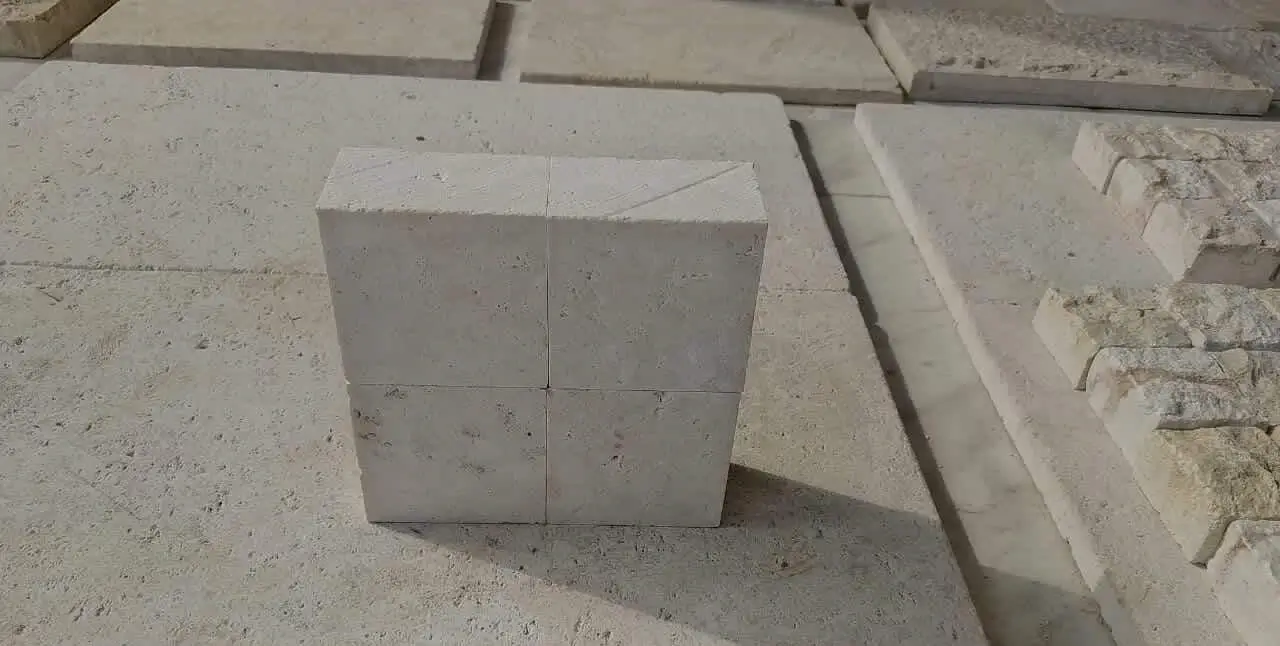
Ordering, Delivery, and Project Timing for Arizona Installations
Material planning for graphite paving projects requires you to build in a buffer that most homeowners underestimate. Calculate your square footage, add 10% for cuts and breakage, then add another 5% for pattern complexity — herringbone at 45 degrees generates significantly more cut waste at perimeters than a standard grid pattern. Order all of your material from a single production lot if at all possible; graphite tone can vary between quarry extraction batches, and mixing lots creates visible tonal banding in the finished installation that no sealer corrects.
Our warehouse carries dedicated Arizona inventory that typically allows 1–2 week lead times for standard thickness and finish specifications. A second warehouse location serves the western Phoenix metro, helping reduce delivery windows for Peoria and Surprise projects. Truck delivery to residential sites in the Phoenix metro area requires you to confirm driveway access clearance — standard flatbed trucks need approximately 12 feet of vertical clearance and a turning radius that rules out some tight cul-de-sac configurations. Coordinate with your crew on receiving day, because graphite block pallets run 2,200–2,800 lbs and need immediate transfer to a shaded storage area if you’re not installing same-day.
- Order material quantity: (area × 1.15 for herringbone) or (area × 1.10 for grid patterns)
- Confirm single production lot with your supplier before finalizing the order
- Store delivered pallets in shade — direct sun pre-heating blocks before installation creates uneven bedding sand compaction
- Truck access: confirm overhead clearance and load-bearing capacity of existing driveway surface before scheduling delivery
- Monsoon season (July–September) installations require flexible scheduling — work sessions cut short by afternoon storms
What Matters Most for Graphite Block Paving in Arizona
The performance gap between graphite installations that age gracefully and those that deteriorate within a few years traces back to UV management — not installation technique alone. Your choice of finish, the consistency of your sealing schedule, and your pattern selection all feed into how the material responds to Arizona’s relentless solar radiation over time. Get the base preparation right and the interlock geometry right, but don’t treat sealing as an afterthought — it’s the variable that sustains everything else you’ve invested in the installation.
Graphite paver installation steps in Arizona reward specificity at every stage. Vague specs produce mediocre results; precise specifications for base depth, joint sand type, sealer chemistry, and reapplication intervals produce installations that hold their character for 20 years or more. As you finalize your project scope, it’s also worth considering how stone sizing decisions affect both aesthetics and performance — 16×16 vs Other Patio Stone Sizes in Arizona covers those dimensional tradeoffs in detail and complements the specification work you’ve done here. Builders in Phoenix, Tempe, and Peoria rely on Citadel Stone graphite block paving, known for its dense composition that resists surface cracking under prolonged Arizona summer temperatures.