

Why Code Compliance Drives Patio Stone Size Selection in Arizona
The conversation around 16×16 vs other patio stone sizes in Arizona should start with your local building department, not your design preferences. Arizona municipalities vary significantly in their requirements for exterior paving systems — Maricopa County jurisdictions often mandate specific base depths and edge restraint specifications that directly influence which slab format you can realistically install without triggering a re-inspection cycle. Understanding those requirements before you commit to a format saves you from the expensive situation of pulling up freshly installed stone because your base preparation didn’t meet the structural load transfer requirements tied to the slab thickness you chose.
The structural logic here is straightforward: larger-format slabs like 16×16 distribute point loads across a wider surface area, which can actually work in your favor under certain code interpretations — particularly when the paving system needs to demonstrate adequate load-bearing capacity for outdoor living structures like pergolas, fire pits, or built-in kitchens. Smaller formats, by contrast, require tighter joint spacing and more precise compaction verification to achieve equivalent load distribution. Your engineer of record will care about this distinction when evaluating your Arizona outdoor paving format selection.
Arizona Structural Base Requirements by Patio Stone Format
Base depth requirements in Arizona don’t follow a single statewide standard — they track with soil classification, intended use, and the load-bearing scenario your inspector will evaluate. For most residential patio applications across the Phoenix metro, you’re looking at a compacted aggregate base of 4 to 6 inches under standard pedestrian loading. But here’s where format size enters the equation in a way most homeowners don’t anticipate: the larger your paver format, the more critical your base uniformity becomes.
A 16×16 patio stone with a 1.5-inch nominal thickness has virtually zero tolerance for voids or inconsistent compaction beneath it. Because the slab spans a larger area, any soft spot transfers directly into a visible rock or hollow sound underfoot — and in Arizona’s expansive clay soils, that soft spot can develop seasonally even after a solid initial installation. Smaller formats like 12×12 or 12×24 are somewhat more forgiving because the slab’s shorter span reduces the lever effect that amplifies sub-base inconsistencies.
- Verify base depth with your local building authority before specifying format size — requirements range from 4 inches in stable sandy loam to 8 inches over expansive clay
- Edge restraint must be engineered for the slab weight your format produces — 16×16 natural stone at 2 inches thick runs approximately 18 to 22 pounds per piece depending on material density
- Compaction verification at 95% Modified Proctor is the standard residential threshold most Arizona inspectors reference
- Slope gradient requirements (typically 1.5% to 2% away from structures) must be achieved in the base layer, not shimmed at the surface
Patio Slab Size Comparison: What the Numbers Actually Tell You
Running a real patio slab size comparison in Arizona means looking at more than square footage coverage per piece. The metrics that matter structurally are thickness-to-span ratio, joint count per area, and weight per installed square foot — because all three feed directly into how your paving system performs under the thermal and load cycling that Arizona conditions impose year-round.
The 16×16 format produces roughly 1.78 square feet of coverage per piece, which means a 300-square-foot patio requires approximately 170 pieces. That same patio in 12×12 format requires around 300 pieces — nearly double the joint count. More joints mean more opportunities for sand migration, weed infiltration, and differential settlement. From a structural standpoint, fewer joints in a well-prepared system is almost always preferable, which is one reason specifiers in the Scottsdale market have trended toward larger formats for upscale residential work. Scottsdale’s high-end outdoor living projects frequently involve structural slabs under outdoor kitchens, and the 16×16 format handles those concentrated loads more predictably than a mosaic of smaller pieces.
- 16×12: Good mid-range option, creates a more linear pattern, 1.33 sq ft per piece
- 12×12: Standard format, highly forgiving of minor base imperfections, easiest to source as replacement pieces
- 16×16: Optimal joint reduction, best load distribution per piece, requires the most precise base preparation
- 18×18 or 24×24: Maximum coverage per piece, but handling weight per stone becomes a field labor consideration, especially in temperatures above 100°F
Seismic and Soil Movement Considerations for Arizona Paving
Arizona sits in a seismically active region that most specifiers underestimate. The state’s proximity to the Basin and Range fault system means periodic ground movement is a real design consideration — not a remote possibility. For paving systems, the relevant question is whether your stone format and joint design can accommodate minor differential movement without fracturing. This is one area where the 16×16 vs other patio stone sizes in Arizona creates a genuine trade-off that deserves honest evaluation.
Larger format stones have less inherent flexibility in the system. A 12×12 grid of pavers can absorb micro-movement through the joint network — individual pieces shift slightly without fracturing because the joints act as controlled movement gaps. A field of 16×16 stones with tighter joints has fewer of those movement-relief points, which means seismic activity or soil settlement loads transfer more directly into the stone itself. For most Arizona residential projects, this risk is manageable with proper joint sand specification (polymeric sand with appropriate elongation characteristics), but it’s a detail your structural consultant should sign off on if you’re in a higher seismic zone. Projects in Flagstaff at higher elevations face the added complexity of freeze-thaw cycling layered on top of the seismic consideration — the combination demands a flexible joint compound rated for both thermal movement and minor ground displacement.
Which Stone Size Suits Arizona Patios by Application Type
The format selection that works for a simple pedestrian patio won’t necessarily be the right call for a patio that doubles as a vehicle drop-off, supports a heavy outdoor kitchen island, or transitions into a pool deck. Your application type should be the first filter in your format decision — before aesthetics, before budget, before material selection. Understanding which stone size suits Arizona patios for your specific use case is the foundation of a durable installation.
For purely pedestrian patios under 500 square feet with no structural loading from outdoor furniture heavier than standard teak or aluminum sets, the 12×12 and 16×16 formats are both structurally sound choices when installed over a properly compacted base. The decision between them becomes about pattern preference and maintenance tolerance. For patios that support heavy outdoor structures, built-in grills, or any vehicle access — even occasional golf cart traffic — you need to be looking at 16×16 at minimum in a 2-inch or thicker cut, with a base depth that accounts for the increased point loads.
- Pedestrian-only, under 400 sq ft: 12×12 or 16×12 are cost-effective and structurally adequate
- Outdoor kitchen support: 16×16 at 2-inch minimum thickness, engineered base required
- Pool decking transition: 16×16 or 18×18 preferred for slip-resistance scoring across wider surface area
- High-traffic entertainment spaces: 16×16 reduces joint maintenance over time in heavy-use scenarios
- Decorative accent borders: 4×8 or 6×6 formats serve as visual breaks without structural compromise when bounded by larger format fields
Large Format vs Standard Pavers in AZ: Thermal Mass and Surface Temperature
The technical literature on large format vs standard pavers in AZ rarely addresses this directly: thermal mass accumulation scales with slab volume, not just surface area. A 16×16 stone at 2 inches thick holds significantly more heat energy per unit than a 12×12 at 1.25 inches, and that stored heat radiates back into your outdoor living space well into the evening. In Scottsdale’s summer months, when ambient temperatures stay above 90°F past 10 PM, that thermal mass differential is something you’ll actually feel when standing barefoot on the patio surface.
This doesn’t make the 16×16 format a bad choice — it makes material selection more important alongside format selection. Light-colored limestone or travertine in a 16×16 format will outperform dark granite in the same format by 15 to 25°F on surface temperature readings at peak solar exposure. The format and the material are interacting variables, not independent decisions. At Citadel Stone, we routinely walk clients through this interaction during the specification phase because it’s one of the most commonly misunderstood dynamics in Arizona outdoor paving format selection.
Arizona Outdoor Paving Format Selection: Ordering, Delivery, and Lead Times
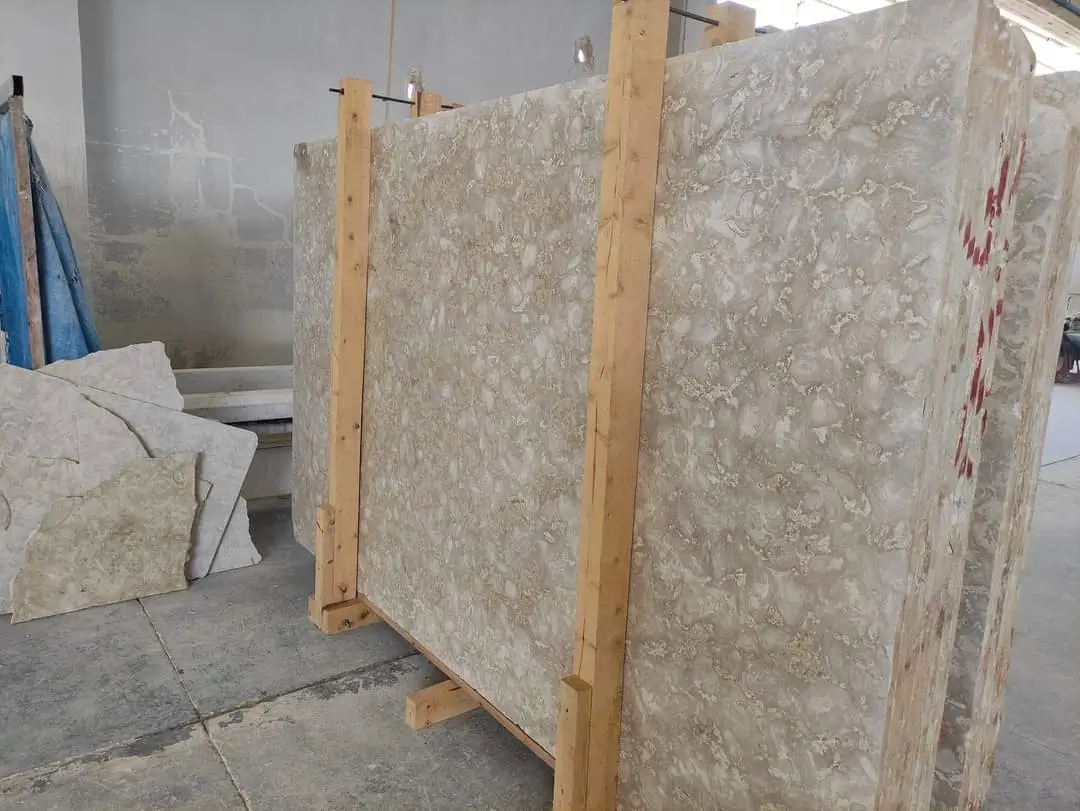
Format selection has real logistical implications that affect your project timeline in ways that smaller details often obscure. Larger format stones — the 16×16 and above — are heavier per piece and require more careful handling during truck delivery and on-site movement. A pallet of 16×16 natural stone at 2-inch thickness typically runs 2,800 to 3,200 pounds depending on material density. Your site needs to accommodate that truck access without damaging existing landscape or hardscape, and your installation crew needs appropriate lifting equipment or a well-organized manual staging plan.
For projects in Sedona, truck access to hillside or canyon-adjacent sites adds another layer of planning — narrow driveways and grade changes can make direct pallet delivery impractical, which means budgeting for additional hand-carry labor or a second staging location. Citadel Stone’s warehouse team can advise on delivery configurations for challenging access situations, and we typically recommend confirming site access specs before finalizing your format and quantity order. Warehouse stock levels for popular 16×16 formats in natural limestone and travertine are generally available for 1 to 2 week lead times on standard orders, but larger specialty orders may need additional lead time depending on current inventory.
- Confirm driveway weight limits before scheduling truck delivery of palletized stone
- Larger format pieces require two-person handling on-site — factor labor accordingly
- Order a minimum 10% overage on 16×16 format to account for cuts, breakage, and future replacement matching
- Warehouse stock availability varies by material and finish — verify before finalizing your project schedule
For clients comparing format options across their specific project requirements, our patio stone size comparison Arizona resource provides a detailed breakdown of how different formats perform across soil types, load scenarios, and regional climate zones.
Installation Precision Requirements by Format
The margin for installation error shrinks considerably as format size increases. Field crews experienced with 12×12 work sometimes underestimate how much the 16×16 format magnifies any deviation in base preparation or string line accuracy. A 3mm low spot under a 12×12 paver is largely invisible in the finished surface — the same 3mm under a 16×16 creates a noticeable rock that becomes a trip hazard over time as foot traffic concentrates load at the edges.
Specifications for 16×16 patio stones in Arizona should mandate screeded setting beds with no more than 3mm deviation across any 10-foot run, verified with a straightedge before placement begins. That’s tighter than the tolerances most residential crews default to without specific guidance. On the joint side, 16×16 format in a natural stone material with dimensional variation — which all quarried stone has — requires consistent adjustment during layout rather than a set-it-and-forget-it joint width. Expect your installer to spend 20 to 30% more time on layout verification for 16×16 than for 12×12, and build that into your labor estimate.
- Setting bed tolerance: 3mm max deviation per 10-foot run for 16×16 format
- Joint width range: 3/8 inch to 1/2 inch for natural stone 16×16, accommodating dimensional variation
- Pattern layout: dry-lay at least one full row before committing to wet-set or compacted sand-set installation
- Edge cut accuracy: wet-saw cuts on 16×16 stone require diamond blade rated for the specific material density
Format Decision Factors for Arizona Patio Projects
The 16×16 vs other patio stone sizes in Arizona decision ultimately comes down to three converging factors: what your local code requires for your specific application, what your soil conditions demand from a structural base standpoint, and what your installation team can execute at the precision level the format requires. Those three factors have to align before aesthetics even enter the conversation — and in most well-run Arizona projects, getting those fundamentals right is what separates a 25-year installation from one that needs remediation in year seven.
The format you choose sets the structural framework for everything that follows — base depth, compaction specification, edge restraint engineering, joint compound selection, and long-term maintenance intervals. Larger formats like the 16×16 offer genuine performance advantages in load distribution and joint reduction, but they demand a higher baseline of installation quality to deliver on those advantages. Understanding which stone size suits Arizona patios for your specific conditions is what drives confident, long-lasting results. For a detailed look at budgeting your patio project, 16×16 Patio Stone Cost in Arizona: Full Guide covers material, labor, and base preparation costs across the region. Available across Scottsdale, Tempe, and Mesa, Citadel Stone’s 16×16 patio stones are commonly evaluated alongside smaller formats to match Arizona’s varied outdoor living scales.