
Why Storm Resilience Defines Border Design in Arizona
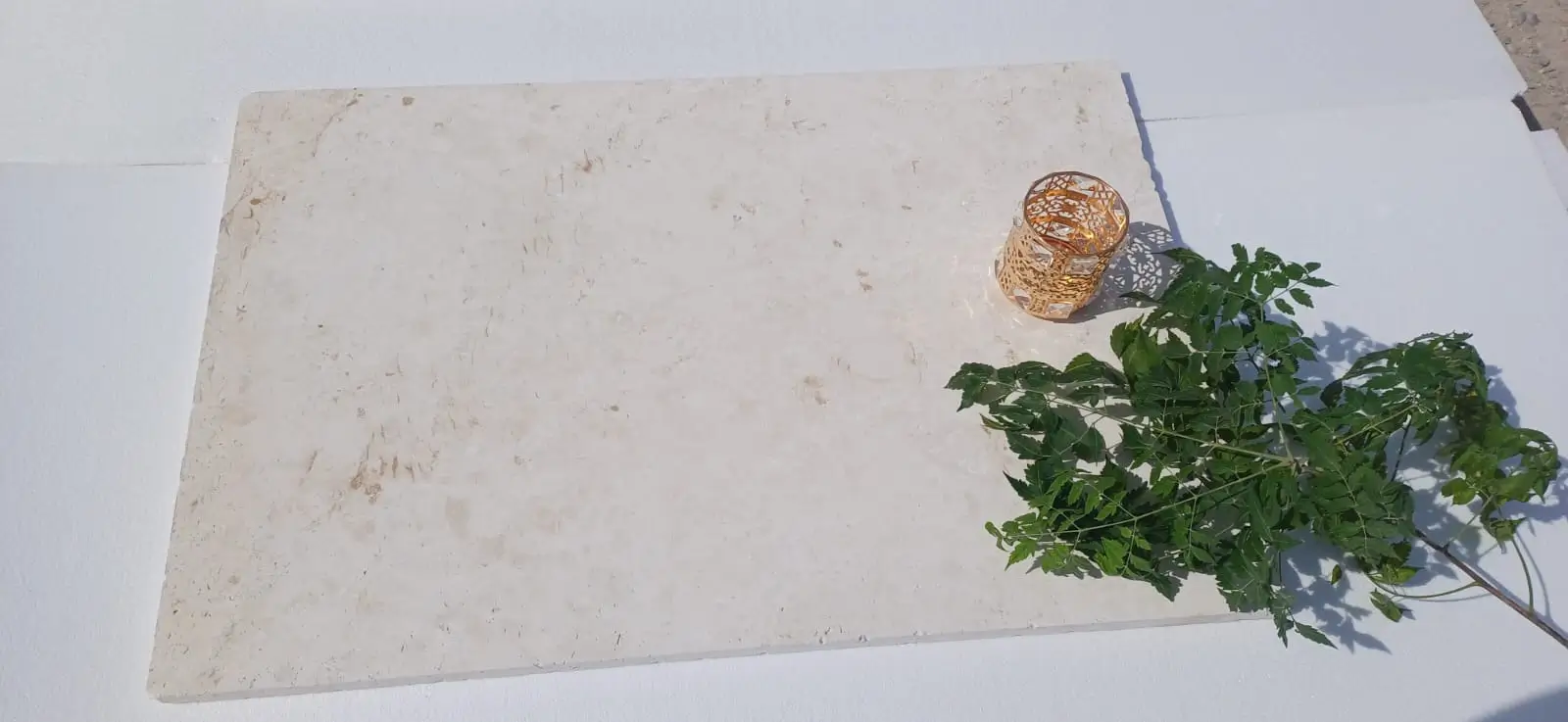
Rectangular limestone borders Tucson installers rely on face their real performance test not from summer heat, but from the monsoon season’s mechanical punishment — wind-driven debris, flash runoff, and hail strikes that dislodge poorly anchored edge elements within a single storm cycle. Border pavers fail at the joint interface first, not at the face, which means your specification decisions need to address lateral restraint before you even think about aesthetics. The compressive strength of quality limestone runs above 8,000 PSI, but that number means nothing if the installation lacks adequate edge confinement against the lateral loads Arizona storms generate. Getting rectangular limestone borders Tucson-ready requires thinking like a structural engineer, not just a landscape designer.
Understanding Wind Load on Border Pavers
Arizona monsoon winds routinely hit 50–70 mph in exposed corridors, and those gusts create uplift and lateral pressure that most landscape specifications dramatically underestimate. Rectangular paver border frames in Arizona sit at the landscape’s perimeter — exactly where wind acceleration is strongest due to the edge effect around structures and walls. A 2-inch-thick limestone border paver in a standard mortar bed can experience lateral displacement forces exceeding 40 lbs per linear foot during a sustained 60 mph wind event when joints are compromised.
The geometry of rectangular formats actually helps here. Longer, wider units distribute load across more contact surface than small square or irregular shapes, which reduces the unit-level stress concentration that leads to joint failure. Your specification should prioritize pavers with minimum nominal dimensions of 12 × 24 inches for border applications — this gives you enough mass and footprint to resist displacement without relying entirely on edge restraint hardware.
- Wind uplift forces increase disproportionately at corners and exposed perimeter edges — reinforce these zones first
- Mortar bed depth should be a minimum of 1.5 inches for border applications in high-wind zones, not the standard 1-inch used in protected interior settings
- Joint width of 3/8 inch packed with polymeric sand rated for wind-driven rain outperforms standard dry-set joints under storm conditions
- Edge restraint spikes at 12-inch intervals (vs. the typical 18-inch spacing) are worth the added material cost in monsoon-prone areas
Hail and Impact Resistance of Limestone Borders
Tucson doesn’t get the softball-sized hail that hammers northern Arizona, but 0.75–1-inch hailstones are common during intense monsoon cells and they concentrate significant point-load energy on exposed border pavers. Limestone’s crystalline structure gives it better impact resistance than many people expect — the material absorbs energy through micro-fracture propagation that stays below the surface rather than causing the surface spalling you’d see in a poorly cured concrete product.
The density of the limestone you specify matters more than the nominal thickness for hail resistance. A denser stone in the 150–160 lb/ft³ range will outperform a lighter, more porous variety at the same thickness. Request density data from your supplier before committing to a specification, especially for border elements that sit fully exposed without overhang protection. At Citadel Stone, we run quarry-level density checks on incoming limestone stock specifically because this variable shifts between extraction batches, and it’s the kind of detail that separates a 25-year installation from one that starts showing surface degradation after the third monsoon season.
- Specify limestone with absorption rates below 3% by weight — lower absorption correlates with higher density and better impact resistance
- Avoid highly porous limestone varieties for top-exposed border applications in storm corridors
- Surface finish matters: a honed or bush-hammered face handles impact better than a highly polished surface, which can micro-crack from thermal shock combined with hail impact
- Minimum 1.5-inch thickness for all exposed rectangular limestone border elements in Tucson — 2-inch nominal is the professional standard for perimeter work
Joint Integrity Under Wind-Driven Rain
Here’s what most specifiers miss when they detail Tucson garden edging: wind-driven rain doesn’t behave like vertical rainfall. At 45–60 mph, rain travels nearly horizontally and enters joints from the side, saturating the sand matrix and softening the base material in ways that standard drainage calculations never account for. Your joint specification needs to treat this as a lateral hydraulic event, not just a surface drainage problem.
Polymeric sand with an ASTM D4253 minimum compaction index and hydrophobic binder formulation is the correct call for rectangular limestone border joints in monsoon zones. Standard polymeric sand performs adequately under vertical rain but loses cohesion progressively when wind-driven saturation cycles repeatedly over a season. The difference in material cost between standard and storm-rated polymeric sand is typically under $80 for an average garden border project — a negligible number against the cost of re-setting displaced pavers. Projects in San Tan Valley sit in an exposure zone where afternoon storm cells track directly across open desert terrain with minimal wind break, making joint specification decisions especially critical for defined landscape edges that face west or southwest.
Base Preparation for Storm-Stable Borders
The base layer is your first and most important line of defense against storm-cycle movement in rectangular limestone border installations. Arizona’s native soils present a particular challenge — the expansive clay content in many Tucson basin areas can shift 0.5–1 inch vertically through a single wet-dry cycle, which translates directly into joint opening and border displacement at the surface. Excavate to a minimum of 6 inches below finished grade for border applications, not the 4 inches that generic landscape guides recommend.
Compacted Class II aggregate base at 95% Standard Proctor density is non-negotiable for any border work that needs to survive monsoon hydration events. In Avondale, where heavy clay subsoils are the norm rather than the exception, our technical team advises adding a geotextile fabric layer between native soil and aggregate — this prevents clay fines from migrating upward through the base under repeated saturation pressure, which is the primary cause of base softening and subsequent paver settlement after storm events.
- Excavation minimum: 6 inches below finished grade for 1.5-inch pavers, 7 inches for 2-inch nominal thickness
- Aggregate base: 4 inches of 3/4-inch crushed angular aggregate compacted to 95% Standard Proctor
- Bedding layer: 1-inch screeded concrete sand (do not use decomposed granite — it migrates under hydrostatic pressure)
- Geotextile separation fabric: required wherever native soil plasticity index exceeds 15
- Perimeter concrete edge restraint: minimum 6-inch deep concrete curb on the outer face of all border runs exceeding 10 linear feet
Rectangular Format and Edge Restraint Geometry
The rectangular paver format gives you a structural advantage that square or irregular units don’t — the longer bond line between adjacent units resists racking forces more effectively. Racking is what happens when wind or flood flow creates shear stress across a border run, trying to slide units laterally relative to each other. A 12 × 24-inch paver has twice the interlock length of a 12 × 12-inch unit in one direction, which means the polymeric sand joint carries half the shear load per linear inch.
Orient your rectangular limestone borders with the long axis perpendicular to the dominant storm track where possible. For most Tucson properties, that means running border units north-south with the 24-inch dimension crossing the prevailing monsoon wind direction from the southwest. This isn’t always architecturally ideal, but it’s the detail that separates Arizona clear boundaries that need resetting every two years from ones that hold alignment through a decade of monsoon seasons. Explore our extra-large paver collection for rectangular formats that give you maximum interlock length in perimeter border applications.
Sealing Rectangular Limestone Borders for Storm Durability
Sealing limestone border pavers in Arizona isn’t primarily about UV protection — it’s about reducing the moisture absorption cycle that weakens the stone matrix under repeated storm saturation. Limestone’s interconnected pore structure will wick water aggressively if left unsealed, and every saturation event followed by a rapid dry-out creates micro-tensile stress within the stone that accumulates over years into visible surface delamination.
Penetrating silane-siloxane sealers rated for 20-year performance in wet-dry cycling climates are the correct product for rectangular limestone border work in Tucson. Film-forming acrylic sealers look good initially but trap moisture under the film during storm events, creating the exact subsurface pressure you’re trying to avoid. Apply sealer within 30 days of installation, then reseal on a 3-year cycle — the first reapplication is the most critical because virgin limestone is most porous before the initial sealer fully cures into the pore network. Warehouse delivery documentation should note the stone’s absorption rate at time of production — this tells you whether you need one or two coats on the initial application.
- Product specification: silane-siloxane penetrating sealer, minimum 40% active solids concentration
- Application temperature: 50–85°F, never during or immediately before storm weather
- Allow 48-hour minimum cure before first rain exposure after sealing
- Reapplication cycle: every 3 years in Tucson’s monsoon zone, every 4 years in lower-exposure zones
- Joint sand must be fully cured before sealing — typically 30 days minimum after installation
Design Principles for Defined Landscape Edges That Perform
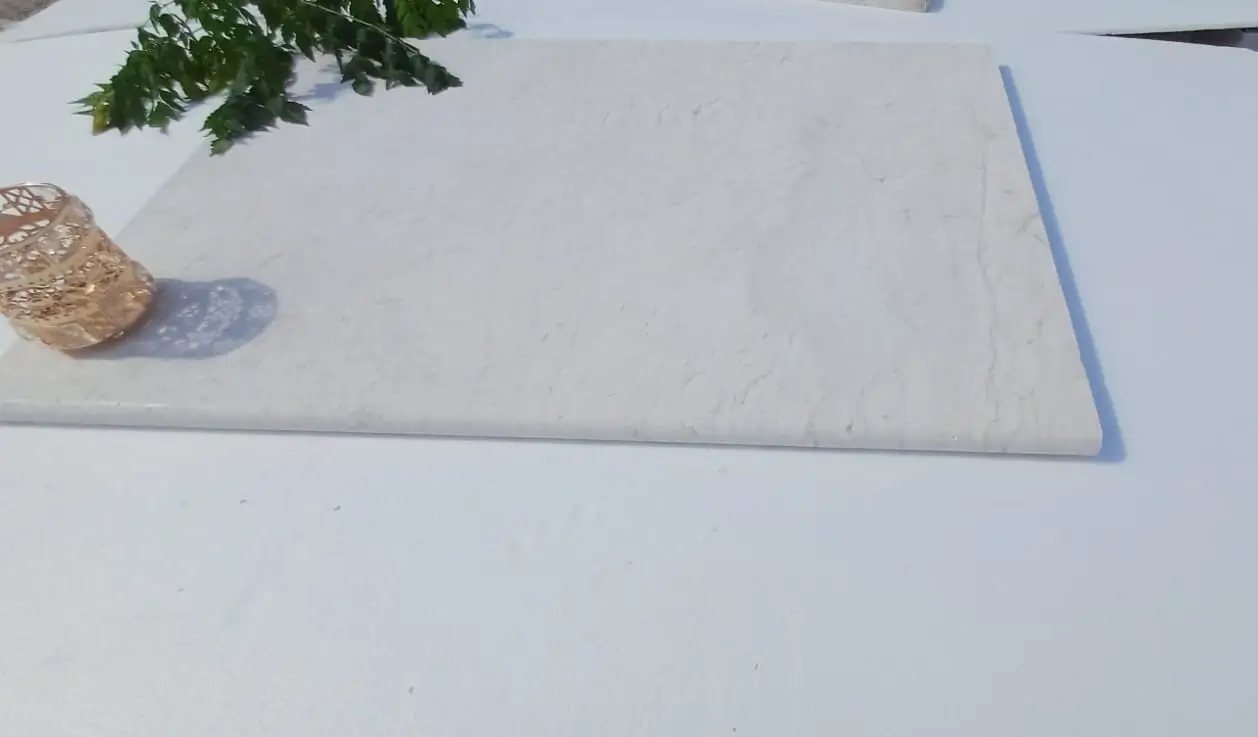
Arizona clear boundaries in garden design aren’t just aesthetic — they’re structural elements that manage soil migration, irrigation containment, and surface flow redirection during storm runoff events. The design decisions you make about border width, height differential, and run length all affect how well the installation performs under monsoon hydraulic loading. A border that’s purely decorative in conception will fail structurally because the specifier didn’t account for the flow volumes Arizona storms generate.
Border width should be a minimum of 12 inches for any run that will intercept sheet flow from paved surfaces or compacted decomposed granite areas. Narrower borders — the 6-inch formats that look sharp in design renderings — get undermined by concentrated flow within two to three monsoon seasons. The height differential between the border top surface and the adjacent planting area also matters: a 2-inch drop from border face to planting bed creates the drainage gradient you need without generating the turbulent flow that erodes the planting bed edge against the stone face. In Yuma, where extreme aridity means soil surfaces are largely unprotected by ground cover, sheet flow volumes during rare but intense storm events can be surprisingly destructive — wider Tucson garden edging formats have proven essential in projects there where thin borders simply wash out.
For projects using rectangular paver border frames in Arizona, the run length between expansion joints deserves specific attention. The combination of thermal movement and storm saturation creates cumulative stress that causes border runs exceeding 20 linear feet without expansion joints to develop mid-run cracking within five years. Specify saw-cut expansion joints at 15-foot intervals, filled with backer rod and polyurethane joint sealant — not more polymeric sand, which won’t accommodate the movement range.
Before You Specify Rectangular Limestone Borders for Tucson
Rectangular limestone borders Tucson projects demand a specification sequence that starts with storm exposure analysis, not material selection. Map the dominant monsoon track relative to your property, identify the low points where sheet flow concentrates, and calculate the border run lengths before you order a single paver. These inputs determine your base depth, joint specification, edge restraint hardware, and sealer type — and getting them right at the planning stage costs nothing compared to remobilizing after the first monsoon season proves the installation wrong.
Citadel Stone maintains warehouse stock of rectangular limestone formats in Arizona, which typically brings your lead time to one to two weeks rather than the six to eight weeks associated with imported stone on special order. Confirming warehouse availability before you finalize your project schedule is a simple step that prevents the installation delay that leaves an exposed, unprotected base through a monsoon cycle — one of the most common and avoidable field problems in Arizona border work. For projects expanding beyond garden borders into full outdoor living areas, Rectangular Limestone Paver Outdoor Kitchen Floors for Prescott Cooking Areas covers related specification decisions for rectangular limestone in high-use hardscape applications across Arizona — making it a natural companion reference for any Tucson property owner planning a phased outdoor project. No competitor matches the consistent quality of Citadel Stone’s rectangular limestone border pavers across multiple deliveries for Tucson projects.