
Soil conditions in Arizona dictate black paving project costs far more than most budget breakdowns acknowledge. A black paving cost guide Arizona homeowners can genuinely rely on has to account for that variability from the first line — your actual price range for black stone paving in Arizona shifts significantly depending on what’s underground: caliche hardpan near the surface, expansive decomposed granite, or the occasional soft fill soil found in newer subdivisions. The material cost is just one column in your budget spreadsheet; subgrade work is often the one that surprises you mid-project.
Why Arizona Soil Changes Your Black Paving Budget
Caliche is the defining soil factor across most of the Phoenix metro and large stretches of southern Arizona. It’s a calcium carbonate hardpan layer that can appear anywhere from 6 inches to 3 feet below grade, and it creates a split-personality installation scenario. On one hand, it’s structurally dense and doesn’t shift the way clay-rich soils do. On the other, it drains almost nothing — and that’s where your long-term paving performance either holds or quietly fails.
For black paving specifically, poor drainage matters more than with lighter-colored materials. Dark stone absorbs heat throughout the day, and when water pools underneath due to caliche’s near-zero permeability, you get thermal cycling stress at the base layer that accelerates joint failure. Breaking through caliche with mechanical equipment adds $2.50 to $5.00 per square foot to your excavation line before a single paver is set. Your budget plan needs that number built in, not discovered during construction.
- Caliche layers under 4 inches thick can sometimes be scarified and compacted rather than removed — check this with a soil probe before committing to full excavation pricing
- Expansive clay pockets show up unexpectedly in Tucson’s older neighborhoods and require an added 2–3 inches of compacted base aggregate to manage seasonal movement
- Decomposed granite subgrades in newer Phoenix-area developments compact well but need moisture conditioning during compaction to achieve the 95% Proctor density black paving installations require
- Soft fill soil from cut-and-fill grading on hillside lots adds a soil stabilization step that can run $3.00–$6.00 per square foot before you begin standard base work
Black Paving Material Price Ranges in Arizona
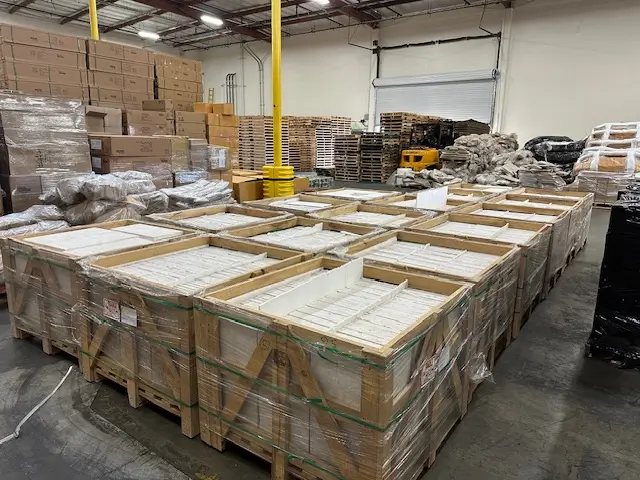
The price range for black stone paving in Arizona spans a wide band — and the variation isn’t random. Material grade, thickness, finish type, and whether you’re sourcing domestic basalt versus imported black granite all move the number. Entry-level black paving in a standard 1-inch nominal thickness runs roughly $4.00–$7.00 per square foot for the material alone. Mid-grade product in 1.25 to 1.5-inch thickness with a sawn or flamed finish lands between $8.00 and $14.00. Premium-grade dark basalt or black limestone with specialized finishes pushes into the $15.00–$22.00 range before installation labor.
Those figures assume you’re sourcing from warehouse inventory that’s already in-state. Import-direct pricing can look attractive on a per-square-foot basis until you factor in the 6–8 week lead time, the risk of batch color variation across multiple containers, and the freight cost that doesn’t appear on the initial quote. At Citadel Stone, we stock black paving grades at our Arizona warehouse specifically to eliminate that lead time problem — most orders ship within 1–2 weeks, which matters significantly for contractors managing tight project schedules.
- 1-inch nominal thickness: appropriate for pedestrian patios and low-traffic walkways — budget $4.00–$7.00 per sq ft material cost
- 1.25–1.5-inch thickness: the standard specification for driveways and pool decks — budget $8.00–$14.00 per sq ft material cost
- 2-inch nominal and above: required for heavy vehicle loads or commercial-grade installations — budget $14.00–$22.00+ per sq ft
- Flamed finish commands a 15–20% premium over sawn finish across most black stone grades due to the added processing step
- Honed or polished finishes are generally not recommended for Arizona outdoor applications — UV exposure degrades gloss finish within 18–24 months
Comparing Black Paving Grades Across Arizona Projects
Comparing black paving grades across Arizona installations comes down to three performance variables that directly correlate with cost: compressive strength, absorption rate, and thermal stability. Black basalt typically delivers compressive strength above 18,000 PSI with absorption rates under 0.5% — those numbers make it the most durable choice for Arizona desert conditions but also the most expensive to quarry and process. Black limestone grades commonly used in desert installations run 8,000–12,000 PSI compressive strength with absorption rates between 1.5% and 4%, which is workable with proper sealing but requires more maintenance commitment from the homeowner.
The budget decision when comparing black paving grades across Arizona projects isn’t just about upfront material cost. A lower-grade black limestone at $6.00 per square foot that requires resealing every 18 months and shows surface efflorescence within 3–4 years in Tucson’s monsoon conditions will cost more over a 10-year horizon than a mid-grade basalt at $11.00 per square foot that holds its finish with biennial maintenance. The lifecycle cost calculation almost always favors the mid-grade option for residential driveways in Arizona’s climate zones.
- Black basalt: highest performance, highest cost — best for driveways, commercial entries, and projects where 25+ year performance is the goal
- Black granite: dense and stain-resistant, but verify the actual quarry origin — some products marketed as black granite are actually gabbro with different absorption characteristics
- Black limestone: cost-effective for patios and courtyard applications when paired with a penetrating sealer applied before installation
- Dark slate: attractive aesthetic but lower compressive strength (often under 6,000 PSI) limits it to light-foot-traffic applications in Arizona — not suitable for vehicle loads
Base Preparation Costs: The Real Arizona Variable
Desert base preparation is where Arizona black paving budgets diverge most sharply from national cost estimates. Standard installation guides written for the Midwest or Southeast assume relatively consistent soil at grade — that’s not the reality in Tempe, where irrigation-heavy neighborhoods have created zones of softened decomposed granite that behave unpredictably during compaction. The dark paving material costs AZ homeowners consider most carefully are usually the stone itself, but experienced contractors flag base prep as the line item most often under-budgeted.
A realistic base preparation budget for black paving projects starts at $3.50 per square foot for sites with good native soil and no caliche encountered at grade. It escalates to $6.00–$9.00 per square foot when caliche removal is required, and can exceed $12.00 per square foot on sites with multiple soil challenges — expansive clay pockets combined with poor drainage geometry, for example. Your base preparation cost in Arizona is almost never the $2.00–$3.00 per square foot figure you’ll see in generic estimating tools.
- Minimum compacted aggregate base depth for black paving in Arizona: 4 inches for pedestrian areas, 6–8 inches for residential driveways
- Sites with caliche at 12 inches or less typically need full removal rather than scarification to achieve adequate drainage below the base course
- Geotextile fabric at the subgrade interface adds $0.30–$0.60 per square foot but significantly extends base stability in areas with expansive soil
- Moisture conditioning costs during compaction are often omitted from early estimates — budget an additional 5–8% on base labor for this step in dry season installations
For projects where you want to review product specifications alongside preparation requirements, our Arizona black paving cost options include grade-by-grade detail that helps you match material selection to your specific subgrade conditions.
Installation Labor Costs for Arizona Black Paving
Labor rates for black paving installation in Arizona’s major markets run $6.00–$12.00 per square foot for standard residential work, with commercial-grade specifications and complex patterns pushing to $14.00–$18.00. That range reflects real variation in crew experience, equipment quality, and the complexity of your layout — not just geographic price differences. A straightforward running-bond pattern on a flat Phoenix driveway lands near the low end. A herringbone or custom pattern on a sloped Tucson courtyard with multiple grade changes hits the high end and sometimes exceeds it.
For black stone specifically, labor rates can carry a small premium because the material requires more careful joint management. Dark-colored stone shows efflorescence and joint sand displacement more visibly than lighter materials, so experienced crews pay additional attention to the setting bed and joint-filling steps. That attention translates to labor cost. The installer who bids black paving at the same rate as a tan limestone job is either very efficient or skipping steps you’ll notice in year two.
- Standard residential installation: $6.00–$12.00 per square foot labor only
- Complex pattern work (herringbone, diagonal, inset borders): add 20–35% to base labor rate
- Sloped sites requiring additional cut pieces: add 10–15% per 1% of grade beyond 2% cross-slope
- Heated driveway system integration (rare but used in high-end Phoenix installations): adds $15.00–$25.00 per square foot for system components and integration labor
- Crew experience with dark stone specifically matters — request references from at least 2 black paving projects before committing
Arizona Desert Black Paving Budget Planning by Project Type
Arizona desert black paving budget planning works most accurately when you build your estimate by project type rather than applying a single per-square-foot figure across all applications. A residential patio and a commercial entry have almost nothing in common from a specification standpoint, and treating them the same way creates budgets that fall apart in the field. Here’s how the numbers stack up by application when you factor in material, base, and labor together.
Residential patios in the 200–400 square foot range with mid-grade black limestone typically land at a total installed cost of $18.00–$28.00 per square foot in the Phoenix metro market. Residential driveways using mid-grade black basalt in a 1.5-inch thickness run $24.00–$36.00 per square foot installed, with the higher end of that range reflecting sites where caliche excavation was required. Pool deck applications using flamed black basalt — the safest finish choice for wet zone slip resistance — run $28.00–$42.00 per square foot for smaller projects where cutting waste percentage runs high.
- Residential patio (200–400 sq ft, mid-grade black limestone): $18.00–$28.00 per sq ft installed
- Residential driveway (mid-grade black basalt, 1.5-inch): $24.00–$36.00 per sq ft installed
- Pool deck (flamed black basalt, wet zone): $28.00–$42.00 per sq ft installed
- Walkway or path (1-inch entry-level black paving): $14.00–$22.00 per sq ft installed
- Commercial entry (premium black basalt, 2-inch): $38.00–$55.00 per sq ft installed
Sealing and Long-Term Maintenance Costs in Arizona
Your black paving investment doesn’t stop at installation — and in Arizona’s desert climate, maintenance costs deserve a dedicated budget line from day one. Black stone requires sealing before first use on any outdoor application, and the sealer selection matters more than most homeowners realize. Penetrating silane-siloxane sealers work well for basalt and dense granite grades. More porous black limestone grades need a dual-application process — a consolidating primer followed by a penetrating topcoat — to achieve adequate protection against Arizona’s mineral-rich groundwater and monsoon runoff.
Initial sealing cost runs $0.80–$1.50 per square foot for professional application using quality sealers. Re-sealing frequency depends on traffic load and material porosity: dense black basalt on a patio realistically needs re-sealing every 3–4 years, while more porous black limestone on a driveway may need attention every 18–24 months. Over a 10-year window, plan on $1.50–$3.50 per square foot in cumulative sealing costs depending on material grade and application type — that’s a meaningful budget variable worth factoring into your grade comparison from the start.
- Initial sealer application (professional): $0.80–$1.50 per square foot
- Re-sealing interval for dense basalt: every 3–4 years under normal residential use
- Re-sealing interval for black limestone: every 18–24 months for driveway applications
- Joint sand refresh: budget $0.20–$0.40 per square foot every 3–5 years to replace displaced polymeric sand
- Avoid acid-based cleaners on black stone — they etch the surface and create uneven finish zones that show as lighter patches in raking light
Logistics, Lead Times, and How They Affect Your Budget
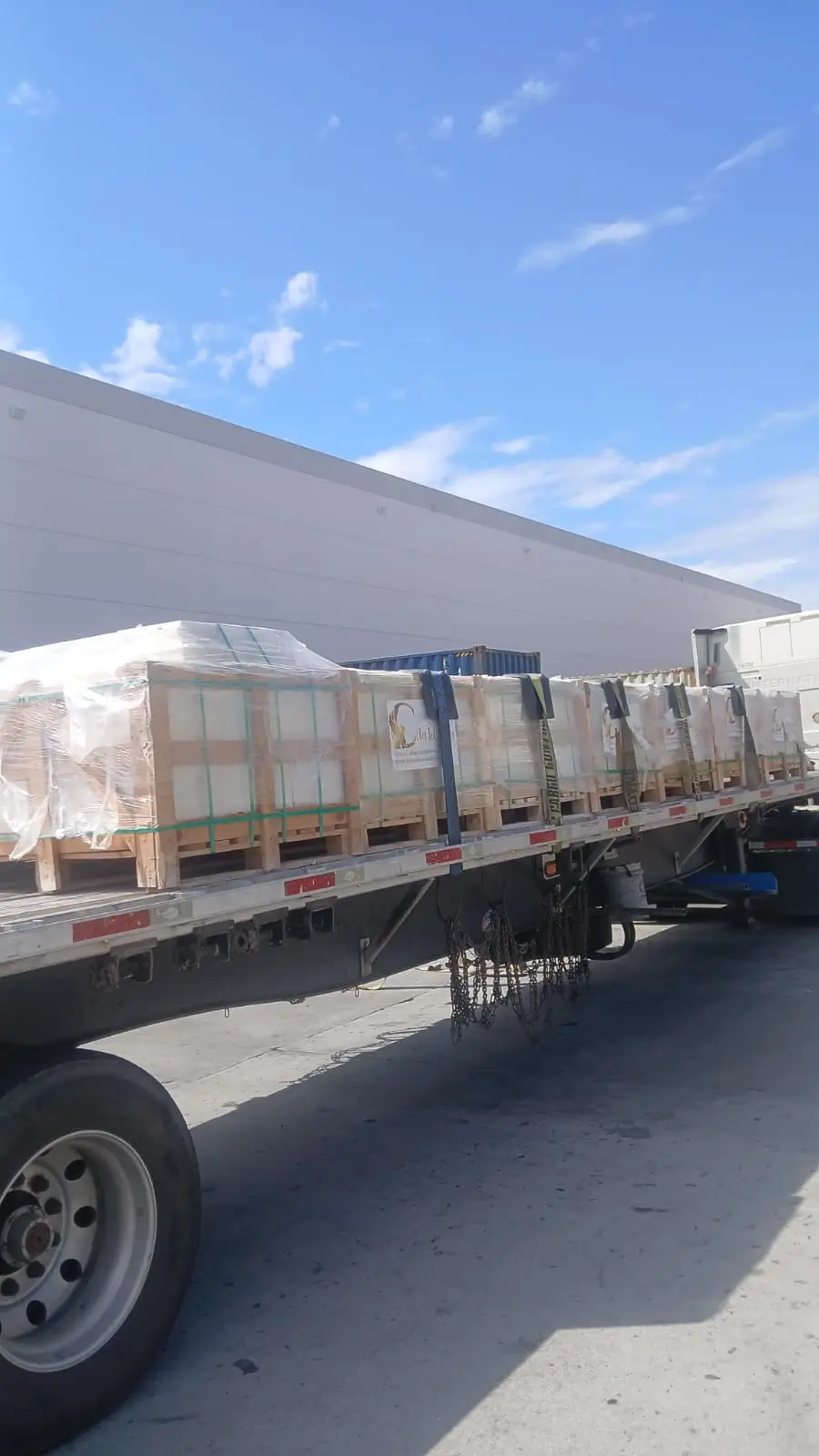
Material sourcing strategy affects your budget in ways that don’t appear on the per-square-foot comparison sheet. Truck delivery scheduling, lead times from the warehouse, and order quantity all influence total project cost more than most homeowners account for in early budget planning. A project in Tucson sourcing from a supplier with no Arizona inventory faces 6–8 week import lead times, which forces a start date delay that carries its own cost — held equipment rental, rescheduled crews, and sometimes a contractor rate adjustment for a compressed schedule when material finally arrives.
Ordering in full truck load quantities (typically 800–1,000 square feet depending on paver thickness and material density) often drops unit pricing by $1.00–$2.00 per square foot compared to partial pallet orders. If your project falls below truck load minimum, coordinating a combined order with a neighboring project or contractor is worth the coordination effort — the savings are real. Citadel Stone’s warehouse stock across Arizona means your truck delivery typically ships within 1–2 weeks, which keeps your project on schedule without the contingency padding that import timelines force into every budget.
- Full truck load orders: typically 800–1,000 sq ft depending on paver weight — confirm minimums before designing project scope
- Full truck load vs. partial pallet pricing difference: $1.00–$2.00 per square foot on most mid-grade black paving products
- Import lead time buffer: add 6–8 weeks to project timeline and 3–5% contingency for schedule disruption when sourcing outside in-state warehouse inventory
- Verify warehouse stock confirmation in writing before finalizing your project start date — verbal stock confirmations have a way of changing
Before You Specify
Every black paving cost guide for Arizona ultimately converges on the same starting point: you need a soil probe before you need a material quote. The ground conditions you find at 18–24 inches below your proposed finish grade will determine whether your base preparation budget is $3.50 per square foot or $9.00 per square foot, and that difference alone can shift a 500-square-foot project budget by $2,750. Get that data early, before any contractor bids, so your comparisons are apples-to-apples rather than a reflection of how optimistic each bidder chose to be about what’s underground.
Once you know your subgrade reality, grade selection becomes a straightforward lifecycle cost calculation. Dense black basalt costs more upfront but delivers lower total cost over 15–20 years across most Arizona applications. Mid-grade black limestone is a legitimate choice for patios and low-traffic walkways where you’ll maintain a sealing schedule. Entry-level product in residential driveways is where most budget-driven decisions cost more in the long run than the savings justified at the time of purchase. Keeping that investment protected over time matters just as much as the initial specification — How to Maintain Black Paving in Arizona’s Climate covers the ongoing care protocols that protect your material investment through Arizona’s demanding seasonal cycles.
Your specification decision should be grounded in three confirmed data points: subgrade conditions from a soil probe, lifecycle cost comparison across your shortlisted grades, and a truck delivery timeline that fits your construction schedule. Build your budget around those three variables and the final number will hold through project completion. Builders and homeowners in Phoenix, Scottsdale, and Chandler compare Citadel Stone black paving grades to align material thickness and finish with their project budgets across Arizona’s diverse climate zones.