
Terrain is the first variable you need to resolve when making a natural paving stone buyer guide Arizona decision — not color, not texture, and not price. Arizona’s elevation range spans from roughly 70 feet above sea level near Yuma to over 7,000 feet in the White Mountains, and every foot of that range changes how water moves, how bases settle, and which stone thicknesses hold under load. Get the grade management right first, and the rest of the specification falls into place. Miss it, and even the finest limestone slab will rock, crack, or migrate within a few seasons.
Why Arizona Terrain Shapes Every Paving Decision
Arizona is not one landscape — it’s five distinct terrain types stacked on top of each other. You have the low Sonoran desert basin, the transitional foothills, the Colorado Plateau rim, the high plateau, and the mountain elevations. Each one delivers a different drainage challenge, a different soil behavior, and a different set of base preparation requirements. Treating them as the same problem is exactly how projects fail before the first paver is ever set.
Desert basin areas like the Phoenix metro tend to receive intense, short-duration monsoon events — sometimes 2 inches of rain in under 90 minutes. That kind of hydraulic event across a flat hardscape sends water sideways rather than downward. Your cross-slope on any paved surface needs to be at minimum 1.5%, and in basin applications, 2% is safer. The bigger risk in flat terrain is actually sub-surface saturation: desert soils with high caliche content resist vertical drainage, which means water pools in your base aggregate and causes lateral shifting in your stone field.
Foothill and hillside installations carry a different problem entirely — you’re managing energy, not just volume. Water gains velocity on grade, and a 4% to 8% slope creates hydraulic forces that can migrate pavers laterally if your edge restraints and joint fill aren’t robust. This is where choosing the right weight class of natural paving stone in Arizona becomes structurally critical, not just aesthetic.
Base Preparation Varies Dramatically by Elevation
The base system under your stone is doing more structural work than the stone itself in most Arizona applications. At lower elevations, the primary threat to base integrity is swelling clay and caliche disruption. At higher elevations, freeze-thaw cycling in aggregate voids starts to matter — and that changes your compaction specification, your drainage layer design, and your minimum base depth.
Low-Elevation and Basin Base Requirements
In Sonoran basin conditions below 2,500 feet, your aggregate base should typically run 4 to 6 inches of compacted Class II road base for pedestrian applications and 6 to 8 inches for vehicular paving. But the step that most contractors skip is the sub-base evaluation. In caliche-heavy soils — which are widespread across central Arizona — you need to assess whether the natural caliche layer is at a depth that provides structural support or is shallow enough to create a perched water table problem. Projects in Chandler frequently hit caliche at 18 to 30 inches, which can actually stabilize your base when properly leveraged, but which also creates drainage resistance that demands deliberate slope engineering at the sub-grade level.
- Compact sub-grade to 95% Modified Proctor density before adding base aggregate
- Install a 4-inch perforated drain at the low edge of any paved field larger than 150 square feet
- Use angular, not rounded, aggregate for base layers — angular material locks under compaction; rounded material shifts
- Never place aggregate base on wet or saturated sub-grade, regardless of schedule pressure
Hillside and Slope Base Engineering
Slopes above 3% change the engineering conversation significantly. Your base needs to resist both vertical settlement and lateral creep simultaneously. For hillside natural stone installations on grades between 3% and 8%, a geotextile fabric layer beneath the aggregate base prevents base material from migrating into the sub-grade soil over time — a failure mode that typically shows up 3 to 5 years after installation as gradual dish settling across the paved field. On grades above 8%, you should evaluate whether a mortar-set installation with a structural concrete slab sub-base is more appropriate than a sand or aggregate-set approach.
Peoria sits at a slightly higher elevation than much of the eastern Valley, and projects in that area’s northern reaches start to encounter more mixed soil profiles — sandy loam over clay-heavy subsoils that behave very differently depending on seasonal moisture. That variability makes a soil probe or test pit genuinely worthwhile before finalizing your base specification. The cost of that information pays back immediately in your base design confidence.
Stone Thickness Selection for Arizona Applications
Natural paving stone selection across Arizona comes down to matching stone thickness to both the load type and the base conditions beneath it. The generic guidance of “1.25 inches for pedestrian, 2 inches for vehicular” is a starting point, not a specification. Real field conditions push that guidance in both directions.
- Pedestrian-only, well-drained base, flat terrain: 1.25-inch nominal thickness is adequate
- Pedestrian on slopes above 3% or in monsoon runoff pathways: move to 1.5 inches minimum
- Light vehicular (passenger cars, occasional truck delivery): 2-inch nominal minimum, 2.5 inches in sandy sub-grade conditions
- Heavy vehicular or RV access: 3-inch nominal stone over a reinforced concrete slab sub-base
- Irregular terrain with variable base depth: use a thicker, more forgiving stone rather than relying on base uniformity
Verifying warehouse stock levels for your chosen thickness before committing to a project timeline is essential. At Citadel Stone, we carry core thicknesses in warehouse inventory for immediate release, but specialty thicknesses and cut-to-size formats typically require 1 to 2 weeks from our Arizona distribution points. Planning around that window prevents the schedule gaps that tempt contractors to substitute materials mid-project — a shortcut that rarely ends well.
Choosing the Right Stone Type for Arizona Terrain Conditions
The best stone paving types for AZ climates share one characteristic: they’re dense enough to resist moisture intrusion but textured enough to manage surface drainage without creating slip hazards. That combination matters more in Arizona terrain than in flat, low-rainfall climates because you’re dealing with concentrated water events across surfaces that may carry slope-induced velocity.
Limestone in Arizona Applications
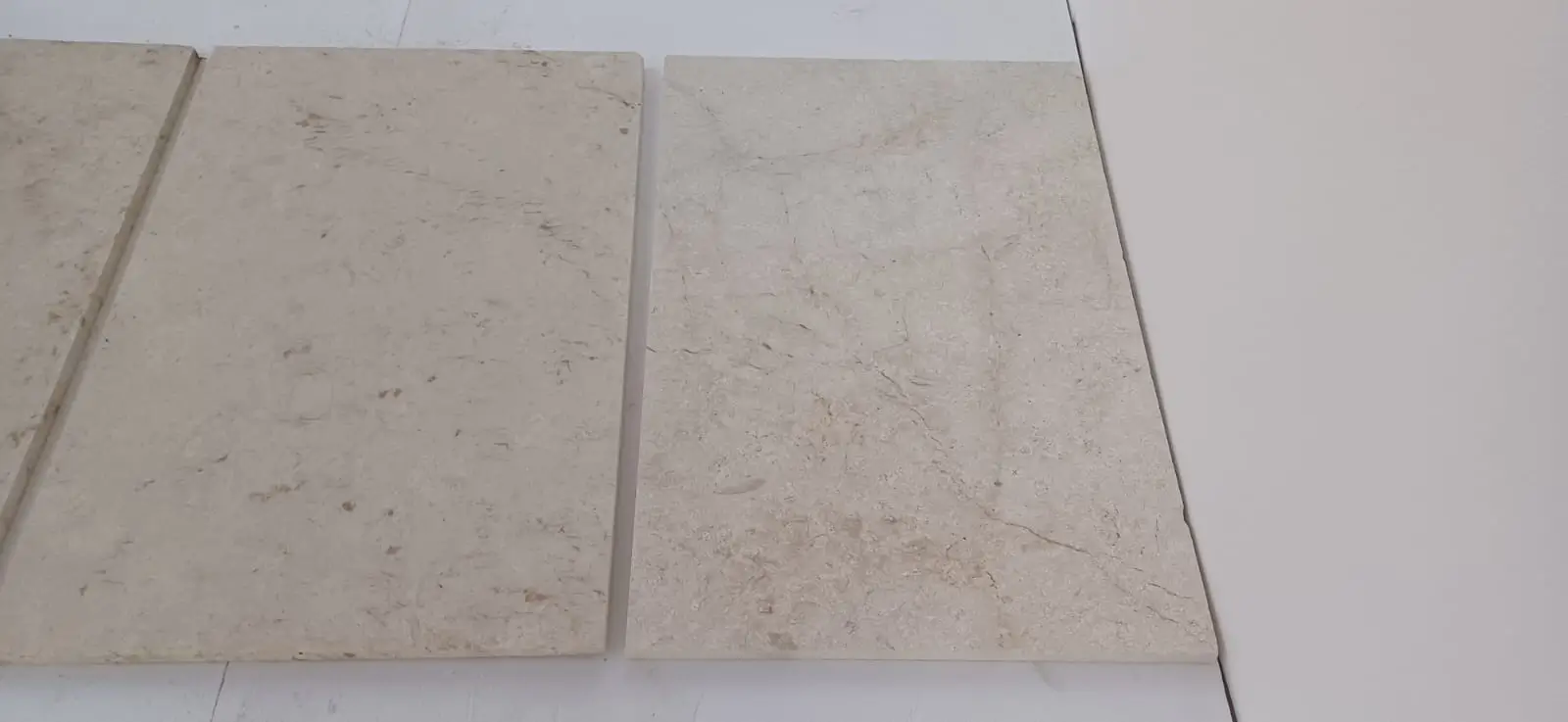
Limestone is one of the most practical choices for lower-elevation Arizona projects. It has a moderate absorption rate — typically 3% to 5% by weight — which means it takes on some moisture during monsoon events but releases it relatively quickly. The thermal mass of limestone is manageable in the 700 to 900 BTU/hr·ft·°F range, which prevents extreme surface temperature spikes compared to darker stone options. For hillside installations, limestone’s natural bedding plane texture provides a built-in grip that performs well on grades up to about 5% without additional honing or surface treatment.
Basalt for High-Slope and Heavy-Load Applications
Basalt deserves more attention in Arizona terrain specifications than it typically receives. With compressive strength often exceeding 25,000 PSI and absorption rates below 1%, it’s essentially impervious — which makes it excellent for high-slope drainage channels and any installation where water concentration is unavoidable. The flip side is weight: basalt typically runs 175 to 185 lbs per cubic foot, which affects both your structural base design and your truck delivery logistics. For elevated or access-restricted sites, that weight consideration becomes a genuine planning factor before the first pallet leaves the warehouse.
Travertine Considerations for Arizona
Travertine’s open-pore structure — the voids that give it that characteristic texture — behaves differently on a slope than on a flat surface. On grades above 2%, water moves through the surface voids and into the base layer rather than sheeting off cleanly. That’s not always a problem; in fact, it can reduce surface runoff velocity on gentle slopes. But it does mean your base aggregate specification needs to include adequate drainage capacity to accept that infiltration without saturation. Filled travertine (where the voids are grouted before shipping) reduces this issue significantly and is generally the better call for Arizona’s monsoon exposure.
Designing Drainage for Arizona Slope Conditions
Drainage design for natural paving stone in Arizona is where most residential specs fall short. The standard advice — “ensure positive drainage away from the structure” — is necessary but not sufficient for Arizona’s terrain complexity. Effective planning requires designing for three separate water events: normal irrigation runoff, light rain events under a quarter inch, and monsoon surge events above one inch per hour.
For projects larger than 400 square feet, a drainage plan that addresses all three scenarios separately is worth developing. Channel drains at grade transitions, pop-up emitters at low points, and slot drains along retaining features all serve different hydraulic roles. The stone spec and the drainage spec need to be developed together — the joint width, fill material, and surface texture of your natural paving stone determine how much of each rain event infiltrates versus sheets, and that ratio drives the sizing of your drainage infrastructure.
- Minimum cross-slope of 1.5% for all paved surfaces; 2% is preferred in basin applications
- Direct surface drainage away from structures at a minimum of 6 inches of fall per 10 horizontal feet
- Install channel drains at all grade transition points where upslope area exceeds 200 square feet
- Use open-graded drainage aggregate (¾-inch clean stone) in the bottom 2 inches of base on any installation with known drainage challenges
- Verify that outlet points for collected drainage have adequate capacity — a drain that backs up is worse than no drain at all
Joint Fill and Edge Restraint for Terrain-Stressed Installations
The joint system in a natural stone installation is the first component to show terrain stress, and it’s the component most specifiers underinvest in. For Arizona’s terrain conditions — where drainage events are intense and thermal cycling affects expansion — your joint fill selection should be driven by the site’s movement expectations, not by what’s cheapest or fastest to install.
Polymeric sand performs well in most flat and gentle-slope applications but starts to underperform on grades above 4% in high-rainfall events. The polymer binders can wick moisture unevenly on a slope, leading to differential hardening across the joint field. On slopes, consider a sanded epoxy joint compound for any installation where maintaining joint integrity under hydraulic stress is critical — the added cost is typically offset by avoiding the replenishment cycles polymeric sand requires after heavy monsoon seasons. You can explore our natural paving stone for Arizona options that pair well with slope-rated installation systems for your specific project conditions.
Edge restraints on sloped installations need to be mechanically anchored, not just spiked. On grades above 3%, plastic spike-anchored restraint systems can migrate laterally under hydraulic pressure and thermal expansion cycles. Steel restraint with concrete haunching on the exterior face provides the lateral resistance that sloped installations demand. In foothill applications, this edge detail is often the difference between a stable installation at year 5 and one that’s showing migration and joint loss.
Surface Texture and Slip Resistance on Arizona Grades
Surface texture decisions for choosing natural paving stone in Arizona need to account for slope as a primary variable. A tumbled or brushed surface that provides excellent grip on a flat patio becomes inadequate on a 5% grade when wet from irrigation or monsoon. The ASTM C1028 static coefficient of friction standard targets a minimum 0.6 for pedestrian surfaces — but that test is performed on a flat surface, and field conditions on a slope are meaningfully different.
- Honed or polished surfaces: appropriate only for covered areas or flat surfaces below 1% grade
- Flamed or brushed finishes: suitable for grades up to 4% in most Arizona conditions
- Tumbled or antiqued surfaces: generally good to 5% grade with adequate joint width
- Split-face or cleft finishes: the most slip-resistant and appropriate for grades above 5%
- Any surface receiving regular irrigation overspray: spec one texture grade coarser than the grade classification would suggest
In Gilbert, where residential developments frequently include graded rear yard hardscapes stepping down from house grade to back fence, the texture specification on transitional steps and ramps is where slip liability lives. The flat terrace areas are straightforward; it’s the connecting ramps at 5% to 8% that need your most careful surface selection.
Material Ordering, Logistics, and Project Planning in Arizona
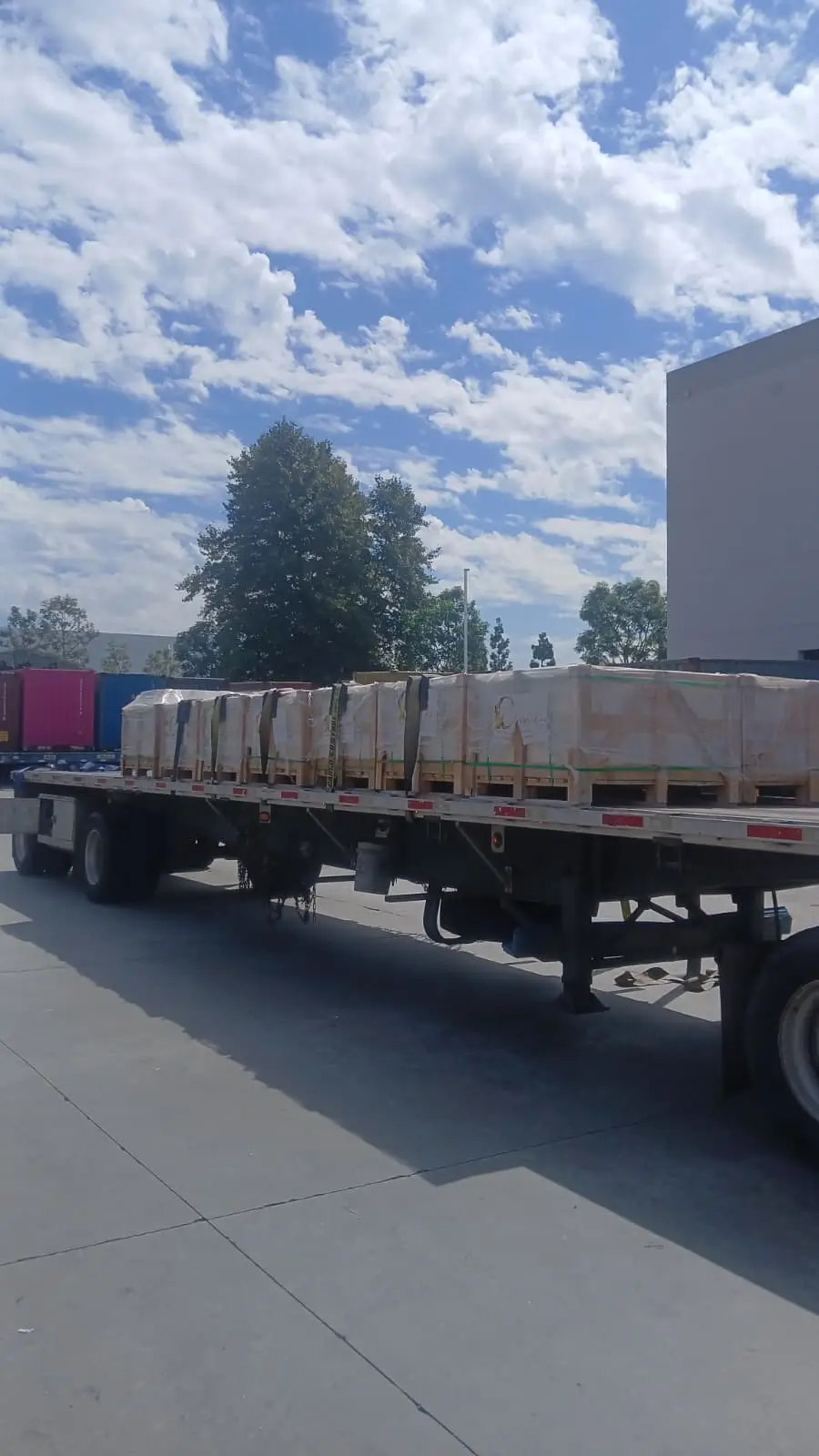
Truck access constraints at your project site have a direct effect on which stone formats are practical to specify. Full pallets of 2-inch natural stone typically run 2,200 to 2,800 lbs, and a standard delivery truck requires a reasonably flat, accessible drop zone within 50 feet of the installation area. For hillside sites with narrow access drives or projects with grade changes between the street and the work area, you need to either break orders into smaller pallet quantities — accepting multiple truck deliveries — or plan for on-site mechanical transfer from the drop point.
At Citadel Stone, our technical team frequently works through these logistics before orders are placed, because finding out your delivery access is constrained after the truck arrives creates costly delays. We source material directly from proven quarry partners and maintain Arizona warehouse stock on the most commonly specified formats, which allows us to turn most standard orders within 1 to 2 weeks. Custom cuts and large-format slabs above 24×24 inches typically require 3 to 4 weeks from our procurement cycle.
- Confirm truck delivery access and drop zone dimensions before finalizing your order format
- For hillside sites, factor in the labor cost of hand-carrying pallets from a street-level drop to the work area
- Order 8% to 10% overage on natural stone — cuts for curves, slopes, and grade transitions consume more waste than flat-field installations
- Coordinate delivery timing with base completion — receiving stone before the base is ready forces outdoor staging that risks rain damage to certain stone types
Sealing and Maintenance Protocols for Arizona Terrain Installations
Arizona-rated natural stone pavers for outdoor use require a sealing protocol that accounts for both thermal cycling and monsoon exposure — but the terrain adds a third variable: hydraulic stress on the sealer film at grade transitions and drainage concentration points. A sealer that performs adequately on a flat patio can fail at entry points where water concentration accelerates abrasion of the sealer surface.
Penetrating impregnator sealers — specifically those with fluoropolymer carriers — provide the best performance in Arizona terrain applications because they bond within the stone matrix rather than forming a surface film. Surface film sealers fail under the combination of UV intensity and hydraulic pressure at grade transitions, often delaminating within 18 months in exposed slope applications. Penetrating sealers should be re-applied every 2 to 3 years in low-elevation applications and every 3 to 4 years at higher elevations where UV intensity, while still significant, is moderated by lower average temperatures.
- Apply sealer to fully cured, clean, dry stone — moisture content above 5% prevents proper penetration
- Use a second coat on cut edges and any surface exposed to drainage concentration
- Inspect joint fill condition at sealing intervals — compromised joints allow sub-surface moisture intrusion that sealer cannot compensate for
- At higher elevations with freeze-thaw exposure, prioritize a sealer with a confirmed freeze-thaw cycling rating
What Every Natural Paving Stone Buyer Guide Arizona Specification Gets Right
The most important insight from any serious natural paving stone buyer guide Arizona discussion is this: the specification decisions that determine long-term performance happen before the stone is selected, not after. Your terrain analysis, drainage design, and base engineering define the performance envelope — the stone choice fills that envelope. Selecting a beautiful material for a poorly engineered base is the single most common failure pattern in Arizona natural stone installations, and it’s entirely avoidable.
Grade management is the skill that separates durable Arizona stone installations from problematic ones. Whether you’re working on flat desert terrain in the Phoenix basin, foothill slopes in the northeast Valley, or elevated sites where soil profiles and drainage behaviors shift significantly, the principles are consistent: understand how water moves across your specific site, build a base that handles that movement, select a stone thickness and texture appropriate for the grade, and seal it with a product engineered for Arizona’s UV and hydraulic exposure. Natural paving stone selection across Arizona demands that the joint width, surface texture, and drainage infrastructure all be treated as an integrated system rather than independent variables. For project teams navigating installation complexity, Stone Paving Slab Mistakes in Arizona? Here Is How to Fix It addresses common field errors that even experienced crews encounter on Arizona terrain projects.
Every site has a dominant terrain challenge — identify it early and let it drive your specification from sub-grade to surface finish. That discipline, applied consistently across the project, is what delivers the 20-plus year performance that natural stone is fully capable of providing in Arizona’s demanding environment. In Yuma, where low elevation and intense summer heat place exceptional demands on both the stone surface and the sealer film, specifying Arizona-rated natural stone pavers for outdoor use with the right penetrating sealer is non-negotiable. For homeowners in Yuma, Gilbert, and Chandler comparing stone density and surface texture, Citadel Stone provides specification sheets for each natural paving stone variety to support informed selection across Arizona’s distinct outdoor environments.