
Stone paving slab installation mistakes in Arizona often trace back to one overlooked variable: the installation window itself. Most slab failures — lifted edges, debonding mortar beds, cracked joints — aren’t material defects. They’re the result of work that started at the wrong time of day, the wrong week of the season, or in conditions where adhesive chemistry was already compromised before the first slab touched the ground. Understanding Arizona’s seasonal calendar isn’t a nice-to-have — it’s the single most influential factor in whether your stone paving slab installation lasts two decades or two years.
Why Timing Drives Slab Performance in Arizona
Arizona’s desert climate creates installation windows that are surprisingly narrow once you factor in substrate temperature, ambient humidity, and adhesive pot life. You’re not just racing the clock — you’re managing a chemical reaction happening in real time underneath your slabs. Polymer-modified mortars and thin-set adhesives have ideal working ranges between 50°F and 90°F. Outside that band, bond strength drops measurably, with some manufacturers documenting 30–40% tensile reduction in specimens cured above 100°F ambient.
The failure mode you’ll see most often in Yuma and other low-desert zones is hollow-sounding slabs — a telltale sign that the mortar skinned over before the slab made full contact. That happens in minutes, not hours, when you’re working on a sun-baked substrate in July. Timing isn’t a scheduling preference; it’s a structural variable that drives natural stone paving slab failures across Arizona more than any other single factor.
- Mortar pot life drops from 45–60 minutes to under 20 minutes when substrate temperatures exceed 110°F
- Slab thermal expansion peaks in afternoon hours, creating joint gaps that mortar can’t bridge once cooling begins at night
- Grout curing requires stable temperatures for at least 24 hours — nighttime drops below 45°F in winter can arrest the process entirely
- UV exposure accelerates moisture evaporation from fresh mortar, reducing workable coverage time by half in direct sun
Optimal Installation Seasons for Arizona Stone Projects
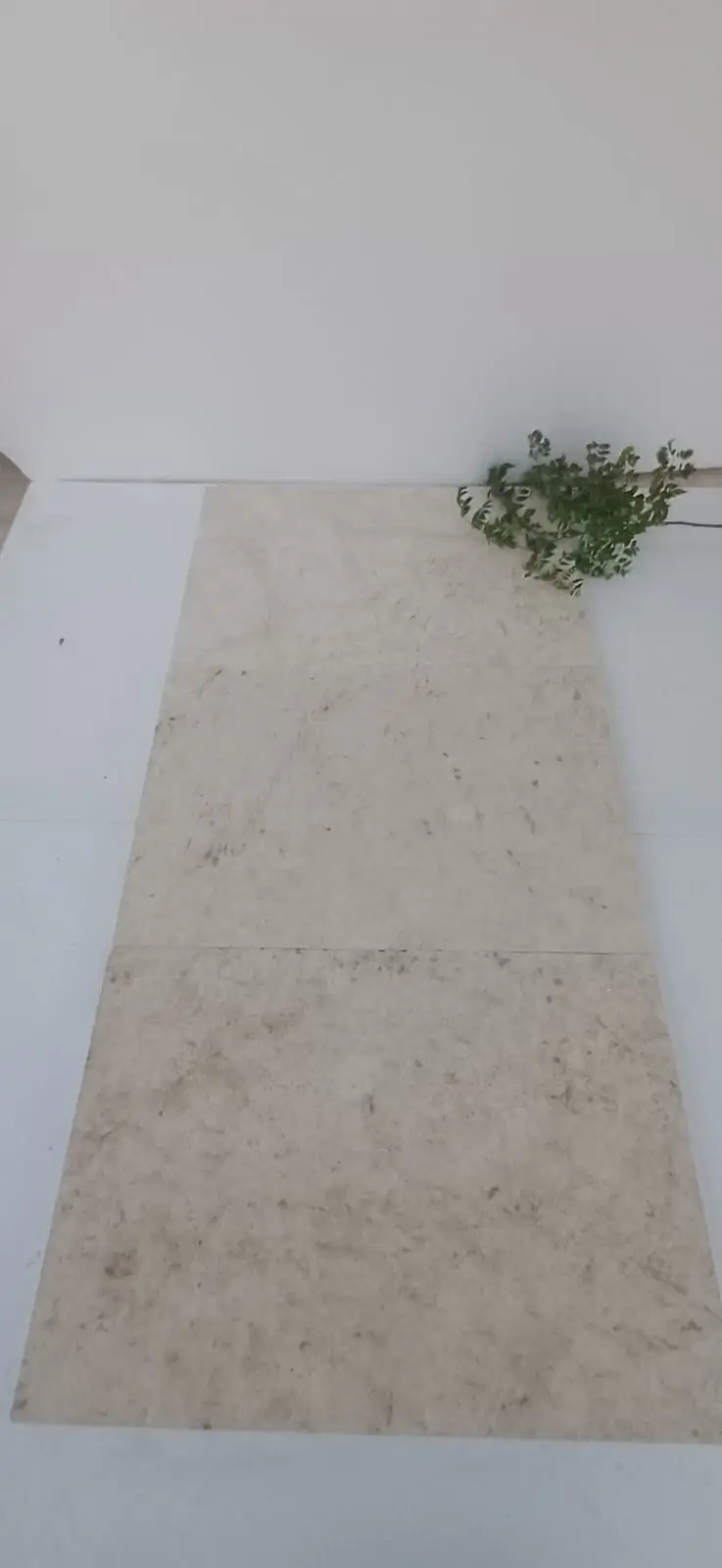
The two reliable installation seasons in Arizona are mid-October through early December and late February through mid-April. These windows give you ambient temperatures that keep mortar chemistry predictable, substrate temps that won’t flash-evaporate your water-to-cement ratio, and enough daylight to complete sections without rushing the finishing sequence.
Summer installs aren’t impossible — but they require a fundamentally different site protocol. You’ll need shade structures over the work area, pre-wetted substrates, and a hard stop on all mortar work by 9:00 a.m. in June and July. That’s not an exaggeration. Concrete substrate temperatures in direct Arizona sun reach 150°F+ by midday, which means your effective morning window for quality stone paving slab installation work in Arizona may be only 90–120 minutes long.
- October–November: best overall window — moderate substrate temps, low humidity, stable overnight lows above 45°F
- February–April: strong secondary window — watch for late cold fronts that can push overnight lows below adhesive minimums
- May and September: marginal — workable with early-morning discipline and appropriate adhesive formulations
- June–August: high-risk months — requires heat-tolerant mortar systems and strict time-of-day controls
- December–January: low desert acceptable, but high-elevation projects face freeze-thaw risk during curing phase
Morning vs. Afternoon Installation Protocols
Here’s what most specifiers miss: the problem isn’t just working in the afternoon — it’s assuming the morning schedule that worked in March still applies in June. Your morning window compresses dramatically as the season advances. In March, you might comfortably work until 11:00 a.m. By June, that same substrate reaches critical temperature before 8:30 a.m.
Establish substrate temperature as your cutoff trigger, not clock time. Using an infrared thermometer on the concrete or aggregate base, halt mortar placement when readings exceed 95°F. This single protocol change eliminates the most common natural stone paving slab failures across Arizona — debonded slabs that failed not from poor material, but from adhesive applied to an overheated substrate.
- Start mortar work only when substrate temperature reads below 90°F with infrared thermometer
- Pre-wet the substrate with a light mist 10 minutes before setting — this drops surface temp by 15–20°F temporarily
- Use shade cloth over completed sections immediately after setting to slow moisture loss from fresh mortar
- In afternoon sessions (October–April only), avoid scheduling grouting within 2 hours of sunset to prevent incomplete curing overnight
Expansive Soil and Seasonal Ground Movement
Arizona expansive soil paving slab issues are a compounding problem — they interact directly with seasonal timing because soil moisture content shifts dramatically between summer monsoon season and the dry winter months. If you install over expansive clay during the dry season, the subgrade is at its most contracted state. When the monsoons arrive, that clay can heave 1.5–2 inches in a single season, shearing joints and cracking slabs regardless of installation quality.
Projects in Sedona sit on a mix of sedimentary overburden and red clay subsoil that’s particularly reactive. A 4-inch compacted aggregate base isn’t sufficient there — you need 6–8 inches with a geotextile separation layer between native soil and base rock. Timing your installation for late spring — after winter moisture has allowed maximum soil expansion — reduces seasonal movement risk during the critical first-year curing period. Arizona expansive soil paving slab issues of this type are among the most preventable failures when base depth is engineered to match site conditions.
- Commission a soil expansion index test before specifying base depth — EI values above 50 require engineered base systems
- Install isolation joints every 10–12 linear feet in expansive soil zones, not the 15–20 feet used in stable subgrade conditions
- Avoid installation in the 2–3 weeks immediately following significant rainfall — soil moisture creates false compaction readings
- Schedule your final compaction check and slab installation as close together as possible to prevent subgrade moisture changes between operations
Adhesive Selection and Seasonal Behavior
One of the most common stone slab errors Arizona homeowners make is using a single adhesive product year-round without adjusting for seasonal conditions. Standard polymer-modified thin-set works reliably in the October–April window. Outside that range, you need a heat-resistant, extended-open-time formulation specifically rated for high-temperature applications.
For summer installation, look for thin-set products with a minimum open time of 30 minutes at 100°F ambient — several major manufacturers now produce these specifically for Southwest markets. At Citadel Stone, we recommend confirming your adhesive selection with your specific natural stone paving slabs in Arizona before the project starts, not mid-install when you realize the standard product is flashing over in 12 minutes. The warehouse team can cross-reference slab porosity with adhesive chemistry to prevent incompatibility failures we see regularly in high-absorption stones like sandstone and certain limestones.
- Extended open-time thin-sets (30+ min at 100°F) are mandatory for summer work
- Two-part epoxy mortars provide the most temperature-stable bond but require precise mixing ratios and faster working speed
- In winter installs below 50°F ambient, use a heated-water mix and keep bags of thin-set inside until use — cold thin-set loses workability rapidly
- Never use pre-mixed adhesive products for natural stone slabs thicker than 3/4 inch — they lack the structural bond strength required
Fixing Debonded and Hollow Slabs
Fixing paving slab problems in Arizona that have already failed requires diagnosing the root cause before lifting a single piece. Tapping slabs with a rubber mallet gives you a clear acoustic map: solid bond produces a dense thud, debonded areas ring hollow. Mark every hollow slab before pulling anything — the pattern tells you whether you have a localized adhesive failure or a systematic base problem.
Localized hollow spots over a stable base are repairable without full removal. Injection grouting through small-diameter drilled holes can fill voids under 2–3 square feet effectively. Larger hollow areas, or any pattern suggesting base movement, require full removal, base assessment, and re-installation — there’s no shortcut that holds long-term over a compromised substrate. For the re-installation, address the original timing or base failure before relaying the slabs. Fixing paving slab problems in Arizona correctly the second time means treating the cause, not just the symptom.
- Use the tap-test grid method — work in 12-inch increments across the full slab field to identify all affected areas before disturbing anything
- Photograph the hollow pattern before removal — it’s diagnostic evidence of what failed and where to focus the base repair
- When re-bedding, back-butter each slab in addition to spreading the mortar bed — double-application ensures 95%+ contact coverage
- Allow repaired sections to cure fully (72 hours minimum in optimal temperatures) before reopening to foot traffic
For guidance on specifying the right materials before installation begins, Citadel Stone Arizona stone installation resources cover slab thickness, porosity ratings, and base compatibility in detail that’s worth reviewing before your next project.
Joint Spacing and Thermal Expansion Errors
Thermal cycling in Arizona is extreme by any national standard. In Mesa, daily temperature swings of 30–40°F are common even in moderate seasons, and larger swings occur in transition months. Natural stone paving slabs expand and contract with every cycle, and if your joint spacing doesn’t accommodate that movement, the slabs push against each other and pop — sometimes violently enough to lift 80-pound pieces off the mortar bed.
Standard joint widths from manufacturer literature are typically written for moderate climates. For Arizona conditions, add 25–30% to the recommended joint width. A product spec calling for 3/16-inch joints should be installed at 1/4 inch in the low desert, and 3/8 inch in areas with greater daily temperature variation. This single adjustment accounts for a significant share of the common stone slab errors Arizona homeowners discover in year two or three after installation.
- Minimum joint width for exterior natural stone in Arizona low desert: 1/4 inch
- Expansion joints (unbonded, backer rod + sealant) required every 12–15 feet in all directions
- Never grout over control joints — use a color-matched flexible sealant rated for UV and thermal movement
- Recheck expansion joint sealant annually — Arizona UV breaks down sealant faster than cooler climates, with typical replacement cycles of 3–5 years
Scheduling Around Monsoon Season
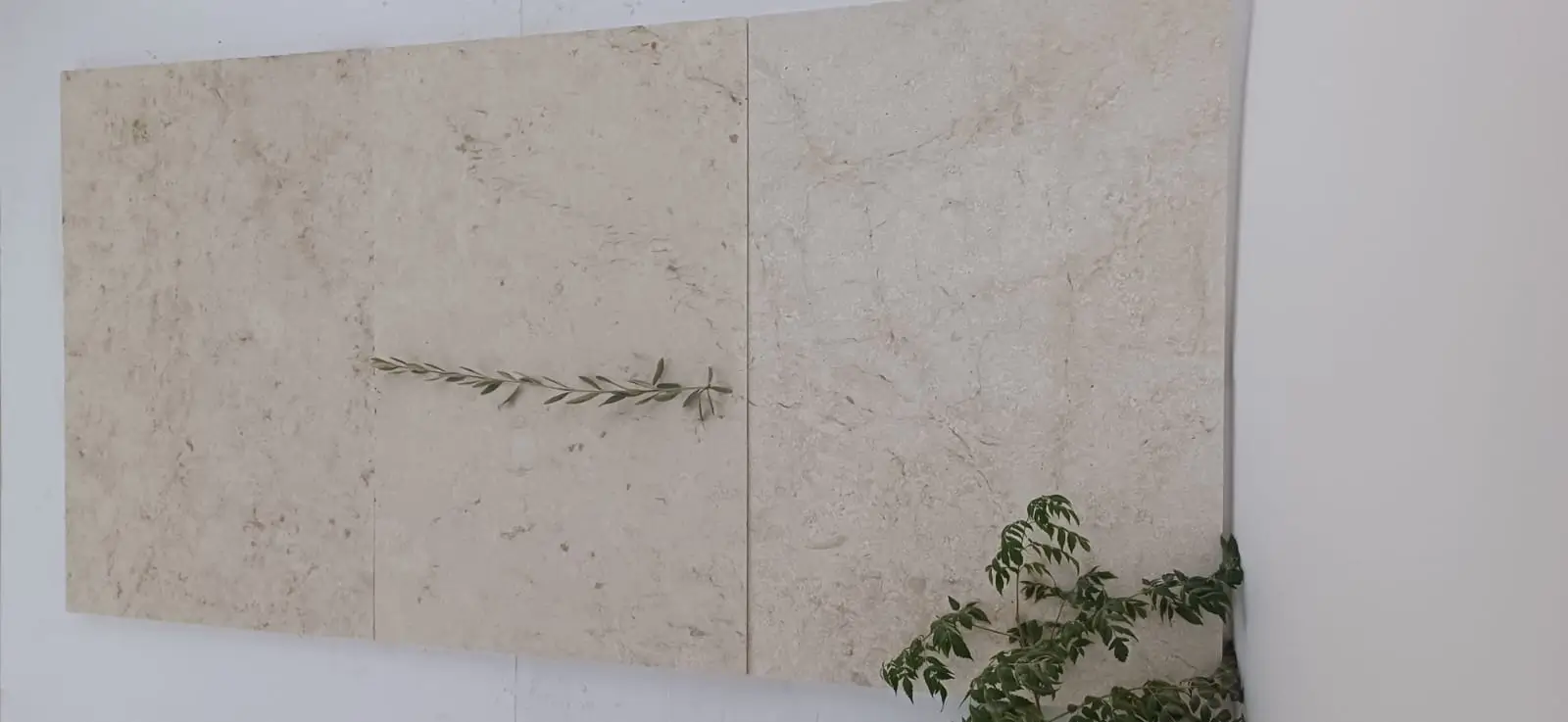
Arizona’s monsoon pattern — typically July through mid-September — creates a scheduling risk that’s separate from the heat itself. Sudden high-volume rainfall on fresh mortar beds causes water infiltration that disrupts the curing chemistry, weakens bond strength, and can cause efflorescence that’s difficult to remove once the calcium carbonate migration has stained the slab face. Your installation schedule needs a rain contingency built in, not added as an afterthought.
Practically, this means scheduling all grouting and mortar work in monsoon season only when a 48-hour dry window is confirmed — not hoped for. Local forecast apps underpredict afternoon storm probability in monsoon months. The more reliable approach is to treat any day in July or August with more than 20% afternoon storm probability as a no-grout day, regardless of morning conditions. It sounds conservative until you’ve had to replace 200 square feet of stained travertine because a 20-minute storm hit two hours after grouting.
- Build monsoon contingency days into your project schedule — assume 2–3 weather delays per week in July and August
- Cover fresh mortar beds with plastic sheeting weighted at edges if there’s any precipitation risk during the curing window
- Avoid scheduling slab delivery during monsoon peak — truck access on muddy job sites risks substrate damage and material contamination
- Pre-seal slabs before grouting in monsoon season — a penetrating sealer applied 24 hours before grout application dramatically reduces staining risk from unexpected rain events
Timing, Materials, and Getting Stone Paving Slab Installation Right in Arizona
Getting stone paving slab installation right in Arizona is fundamentally a scheduling and timing discipline, not just a material discipline. The right slabs installed at the wrong time of day, wrong season, or wrong soil moisture condition will underperform every time. Build your installation calendar around substrate temperature triggers and seasonal adhesive performance windows — not around convenience or contractor availability alone. Cross-referencing your material order lead times with your installation window is equally important: confirm warehouse stock on your natural stone paving slabs in Arizona at least 3–4 weeks before your target start date so truck delivery and site preparation can align with your optimal seasonal window.
As you refine your material decisions alongside these installation strategies, How to Choose Natural Paving Stone in Arizona provides the material-selection foundation that supports everything covered here — from porosity and thickness to regional performance expectations. Contractors in Flagstaff, Sedona, and Peoria have found that specifying Citadel Stone paving slabs with consistent bed-face tolerances reduces lippage risk significantly when laying over Arizona’s reactive subgrade soils.