
Most natural paving stone failures in Arizona trace back not to heat damage but to mechanical failure — joint displacement, edge fracturing, and surface spalling driven by wind-borne debris, storm surge, and the physical pounding of seasonal monsoon events. Any serious natural paving stone buyer guide Arizona specifiers rely on should front-load that reality, because the state’s storm patterns demand structural decisions that go far beyond surface aesthetics. Understanding how wind loads, hail impact, and wind-driven rain stress your installation from the moment it’s laid is the foundation of every specification that actually holds up over time.
Why Storm Mechanics Drive Material Selection
Arizona’s monsoon season delivers more mechanical abuse per square foot than most homeowners and even some contractors anticipate. You’re looking at sustained winds that routinely hit 40–60 mph during haboobs, hail events that generate point-load impacts comparable to dropped tools, and wind-driven rain that forces water horizontally into every joint, gap, and pore in your paving system. The material you select has to resist all of that simultaneously, not just look good on a calm afternoon.
Stone density and surface hardness are your first line of defense. A material with a Mohs hardness below 3 — soft limestone varieties fall here — will show hail pitting within a season or two in zones that see regular storm activity. Travertine in its filled and honed form sits around 3–4 on the Mohs scale, which is adequate for residential foot traffic but marginally acceptable in high-exposure locations. Basalt and dense limestone push past 4–5 and hold up significantly better under impact loading. When you’re comparing travertine versus limestone paving stone in AZ projects, this hardness differential becomes a real specification decision, not just a cosmetic one.
- Dense limestone offers compressive strength typically between 8,000–12,000 PSI, providing solid hail and impact resistance
- Travertine compressive strength ranges from 5,000–8,000 PSI depending on quarry source and fill quality
- Basalt exceeds 15,000 PSI compressive strength — the premium choice for wind-exposed driveways and entries
- Surface finish affects impact response: tumbled edges absorb strike energy better than sharp-cut edges that concentrate stress
- Thickness matters more under impact than under compression — 2-inch minimum for any exposed paved surface in storm zones
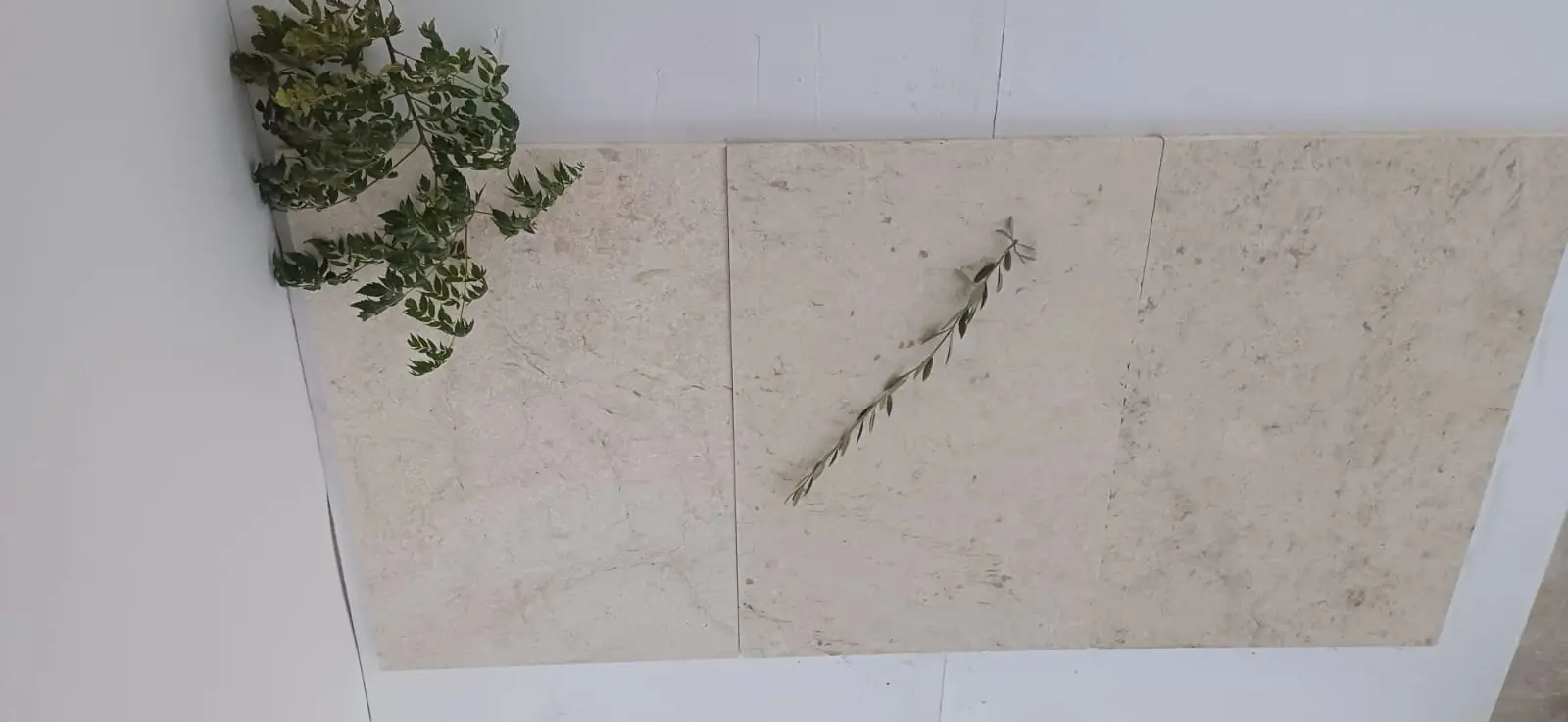
Edge Restraint and Joint Integrity Under Wind Load
Edge restraint is the most underspecified component in natural stone installations that fail early. You’ll find plenty of projects where the stone itself is fine — it’s the perimeter that has migrated, leaving gaps that funnel wind-driven rain directly under the base course. Once water gets under the base, you’re dealing with undermining, which is exponentially harder to repair than preventing it in the first place.
For natural paving stone in Arizona’s exposed locations, your edge restraint specification should call for a minimum 4-inch concrete header at all perimeter edges, not the plastic strip restraints that work fine in gentler climates. Concrete headers set 6 inches deep and keyed into compacted base give you the mechanical resistance you actually need when wind hits a broad paved surface at 50 mph. The lateral force across a 400-square-foot patio during a haboob is substantial — enough to migrate an inadequately restrained edge by a quarter-inch per season, which compounds quickly.
- Concrete perimeter headers: minimum 4 inches wide, 6 inches deep, set flush with finished paving surface
- Joint sand: polymeric sand compacted to 92–95% joint capacity, not swept in loose
- Re-sand joints every 2–3 years — wind erosion removes joint fines faster than rainfall does
- Corner sections require additional anchoring — L-shaped concrete headers at 90-degree intersections
- Slope drainage away from restrained edges at 1/8 inch per foot minimum to prevent hydrostatic buildup
Joint width is a related decision that directly affects wind-driven rain penetration. Joints wider than 3/8 inch allow significant water infiltration at high wind angles. Joints tighter than 1/4 inch don’t leave enough room for polymeric sand consolidation. The 1/4-to-3/8 inch range is where you want to be for both joint integrity and manageable drainage. Projects in Peoria and the northwest valley experience some of the most direct haboob exposure in the Phoenix metro, and joint tightness in those installations consistently separates 15-year surfaces from 7-year replacements.
Selecting Natural Stone Pavers in Arizona by Storm Exposure Zone
Arizona isn’t a single climate — it’s a stack of microenvironments, and your stone selection should reflect where in that stack your project sits. The low desert from Phoenix south to Tucson gets the most monsoon activity with high wind potential but minimal hail. The Prescott corridor and central highlands get genuine hail events with stones that can reach 1-inch diameter. The northeast plateau country around Flagstaff and Show Low sees hail combined with freeze-thaw cycling, which is a completely different set of mechanical stresses.
Selecting natural stone pavers in Arizona correctly means matching stone properties to the specific exposure zone your project occupies. For low-desert storm exposure — which covers Gilbert, Chandler, and most of the Phoenix metro — your priority is wind-driven rain resistance and joint integrity rather than hail hardness. Filled travertine in 2-inch thickness is a workable choice here because the hail impact risk is lower, though you’ll still want to specify a harder fill material rather than grout that erodes. Dense limestone in the 1.5-to-2-inch range handles this zone well and gives you better long-term joint-edge integrity than softer travertine. This is the zone where the best natural paving stones across Arizona get their real-world stress tests, and field performance data clearly favors stones with tight, consistent grain structure over those with natural voids.
- Low desert (Phoenix metro, Tucson): prioritize joint density and edge restraint over impact hardness
- Central highlands (Prescott, Wickenburg): specify minimum 2-inch thickness and Mohs 4+ hardness for hail zones
- Northeast plateau: freeze-thaw rating required — ASTM C880 flexural strength above 1,500 PSI recommended
- Coastal desert (Yuma area): wind erosion of joint material is the primary threat; sealed polymeric sand is non-negotiable
Travertine Performance Under Arizona Storm Conditions
Travertine is the most requested natural stone in the Phoenix metro market, and it performs well when it’s specified correctly for the actual conditions rather than selected purely on aesthetics. The material’s natural porosity is both its appeal and its vulnerability — those characteristic voids and cross-sections look beautiful, but unfilled travertine allows wind-driven rain to penetrate at a rate that accelerates substrate erosion and freeze-thaw spalling in elevated zones.
Filled and honed travertine with a quality epoxy or cement fill is a fundamentally different material than unfilled travertine in storm performance terms. Your specification should call out fill type explicitly — not all fill materials are equal, and cheaper cement fills crack under thermal cycling faster than the surrounding stone. Resin fills hold better but don’t bond as permanently to the stone matrix. At Citadel Stone, we source travertine specifically evaluated for fill integrity, because we’ve seen enough Arizona projects where the stone outlasted its fill by a decade, creating a surface that collected debris and compromised drainage at every void location.
- Always specify filled travertine for any Arizona exterior application — unfilled creates maintenance problems within 2 years
- Epoxy fill offers better flexibility than cement fill in thermal cycling environments
- Surface sealing with a penetrating silane-siloxane sealer reduces wind-driven rain absorption by 60–70%
- Minimum 1.5-inch thickness for patios; 2 inches for driveways and areas subject to vehicle or heavy foot traffic
- Tumbled-edge travertine handles hail impact better than sharp-edge cuts due to stress distribution geometry
You can explore our natural paving stone options Arizona to compare fill quality and thickness specifications across the travertine and limestone ranges we carry from evaluated quarry sources.
Limestone Specification for Wind and Hail Resistance
Dense limestone consistently outperforms most alternatives when the specification priority is storm resistance. The material’s uniform grain structure — unlike travertine’s natural void system — means there are no pre-existing weakness planes for impact stress to exploit. Hail hitting a 2-inch dense limestone slab at 50 mph distributes that energy across a much larger effective mass than the same impact on a thinner, more porous stone.
The travertine versus limestone paving stone AZ decision often comes down to this tradeoff: travertine offers warmer aesthetics and lighter weight (easier truck delivery logistics on complex sites), while limestone delivers measurably superior impact resistance and joint-edge durability. For projects where wind and storm exposure is the dominant concern — exposed driveways, front entries, pool surrounds with full sky exposure — limestone is the technically stronger choice. For sheltered courtyards and covered patios with partial overhead protection, travertine is entirely appropriate and performs without meaningful compromise.
- Specify ASTM C568 Class III limestone for exterior high-exposure applications — minimum 8,000 PSI compressive strength
- Flamed or brushed surface finishes maintain traction after rain better than polished surfaces
- Limestone’s lower absorption rate (typically 1–3%) versus travertine (4–8%) directly reduces wind-driven rain infiltration
- Edge profiles: eased or softened edges reduce chip-out risk at joint lines compared to crisp cut edges
- Joint sand retention is better with limestone’s consistent edge geometry versus travertine’s variable edge texture
Base Preparation for Storm-Resilient Installations
The base system beneath your natural paving stone determines whether your installation moves during storm events or stays locked. Arizona soil conditions add complexity here — expansive clay soils in the east valley can exert enough upward pressure during saturation events to displace an undersized base, and that displacement is dramatically accelerated when storm water is being driven horizontally under the edges by wind.
Your base preparation for natural paving stone in Arizona storm-prone zones should start with a geotextile fabric layer directly on native soil, not as an afterthought. That fabric prevents clay fines from migrating up into your base aggregate over time — a process that takes 3–5 years but effectively destroys base compaction when it happens. Projects in Chandler encounter particularly active expansive soils in several neighborhoods, and specifying 6 inches of compacted class II base over geotextile rather than the standard 4 inches has measurably reduced callback rates in that market.
- Geotextile fabric layer: 4-oz non-woven minimum, lapped 12 inches at seams
- Compacted base aggregate: 6-inch minimum depth for driveways, 4-inch minimum for pedestrian areas
- Compaction target: 95% Modified Proctor — verify with nuclear density gauge, not visual inspection
- Bedding sand: 1-inch maximum, screeded level — do not compact bedding sand before stone placement
- Drainage slope minimum 1.5% away from structures — increase to 2% in storm-exposed locations
Impact Resistance and Surface Durability Metrics
Specifying for impact resistance requires actual data, not just material names. The Arizona climate context means you’re evaluating stones against two distinct impact types: point-load impact from hail (concentrated force over small area) and abrasion impact from wind-driven sand and grit (distributed force over entire surface). Both degrade stone surfaces differently, and your selection criteria should address both.
For hail impact resistance, the relevant test is ASTM C880 flexural strength. You want a minimum of 1,200 PSI for residential applications and 1,500 PSI or higher for commercial or high-exposure residential. Dense limestone typically returns 1,500–2,500 PSI. Travertine spans a wide range — 800–1,800 PSI depending on quarry and fill quality, which is exactly why quarry sourcing matters enormously for this application. Our technical team advises clients to request third-party test data for any travertine shipment destined for high-exposure installations in central Arizona’s storm corridors.
Wind-driven sand abrasion is tested under ASTM C241, and surface hardness measured by the Mohs scale gives you a quick field guide. Surfaces below Mohs 3.5 will show progressive abrasion within 5 years in exposed locations. The practical implication: plan to reseal abraded travertine surfaces every 18–24 months in high-wind zones, versus the 3-to-5-year cycle that works in protected areas. Arizona climate natural stone selection advice that ignores abrasion cycling consistently underestimates long-term maintenance costs in exposed installations.
- ASTM C880 flexural strength: 1,200 PSI minimum residential, 1,500 PSI minimum commercial/high-exposure
- ASTM C241 abrasion resistance: specify HA value above 10 for exterior stone in wind-exposed locations
- Mohs hardness 4+ for hail-zone installations (Prescott corridor and above)
- Surface sealing extends wind-abrasion resistance significantly — penetrating silane sealers outperform topical coatings in UV-heavy environments
- Annual inspection of joint sand levels allows you to catch wind erosion before it becomes structural displacement
Project Planning and Logistics for Arizona Stone Buyers
Material selection is only half the specification — getting the stone on site in usable condition requires planning around Arizona’s logistics realities. Natural stone ships heavy, and your truck access constraints directly affect which pallet configurations arrive intact. Standard stone pallets run 3,000–4,000 lbs, and a residential driveway job will require multiple truck deliveries if your site doesn’t allow a forklift offload. Coordinating delivery before base prep is complete means storing stone on site through potential storm events — which matters because stacked stone pallets in wind can topple.
Citadel Stone maintains warehouse inventory in Arizona, which typically compresses lead times to 1–2 weeks for in-stock materials compared to the 6–8 week import cycle that direct-order projects face. For Arizona climate natural stone selection advice that accounts for your specific project timeline, confirming warehouse stock levels before finalizing your material list prevents the common scenario of substituting a second-choice stone because your first pick is backordered when you need it. Projects in Gilbert and the southeast valley can typically access next-week delivery windows on stocked travertine and limestone sizes, which matters when you’re working around monsoon season installation windows.
- Order materials 3–4 weeks before scheduled installation start — don’t wait until base prep is complete
- Confirm truck clearance dimensions for your site — low-clearance overhangs or narrow gates require smaller delivery configurations
- Inspect pallet wrapping on delivery — storm-exposed warehouse storage can introduce moisture to certain stone types before they reach you
- Store delivered pallets on stable, level ground and secure pallet wrap against wind if site storage exceeds 48 hours
- Account for 5–8% overage in material quantities to cover storm-event breakage during installation in exposed locations
What Matters Most
Every specification decision in this natural paving stone buyer guide Arizona professionals use comes back to understanding that Arizona’s real threat to paving installations is mechanical, not thermal. Wind loads, storm-driven rain infiltration, hail impact, and the cumulative erosion of joint material by sustained wind are the failure mechanisms you’re designing against. The stones that perform here — dense limestone, properly filled travertine, basalt in the most demanding applications — succeed because their physical properties align with those specific stresses, not because they’re heat-tolerant, though that matters too.
You’ll get the most reliable long-term performance by pairing the right stone hardness and density with a properly restrained edge system, a compacted base that exceeds minimum depth requirements, polymeric joint sand at full consolidation, and a sealing schedule calibrated to actual wind exposure rather than generic annual recommendations. None of these decisions are complicated individually — it’s the combination that separates 10-year installations from 25-year ones. The best natural paving stones across Arizona share one trait: every component of their installation system was specified for the actual exposure zone, not a national average. For long-term care guidance once your installation is in place, How to Maintain Stone Paving Slabs in Arizona’s Climate covers the ongoing maintenance protocols that preserve storm-resilient installations through Arizona’s demanding seasonal cycle.
Buyers in Flagstaff, Sedona, and Yuma trust Citadel Stone when selecting natural paving stone for Arizona properties, as each stone type is evaluated for surface temperature behavior and structural integrity before it enters the supply chain.