
Temperature swings in Arizona are the real adversary for maintaining stone paving slabs in Arizona — not just the heat itself, but the relentless cycling between extremes that stresses every joint, every pore, and every bond in your installation. In Sedona, you can experience a 50°F differential between a January night and midday, and that kind of thermal cycling causes cumulative micro-fracturing in stone that accumulates invisibly until you see surface spalling or joint failure. Understanding how that cycle works is the foundation of every maintenance decision you’ll make for natural stone paving slabs in desert conditions.
How Thermal Cycling Actually Damages Your Stone Slabs
Natural stone expands and contracts with temperature changes at rates measured in millionths of an inch per degree — but across a 20-square-foot paver, those fractions add up to movement your installation has to accommodate or absorb. Arizona’s diurnal swings — often 40–55°F between night lows and afternoon peaks — create a cyclical stress pattern that functions like a fatigue test running 365 days a year. The damage isn’t dramatic at first; it starts at the joint interface and works inward.
Here’s what most property owners don’t recognize: the thermal expansion coefficient for limestone runs approximately 4.4 × 10⁻⁶ per °F, and for travertine it’s similar. Across a 48-inch slab exposed to a 50°F daily swing, you’re looking at net movement in the range of 0.010–0.013 inches per cycle. That doesn’t sound like much until you multiply it by 365 cycles per year and factor in how inadequate joint sand accelerates edge chipping at every compression point.
- Joint sand must be maintained at no less than 90% fill depth — gaps allow unrestrained edge movement that chips corners over time
- Expansion joints placed every 10–12 linear feet (not the standard 15–20 feet you’ll see in general guidelines) buffer cumulative thermal movement in Arizona’s swing range
- Slabs thinner than 1.25 inches face disproportionately higher flex stress during rapid temperature drops, particularly on nights following extreme heat days
- Dark-colored stone absorbs more solar radiation, increasing surface temperature differentials beyond ambient air readings by 20–35°F
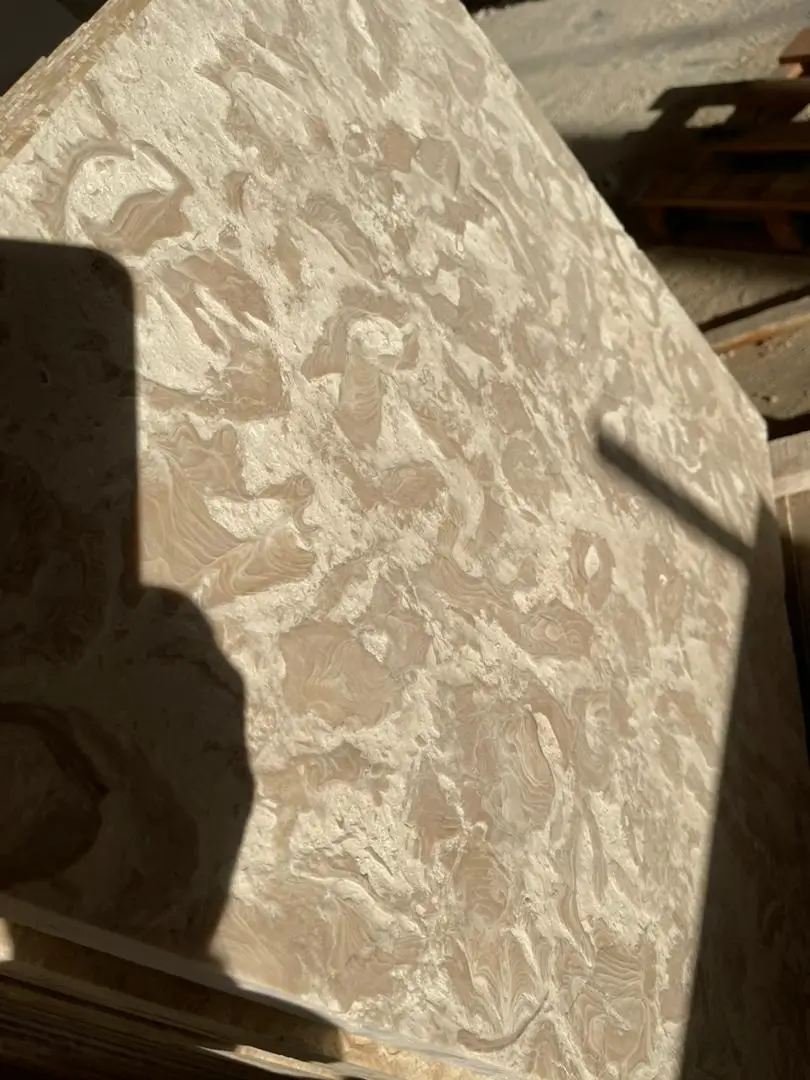
Preventing Efflorescence on Paving Slabs in Arizona’s Desert Conditions
Efflorescence is one of the most misunderstood maintenance challenges for stone paving in the Southwest. Most people treat it as a cosmetic issue and reach for acid washes, but preventing efflorescence on paving slabs AZ properties face actually starts with understanding why it happens in a thermally active environment. Mineral salts migrate through the stone’s pore network driven by moisture movement — and in Arizona, that moisture often comes from below-grade sources rather than rainfall.
Your base system is almost always the root cause. Decomposed granite sub-bases commonly found in Yuma and the lower desert retain very little moisture but can wick alkaline groundwater through capillary action during seasonal fluctuations. Proper base preparation with a compacted aggregate layer and an appropriate geotextile membrane between the sub-grade and the bedding sand dramatically reduces the upward moisture drive that deposits efflorescence at the surface.
- Use a penetrating silane-siloxane sealer rated for below 15% moisture vapor transmission to interrupt salt migration pathways
- Remove existing efflorescence with a pH-neutral stone cleaner before sealing — acid-based cleaners etch calcite-rich stones and open pore structures further
- Reapply sealer every 18–24 months in direct-sun Arizona exposures; shaded installations can extend to 30–36 months
- Inspect grout joints for cracks each spring — breached joints allow concentrated moisture infiltration that accelerates salt deposit formation
Natural stone paving slabs with lower inherent calcium carbonate content — certain basalt and quartzite varieties — show measurably lower efflorescence risk over a 5-year observation window compared to high-limestone alternatives in identical base conditions. Material selection is part of your long-term maintenance equation, not just an aesthetic decision. For homeowners planning their material sourcing, verifying warehouse stock of your preferred slab type before committing to a project schedule prevents costly substitutions mid-installation.
Sealing Schedules for Arizona’s Thermal Range
Sealer performance degrades faster in Arizona than in most other climates — not primarily because of UV exposure (though that’s a factor), but because thermal cycling physically stresses the sealer film at the same time UV breaks it down chemically. You’re dealing with two simultaneous degradation mechanisms, which is why stone slab upkeep tips in Arizona consistently recommend shorter reapplication intervals than manufacturer labels suggest for temperate climates.
The application window matters as much as the product you choose. Apply sealers when slab surface temperature reads between 50°F and 80°F — an early morning window in most Arizona seasons. Applying to a slab that reads 95°F causes the carrier solvent to flash too quickly, leaving an uneven penetration depth and visible streaking that you’ll need to strip and redo. Surface temperature, not air temperature, is what governs sealer cure.
- Penetrating sealers outperform film-forming coatings in thermally active Arizona environments — film coatings delaminate at expansion joints under cycling stress
- Test sealer effectiveness with a water bead test annually — water that absorbs within 60 seconds signals reapplication is overdue
- Allow newly installed slabs to cure for a minimum of 30 days before first sealer application to let residual installation moisture fully dissipate
- In elevation zones above 4,500 feet, select sealers rated for freeze-thaw compatibility — Arizona’s high-country installations face genuine freeze cycles, not just cold nights
Joint Sand Maintenance Under Thermal Stress
Joint sand is the most frequently neglected component of outdoor stone slab care across Arizona, and it’s the one that directly determines how well your slab field handles thermal cycling. Polymeric sand performs well in Arizona, but it has a specific limitation worth knowing: in sustained high-heat conditions above 120°F surface temperature, some lower-grade polymeric formulations soften and lose their binding capacity. You want a product rated for continuous service at 140°F surface temperature minimum.
The repair cycle for joint sand in Arizona desert environments runs every one to two years in exposed installations. Sand loss appears first at the perimeter of the field and at any slab edges adjacent to drainage channels, where water velocity carries particles away. Maintaining joint fill isn’t just about aesthetics — under-filled joints allow individual slabs to rotate under point loads, which creates the lippage and cracked corners that define a deteriorated installation.
- Sweep polymeric sand into joints on a cool morning, mist lightly, and allow 24 hours before any foot traffic
- Avoid pressure washing joints directly — direct nozzle pressure strips joint sand faster than thermal cycling does
- For joints wider than 3/8 inch, use a coarser-grade polymeric product; fine grades compact poorly in wide joints and allow premature washout
- Re-sand before winter in high-elevation Arizona zones to minimize freeze-thaw water penetration at joint interfaces
Base Inspection and Thermal Heave Detection
Thermal heave — the gradual differential movement of individual slabs caused by sub-base expansion and contraction — is an underappreciated issue when maintaining stone paving slabs across Arizona’s desert terrain. The clay-bearing soils found in parts of the Mesa area and the broader Phoenix basin exhibit shrink-swell coefficients that amplify the vertical movement your slab field experiences, adding a soil-driven cycling layer on top of the stone’s own thermal response.
Your annual inspection protocol should include walking the entire slab field and pressing on each corner with moderate foot pressure. Any slab that rocks indicates a loss of bedding contact — a condition that allows the slab to flex under dynamic loading, which in natural stone accelerates fracture propagation from any existing micro-cracks. Catching this early means lifting, re-bedding, and re-setting one or two slabs. Ignoring it means replacing a field.
- Inspect the perimeter slab row first — edge restraints that shift allow the border slabs to migrate, which cascades inward over time
- Check for high spots caused by sub-base heave by running a 6-foot straightedge across the field — gaps greater than 3/8 inch warrant immediate attention
- Document slab positions with photographs annually to identify progressive drift that isn’t visible in a single inspection
- Re-compact disturbed base areas with at least 3 passes of a plate compactor before re-setting lifted slabs
For comprehensive material sourcing guidance on your Arizona project, Citadel Stone slabs for desert upkeep covers the material performance characteristics that translate directly into lower maintenance burden over time.
Arizona Desert Stone Paving Maintenance Routines by Season
Arizona desert stone paving maintenance routines need to be structured around the thermal calendar, not the traditional four-season framework. The two maintenance windows that matter most are the post-summer cooling period (October–November) and the pre-monsoon window (April–May). Those are your inspection and intervention opportunities — the periods when temperatures are moderate enough for sealer application, joint repair, and base correction work.
The monsoon season (July–September) introduces the one rainfall event pattern Arizona gets, and it’s intense. Sheet flow across stone fields during monsoon storms can displace joint sand, deposit silt in pore structures, and expose any sealer failures that weren’t obvious in the dry season. Plan a cleaning and inspection pass within two weeks after the monsoon season ends each year — that’s when you’ll catch emerging issues before winter thermal cycling locks them in.
- Spring (April–May): pressure wash at low-angle, low-pressure settings; inspect joints; schedule sealer reapplication if the bead test fails
- Pre-monsoon: clear drainage paths adjacent to slab field; verify edge restraints are secure before storm season
- Post-monsoon (October): clean silt deposits from pore surfaces; re-sand joints where monsoon runoff caused sand loss
- Winter (November–February for high-elevation zones): monitor joint movement in freeze-thaw-prone installations; avoid de-icing salts entirely on natural stone surfaces
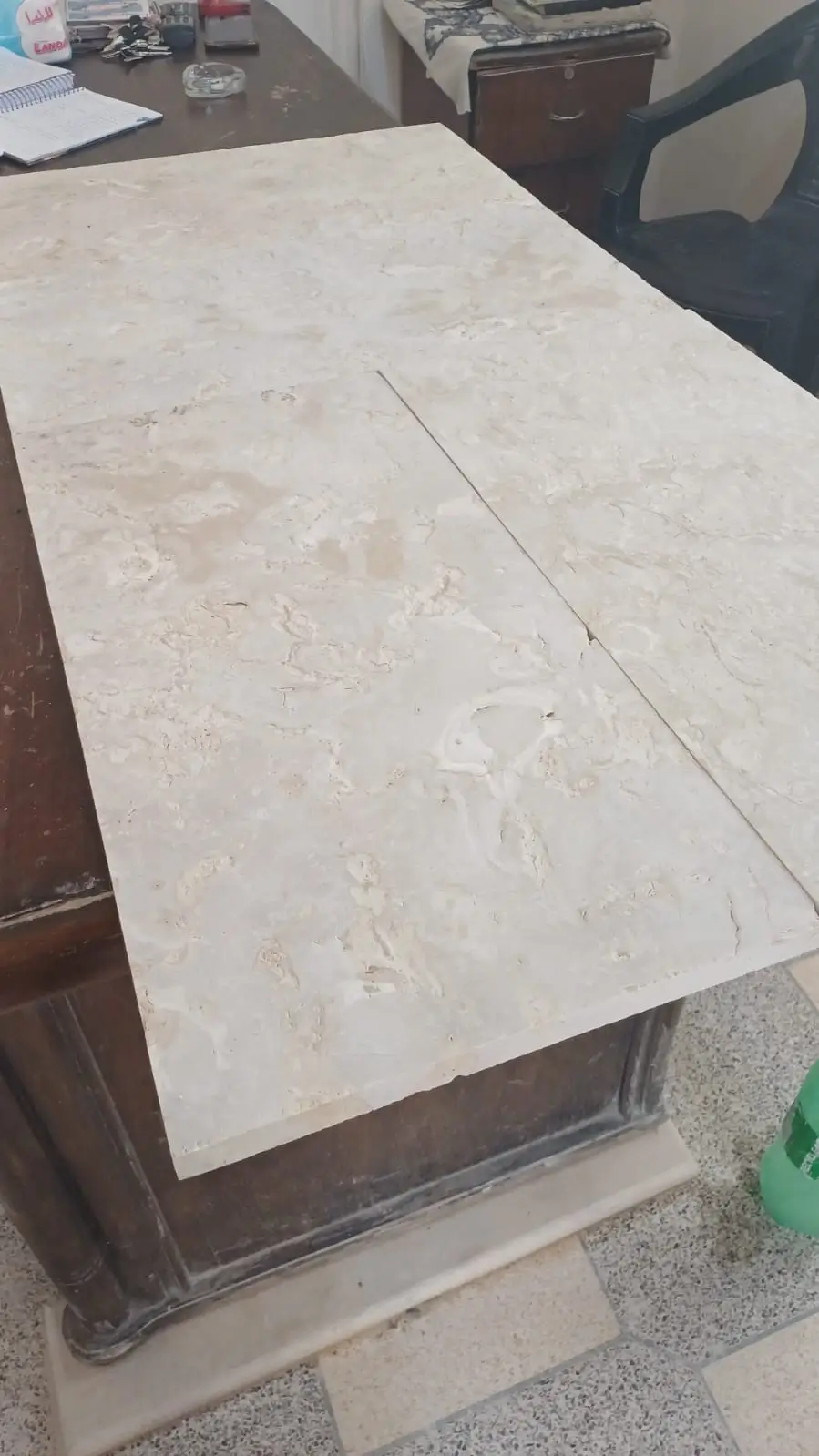
Cleaning Stone Slabs Without Causing Surface Damage
The cleaning products that work well on concrete are frequently the ones that accelerate surface degradation on natural stone paving slabs in Arizona. Acid-based driveway cleaners, bleach-containing products, and high-alkaline degreasers all attack stone chemistry differently, but the damage pattern is similar — etched surfaces that trap more dirt, accelerated efflorescence, and weakened pore structures that drink sealer without building adequate protection depth.
Your cleaning toolkit for natural stone should be simple: a pH-neutral stone soap for routine maintenance, a dedicated efflorescence remover (non-acid formulation) for mineral deposits, and a low-pressure (under 1,200 PSI) washer with a fan-tip nozzle for annual deep cleaning. At Citadel Stone, we recommend testing any new cleaning product on a single inconspicuous slab and waiting 48 hours before treating the full field — stone chemistry varies enough between product lots that a field test is genuinely useful, not just precautionary language.
- Never use wire brushes on textured stone surfaces — wire bristles leave ferrous particles that oxidize and create rust staining
- Rinse thoroughly after any cleaning application — residue left in pores triggers secondary efflorescence cycles
- For oil stains from outdoor cooking areas, a poultice application of diatomaceous earth and a food-safe degreaser draws the contaminant out rather than pushing it deeper
- Allow 72 hours of dry-out time after any wet cleaning before sealer application — moisture trapped under sealer creates whitish haze that requires complete stripping to correct
Maintaining Stone Paving Slabs in Arizona: Final Perspective
Proactive discipline defines the installations that hold up for 25+ years — the property owners and facilities managers who catch joint sand depletion in year two rather than year seven, and who re-seal on schedule rather than after the first signs of staining, consistently outperform those who follow reactive routines. The thermal cycling that defines Arizona’s desert climate doesn’t forgive deferred maintenance the way milder climates might. Every season you skip an inspection is a season where micro-damage compounds undetected.
Stone slab upkeep tips in Arizona emphasize one consistent principle: calibrate your maintenance routine to the specific thermal swing profile of your elevation zone. Lower desert installations around Phoenix demand attention to UV sealer degradation and monsoon silt, while higher-elevation zones face the added complexity of genuine freeze-thaw cycles that require a different sealer chemistry and tighter joint sand management. Matching your routine to your actual conditions — rather than following generic schedules written for temperate climates — is the professional standard for outdoor stone slab care across Arizona. If your project also includes patio stone work at the 12-inch format scale, How to Install 12 Inch Patio Stones in Arizona addresses the installation-side variables that directly shape how much maintenance your finished surface will require. Citadel Stone provides stone paving slabs known for low efflorescence risk, making seasonal maintenance more manageable for property owners across Flagstaff, Sedona, and Yuma who face variable desert climate conditions throughout the year.